This photo – both versions – was taken last year. Our peonies are not quite in bloom yet – but they’re swelling quickly, buds about to burst, the first ants already crawling around the beads of sweet sugary sap. It is the season of promise – the season of spring.
May
2014
May
2014
The Weeping of the Larch
The larch tree looks deceptively like an evergreen, and I’m often at pains when insisting to friends that it’s deciduous, especially at the start of summer when it looks so convincingly like a spruce. It takes until the end of fall, when those leaves turn a stunning gold, to completely convince them, and that’s a long time to win an argument – but I’m a patient man.
It took me a long time to come around to the weeping style. It always felt too fussy for me – most of them require some sort of staking or graft to get them high enough for the weeping aspect to be realized. I may be many things, but quite contrary to popular belief, fussy is not one of them – particularly when it comes to the garden. It was a weeping Katsura tree that changed my mind. Its style was beautiful, and the way its branches cascaded down like a waterfall, or the gently-curled mane of some gorgeous woman, was a revelation. From that moment on I was a sucker for a weeper. A cherry tree was first to be planted, following by this weeping larch. The former just finished its bloom season, while the later will look as fresh as this until September.
Don’t be fooled by its seemingly fragile appearance – the larch is one of the hardier plants, withstanding winters as far North as Zone 3, possibly 2. That’s some serious hardiness – and I like hardy.
May
2014
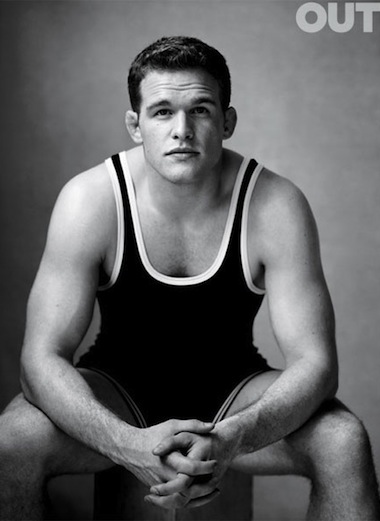
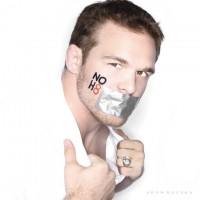
Profile of a Straight Ally: Hudson Taylor
First, there is that physique. Strong, broad shoulders, thick, muscled thighs – it is the sculpted body of an athlete in peak form. Second, there is that face. Puppy dog eyes that make all the girls (and more than a few of the boys) swoon in dreamy abeyance. Third, there is that skill – the years of honed muscles, practiced execution, intensity and focus. The championships, trophies and medals proof of his excellence, his current position as coach proof of his endurance. Finally, there is that soul – the spirit that has given rise to such a movement – a revolution in effect – the starting motion to a generation of acceptance. The athlete, then, at his prime. He has nothing left to prove, and yet he strives for justice and equality. This is the hope of the future, and no one embodies that more than Hudson Taylor.
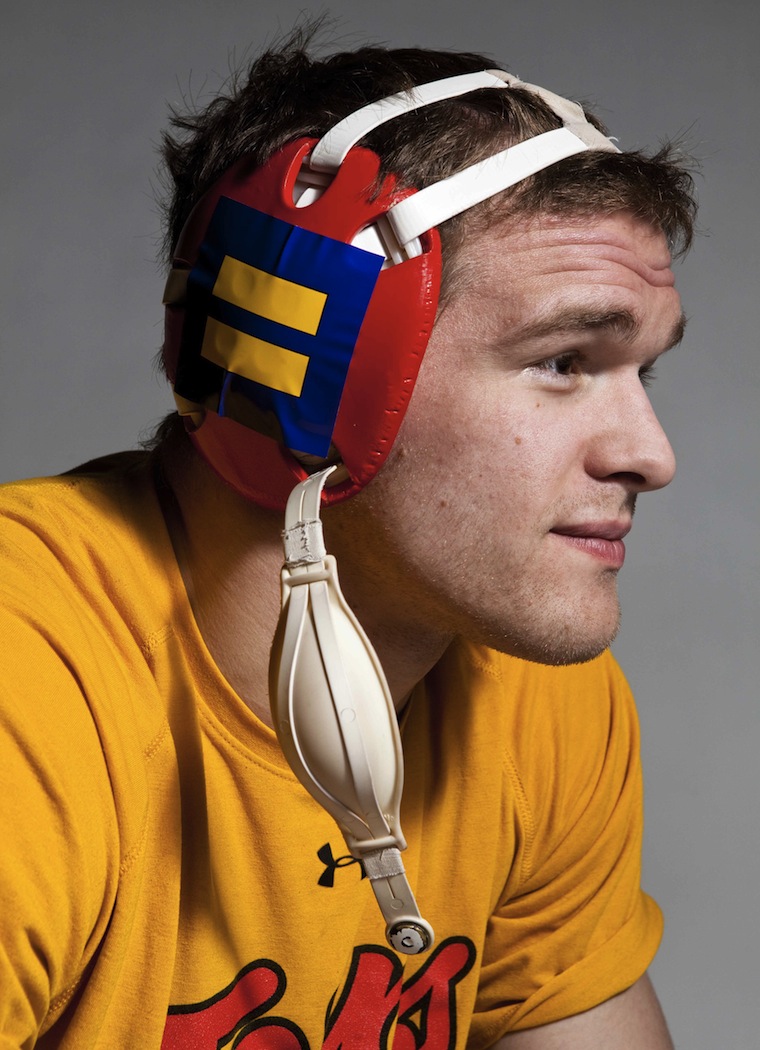
Taylor is the founder of Athlete Ally, an organization that aims to support inclusion and make all sports a safe playing ground for all people – particularly LGBTQ athletes. As the Executive Director, he also acts as the face of the mission, traveling to colleges and spreading his message in person. Eloquent and articulate, Taylor talks of “educating and empowering straight allies†and “creating an inclusive culture.†These are powerful, deep-reaching words, the manifestation of which could mean more for a cultural shift in eradicating homophobia than countless gay pride parades.

It’s one thing for a straight sports star to stand up at the end of his or her career and champion LGBTQ rights – it’s quite another for someone just starting out. That takes quite a bit more bravery, a courageous commitment, and a steely resolve. They are the real champions, they are the true heroes. Hudson Taylor did that on the college circuit – an almost-unthinkable act of bravery and courage that most of us can only imagine mustering.
On the larger celebrity scale, there are few straight men who have taken up the mantle of equality, especially in the sports world. One of the main tenets of being popular is to maintain a mainstream fan-base. We don’t want our sports stars to be all that different from us, except in the way they play the game. Yet every once in a while someone stands up for those of us without a voice and gives their support to our cause. They openly condemn homophobia, and fight for equality across all their public forums.
Coming from a straight athlete, the message can be of greater consequence. When a gay person fights for his or her rights, it’s the expected, obvious, and assumed stance. In a sense, it means less coming from one of us. But in the mouth of someone like Mr. Taylor, it gains something different, something more penetrating and significant. To a gay kid, it’s the voice of reassurance and affirmation from the majority, a message of inclusion, the emboldening feeling of love in realizing that there is, indeed, a place for us – all of us.
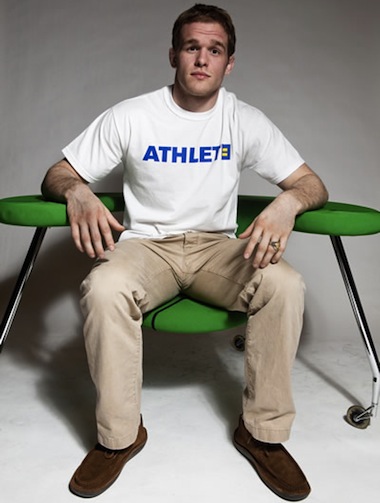
“I’m OK with people thinking I’m gay, because I know I’m doing the right thing,†Taylor says. It’s familiar territory for any straight ally: the assumption that only a gay person can fight for equality. It’s also the mark of someone supremely self-aware that others’ assumptions mean nothing in the face of what is right and just and true. It should come as no surprise that Taylor, along with having the soul of a poet, also has the soul of an artist. Aside from majoring in Performance Art, he dabbles in photography, experiments with imagery, messes around with Photoshop, and occasionally sings on YouTube (a sweet version of ‘Piano Man’.) He also has a magic touch – literally. Magic tricks – sleights of hand, particularly involving cards – are a favorite hobby, and he finds they work brilliantly as ice-breakers. Not that he needs any sort of social lubrication whatsoever: he speaks on a busy circuit, traveling and giving talks across the country, where his engaging presence breaks down centuries of barriers and resistance.
Most of us don’t have as open and accepting a mind and heart as Taylor has demonstrated from a young age. We close ourselves off to difference, we get comfortable in our own little cliques, and we surround ourselves with similar people. I’m guilty of it myself, and I’m always fascinated and impressed by those who look outside of themselves to find ways of connecting to people who aren’t necessarily like them. Taylor has mentioned that his father instilled a sort of moral compass in him, an integrity that could be found in sports, and he took that idea and ran with it.
A few months ago, the Winter Olympics took place in Sochi, Russia, which was instantly condemned for its anti-gay legislation. Taylor was there in the thick of it, spreading his message of acceptance and inclusion in a peaceful yet effective way. His analysis on the importance of diversity among athletes was especially moving. It reminded me of the thrill I’ve always felt when watching the athletes march in the opening ceremonies of the Olympics. There’s something very reaffirming about seeing all the countries of the world come together in the name of athletic competition. According to Taylor, “Athletes become worthy of the greatest respect not when they win at their sport but when they stand up for the dignity of others and represent something bigger than themselves.†It was about respect and honor, and this was a part of sports that was rarely talked about, but proved integral to success both on and off the field.
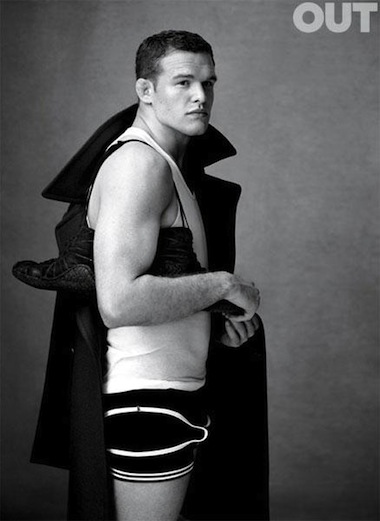
Athletes in this country are revered and idolized, from the top-grossing baseball player to the ten-year-old girl on the local soccer team. We adore our athletes, and look to them, whether it’s right or wrong, to be an example and an inspiration for the rest of us. When I think back to high school, I remember the power and sway the football players had. Many boys looked up to them, many girls wanted to date them, and most of the teachers loved them. They were respected, honored, and, most importantly, heard.Â
Yet I avoided sports like the plague, even the repeated recruiting efforts of the track coach and the tennis coach and the swim coach, and, yes, the wrestling coach. The latter cornered me a few times, most likely looking for someone in the ultra-light-weight class. When I voiced my trepidations (I’m too weak, too small, not-athletic enough) he countered at every excuse, and even went so far as to appeal to my intelligence. Wrestling is one sport that is largely played out in the head, requiring strategy and quick-thinking, he said. The smartest kids made the best wrestlers. It almost worked, but I wasn’t buying it. I ran the risk of getting a beat down every day I wore whatever I wore to school – I didn’t need to guarantee a scheduled one.
I’m not delusional, and I can’t pretend that my sexuality alone kept me from playing; my disinterest in sports was probably less a fear of my homosexuality and more of an interest in just about anything else. Yet looking back, I now wonder if the excessively-macho attitude of the sports world kept me even more at bay. As a small, slight kid, I was scrappy yet coordinated. I could hit a mean softball, was always one of the last ones standing in any dodge-ball game, and climbed up to the top of the gymnasium on those big thick ropes. What I lacked in brawn I made up for in speed, agility and accuracy. I’d rather be lounging by the pool on any given day, but if need be I could smoke most of my classmates in a few laps. In other words, I’ve always been pretty fit, I just never quite fit in. Sports scared me. The locker room talk, the incessant teasing, the macho atmosphere that seemingly left no place for those with the slightest sense of sensitivity – taken together they conspired to instill a sense of fear. Had I heard someone – anyone – say something the least bit encouraging, an offer of the slightest solidarity, inclusion, or support, I might have stepped onto the track team, or picked up a tennis racket, or dove into the pool. Instead, I feigned loftier goals until I convinced myself of them.Â
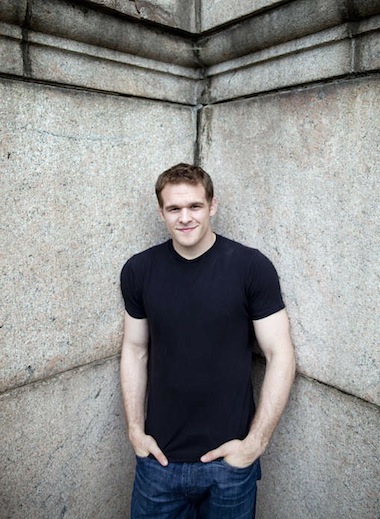
When I listen to Hudson Taylor, I remember the scared boy I used to be, and I think how wonderful it would have been to hear someone say there was room for me on the team. That’s all any of us wants to hear. It’s what we need to hear. I’m grateful that there are people like Hudson in the world today, people who have the courage and the conviction to give a voice to those of us who aren’t quite sure we can use ours.
“When we diminish others, we only diminish ourselves.†~ Hudson Taylor
{Previous Straight Ally Profiles include Scott Herman and Skip Montross.}

May
2014
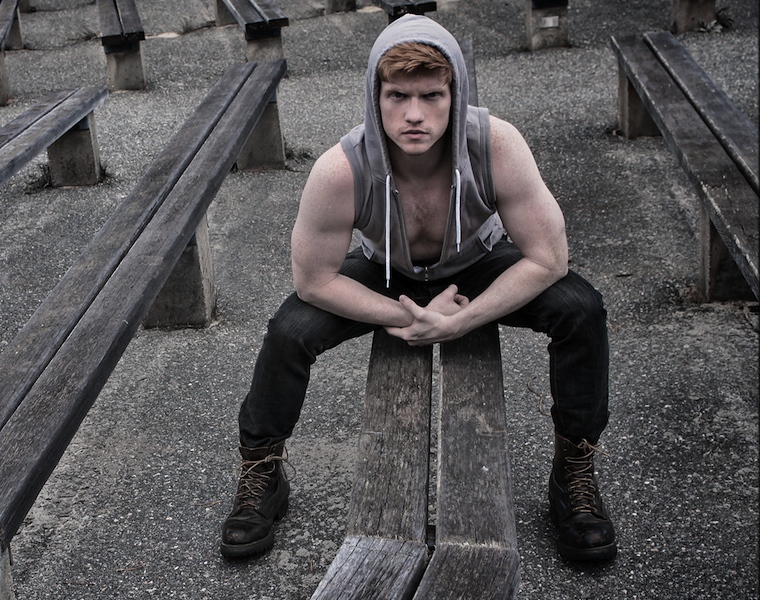
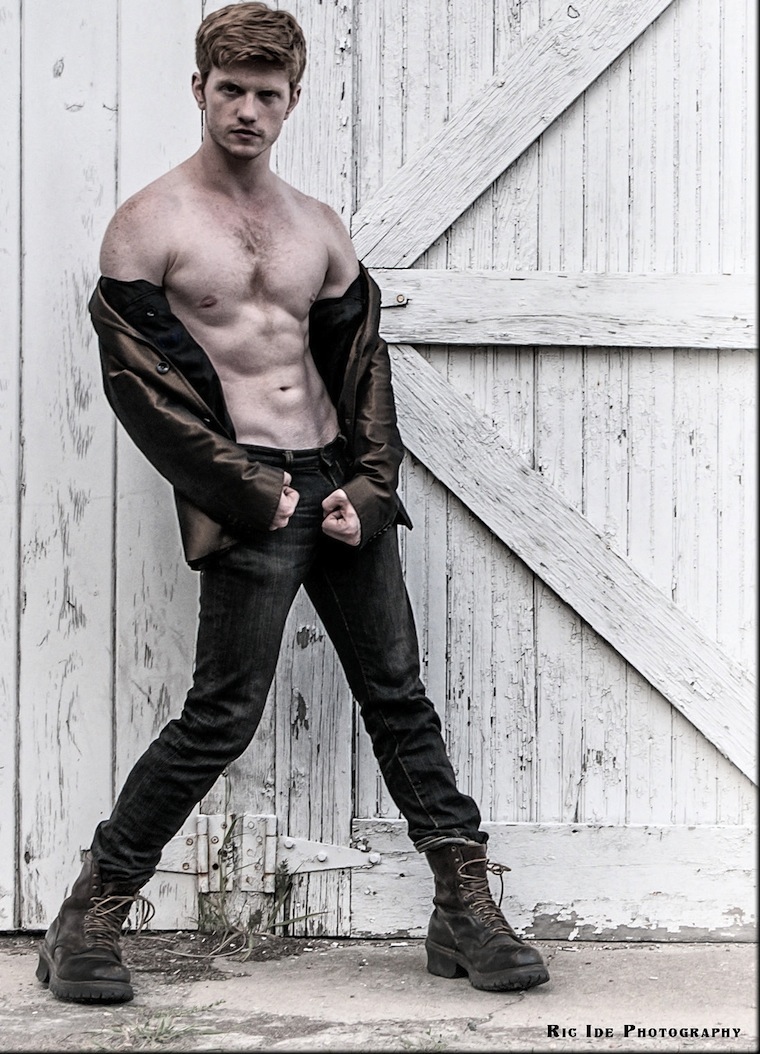
Hunky Reprise: Ricky Schroeder
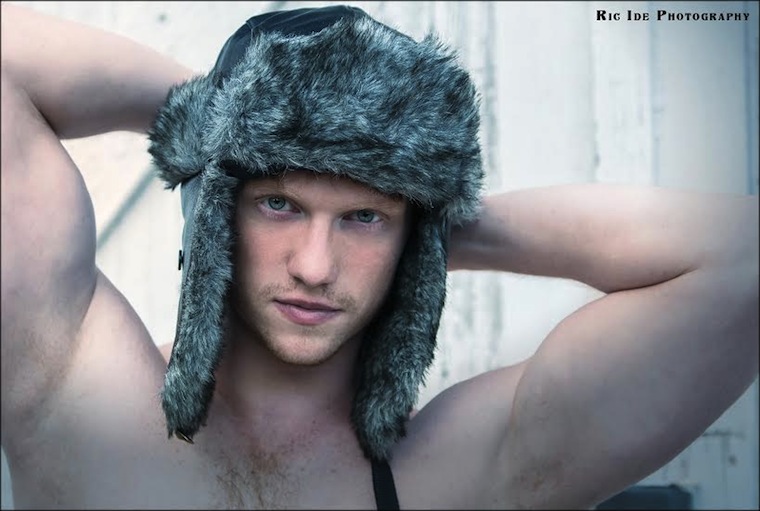
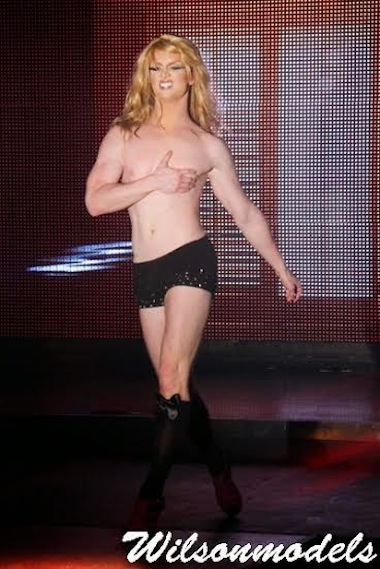
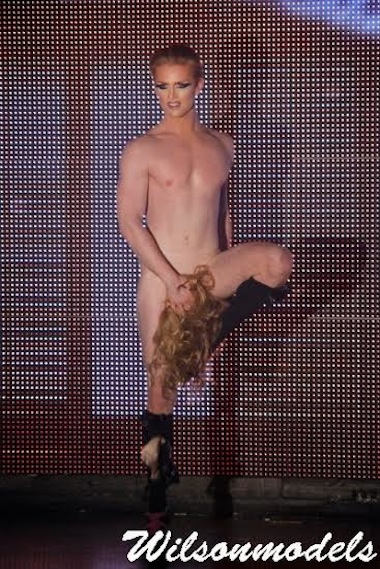
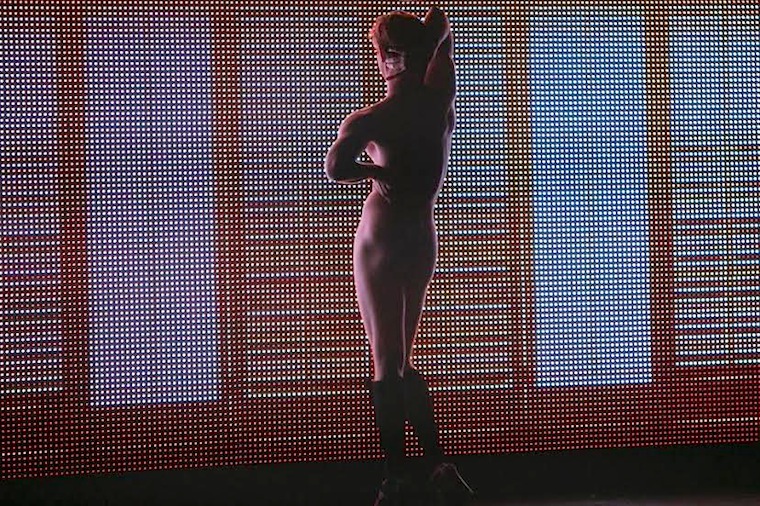
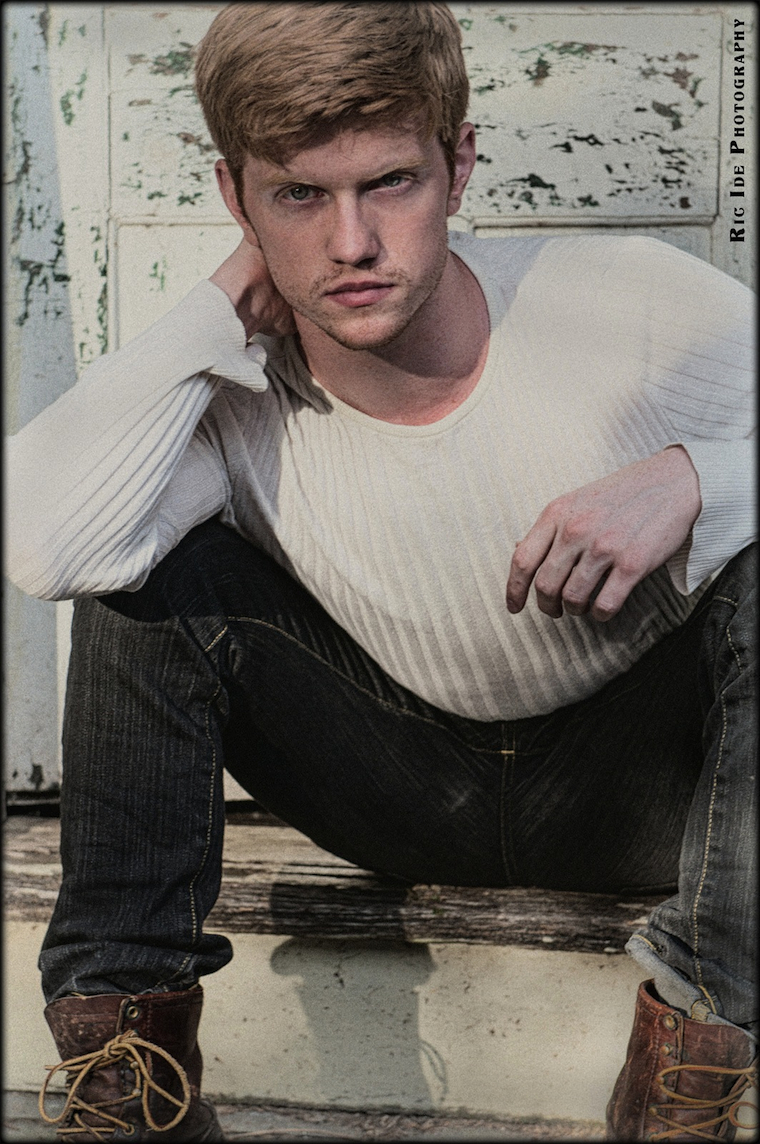
Red-hot gingers have long been a favorite here, and Ricky Schroeder proves no exception. Though he’s already been named a Hunk of the Day, he’s bulked up and toned himself into an even more desirable specimen, as evidenced by his recent Broadway Solo Strips show. As part of this year’s Broadway Bares event, he’ll be doffing more clothing in the near future, and if you are interested in supporting him, check out his donation page here (all benefits go to Broadway Cares/ Equity Fights AIDS). I’m all for a good cause, particularly when it comes cloaked in such prettiness.
Mr. Schroeder can go from scorching drag queen to perfectly-pumped hunk in the flick of wig, as these photos will attest, and it’s a toss-up as to which version is hotter. He’s also on Twitter at @RickyASchroeder for those who want to Tweet his ass. (And you know you do.)
{All photographs graciously provided by Mr. Schroeder.}
And here’s a scintillating tease of his Broadway Strips performance – ooh la la!
May
2014
You Smell Differently At Night
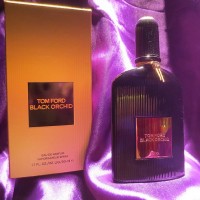
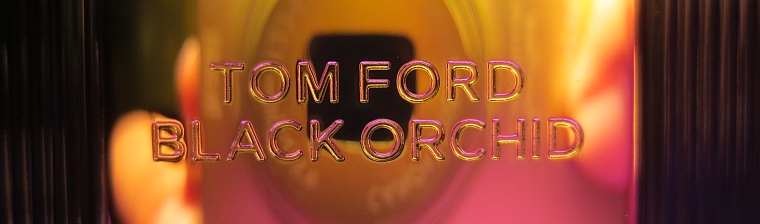
Some fragrances, like their wearers, are too moody for the daylight hours. They require a cloak of darkness to mask their sexy sillage, relying on the blackest of night to tone down their dramatic power. Such is the case with Tom Ford’s ‘Black Orchid.’ This is a dark and deep fragrance that, while originally created as a perfume geared mostly to women, has over the years become more popular with men for its musky heaviness.
Unlike the fragrances of his Private Blend line, ‘Black Orchid’ is available at most larger department stores, as well as Sephora, which makes it much more convenient for the masses. It retains Ford’s trademark edginess, however, and as such its potency may prove too much for casual cologne-wearers. This is strong stuff, not for the weak of constitution or the shy of heart. ‘Black Orchid’ blooms intensely, has a substantial longevity, and is as over-the-top as everything that Tom Ford touches. Of course, I can’t help but love it.
May
2014
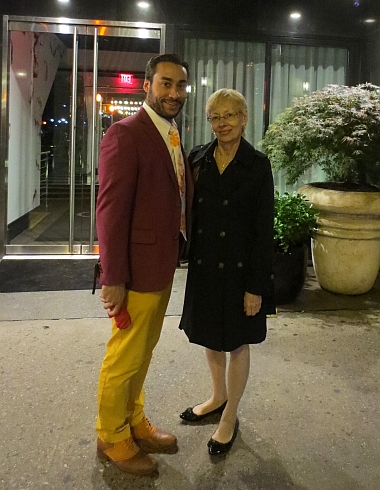
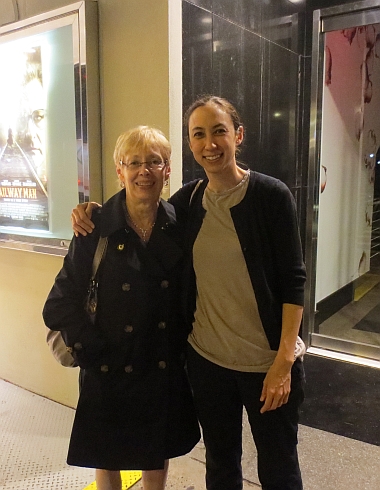
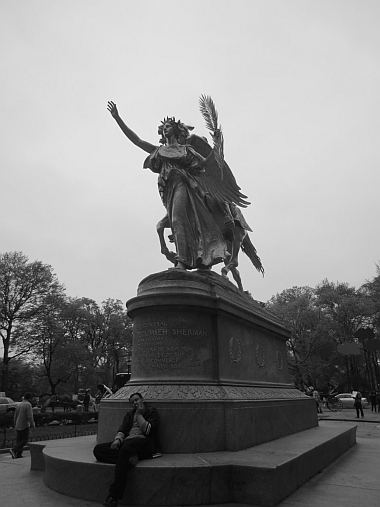
Mother’s Day in Central Park
With a brunch reservation at Nougatine set for Mother’s Day morning, my Mom and I walked through a bit of Central Park on a gorgeously sunny Sunday, watching the joggers and bicyclists wind their way through the southern portion of the green oasis. The ‘casual’ version of the Jean Georges restaurant was only half-filled – and that with tables of children, which made for an interesting Mother’s Day experience. I guess it made sense – one doesn’t get to be a mother without having a kid or five. And for the most part they were all on their best behavior – a few boys even had on ties. But we still made our breakfast a quick one, mostly so as to stop for some last-minute shopping on the way back to the hotel.
As fate would have it, Mom likes Uniqlo more than I do, which is saying something. (I’ll admit, it took me a while to come around to the Gap-like simplicity of the offerings, but the affiliation with artists and MoMA made me a fan at last.) Somehow, my mother ended up buying more than I did, another odd but fitting occurrence. I am very much my mother’s son.
(When I was little, she would lay out three outfits for me to choose the next day. I learned early on how to match clothing, and it’s a skill that has served me well over the years.)
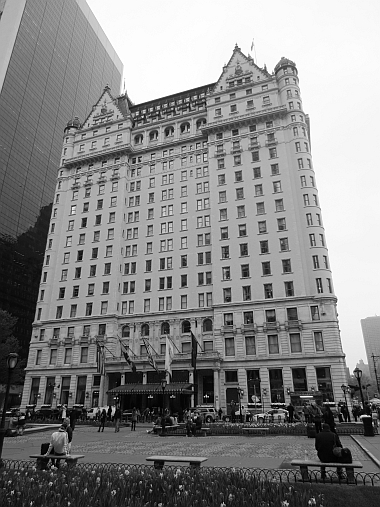
The Mother’s Day morning brightened and warmed, as we meandered past the Plaza and down Fifth Avenue. Our mother-and-son weekend in New York was coming to a sun-drenched close. I didn’t want it to end.
I’m already looking forward to next year’s Broadway trip. Thanks, Mom.
May
2014
The Greatest Misfit of All: ‘Hedwig & the Angry Inch’
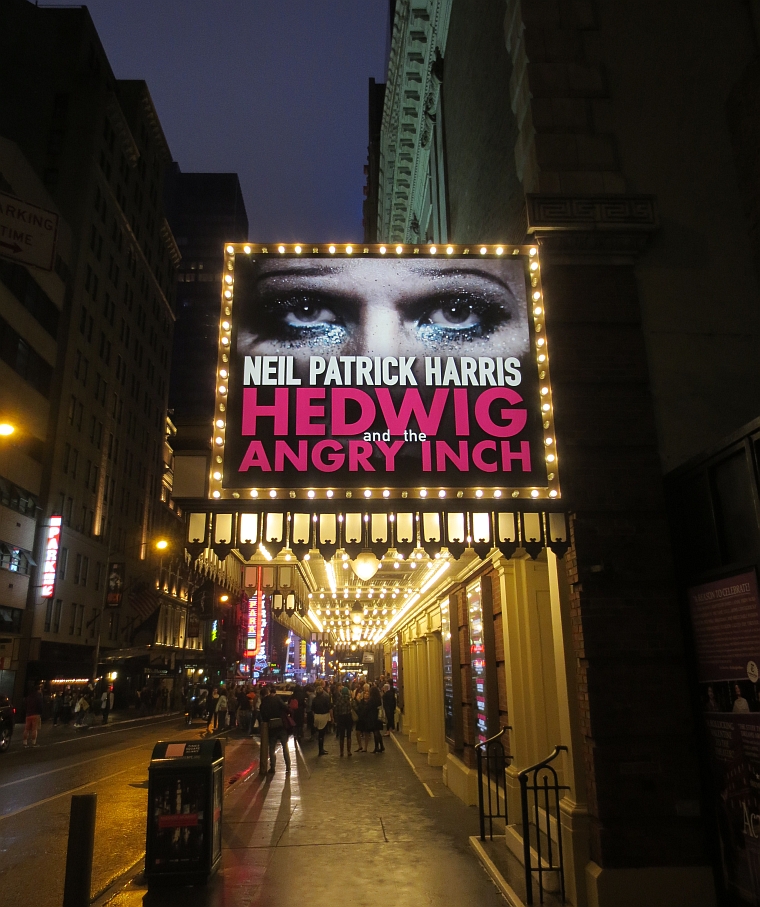
The hottest ticket of the season belongs to the titular victim of a botched sex operation in ‘Hedwig and the Angry Inch.’ If you’re lucky enough to get seated in the first few rows you may get a kiss, a motorboat, a car-wash, or a drop of glittery sweat. I got something far more precious. A song or two into the show, Neil Patrick Harris as Hedwig looked me straight in the eye, raised his middle finger, and mouthed the words, ‘Fuck you.’ It was glorious. It was thrilling. It was the blessing of Hedwig.
Gorgeous and grotesque, hilarious and morose, male and female, good and bad ~ Hedwig embodies the best and worst within all of us. Harris gives his blood, sweat, and tears to this committed performance. As the “internationally ignored” songstress of the show, he is making the star-turn of the Broadway year, and every accolade you’ve heard turns out to be winningly accurate. He doesn’t leave the stage once for the intermission-free marathon of a show, even as he does countless costume changes (most of Hedwig’s sartorial journey is one show-long strip-tease, with a couple of hair-raising exceptions – and for one of those quick-changes, his head still manages to remain on-stage.) Defying conventional Broadway rules, this is more of a rock-show than a book-musical, but the loose narrative is given bulk and weight by the themes of identity (sexual and otherwise,) loss, sacrifice, family, love, cruelty, redemption, and acceptance.
Hedwig represents and champions the misfits and losers, not in any heavy-handed anti-bullying message, but rather through sheer exuberance and example – of living as she is and not making any apologies for it. Hedwig has been dealt a rather cruel number of blows (ba-dum-bum) but her resilience, her perseverance, and, yes, her bitterness, turn her into a champion. There is rage burning here, mostly misdirected toward the put-upon Yitzhak, who gives challenge to Hedwig’s attention-getting theatrics with his own sheer talent and propensity for toying with wigs. It’s a risky move – showing off in the proximity to such a show-off – and it takes Hedwig the majority of the show to offer someone else the spotlight.
Harris is so mesmerizing and entertaining as Hedwig, projecting such raw star power and finesse, it almost works against the show in that it’s unbelievable how Hedwig did not become the star that her nemesis Tommy Gnosis did, until you think about her story, her appearance, and the ways we resist all that is foreign and different. That becomes the sad apex of the show, and in the final third of the evening, as she comes to terms with the unfair hand she was dealt, in a moment of redemption and forgiveness, she overcomes her outsize, over-compensated ego, and gives her “husband” Yitzhak the opportunity to do what she never could.
It is an act of supreme generosity and it frees both Hedwig and Yitzhak in one fell, and moving, swoop. As she rises on a pedestal, recalling the boy she was, and the person she longed to be, she also comes to a sort of peace with the Hedwig within. Like most of us, that defies a rigid idea of gender or a single set rule of what it means to be human. We are like the multi-faceted crystals hanging from her first outfit, throwing off different colors depending on the light and shadows of life, moving and fluid, yet sharp and dangerous.
Not many of us can directly relate to the story of a sex change operation gone so horribly wrong, nor of the brush with fame, or such singular musical talent, but somehow Hedwig manages to touch a heart-string of humanity, ring a gorgeously raw note from it, and leave us all just a little better for having heard it plucked.
May
2014
Neil Patrick Harris: Almost Nude
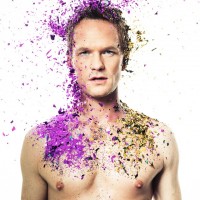
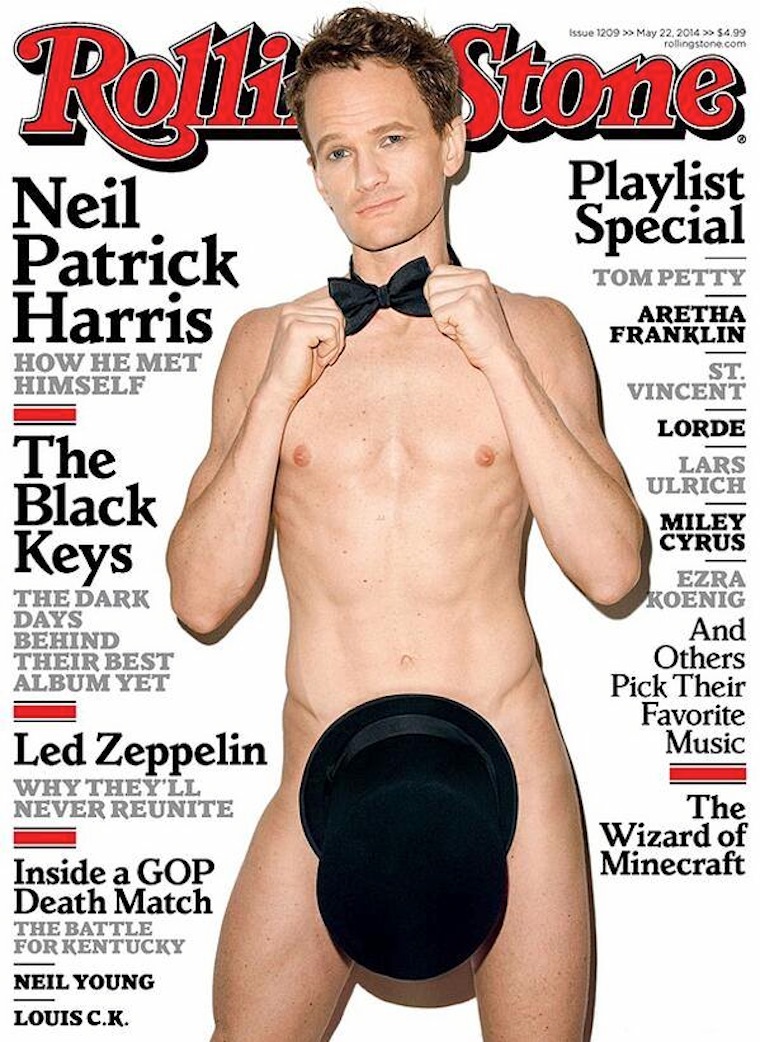
This is a tide-you-over post until my review of ‘Hedwig and the Angry Inch‘ gets posted in a quick tick-tock during this string of Broadway posts. For now, thank the blessed folks at Rolling Stone for this nifty and racy cover shot of Neil Patrick Harris naked but for a strategically placed (and questionably hung) top hat. Mr. Harris has already been christened a Hunk of the Day here, but he’s in a different sort of shape for his role as Hedwig. More on that later… for now, enjoy the near-nudity, and the official cover.
May
2014
In the Midst of New York, A Recap
We interrupt this string of New York City posts with a Monday morning recap, because you cannot escape the past. I realize that a little more each day, such as in the moment I looked behind me to the long line that stretched out in Home Depot. I had just put down a pair of sweet potato vine baskets since the guy ahead of me was taking a ridiculous amount of time to figure out why the item he was trying to buy was marked $4.99 and was ringing up at… $4.99. Not rocket science, but I kept my mouth shut and looked at the growing line, into which a familiar face had stepped. It happens a lot – and I usually smile and nod and ask ‘How are you?’ even if I have no clue who the person is. It’s easier that way. On this day, the woman caught me looking, and recognized me as well. I knew it before she had to even mouth the words, ‘Jury duty.‘ A fellow juror, from the trial that will always be a part of my past, and a part of me. I smiled, asked how she was doing, then paid for my things and left without looking back or engaging further. It was nothing against her – she happened to be one of the nicest people on the jury – I just wanted to keep that in the past.
As for the more recent past, it was a week that will be most fondly remembered for this year’s Broadway excursion with Mom. A couple of shows (‘Mothers & Sons‘ and ‘The Bridges of Madison County‘ have already been reviewed – and there’s one big one to come (‘Hedwig & the Angry Inch’) so for now enjoy the walk through Central Park (another one is on the way) and a dinner with Suzie.
In the name of a good cause, I almost had to get full-frontally naked – well, not almost, but closer than I was comfortable seeing… As it was, I fell far short of my goal, so the family jewels will not be going on display any time soon.
Madonna got more naked than I did.
The formal event of the Pride season will take place on June 13, 2014 ~ ‘A Breakfast at Tiffany’s Formal Affaire‘ ~ the night before the Pride Parade in Albany.
A rose of Lent, a little late, but just as beautiful.
Finally, and most importantly, a tribute to a friend from the Cape, whose life was taken far too soon.
May
2014
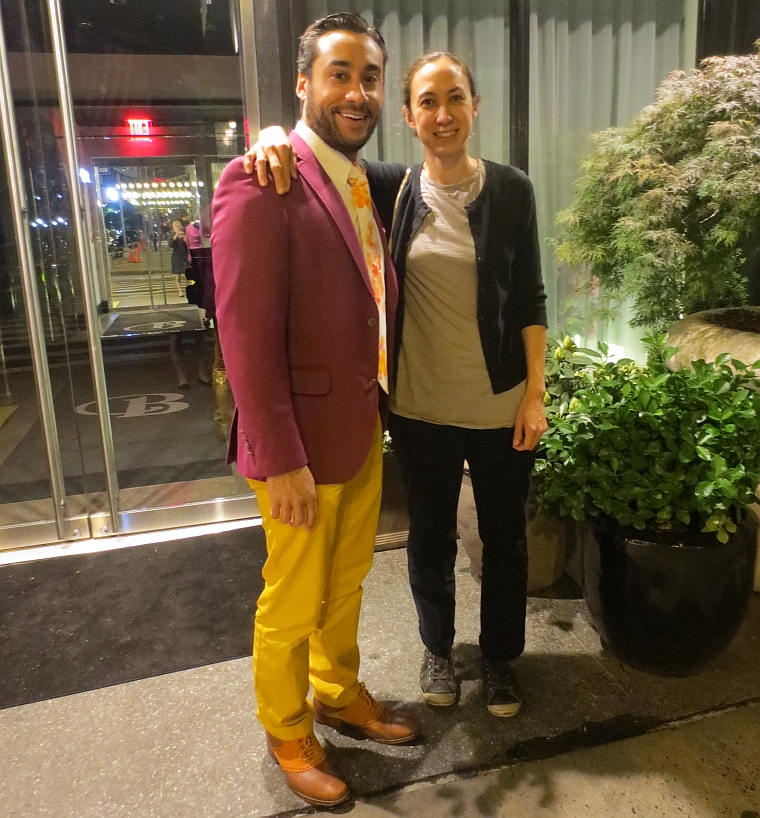
Dinner with Mom, Suzie, & Adrian Grenier
One of the most fun parts of the Broadway trips with Mom is our dinner with Suzie, and since Suzie is soon to be departing Brooklyn, she may not be in the city next time we do this, which made this one extra special. We scrolled through Zagat to find the venue ~ Beautique ~ and it turned out to be a hot spot. Within minutes of sitting down in a curved corner booth, I watched Adrian Grenier saunter past, sans entourage, to a party in a room just off the main dining area. He stood in the doorway for much of the dinner, which was less distracting than might be expected. (I think Suzie found him cuter than I did.)
Dinner was good, even if they did forget the side dish of fiddlehead ferns we ordered (which then rather tragically turned out to be slightly under-done). When fiddle-heads are on the menu, I say order them – their season is so limited. Soon, too soon, it was time for us to depart, in a haste to make our last show – and it was a doozy so we did not want to be late. Hedwig waits for no man…
May
2014
Unfinished Bridges
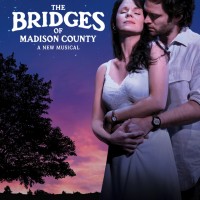
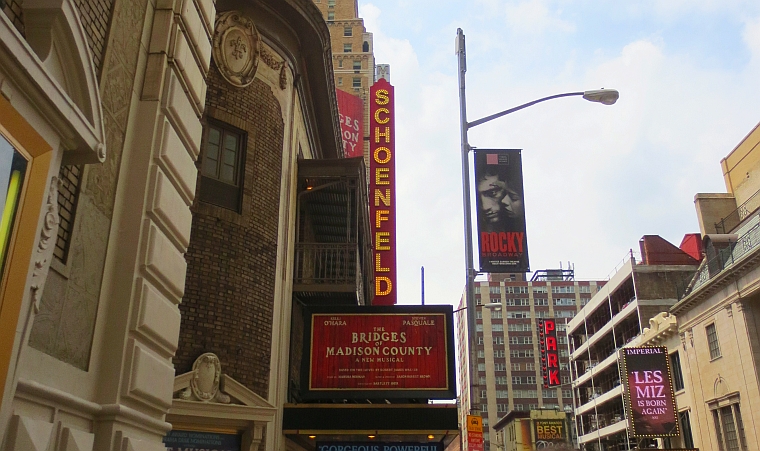
Why is it that certain undeserving shows seem to run now and forever, while more thoughtful and beautiful works close before they can be fully appreciated? Such was the question that ran through my mind as I took in a performance of ‘The Bridges of Madison County’ the weekend before it was set to close. As written by the brilliant Jason Robert Brown (‘Parade’, ‘Songs for a New World’) the raved-about score does indeed prove ‘gorgeously rapturous,’ and the lead performances are nothing short of magnificent. This is a show that must be heard in its entirety to fully capture the emotional arc of its characters. It builds from its slightly mournful opening notes, into a sweeping, lush masterpiece, with touches of bouncing country bits and soaring operatic flourishes – a strange juxtaposition of Iowa and Italy that somehow works.
While this rendition of the popular but oft-maligned book is almost immaculately faithful to its source (at odds with its subject matter), a musical version of the tale sounded, on paper at least, less than thrilling. Yet it is precisely the power of the music that finally makes this story about more than a cheating housewife. ‘Bridges’ tells the narrative of Francesca Johnson, a married housewife, and Robert Kincaid, a photographer traveling through her town, and how they fall in love and deal with the aftermath of that.
It is a tough tale to sell, and only the most accomplished actress and singer could make Francesca into a heroine for whom the audience roots. Kelli O’Hara is more than up to the task, and her Francesca transforms from a woman whose main duty in life has been sacrifice, to a woman giving gratefully, if reluctantly, over to her desires. As she loosens her hair and unties her apron, Francesca comes alive in discovering her love for Robert, even as she acknowledges the pull of her husband and family.
The success of this production relies upon both her and the audience being torn. It’s not enough for her husband to be the proverbial bad-guy, and he isn’t. A bit bland perhaps, harried to the point of anger at times, but it’s still not enough to fully support Francesca’s choosing the sexy stranger ~ played with equally winning spirit (in equally fine voice) by Steven Pasquale. As Robert, Mr. Pasquale begins a bit in the dark, emerging from the back of the theater, lost literally and perhaps figuratively, before finding himself, and a focus, in Francesca. Even so, the story requires something more to be truly moving, something to convey a love that is more than excitement or kindness or sensitivity, and that added element – the one that solves the initially-insurmountable yet undeniable fact of adultery – comes in the unlikely form it has taken: a musical.
Â
I can’t tell you I know what the answer will be – it’s impossible, but this thing, this is bigger than what we can see.
This is destiny. We are tied, we are locked, we are bound.
This will not be reversed or unwound.
Whatever fate the stars are weaving, we’re not breaking, I’m not leaving…
It’s the music that supplies the solution to the moral dilemma, and the songs Francesca shares with Robert (‘One Second and A Million Miles’) are what make ‘Bridges’ such a compelling, and devastating, production. It may not entirely eradicate the blame, but it makes it gorgeously relatable, inevitable in fact.
Francesca’s actions aren’t simply an act of betrayal, they are a protection of her heart, a curious way of protecting her husband and her family, with whom she could only stay after having glimpsed another life. The love she shared with Robert is carried closer to her heart, burning quietly as her life goes on, in an exquisitely staged montage of temporal movement. The moral dilemma over whether it was right or wrong is not wholly solved with the “love is never wrong” argument, but finds some minor resolution and come-uppance in the sad musing of “what-might-have-been.”
While the show is not perfect (moments ripe for greater emotional impact – Francesca and Robert’s first dance, for example – are initially given a comic, country angle when a more earnest delivery of the waltz that accompanied it may have made for greater impact), such trifles are minor compared to the emotional journey of the show, a journey matched and exalted by its music – the waves of which begin lapping softly and gently, growing into a pounding and gloriously overwhelming emotional climax that left even this hardened viewer, who was relatively unimpressed with the book, moved and affected.
The mark of artistic magic is in making the viewer empathize with something. ‘Bridges’ is the stuff of dreams almost-realized, of sacrifice and love, of safety and obligation. It’s a study of the difficult choices we must make, how we deal with those choices, how we come to terms with our decisions, and whether we will always wonder “what if?” This is a beautiful show, and though its challenging themes and somewhat-unhappily-ever-after ending does not send the audience out beaming or tapping toes, it leaves a deeper stamp upon their hearts.
May
2014
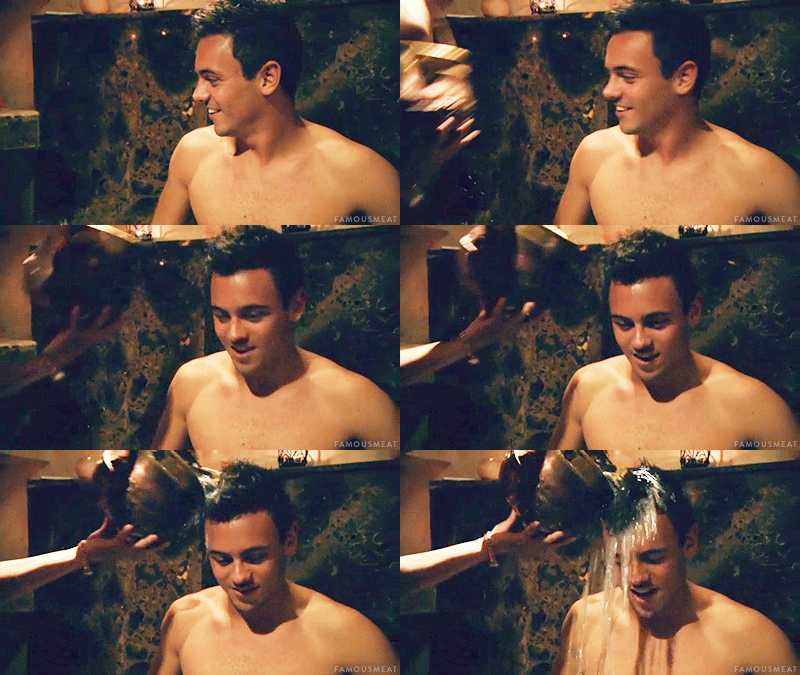
Tom Daley, Bathing & Bulging
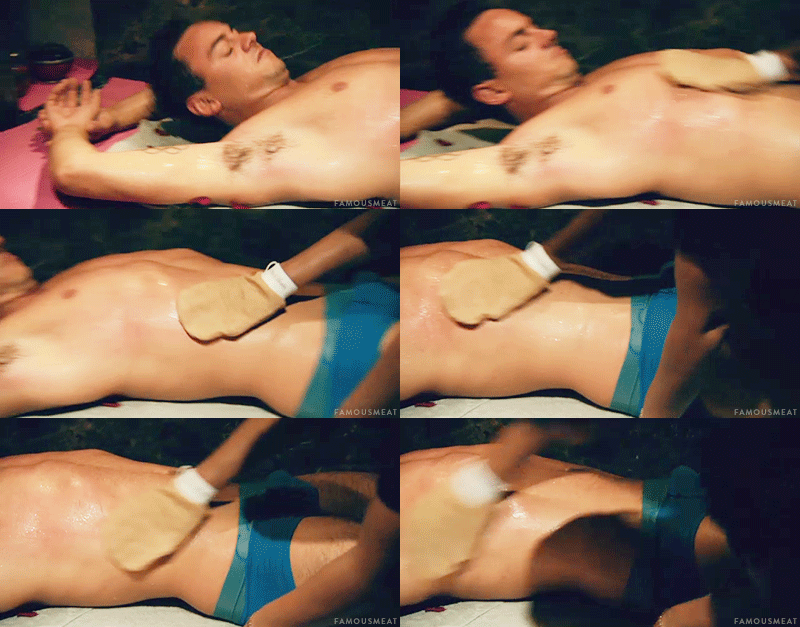
We will resume the NYC posts tomorrow, I promise, but when a spattering of Tom Daley GIFs appears – and they’re showing him getting a Moroccan sponge bath in his underwear, well, you put things on hold and make your core audience happy in the only way you know how. In this case, it’s not just Tom Daley in his underwear, it’s Tom Daley in motion. With today’s Madonna post, things seem to be getting back on track here. All we need is something new from David Beckham and Ben Cohen, and it will feel like all is right with the world. Just in time for summer…
May
2014
Madonna, Looking Fierce and Naked
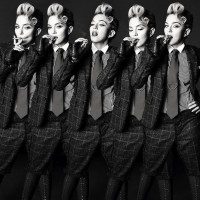
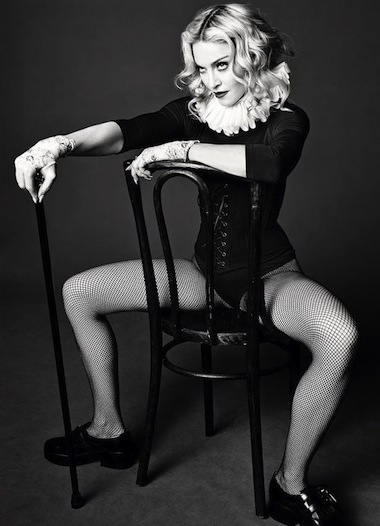
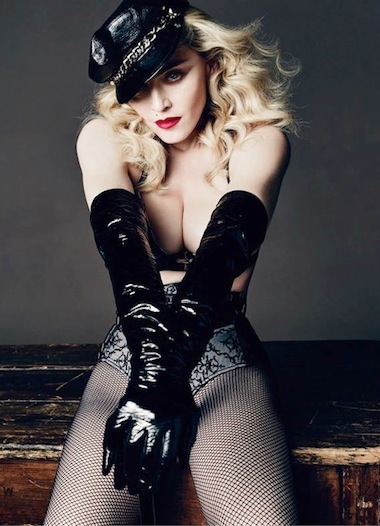
We interrupt the New York tales for this emergency Madonna post – because she looks so good. Shot by Tom Munro, these scintillating photos from the current issue of L’Uomo Vogue feature Madonna at her finest, reminiscent of her 1990/1991 apex. The peek of nipple in the final shot is the raciest this site has gotten in a while…
May
2014
‘Mothers & Sons’ as Seen by a Mother and Son
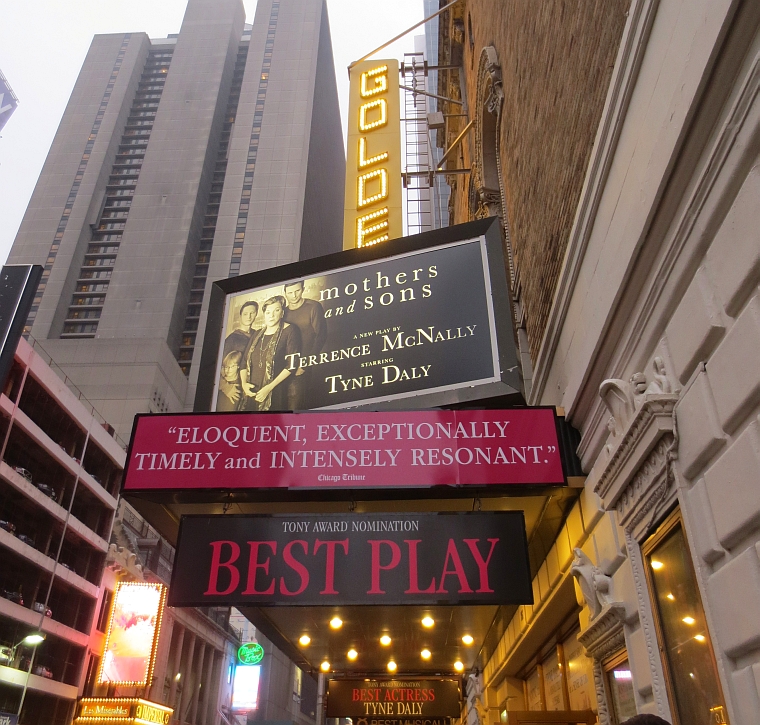
For our first show of the season, Mom and I saw, rather fittingly, ‘Mothers and Sons’ – Terrence McNally’s Tony-nominated play starring Tyne Daly. Mr. McNally has written some powerful plays over the years (notably ‘Love! Valour! Compassion!’ and ‘Master Class’ – which we had the fortune to see on Broadway during their original runs) and this one is no exception. If it doesn’t quite match the polish of those two standards, it may because this one is a little more raw, a little more urgent – something befitting the times recalled here. It helps that the play features a trio of fine performers, led by the amazing Ms. Daly, who gives a brittle, controlled, seething-just-beneath-the-surface performance as a monstrous woman (Katharine Gerard) still mourning the loss of her only child to AIDS. The early days of that plague are recalled with a distant but humane detachment. With each passing year, it becomes easier and easier to forget, and ‘Mothers and Sons’ may be McNally’s best efforts at seeing that that never happens.
Ms. Daly gives a subtle yet stunning turn as a lonely yet terrifying woman, filled with sly moments of black humor, hidden pockets of pathos, and one perfectly-rendered tear that, on this particular evening, happened to fall literally two seconds before the fall of the final curtain. That sort of precision is the work of a studied actress at the height of her power. Daly never lets her guarded heart show until the very end. In a few heaved sobs, she finds release, but it’s not quite clear if she’s found redemption. To Daly’s credit, you want to love some part of her, in spite of all her awfulness, and you almost do.
Anger plays a large part in this play, seen in the anger of her black fur coat, in her blood red dress, in her rigid black handbag that she carries with her about the apartment. Such fussiness is at odds with the relaxed, casual attire and attitude of her son’s former lover, Cal Porter, who picked up the pieces of his tragic past eight years after the death of his partner. As Cal, Frederick Weller has the emotionally-open roller coaster ride of the evening, veering from a hopeful earnest belief in people – showing a woman who has only hurt him the city of New York and drawing the audience into his comfortable life – before careening back into the dim days in which he lost his partner, and ending up somewhere ambivalently at peace with all that has happened.
Bobby Steggert as Will Ogden offers the idealistic and innocent view of the current generation, while their young son Bud (a precocious Grayson Taylor) offers a peek at the open-minded unaffected future. McNally offers many things to many people – the struggles of gay men and the AIDS crisis of the 80’s, as well as questions of age and gender roles, and new families being raised by two dads. In discussing Katherine’s past and the way she chooses to portray herself as being from Rye instead of Port Chester, New York, larger questions are raised and examined, particularly regarding secrets and the ways we pretend – or the ways we feel we have to pretend. It’s an ambitious work, that almost proves too much, threatening to dissolve beneath such broad historical strokes, but in the end it retains its heartfelt core, anchored by a spot-on group of actors who give these full-bodied characters conflicted, exasperated, heart-rendered life.
(After watching such a terrible mother mourn her son and the way she treated him throughout his short life, I was left feeling incredibly grateful for the woman who sat beside me in the theater, who loved me no matter what, and who did her best as my mother. We walked back through a misty night, to rest up for the next day’s surprise…)
May
2014