Category Archives: Food

A Banging Brunch at Boston Chops

Boston Chops is one of my favorite restaurants in that fine city, but until a few weekends ago, I’d never tried them for brunch. Having passed it on Sunday mornings many times, I always filed it away as something I’d get around to doing, but never did. I finally broke such an egregious habit and came away with a new favorite brunch spot.

The fun and funky music in the background (everything from current radio fare to 90’s classics) had a few servers discreetly shaking their groove thangs, and whenever I see employees having fun at their jobs it makes the dining experience ten times better. The seriously competent and seriously fun staff make this brunch experience a memorably enjoyable one, from the greeting host to the team of servers who never let the glasses of water dip below half-full. But who needs water with all the Bloody Mary selections on the menu? The biggest dilemma of the morning was trying to whittle down the choices to one, but I decided on the Pickled Mary – with pickled asparagus, green beans, frog balls and cornichons – with a promise to myself to return to try the others another day. (The Prime Raw Bloody and its oyster and jumbo cocktail shrimp sounded especially tantalizing.)

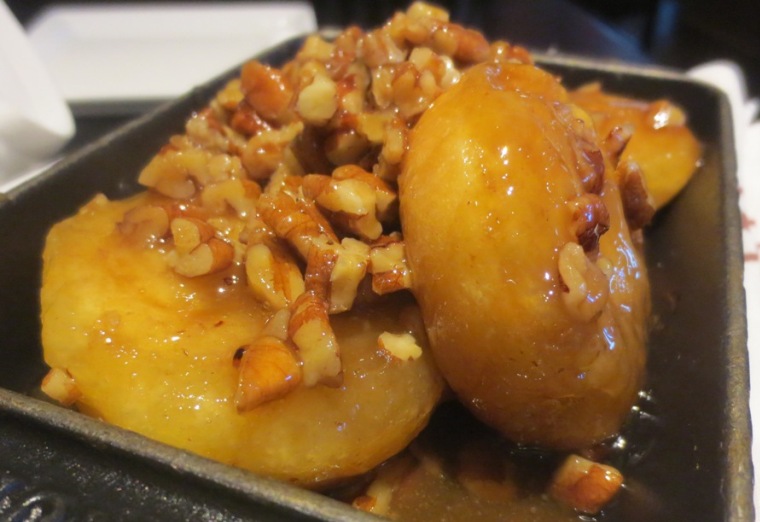
A sweet surprise arrived in the form of this insanely good dish of sweet rolls, which would be reason alone to come back every Sunday, and brave any sort of snowstorm to do so. These are, I imagine, what crack must be life – addictive, mind-blowing, and impossible to refuse. We are them in furiously quick and rude fashion and didn’t even care what we looked like. That’s what brunch is about.

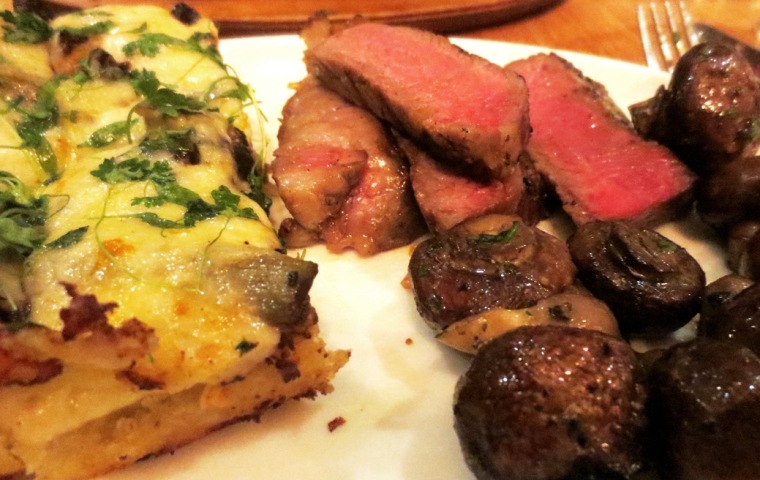
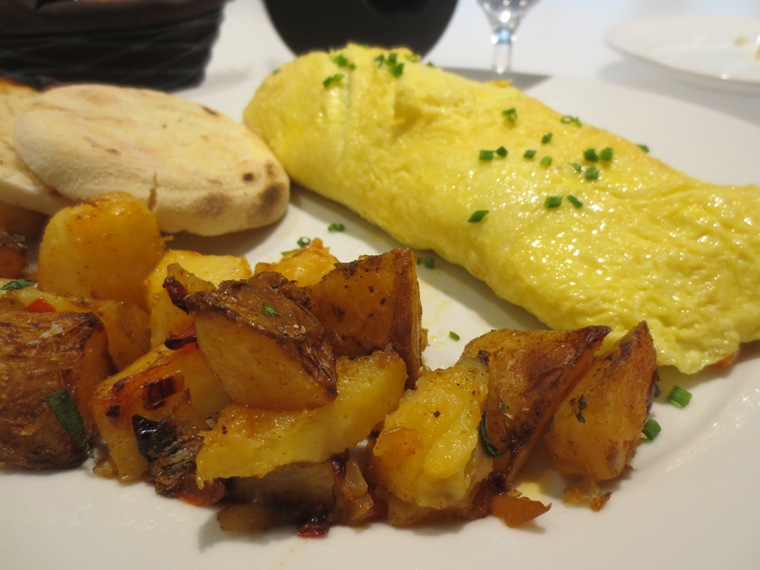
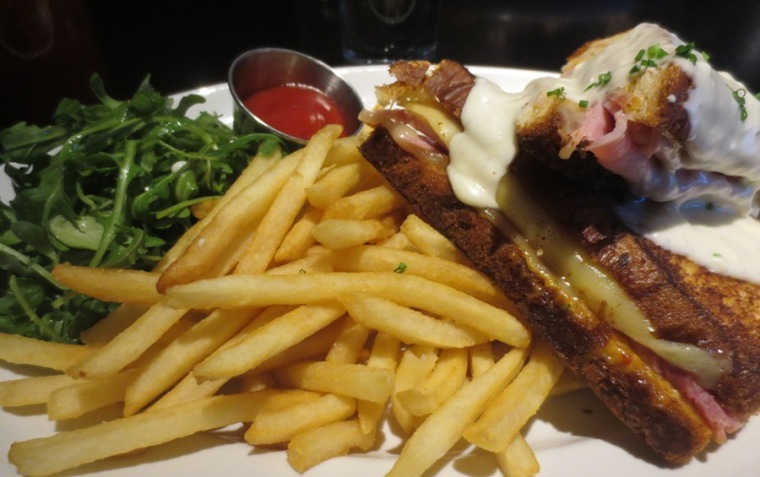
The Croque Monsieur, served with a thrillingly ample portion of their famous frites and a small arugula salad, was heaven-sent for a less-than-sunny Sunday, taking the chill off with grilled perfection and ridiculously rich goodness. Next time I’ll try their Kale Omelet if I’m feeling extra good, the Eggs Benedict if I’m feeling like myself, or the Fried Chicken if I’m feeling especially sinful.

Continue reading ...

A Virgin Risotto Voyage

I’ve watched the preparation of risotto a couple of times, most recently by Lidia Bastianich, and everyone has always made it look very easy, provided you follow a few simple rules. I’m proud to say that for my virgin attempt at this Italian classic, I did pretty well. The constant stirring is a necessity, and yes, your arm will get tired. (Mine certainly did.) And when you get toward the end, it’s less about following the exact recipe and more about how much liquid you need to add to get it to the right consistency, which you can only gauge by repeated tastings.

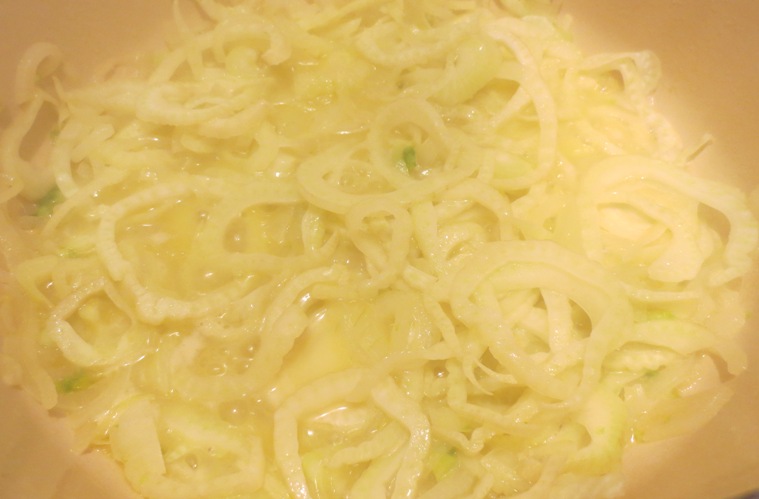
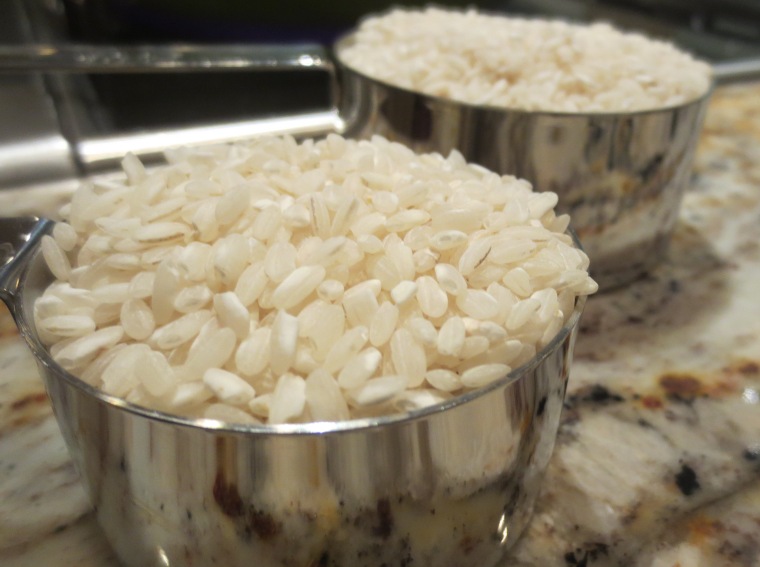
For this initial try, I kept things relatively simple, utilizing an onion and a couple of fennel bulbs as the base. The best thing about risotto is its ability to take on any and all flavors and accents, but I wanted to taste the Arborio rice and see how things worked before getting all shellfish fancy and rainbow bright.

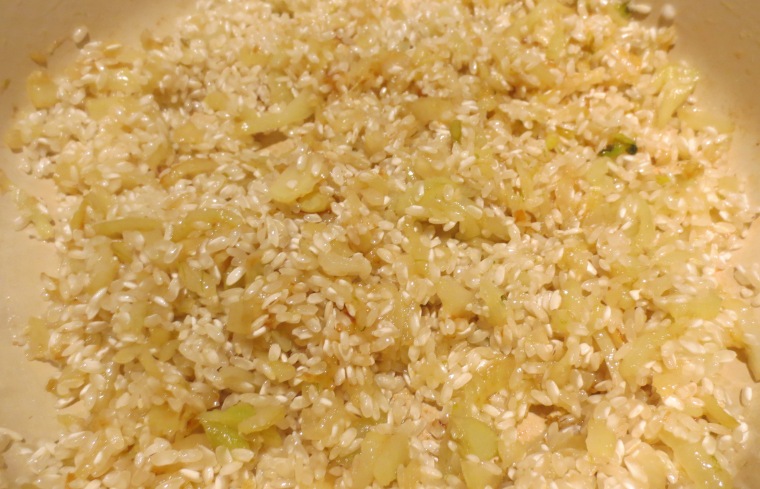
The slow and laborious ladle-by-ladle process of cooking to keep the rice intact works wonders, but it is a task. Repetitive and demanding, and without any corners to cut, it eventually becomes a peaceful endeavor once you give in to the rhythm, listen for the slight crackling, and keep things in motion. It’s also best done on a cold fall or winter’s night – you’re going to sweat.

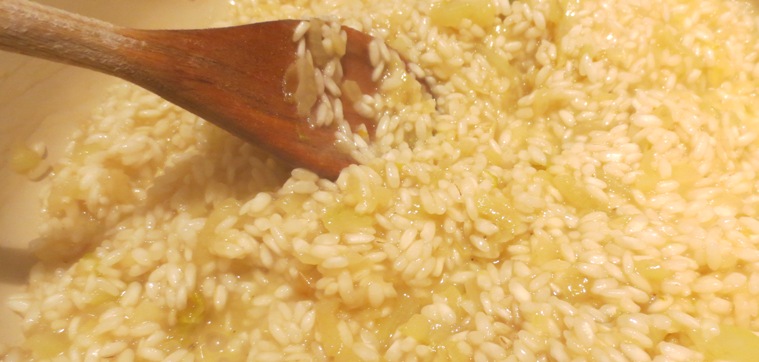
Slowly but surely, the rice gains its classic soft-focus consistency – and I do mean slowly. This is one thing that cannot be rushed.

It’s a good lesson during these soon-to-be-hectic holiday times. We should all slow down a bit, savor the minutes, and pause for reflection. Making risotto is an opportunity for that, and like many instances of cooking, I find it peace-inducing and cathartic.

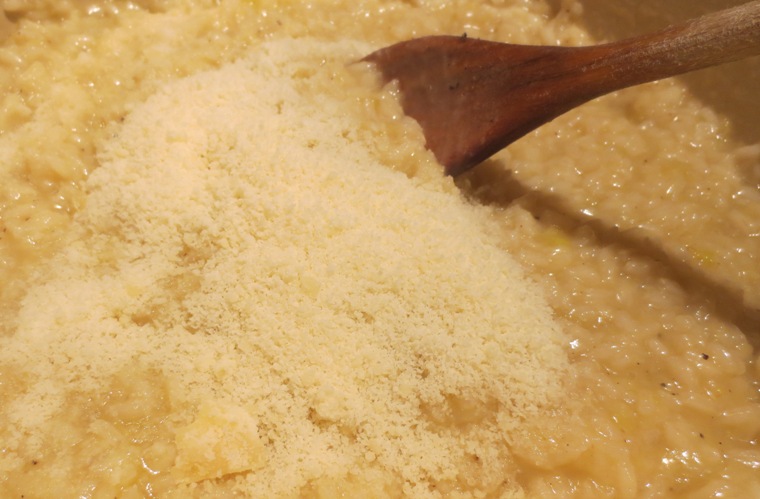
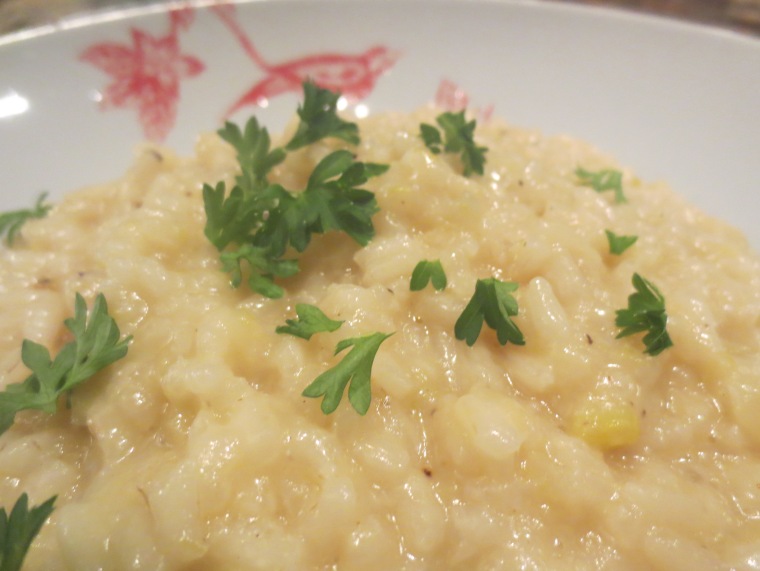
The end result was heavenly – rich and creamy and full-bodied, aided by the last-step addition of freshly-grated Parmigiano Reggiano cheese and a few more dollops of butter. As you approach the last minutes of cooking, be sure to taste for consistency and flavor, and hold off on the addition of salt until after you’ve added the cheese. (Mine was a tad too salty by the end of the ordeal.) All in all, however, I was pleased with the final product. I’ll try it again as soon as my arm recovers from all the stirring.

Continue reading ...

A Present-Day Dinner Brings Back the Past

When I was a little boy, one of the first restaurants to which my parents ever took me was a place called Pepe’s in Amsterdam, New York. They knew the owner, Sam Pepe, and on certain Saturday or Sunday nights we would go out for a dinner together. Pepe’s was a no-frills, old-school Italian restaurant that basically operated out of what looked like a converted house. There was a bar with tall seats, and in the back a small, dimly-lit dining area. A tiny salad-bar held one of the favorite foods of my childhood: a yet-to-be-duplicated mixture of garbanzo beans in an onion marinade. It was wetter and more flavorful than any other garbanzo bean medley I’ve encountered at every other salad bar I’ve visited over the years. That was the best part of every meal there for me, and I’d have been happy if that was all there was to eat.

Of course there were full entrees as well, but as a kid we mostly just had spaghetti (my Dad had his with olive oil and anchovies and a sprinkling of parsley). Mr. Pepe came out every time we were there, mingling and talking with the guests at every table, including us children, which, when you’re a kid, is a pretty cool thing. Now that I think about it, it’s pretty damn cool as an adult. Such personal service is in short supply these days.

I was reminded of those dinners when I visited my parents the other weekend, and they took me out to L’Ultimo on the Southside. In a town like Amsterdam, it sometimes seems that everyone knows everyone else, so when we walked in my parents immediately recognized the table next to us and chatted a bit, and then our server mentioned that she knew my brother, and soon enough it was like I never left my hometown. L’Ultimo is a far cry from Pepe’s (which is a good thing considering that my tastes have evolved from the days when garbanzos were enough to satisfy) but the goodness and familiarity of a family dinner out felt the same. Breaking bread with loved ones, in the town in which you grew up, is a warm reassurance in a cold world.

Continue reading ...

A Very Savory Soup

My newly-kindled love affair with soup is in full-effect with this entry. I’ve declared my obsession with Lidia Bastianich from the Create Public Television station (don’t get me started on one man’s unhealthy fixation on JoAnn Weir) and one of her Italian cookbooks features a section on soups that has transfigured the entire notion of that liquid love.

Most of my former issues with soup revolved around the idea of it being rather insubstantial starter fluid, light of heft and lacking in anything fully filling. An ill-fated cabbage soup – made mostly of water and cabbage, and devoid of flavor or broth – did nothing to help my disdain for the dish. Yet there are ways to bulk up any watery concoction – from the simple amendments of noodles or rice, or more decadent additions of coconut milk or cream. When all else fails in thickening up a big pot of the stuff, simply boil it down for an hour or two – even the clearest of liquids will eventually condense into flavorful richness. Oh, and when even that doesn’t managed to turn it something good, drop in a few bay leaves – the greatest secret of many a cook.

Lidia suggests the making of a big batch of vegetable broth base, from which you can create virtually any kind of soup. Still holding onto a few strong threads of doubt as to how flavorful a soup could be made from water, potatoes, celery and carrots (not even an onion or clove of garlic!) – I forged ahead and did as instructed.
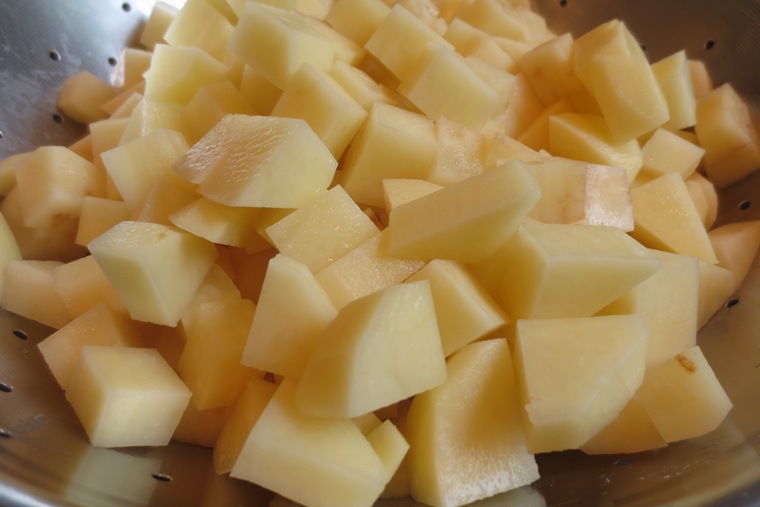
The most difficult part of this is the peeling and cubing of two pounds of potatoes – but this is the work that keeps one occupied on a cold day, the mundane routine of the kitchen that, when coupled with music and a glass of red wine, can turn into something wondrous instead of woeful. It’s the cozy preparation that lays the groundwork for a spectacular bowl of goodness that will warm the oncoming night. I’m getting ahead of myself. First, the recipe, from ‘Lidia’s Family Table’:

SAVORY POTATO BROTH

Ingredients:

  • -        ¼ cup extra virgin olive oil
  • -        2 ½ pounds russet potatoes, peeled and diced into ½ inch cubes (approx. 6 cups)
  • -        2 teaspoons salt
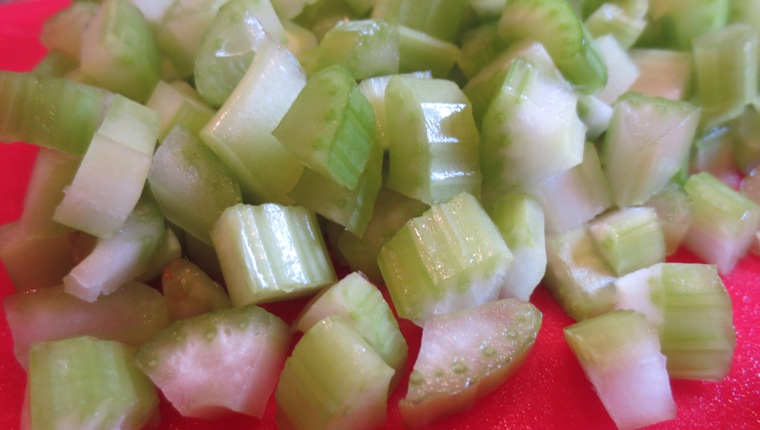
  • -        2 stalks celery, finely chopped (about 1 ½ cups)
  • -        2 medium carrots, peeled and grated (about 1 ½ cups)
  • -        3 tablespoons tomato paste
  • -        4 quarts water, heated to boiling
  • -        3 bay leaves
  • -        1 or 2 pieces outer rind of Parmigiano-Reggiano or Grana Padano cheese

Preparation:

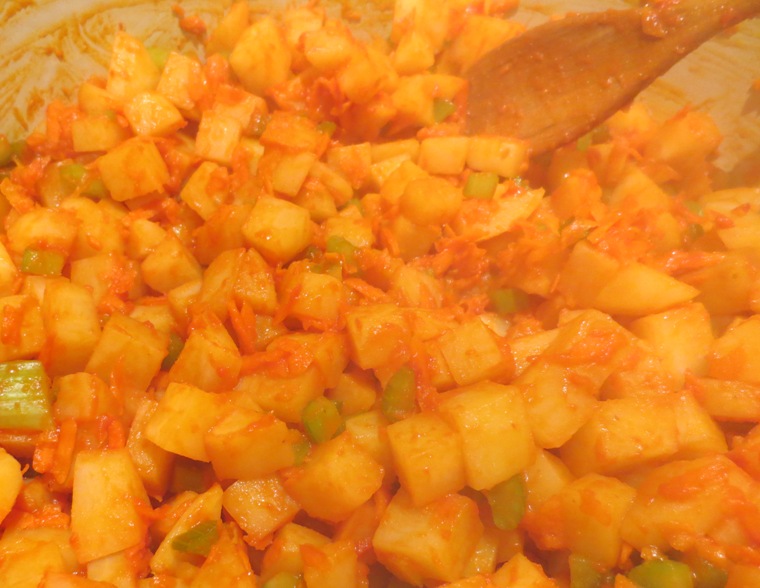
In large cooking pot, heat oil to medium-hot, but not to the point of smoking. Add potatoes, sprinkle on 1 teaspoon of salt, and toss in oil. Cook until lightly crusted and caramelized (about 6 minutes). Lower heat to prevent burning, and stir so they don’t stick. As potatoes start to leave a crust at bottom of pan, add celery and carrots. Stir well, scrape up any potato crust, and raise heat until vegetables are hot and steaming. Push aside to clear a hot spot in center of pan and drop in tomato paste, cooking it a bit before integrating it into the vegetables.

Pour heated water into pan, drop in bay leaves and cheese rind, grind 1/2 teaspoon black pepper, add salt, and stir well. Cover pot and bring to a soft but steady boil for an hour, stirring occasionally.

Uncover pot and cook for another hour or so, still at low bubbling boil, until it has reduced to 4 quarts.

After an hour, remove the bay leaves and let cool. Divide as you wish, or use as a simple soup on its own. Oddly enough, I didn’t happen to have the outer rind of a big-ass block of cheese lying around, so I omitted it – though I can see how that would add another layer of richness to the affair, and may find a smaller piece in the future for just such a purpose.
This is the savory vegetable broth base from which I made two variations on a couple of Lidia’s recipes: a parsnip and fennel soup, and a bok choy and scallion soup. Basically I chopped up the additional ingredients and boiled them for 45 more minutes or so. The russet potatoes somehow remained solid enough and didn’t fall apart – not sure if this was due to the initial cooking in oil part, but whatever the reason, it’s a happy one.

Though it’s a simple recipe, it does take time – but that’s cooking time, not active preparation and work time, so once it begins you can sit around writing silly blog posts while the heat works its magic. You can also speed things along by upping the heat and boiling factor, but the slow nature of the cooking process is, for me, part of its cathartic empowerment. One of the best lessons of all is to be found in the making of soup: patience.

Continue reading ...

Of Soups & Stews

One of the few saving graces of the arrival of the colder seasons is the opportunity for comfort foods. The downturn in temperature practically demands it, and it’s the one instance where I’m happy to oblige. This is the time of the year when I enjoy cooking. It’s cozy to be in a kitchen warmed by simmering stews and soups or a tray of winter vegetables roasting in the oven. I’ll attempt a chicken at some point in the coming months, but for now it’s just soup, as evidenced by the feature photo.

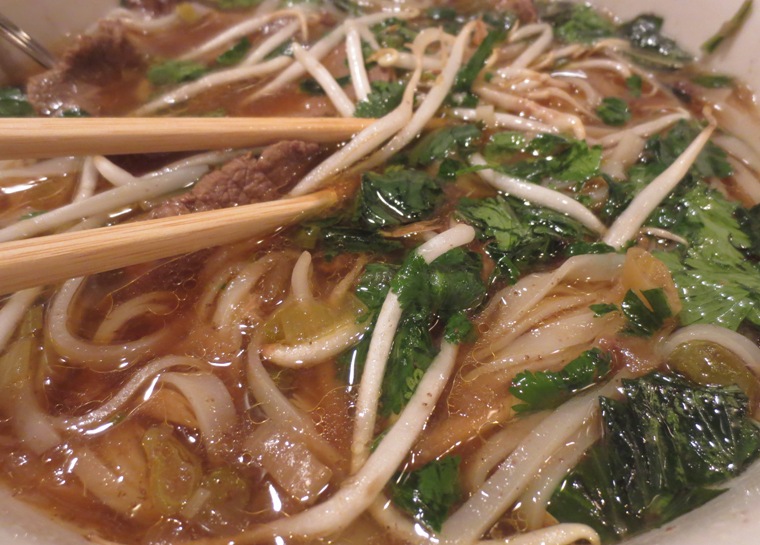
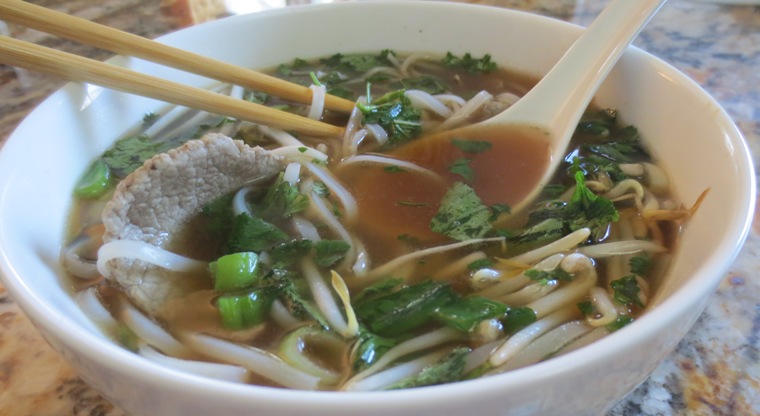
This one is a bowl of Won Ton soup, procured at a Malaysian restaurant in Chinatown. Suzie and I ducked in just before closing time on a late September evening a little before midnight. The winds were starting to bite, and we were only about half-way back to the condo, so we took refuge in the almost-empty restaurant. A relative novice to the Asian noodle scene, I vowed to make this the fall and winter in which I sustain myself with their heat-miser magnificence. I chose one of the first soup entries on the menu – something with pork dumplings and scallions that sounded plain enough to enjoy as an entry-way to more extreme bowls down the line. It was amazing.
The broth was light but flavorful, and the pouches of pork dumplings were like pungent little pillows, providing their spicy protein in puffs of perfectly-puckered pulchritude. Scattered with scallions, the soup was layered with several levels of flavor, even as the main broth was relatively clear. The noodles were just the right amount to sustain without overfilling, and substantial enough to be more than satisfying for a full meal. Up until recently, I’ve always considered soup to be s starter or an accent, not the main course, but I’ve changed my mind. With noodles and/or rice, a soup can be a hefty dinner unto itself, and this fall I’m making it a staple dish in the seasonal repertoire.

Continue reading ...

Seattle Eats

Let’s get one of my favorite parts of Seattle out of the way early on: the food. A lover of seafood will find his or her mecca in this ocean-inspired city. For this post, I’m only going to delve briefly into three spots that impressed me, and keep in mind that this is just the most minor of culinary spotlights in a city with such a buzzing food scene.

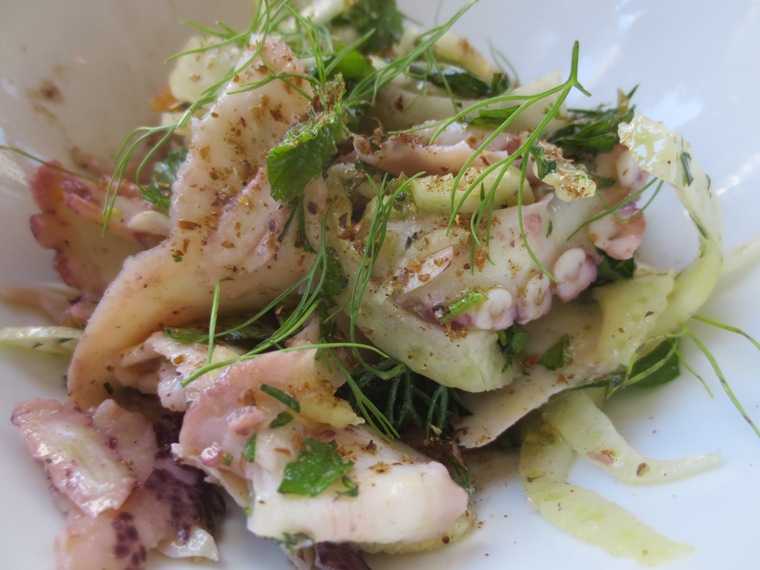
For the first night dinner, there was no other place to go but Place Pigalle, overlooking Puget Sound as the sun went down. My love for all things octopus continued with one of the most imaginative dishes I’ve seen utilizing the cephalopod: octopus with lavender-fennel sausage. Hello taste explosion! I’m a sucker for all things lavender as well, so this was an unthinkable, and unbelievably good, combination. After my mouth had its happy ending, I had the halibut – and the whole meal was the perfect introduction to the Northwest, where beauty managed to be both raw and refined, bright and bold, and unfathomably intriguing.

Across the sound, the ferry brought me to Bainbridge Island (site of a future post on Bloedell Reserve). Before the forest, however, some sustenance in the form of the best deviled eggs I have ever eaten. (And I’ve tried a lot of deviled eggs over the years.) Crafted by the folks at Café Nola, these had lobster – a portion of a claw on each – and the filling was expertly flavored to make the whole thing even richer. Out of all the deviled egg variations that are out there, this was by far one of the best. I still have daydreams about it, with drool running down my face and onto my office desk. Sorry, I can’t help it. Oh, the Dungeness crab melt that followed wasn’t half bad either.

As amazing as the previous meals were, my favorite of all the time I spent in Seattle had to have been the meal I had at Matt’s in the Market. Housed at the Pike Place Market where so much other yumminess happens, Matt’s was a feast for the eyes and the mouth.

As another sun set over the Sound, and the gorgeousness of impending twilight lowered itself as a backdrop, one of the most enchanting salads I’ve ever seen appeared on the table. A bed of smooth avocado, topped by a slab of exquisitely-ripe watermelon, formed the base of this whimsical treat, accented by edible violets and cucumber horns. Forget salad – this was a veritable art installation.

Paper-thin radishes and Serrano peppers gave an impassioned pizzazz to the fresh dish, and I didn’t think the main course could top it.

It happily turns out that I didn’t think correctly.

A Thai-inspired seafood stew, with green coconut curry, basil, mint and cilantro, was a pungent holding pen for mussels, fin fish, Yukon gold potatoes, clams, scallops, Thai eggplant, fried shallots and peanuts. My description cannot possibly do it justice. It was spicy, it had heat, yet it was perfectly tempered by the fresh herbs and potatoes. Somehow, the flavors of the seafood stuck their heads above all the amazing things going on in this bowl, and it was easily one of the best dishes I’ve had on this trip – and possibly any trip, in a very long time.

Seattle was winning me over, even though it had had me at hello.

Up next: A reserve of beauty…

Continue reading ...

On the Eve of 40: An Epic Brunch

Brunch on the roof-deck of the Taj Hotel is no average affair, but the last day of one’s thirties is no average affair either. We splurged at the establishment that hosted our wedding weekend, and tried out their highly-touted Sunday roof-deck brunch. It was, unsurprisingly, an over-the-top affair, with and endless buffet of decadent treats. I tend to get a little uncomfortable at such formal affairs, especially when the wait-staff puts on airs of utmost importance, but no such formality or judgement was in evidence. The service was attentive but non-intrusive, the professionalism intact but friendly. It set us at ease to enjoy the food on display. And what a display it was.
Endless platters of shrimp, oysters and crustacean claws (already cracked!) spread out before us. I could have made a meal on these alone, but it was only the beginning.

A charcuterie board looked almost too perfect to disturb, but at I made a big disturbance. (A bit more money would have gotten me a glass of champagne, but I couldn’t waste precious stomach space on the bubbly.)
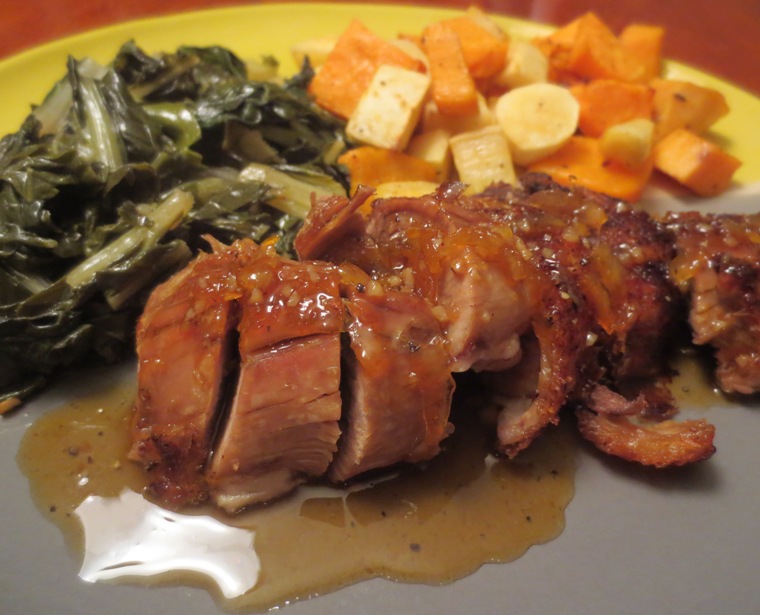
A sashimi spread put the average Japanese restaurant to shame, and here it appeared as almost an after-thought. (Likewise with the freshly-carved tenderloin and bearnaise sauce, not to mention the omelet station, and an entire Indian buffet – the nod to Taj heritage.)

Yet it was the desserts that caught the eye most, such as this insanely-good hibiscus elderflower mousse, which somehow managed to taste even better than it looked.

A sinful cavalcade of sweet treats went on much further than the stomach could contain, but we did our best, and I managed to sample almost everything.

It was a decadent indulgence on the morning before my 40th birthday, but things were about to get even more sumptuous, thanks to Judy Garland…¦

(Before that, however, I needed to sit down. Five plates are a lot to digest.)

Continue reading ...

Dinner at Douzo

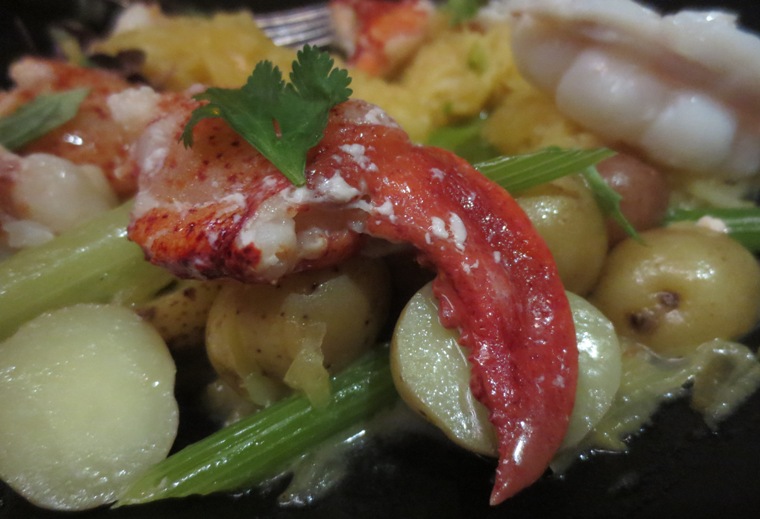
A favorite as much for its decadent rolls as its convenient location right off Southwest Corridor Park, Douzo was where I once enjoyed a New Year’s Eve dinner of hellaciously good stuff. We revisited it recently, and it was just as good as I remember. Sometimes it’s better to just let the images speak for themselves, particularly when they’re as pretty as the presentation included here. To give a brief synopsis of what you are about to see, the appetizer was a Yuzu lobster dish served over shiso tempura, followed by a collection of special rolls (including the aptly-named, and strikingly-crafted, caterpillar roll). Everything was as delicious as it looks.
Continue reading ...

Caprese Baby

Fresh heirloom tomatoes, fresh mozzarella, fresh basil, olive oil and balsamic vinegar. The simple makings of a mouthful of pleasure. This is the sort of thing I will miss most about summer. It just isn’t the same with supermarket stuff found in the dead of winter. That only makes me appreciate it more ~ the summer, and the flavor. I’ve added a sliced baguette to this in the past, which is even better at soaking up the oil and vinegar, but for the carb and gluten avoiders no bread is needed, and the effect is just as delicious.

This makes a lovely late-morning or early afternoon snack, or a great appetizer before a summer evening of grilling. When the vegetables are at their peak, there’s no need to mask or amp up the flavor – they speak vibrant volumes on their own. Equally pretty to look at, it’s a feast for the eyes, mouth and summer-seeking soul.

Continue reading ...

Cooking in the Nude: Hot Buns

How does the Naked Chef do it? There are so many dangers, so many burn risks. And sometimes an apron just isn’t enough. But sometimes it is. Especially in the summer. This brief collection of gratuitous gourmet shots is an homage to all those cooks who trouble and toil in the kitchen, like Martha Stewart, Jamie Oliver, Lidia Matticchio Bastianich, Joanne Weir, and Dinah herself (strumming on the old banjo).

I don’t get to cook as much as I’d like, and I’m actually pretty decent at it. (I’m less gifted at the cleaning-up aspect, as Andy will attest.) But the creation and the preparation? Absolutely. It satisfies some of my creative drive, and recipes appeal to my love of scientific order and transformation.

Some favorite dishes that I’ve succeeded in executing over the years include the following:

Tom Yummy.

Tied-up meat.

Chicken and olives and oranges, oh my!

Kickin’ it with the quinoa.

A Great Crepe Caper.

Guacamole!

Kimchi fried rice and the all-important fried egg.

Beet it.

Pasta and vodka.

Super scallops.

A meal fit for a prostitute.

For (and from) the family.

Everybody’s favorite brownies.

And don’t forget the cocktails.

Rest assured, if I can handle them, you can. I prefer the simple, tried and true rather than the exotic and elaborate, so these are easy-peasy lemon-squeezy. Get your apron ready.

Continue reading ...

Doing the Ditalini

It’s amazing what such a little piece of pasta can accomplish, and how it can fill such a large bowl when used en masse and plumped with water and warmth and a bit of EVOO love. Though the close-up on this cup of pasta misleadingly magnifies the size of the tiny noodles, trust me that in their dry form they are small and insignificant. Only in their quantity do they amount to much. I like the lesson of life inherent in that metaphor. One small part, no matter how small, can make a difference when it’s not alone.

This pasta plays a part in another delicious recipe from Lidia Bastianich – a classic Italian dish, Pasta e Fagioli Veloce – which relies on a cannellini bean base for thickness, into which the ditalini goes to retain all of its starchy goodness. Hand-crushed tomatoes and freshly chopped parsley add pizzazz to the hearty dish – perfect for those cold nights and showery April days. A bit of grated cheese over the final product, and a rustic baguette for dipping, make it a meal unto itself, or the ample beginning of an evening of delicious sustenance.

Pasta e Fagioli Veloce

  • 3 15-ounce cans cannellini beans, drained
  • ½ cup extra-virgin olive oil
  • 3 garlic cloves, peeled and crushed
  • 2 tablespoons all-purpose flour
  • 3 quarts water
  • 1 fresh rosemary sprig, needles stripped
  • 2 tablespoons kosher salt
  • ¼ teaspoon crushed red pepper
  • 1 15-ounce can whole tomatoes, crushed by hand
  • 2 cups ditalini
  • 2 tablespoons chopped fresh Italian parsley

Method:

In a blender, purée 2 cans of the beans with 1 cup water. Set aside. In a large soup pot, heat the olive oil over medium heat. Add the garlic. Once the garlic is sizzling, sprinkle in the flour. Let the flour toast for a minute but not color; then add 3 quarts of water, the rosemary, salt, and red pepper flakes. Bring to a boil, add the tomatoes, 1 cup slosh water from the tomato can, and the bean purée. Simmer until the soup thickens and is creamy and flavorful, about 30 minutes. Add the ditalini and the final can of beans (not puréed), and simmer until the pasta is al dente. Stir in the parsley and serve.

Continue reading ...

Chicken & Olives & Oranges, Oh My!

My obsession with Lidia Bastianich of the Create channel rages on with this delicious recipe (which can be found on her website here). It’s a substantial chicken breast variation that manages to keep the meat moist and flavorful thanks to its preparation method. The combination of orange and olives works an unexpected magic, lending a flavor-packed punch to the proceedings. There is an olive oil/butter combo at the start that you could probably forego if you want to keep things lean, but you’d be doing yourself a disservice if you go that route. Keep the whole thing intact to get the exquisite full-effect of the recipe – that bit of butter isn’t going to matter in the grand scheme of things.

As Lidia mentions, a chicken breast recipe is the bane and boon of many a family chef, and finding new but simple ways of turning that lackluster piece of meat into something extraordinary is always welcome.

Chicken Breast with Orange and Gaeta Olives
Pollo con Olive ed Aranci

  • 2 tablespoons extra virgin olive oil
  • 2 tablespoons unsalted butter
  • 1 1/2 pounds thin sliced chicken cutlets
  • 1 teaspoon kosher salt
  • all-purpose flour for dredging
  • 1 large red onion, sliced
  • 1 cup pitted Gaeta or Kalamata olives, halved
  • Juice and zest of 1 orange
  • 1/2 cup white wine
  • 1 teaspoon fennel powder
  • 2 tablespoons chopped fresh Italian parsley

In a large skillet over medium heat, add the olive oil and butter. Season the chicken with 1/2 teaspoon of salt and lightly dredge it in flour. Lightly brown the chicken in the skillet (you want the chicken to end up with a blonde-colored crust and slowly build the color, and flavor, up) on both sides, about 2 minutes per side. Cook the chicken in batches, if necessary, depending on the size of your skillet. Remove to a plate as it is colored.

Once the chicken is colored, add the onion and cook until softened, about 3 to 4 minutes. Add the olives, orange juice and zest, white wine and fennel powder. Add chicken back to the skillet and simmer until the chicken is just cooked through and the sauce coats the chicken, about 3 to 4 minutes. Season with remaining salt, sprinkle with the parsley, and serve.

From ‘Lidia’s Commonsense Italian Cooking

The only thing I did slightly differently was pounding out the breasts a bit before cooking. There’s nothing worse than a breast that’s too thick and requires extra cooking time. Such a set-up leads to the possibility of drying out the meat in order to ensure a safe cook-through. Pounding out any extra-thick pieces alleviates this risk, while tenderizing the meat in the process. It need not be super-thin, just slightly, and it will turn out fine.

To counter-balance the strong flavors of the entree, I served this with a side of couscous and fresh parsley.

Continue reading ...

Tying Up My Meat

Despite the ease with which it seemed my pal Simon tied up a piece of pork many years ago, I’ve always steered clear of anything that requires tying, at least as far as the kitchen goes. It’s one of my peculiar and unfounded fears, like my trepidation of the pool drain or the Easter bunny. But when a recipe for a basic braciole showed up online, and the weekend turned snowy, I gave the classic Italian dish a try – and it turned out pretty well.

The trick here, at least according to many iterations, is a quick searing in oil then a long, slow cook in your best tomato sauce. Here’s the recipe I used:

INGREDIENTS:

1 1/2 lb flank steak (usually labeled braciole meat)

6 tbsp fresh parsley leaves (roughly chopped)

8 garlic cloves (minced)

4 tbsp of olive oil

Salt and pepper to season

4 tbsp grated Pecorino Romano cheese

METHOD:

1. Lay out the braciole on wax or parchment paper. Pound with a meat mallet.

2. Season both sides generously with sea salt and pepper. Sprinkle with olive oil.

3. Spread garlic on top of the braciole evenly across the entire piece. Scatter grated cheese on top of garlic.

4. Add a thick coating of parsley.

5. Roll it up tightly and tie securely with baker’s twine.

6. Heat dutch oven on stove top to medium-high heat and add olive oil. Place bracioles in carefully and turn to brown on all sides. Add water if necessary to keep the meat moist.

7. When fully browned, cover with tomato sauce and reduce to medium-low heat and let cook slowly for 2- 2 1/2 hours. Serve bracoile and sauce over pasta.

The rolling and tying was the messiest part, but with practice I can see it becoming less unwieldy. I made a tomato sauce from scratch as well (hello kitchen ambition) and cooked it slowly for about three hours, at the end of which the meat was super tender. A variation that you may want to try is the addition of pine nuts in the braciole, for an extra Italian twist.

It seems that certain things do much better when they’re tied up. The kitchen likes it kinky.

Continue reading ...

The Great Crepe Caper

(Try saying that three times in quick succession.)

This is neither a disaster nor a striking success story – it falls somewhere between the two and involves my first attempt at crafting a crepe. I’ve never really been a fan of the fancy pancake – my mind has never quite gotten itself around where it’s meant to fall on the sweet versus savory spectrum (I love a good spectrum). I know there are both, but I like something a little less malleable in my food options. At any rate, I found a quick and easy (and quite basic) recipe in a recent New York Times magazine, and it went like this:

UNMEASURED CREPES

Very adapted from ‘Ratio’ by Michael Ruhlman

1 vessel whole raw eggs

1 vessel all-purpose flour

1 3/4 vessel whole milk

1/4 vessel sweet butter

Dash to pinch of salt

1. Beat eggs. Add ingredients and whisk. Add salt and taste.

2. Heat nonstick pan or lightly oiled one on medium heat. Add ladleful of batter, just enough to thinly coat bottom of pan. Cook until edges begin to brown, maybe 30 seconds. Flip, with conviction, and cook ten more seconds.

3. Cook as many as desired, stacking on plate and covering with cloth towel until ready to serve.

4. Savory variation: chop up fresh herbs – parsley, mint, and/or dill – and add to batter before cooking. (As much as you like.)

I gave it a whirl and it didn’t turn out badly. I love a simple recipe with a simple preparation. This time around the trickiest part was flipping the damn things, but even that went better than expected. Only two didn’t quite work out, and that’s because of early hesitation on my part. You have to commit to the flip. It has to be certain and definite, and a little bold. Any fear or hesitancy will not go over well. After a few tries, I found that the higher the crepe went in the air, the better chance I had of landing it perfectly. At first I was trying to keep it low and close to the pan. Go for the gusto and you’ll be fine.

As for the end result, I was pleased but not blown away. The first attempt was too thick – I’d used too much batter – and the crepe was a bit rubbery. After that, I cut down on the batter, keeping it very thin and spreading it around, at which point the traditional light and fluffy crepe consistency was achieved. My only complaint was that with such a quick cooking time, I still tasted a bit of raw flour. I wouldn’t have minded this so much with a sweet version, but in a savory style (I’d opted to add the fresh parsley) it was mildly annoying. (I know nothing about crepes – eating or making them – so I’m sure there are mistakes I made that contributed to the general ho-hum aspect of the whole process.) Perhaps FUSSYlittleBLOG or Carl can help a novice out with some tips…

Continue reading ...

Thai To-Die-For

Here are a few photos from a Thai lunch I had in Washington a number of months ago. I found them on my drive, and while I’ve forgotten the name of the place, the memory of how good it was lingers. Rather than go into the recipes and descriptions and a whole lot of hoo-ha, allow me to let the images speak for themselves. (In other words, you told me to shut up, so sit down and enjoy it.)

Tomorrow we are featuring a Special Guest Blog whose focus is on food, so let this be a mouth-watering preamble to that. Someone set the table, because this is going to be good.

Continue reading ...