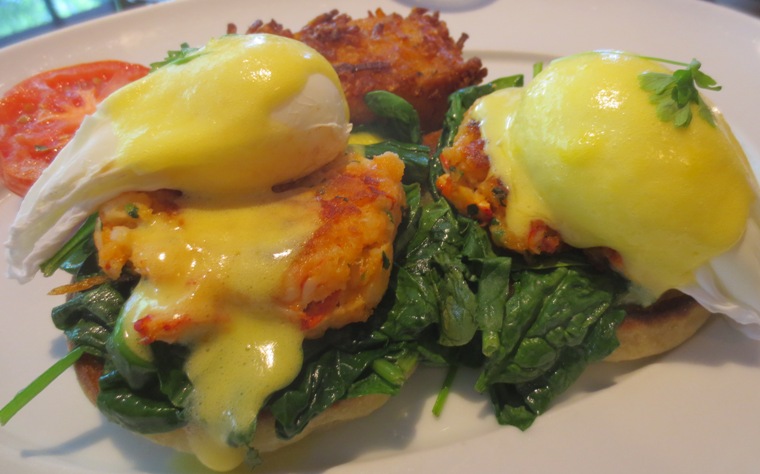
Lobster Eggs Benedict at the Four Seasons’ Bristol Lounge. And a glass of orange juice.
Across the street, the Boston Public Garden.
The best of all possible worlds.
Lobster Eggs Benedict at the Four Seasons’ Bristol Lounge. And a glass of orange juice.
Across the street, the Boston Public Garden.
The best of all possible worlds.
More commonly known as potato salad, and a bastion of an American summer scene, this is my favorite dish of the season, mostly because everyone else does such a better job of preparing it that I beg until someone always delivers. While people always say it is a simple thing to make, anything that requires the added step of boiling potatoes (or boiling anything for that matter) seems like too much work for me. (I feel the same way about pasta salad.)
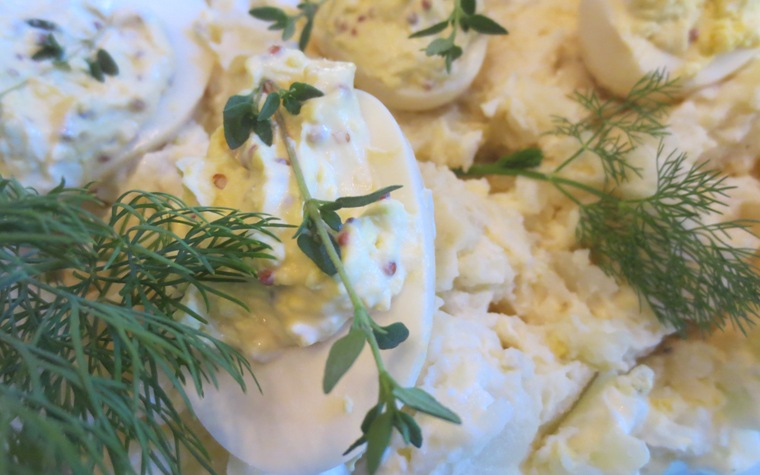
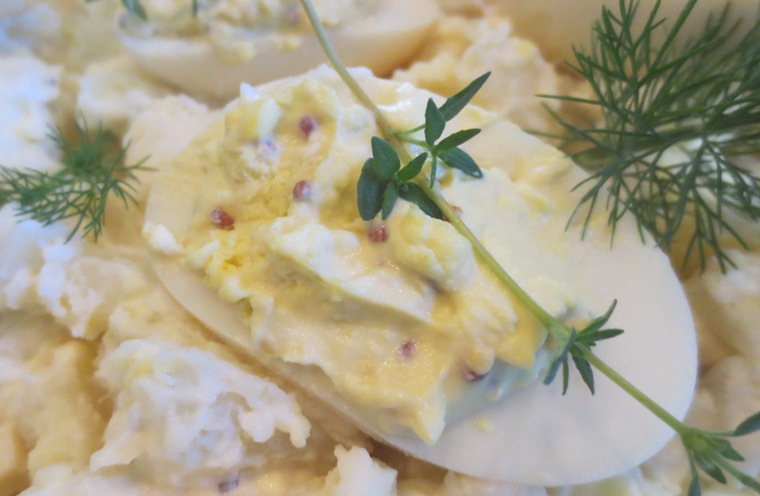
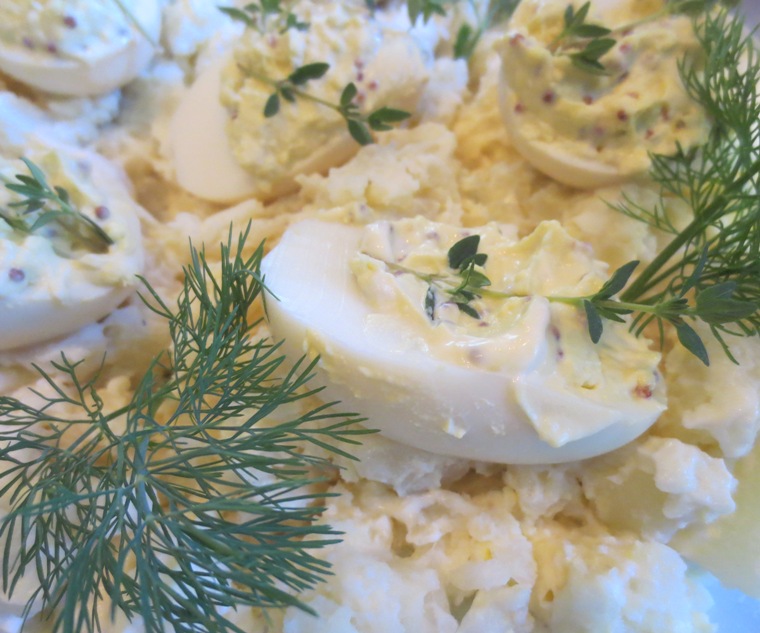
This one was made by Elaine, who brought it to a summer pool gathering. She does a wondrous version as so exquisitely seen here, with lots of hard boiled eggs (another step) and fresh herbs from her garden (hello, lovely dill).
I don’t know what other treasures are used in this fine side dish – it all feels like magic to me. Tastes that way too.
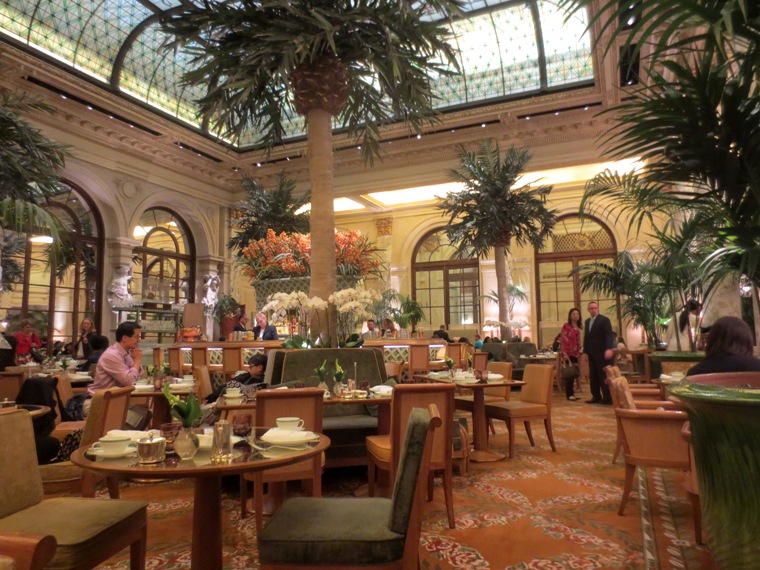
Afternoon Tea at The Plaza is the stuff of history and glamour, of Eloise and elegance. It conjures the ghosts of balls and galas that took place in the Palm Court. In the hallway leading to the Court, photos of Frank Sinatra and Mia Farrow from Truman Capote’s Black and White Ball hang directly across from a framed photo of Marilyn Monroe. These are the memories such storied walls hold. My mother and I slowly walk around, imagining the rustling of fancy skirts and the clinking of crystal.
It is my belated Mother’s Day gift to her, and as we are seated in a comfortable corner nook we nestle in to the surroundings with grateful ease. There is lots of walking to be done in New York, and never enough time for rest, but for the moment we pause and take in the breathtaking scene at hand.
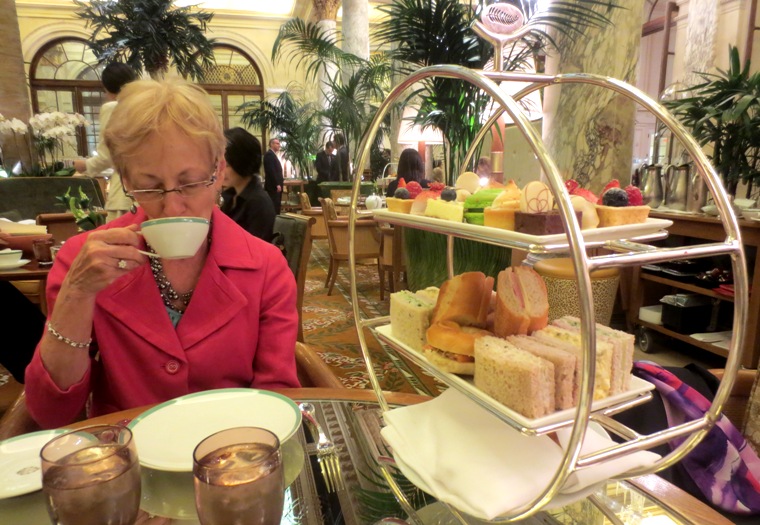
We were both expecting a couple of high-priced petit fours and some fancy tea, but this was a full-bodied meal, presented on a three-tiered wheel that carries all the bang that its hefty buck commands.
The bottom layer was breads and pastries – a delightful scone and muffin combination. The second tier was all dainty sandwiches, and all quite different from one another. Scoff if you must at a finger-sandwich – when there are seven, and each one is a work-of-art in its own right, that’s a lot of damn good food.

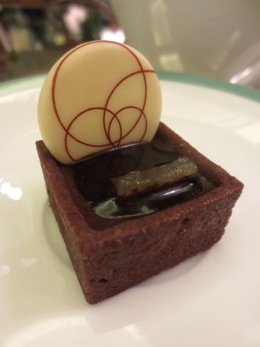
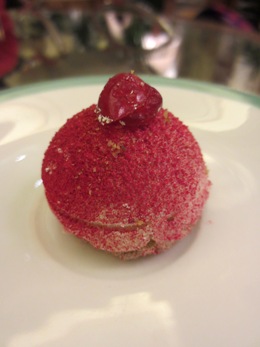
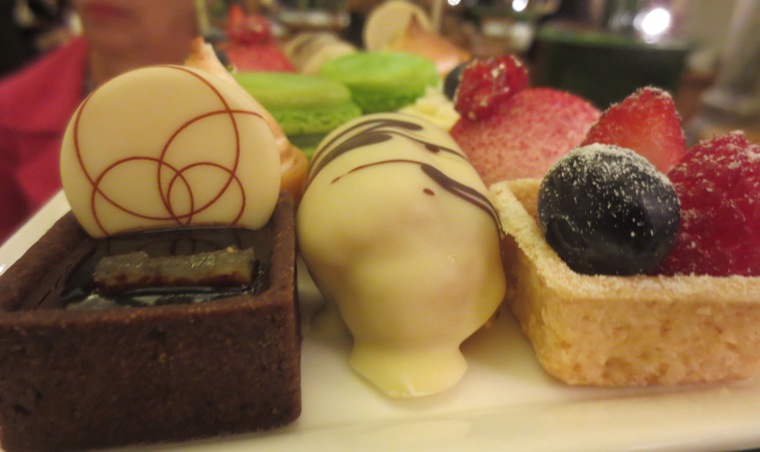
At the very top was this gorgeous rendering of decadent desserts. If this was my daily existence, I could stomach living here, right next to Eloise, roaming the hallways, hiding behind velvet curtains, surreptitiously sneaking a bite-sized confection and gleefully enjoying a world of whimsy.
The entire ceremony was a lesson in refinement and taste, and by the end we were both more than satiated. All worries of it being an exercise in restraint and not enough food were more than put to rest.
Our weekend in New York had come to a close, and it felt like we had only just begun. That’s the spell the city manages to cast upon many of us. As much as I want to write it off, I simply can’t. In fact, I’m already looking forward to next year. (And maybe a high summer weekend with Suzie or Chris before then.) Whether it was the food or the shows or the warm comfort of being with my Mom, I’m ready to do it all over again.
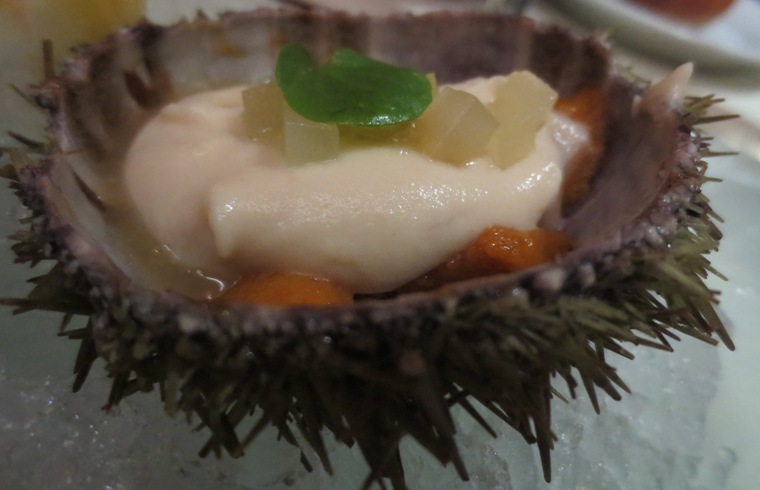
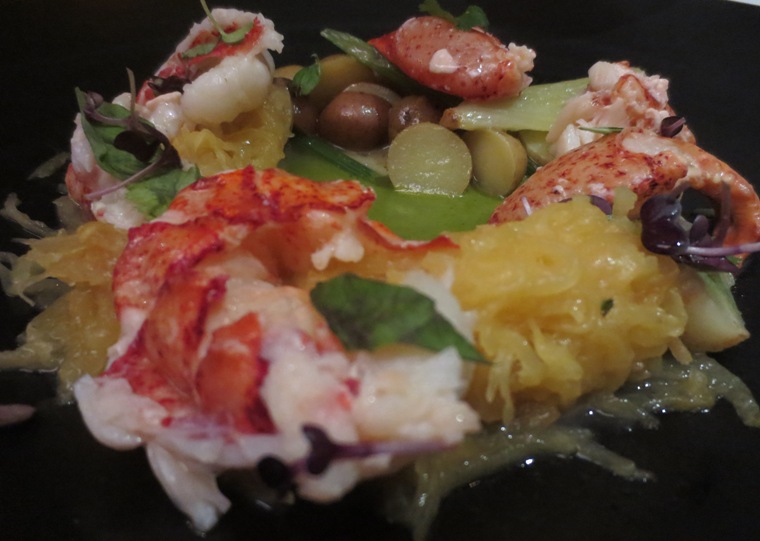
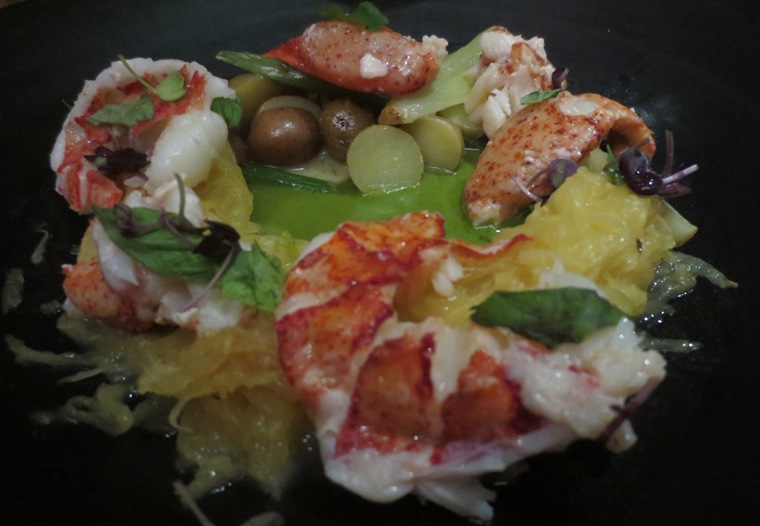
There are a lot of hidden gems on my hard drive, items that I copy then forget about until a scavenger hunt reveals something like these scrumptious shots of a distant dinner at Harvest. The trek to Harvard Square in the middle of winter is not exactly my idea of a good time, but when the journey’s destination is a place as wondrous as Harvest, it’s worth it.
When they had uni on the menu, it was proof that the stars had truly aligned. The first time I tried uni was a few years ago at O Ya in Boston – and if there’s one place where your first uni experience should be, that’s the one. Since then, I’ve had it a few times, but only this preparation and presentation has come close to that initial taste of heaven in a spiky shell.
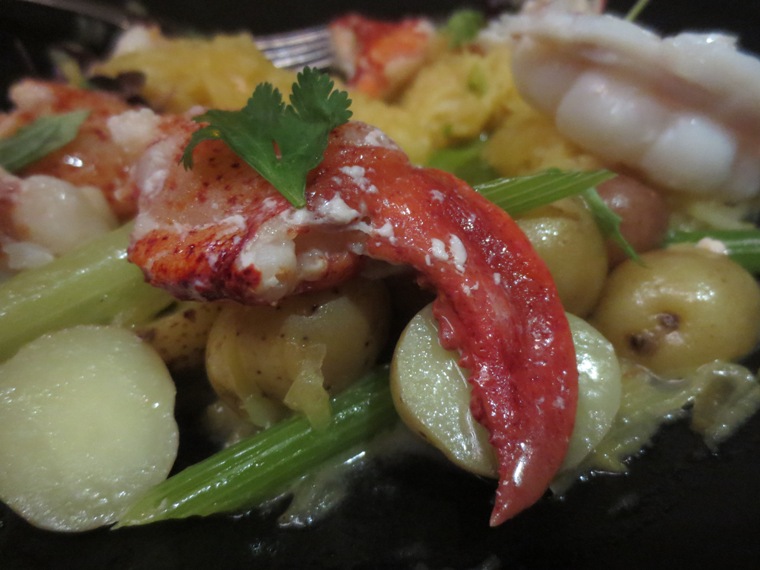
About the only thing that could follow and top such a spectacular sea urchin start is this bowl of buttery Scituate lobster. With its combination of spaghetti squash and potatoes, coupled with an assortment of fresh herbs and microgreens, it made for a feast to please the stomach and the eye.
This was a decadent and elegant dish of comfort, elevated to an art form and energized with bright flavor. Colorful of palette, to taste and sight, it appealed on every level. This is the sort of dish I dream about during the day.
Maybe you’ll dream about it too.
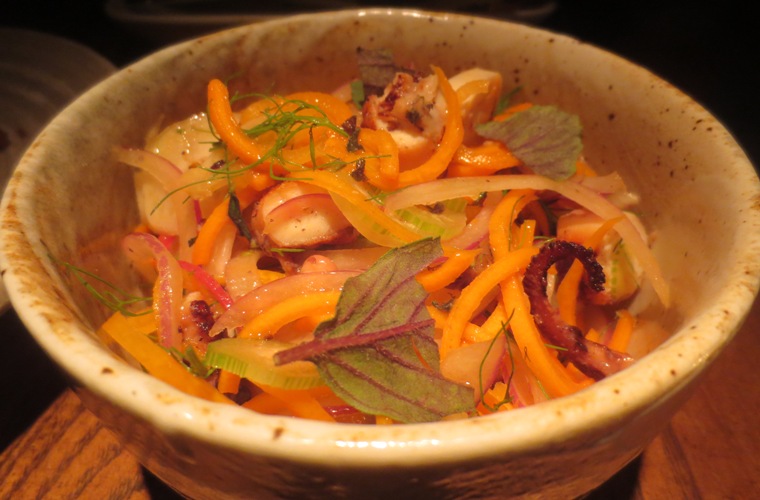
In the middle of the day, on the edge of entering the Seaport, a few restaurants and hotels line the little harbor area, and Kira and I slip into Trade for a little lunch. It’s one of those pockets of time that I will later come to treasure, the unplanned but perfectly-landed respite that acts as its own oasis and siesta in one. A glass of rosé and an octopus salad – no better way to begin.
With a zesty citrus dressing and cacophony of fresh herbs and fennel, the salad was a bright and brilliant blend of flavor and texture.
Trade is better known for its flatbreads, so we ordered two to share. First up was this Prosciutto with peppers and pickled onions. Those onions, and their briny preparation, made this one for me, though it was a close-call with the bacon and artichoke concoction below. With its generous helping of fresh herbs, it held its own with the pungent pickled perfection of its table mate. This was a delicious battle I didn’t mind fighting in the least.
A rainbow of macarons sweetly but quietly shouts its delicious presence in all manners of flavor and color. It is the perfect break for the middle of the day, and a gentle reminder that we need to take a moment to savor the small things. If you’ll excuse me…
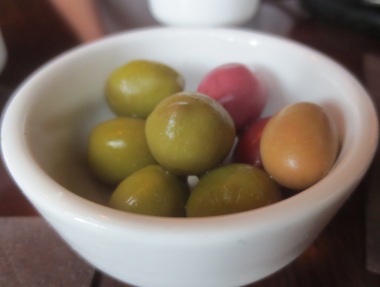
Another mid-afternoon snack idea to kick-start the salivation, here’s a perfect pairing for an early cocktail: olives and nuts. I love the olive bowl, a one-piece work of art that neatly provides a place for the pits. An elegant presentation for the inelegant conundrum of the pit(i)ful olive.
Most of my casual food and hotel reviews end up on Tripadvisor, so I don’t really repost them here. Such is the case with these food photos from Rural Society – a restaurant whose delicious food is slightly marred by stunted service. We’ll leave it at that. The dishes certainly look and taste good, however, so don’t be too put off. Worth it if you have a lot of time on hand.
On 4/20, some of you may be looking for some food ideas, so here’s a link-a-licious post pointing out some of the recipes that have brought my stomach satisfaction over the years. Most of these call for a decent amount of preparation and time to do well, but I’d still recommend any of these over that wretched Kraft Mac & Cheese anytime. Cheese was never meant to be powdered. [High-five.]
Let’s begin with this delicious Waldorf chicken salad, which carries the succulent bite of the spring and summer to come in each of its vibrant bites.
For those nights that still feel a bit cutting and cold, here’s an apple crisp to keep you warm and gooey.
If you want to act all piss elegant, try this traditional French snack.
One simply cannot go wrong with this classic kimchi fried rice with fried egg recipe.
The red pepper relish dip recipe contained in this post is a favorite of many guests.
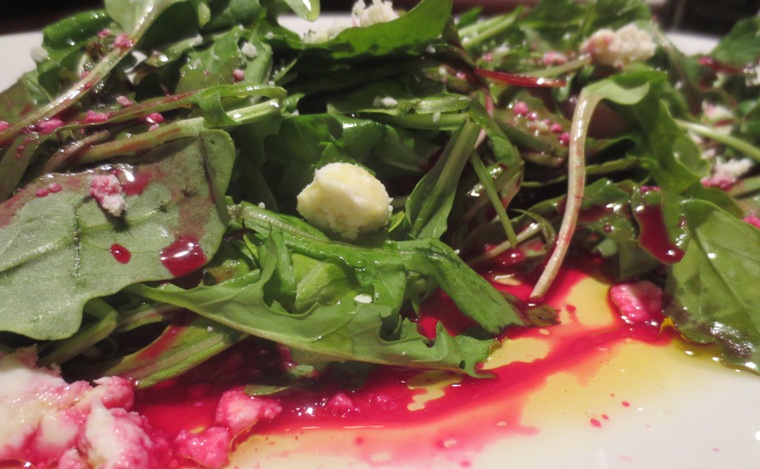
Arugula is a mainstream lettuce.
The infamous Bitch Slap Brownies by Peaches.
Keeping things hot and spicy is this Tom Yum soup.
Check out the great crepe caper here.
You can’t beat the meat.
This recipe from Lidia Bastianich is just incredible. So is this one.
Bon appetit.
And I am nothing if not a Spice Girl. Here is a wonderful ‘Curried Lentil & Vegetable Soup With Spiced Yogurt’ dish that I made a few weeks ago and it’s been haunting my mind ever since. This recipe was from ‘The Complete Asian Cookbook’ and at first I wasn’t sure if such an all-encompassing tome could actually deliver something worthwhile. I was pleasantly surprised at the depths of flavors garnered with just three basic spices, as well as the substantial heartiness of the soup itself – which is really more like a vegetable stew. The absolutely integral addition is the hefty dollop of spiced yogurt, which brings it all together in one miraculous swoop of creamy but healthy goodness.
Here are the ingredients for the soup:
– 2 Tbsp. olive oil
– 1 small leek, chopped
– 2 cloves garlic, crushed
– 2 tsp. curry powder
– 1 tsp. ground cumin
– 1 tsp. garam masala
– 4 1/2 cups vegetable stock
– 1 fresh bay leaf
– 1 cup brown lentils
– 14 oz. butternut squash, peeled and diced
– 1 14 oz. can chopped tomatoes
– 2 small zucchini, cut in half lengthwise then sliced
– 7 oz. broccoli cut into small florets
– 1 small carrot, diced
– 1/2 cup frozen peas
– 1 Tbsp. chopped fresh mint
– Salt and pepper
– 16 oz. water
And the ingredients for the all-important Spiced Yogurt:
– 1 cup thick plain yogurt
– 1 Tbsp. chopped fresh cilantro (coriander) leaves
– 1 clove garlic, crushed
– 3 dashes Tabasco or Sriracha sauce
1. Heat oil in saucepan over medium heat. Add leek and garlic and cook for 4-5 minutes or until tender. Add curry powder, cumin, garam masala and cook for one minute or until fragrant.
2. Add stock, bay leaf, lentils and squash. Bring to boil, then reduce heat to low and simmer for fifteen minutes, until lentils are tender. Season well with salt and pepper.
3. Add tomatoes, zucchini, broccoli, carrot and 16 ounces of water; simmer for ten minutes or until vegetables are tender. Add peas and simmer for 2-3 minutes more.
4. To make yogurt, place yogurt, cilantro, garlic and hot sauce in small bowl and stir to combine. Dollop a generous spoonful of yogurt on each serving and garnish with chopped mint.
The only modification required was some additional water (as I mentioned, it’s really more like a thick stew, and I wanted to keep a soupy consistency). Also, I’d advise mixing the spiced yogurt a day in advance so the flavors have time to really spread throughout the mixture. You can stir it once or twice during the day to incorporate it all. (This also makes an easy dip for pita chips or veggies while waiting for the soup to come together.)
The most difficult part of this whole thing is the preparation and chopping of all the ingredients, but if you take it as a Zen moment of ritual and methodical motion, that can be enjoyable too. I’ll take whatever peace is available these days, and if a decent soup happens to come from it, so much the better. Spring may be here, but the cold will linger. This dish will take that edge off.
(Seriously, it’s all about that spiced yogurt.)
When Sunday dawns with just-below-freezing temperatures, but the sun is shining strongly, the relatively short trek to the South End Buttery is a worthwhile endeavor – mostly because I know what’s at the end. In this case, a delicious almond creme croissant (and a chocolate orange scone for the ride home). Such ended this past weekend in Boston, a jaunt that was as much about business (securing a contractor for the bathroom renovation) as it was about pleasure (perusing bars for possible party locations with JoAnn).
While the nearby Cafe Madeleine remains closed for unexpected repairs, the Buttery provides a perfect pastry fix on Sunday mornings. As a treat for Andy, I also pick up a small package of Sea Salt chocolate chip cookies, and I’m proud to say that the majority of them made it home intact. (I’m less proud to say that they didn’t last very long on the kitchen counter.)
On this Tuesday morning, I remember that Sunday morning – still better than a Monday, but still a little sad.
I love duck. I loved it the first time I had an exquisite dish of Peking duck at a wedding rehearsal dinner for my cousin, when I was maybe ten or eleven years old. Since then it’s been a favorite for sentimental reasons, and for the simple flavor when it’s done right. Which doesn’t always happen, and it’s sometimes a crap shoot on whether you’re going to get a great meal or something gamy and fatty. For that reason, I’ve avoided trying my hand at the yummy waterfowl. A while back, however, my Mom gifted us with a frozen duck, and a couple of weeks ago I tried out Martha Stewart’s recipe for roasted duck, and it turned out to be a delectable success (with a big messy drawback, but more on that later).
The main trick with duck is dealing with all the fat that the birds need to survive the cold and wet environs where they make their home. Some cross-hatch scoring on the breasts, and lots of shallow knife pricks to allow exit room for all the fat, are all that’s needed, along with a high oven temperature to keep the skin crispy and the insides moist.
Because of all the fat, there’s no need for olive oil or butter: the bird can roast without further addendum. Martha advised to cover the bottom of the oven with something to catch any splatter, but that seemed a bit too Martha for me, and an unnecessary step, so I popped the bird and the roaster into a 425 degree oven for the first 50 minutes of breast-up roasting.
It turns out Martha was right and not just being overly cautious when she advised putting in some foil to catch the splattering. It was a huge mess. And the smoke… oh the smoke… it was everywhere, and it got into everything. It’s not a horrendous smell, but it’s pervasive and lingering, and the lengthy cooking time only prolonged the ordeal.
After the first 50 minutes, you turn the duck over and cook for another 50 minutes. More splatter, more smoke – lots of each. Then you turn it once more so the breast is back on top, and you cook for another 50 minutes – total cooking time of 150 minutes for an average bird.
At the end, I let the duck rest for twenty minutes or so, during which I roasted some parsnips and sweet potatoes in some of the rendered duck fat. (Save the rest – it’s to die for.) I also took the time to make an orange marmalade sauce, which is the most important part of the whole dish. Orange and duck is one of the finest pairings my mouth has ever enjoyed.
For all the deliciousness of the final product, I don’t think I’ll be doing this again anytime soon. I’ll save the smoke and oven mess for the restaurants.
For my first attempt at pho, I went slightly faux, omitting the whole roasting of bones and onions beforehand and adding some beef broth. While perfectly serviceable (and more than adequately delicious) that extra step of roasting things beforehand was one I took for this next batch. I’m not going to say it made an enormous difference, but it negated the need for the beef broth (which added an unnecessary flavor (and saltiness) that somehow worked against the traditional pho I was hoping for).
This time around, I roasted the beef bones and onions under the broiler until nicely browned before beginning the broth. I also realized that the proposed ten-hour cooking time was not entirely necessary – at some point it becomes adding water simply to boil it away. I’ve read that three to four hours are all that’s needed to yield the maximum flavor from the bones that you’re going to get. Five to six hours seems safest to me, and manageable. This is a stock that tastes even better the second day, so making it in advance is an easy way to accommodate the extensive cooking time.
I’ll keep on working on this one. It’s a recipe worth perfecting, and the only way to do that is through trial and delicious error.
One doesn’t think of fine dining in destinations established with other priorities in mind, particularly museums, but Bravo at the Museum of Fine Arts in Boston has been serving culinary excellence for a number of years. Ensconced in a corner oasis of the second floor, it functions as a jewel of elevated dining, a respite in the midst of all the art and beauty for those moments when you may want more than cafeteria trays and crowds. A comfy bar, and refined yet cozy banquettes in the seating area, provide rest for feet tired of standing. It’s a gorgeous space befitting a museum, and the food itself is its own work of art.
On my last visit, timed just as it opened on a busy Saturday afternoon in the aftermath of a snowstorm, the tomato bisque with a side of grilled cheese goodness was the only way to go. Creamy yet light, and topped with a decadent drizzle of basil oil, it arrived looking like some gorgeously-rendered abstract painting, all fanciful swirls and tiny bubbles bursting with flavor. The basil oil was the magical part of the bowl, lending a tangy note of elegance that makes it into something more than just a comfort food. The grilled cheese triangles are sharp enough to get noticed, made delicate by proportion and size. Despite such diminutive stature, they pack a punch of their own (but a couple more would not have been unappreciated).
For the main lunch dish on such a snowy day, I kept with the tried and comfortable, choosing an ample omelet that filled half a plate, accompanied by home fries and a toasted English muffin. Filled with the freshness of tomatoes and spinach, and exquisitely offset by the rich threads of cheese (to continue the comfort-food theme) the omelet was a balanced work of unpretentious brilliance.
One of my favorite dishes in winter is a steaming bowl of Vietnamese pho. It’s like a spicy hug from a pocket of paradise. Usually, I leave the making of it to the pros, but decent Vietnamese restaurants are not a dime a dozen in upstate New York (hence frequent trips to Boston – and yes, I have made at least one trip solely for the purpose of procuring pho).
During a quiet weekend, while feeling slightly under-the-weather, I decided to be brave and try my hand at the broth, though naysayers had warned it was a tricky one. I didn’t find it to be such – it’s more about the long simmer time (6 to 10 hours) that gives it a bad cooking name. I happen to love long simmer times, so this was perfect for a chilly weekend project. What follows is my modified recipe and method. Purists will likely scoff at the many shortcuts and anomalies, but fuck ’em, this shit was good.
INGREDIENTS:
METHOD:
Many recipes called for roasting the beef bones and onion beforehand, but I’m a one pot, Andy-clean-up kind of guy, so I didn’t want to rev up the oven and ruin a baking sheet. Instead, I gave up that smoky stuff for a more intense broth in other ways, starting with the addition of 2 cans of beef broth to the 4 quarts of water. I also sprinkled a dash of cinnamon into the mix (it goes so well with the star anise) to add one more note of flavor. This is supposed to be a pungent and spicy dish.
The process was relatively simply: boil the bones in the water and stock for about three hours. Add the onion, ginger, star anise, cinnamon, and fish sauce and simmer for about six hours more. Obviously this can be adjusted for reality, but this is the best time-frame from which to elicit the most flavor (of course you can go longer if desired – you may have to add more water along the way so it doesn’t boil down too much).
Separately, soak the rice noodles in lukewarm water for about an hour. They should be malleable, yet somewhat firm (they will feel underdone even after an hour, but don’t worry because the boiling broth will finish the process beautifully).
As you near the end of the simmer period, add the green onion and cilantro to the broth (I also reserved a small bunch of cilantro for additional garnish later on). Traditionally, and if you have an excellent and reliable butcher, you would put the thin meat slices into the bowl and let the broth do the cooking. Failing such a supply, I dropped the meat into the broth on the stove and let it boil for a bit. (I’ll sacrifice some tenderness for safety when Price Chopper is involved.)
To plate up, drop a decent helping of the noodles into a large bowl. Spoon in the simmering broth until it covers them well, along with several pieces of beef. This will finish cooking the noodles nicely, and then it will be time for the real magic to begin.
As if after my own heart, it’s the accessories that really make this dish special – and if there’s one thing you can’t forego when having pho it’s this collection of fresh ingredients. In a restaurant, you’ll usually be served the dish of amendments first, piled high with bean sprouts, Thai basil, lime wedges and little bowls of hoisin and Sriracha. These accoutrements are vital for such a richly-flavored broth, lending a vivid contrast to the flavor at hand.
I simply tear the basil apart with my hands and drop it into the broth, along with a handful of sprouts. A few squeezes of lime is enough to spruce up the surface, then I stir in some hoisin and Sriracha. For my home-grown version, I tore up the additional cilantro since I love it so much. The end result was decent enough – and an almost-authentic approximation of the pho I’d only had at restaurants.
I’m not always great in the kitchen, but sometimes I’m pretty good. This was one of those happy times, and this is a dish I’ll make again.