Category Archives: Gardening

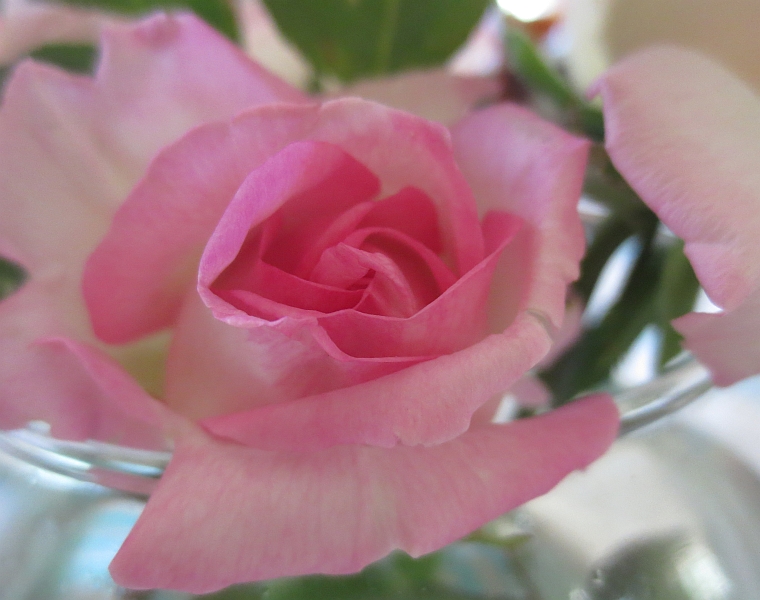
A Perfect Rose, An Imperfect Gardener

Though I pride myself on having a green thumb, I’ve had a number of notable failures in the garden – chief among them my difficulties with roses. Aside from the fool-proof knockout series (a bland thing if ever there was one), I’ve yet to have a successful rose endeavor.

When I was a kid, I begged and pleaded with my parents to order a few roses from Jackson and Perkins. Their catalogs were practically porn for my floral-fixation, and I narrowed it down to a selection of six rose plants, each with a fancy name and pedigree. A few weeks later they arrived in a big box – monstrous things that were alien-like in their bare-rooted form. The planting instructions called for them to be soaked/submerged in water for a few hours prior to planting, so I filled the bathtub with lukewarm water. Ahh yes, the brain of a child. I don’t recall the mess that was made because it was so bad I likely put it from my mind. While they soaked (and left their dirt rings on the tub) I set about preparing six enormous holes in the front and side gardens. Visions of dazzling rose bushes filled my head, with blooms that spilled forth with abundant floriferous vociferousness.

I amended the soil and dug deeply, with ample manure and generous dashes of bone meal. I left a mound at the bottom of each hole, as per the elaborate directions included with them, and somehow hauled the beasts out of the tub and back down to their new homes. Gently, I fanned out the roots over the mounds, then backfilled and firmly secured the plants with crowns at ground level. A small basin designed to catch water surrounded each plant, and I watered them in well. I could almost sense them growing, and I stood there when the last one was in, just waiting for some sign of growth to occur. Again, the mind of a child: ever-hopeful, ever-antsy, ever-anticipating.

Only the two in the sunniest spots did much. In fact, they were the only ones that survived that first year. Fantasies of armloads of rose blooms spilling out of baskets and bouquets were left as just that. The pink and yellow and white varieties I so wanted to see in person didn’t make it. Only those two stalwart red plants survived the winter. They did well enough, and the next year I did manage to coax a few blooming spells from them, but their upkeep and insect control were too taxing to be enjoyed, and their spindly form left much to be desired. I gave up, and roses left my life until I met Andy.

This year he’s trying the variety you see here. Lightly fragrant, and beautifully shaded with an almost lavender blush, it’s a beautiful specimen. I just hope it’s not too fussy.
Continue reading ...

A Pansy of Pink

The smiling pucker of a pansy is sometimes enough to lift the darkest day. Even bowed down by a shower of raindrops, their little faces are still there, ready to face the sun when it deigns to show itself again. While I love seeing these beauties in pots and in yards in the early part of the season, I’ve never grown or planted them myself. A few years of Johnny-jump-ups were all I could muster.
That distant cousin of the pansy, with the much-smaller blossoms and tenacious reseeding tendency, makes a charming-enough companion in the garden, would pop up in unexpected and not-always-welcome places. They always kept me on my toes, and I was usually too guilty to pick them up and move them somewhere more appropriate of aesthetically-pleasing, choosing instead to let them fill the edges of borders or poke through a cement crack. Their unpredictability was a lesson in accommodation, and I knew it was a lesson I needed to learn.

Now, I admire the pansies and the Johnny-jump-ups from a distance. Our summers are simply too long and hot for them to last much beyond June or July, and when you need something to see you through August and September, these just don’t cut it. This gardener doesn’t have time for that.

Continue reading ...

World Naked Gardening Day

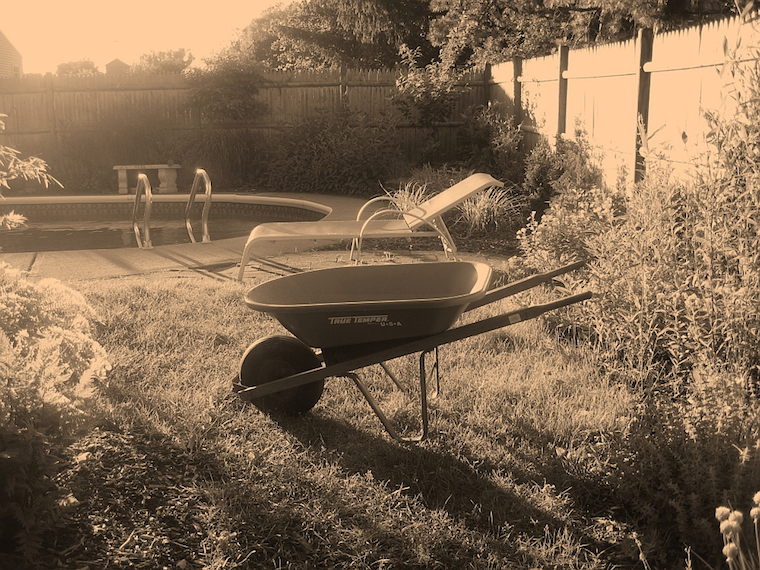
How such a thing as ‘World Naked Gardening Day‘ came into existence is baffling to me (dirt and thorns and ticks don’t seem like a natural match for nakedness) but given what I’ve done thus far on this website, how could I not participate? Before I get nude and start pushing around a wheelbarrow, however, I’d like to point out that gardening is a lifelong passion of mine that I take very seriously.

This week began my spring-time clean-up and garden prep. It’s an arduous process that takes several days, and it takes a lot of physical exertion (as my back will attest) and ruthless mental dedication, as it’s basically just hours of raking up debris and getting it into about 50 large lawn bags then hauling them out to the curb. After that, hundreds of pounds of manure need to be added to the soil around the plants who need a little boost. All of that then must be covered with healthy few inches of mulch. Then there’s the ruthless pruning of trees and shrubs, and the thinning out of overgrown patches of plants, or the replanting of those items that got lost in this wild winter. In other words, gardening is serious work. It’s peaceful work too, and a Zen-like calm settles on me every time I’m in that zone.

The results are more than worth it, and by results I don’t just mean the beauty of the garden, but the peace and contentment the whole process bestows upon those who appreciate it. Such peace may be found in the cultivation of an ostrich fern, or the maintenance of a sweet woodruff patch. Contentment can be culled from the premiere of the peony parade and the delicate shading of the celadon poppy. The subtle shifting hues of a hydrangea and the hot fiery blooms of a prickly pear contrast nicely, while some foliage is just as fine as a fancy butterfly-luring flower. Despite all of that, and my self-taught wealth of gardening knowledge, you probably just came to see some nude gardening, so in the name of World Naked Gardening Day, have at it (you twisted perverted fucks).

PS – How many double-entendres can you dig up in honor of the day? Plow this!

Continue reading ...

Red-Headed Witch (Hazel)

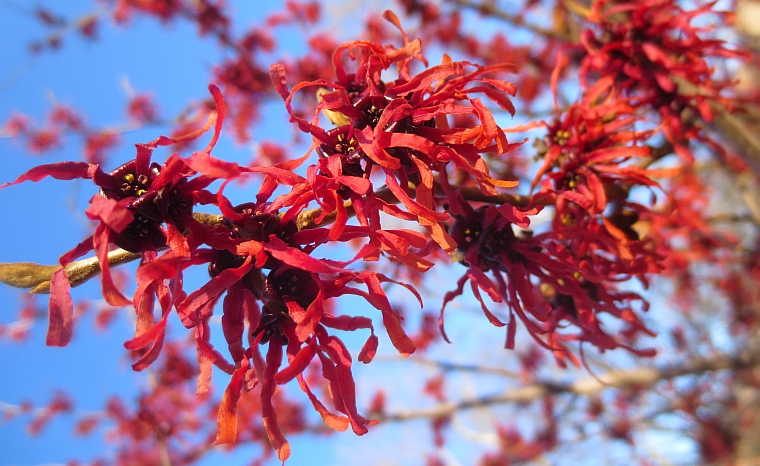
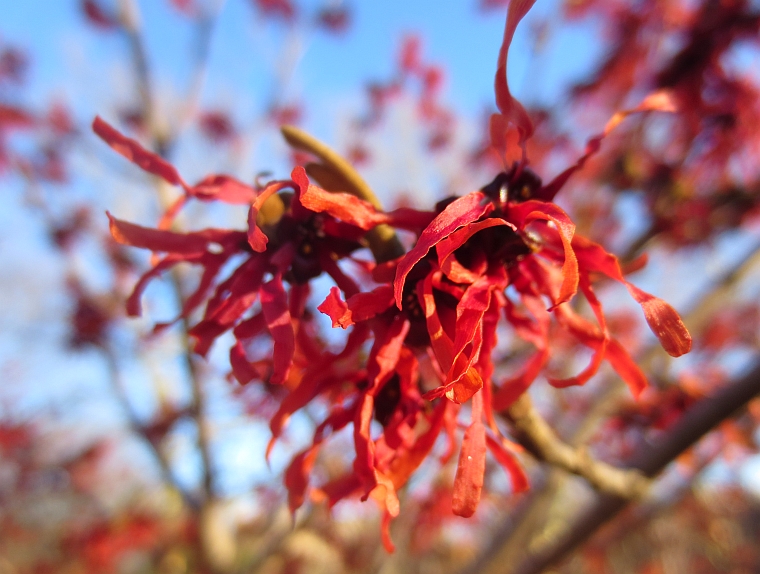
Along the Southwest Corridor Park in Boston, I seek out these witch hazel shrubs every spring. There are yellow versions in the Boston Public Garden, but these are closer to my place, and their color is rarer than their more common yellow counterpart. The fragrance is slightly less compelling, but on such a windy weekend it made no difference either way. The scent of flowers is meant for still evenings and quiet mornings, preferably on the warm side.

While technically not ‘blooms’ the colorful plumage seen here appears as such, making a magical impression of flowering wood. Like the American dogwood and the Judas tree, there’s something elegant and exquisite about a tree or shrub that blooms on bare branches, before the leaves show up. The Japanese cherry is another good example of this, as is forsythia. All is about to commence. We’ve waited long enough.

Continue reading ...

Burst of Crocus

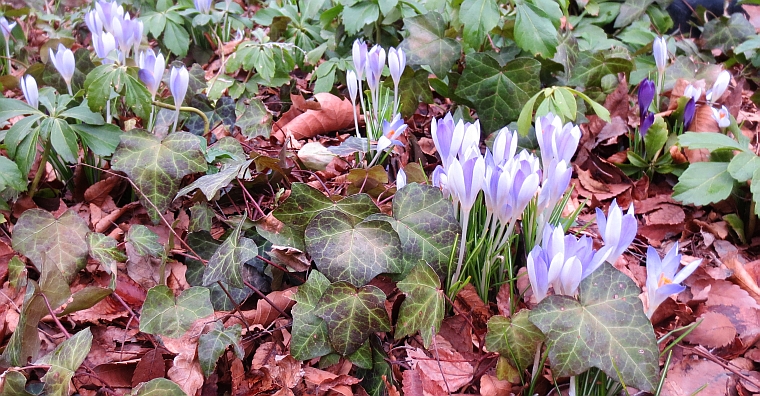
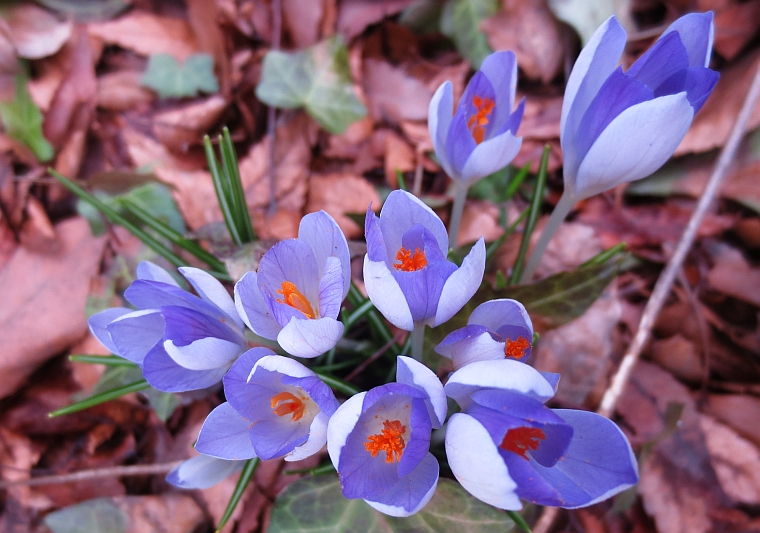
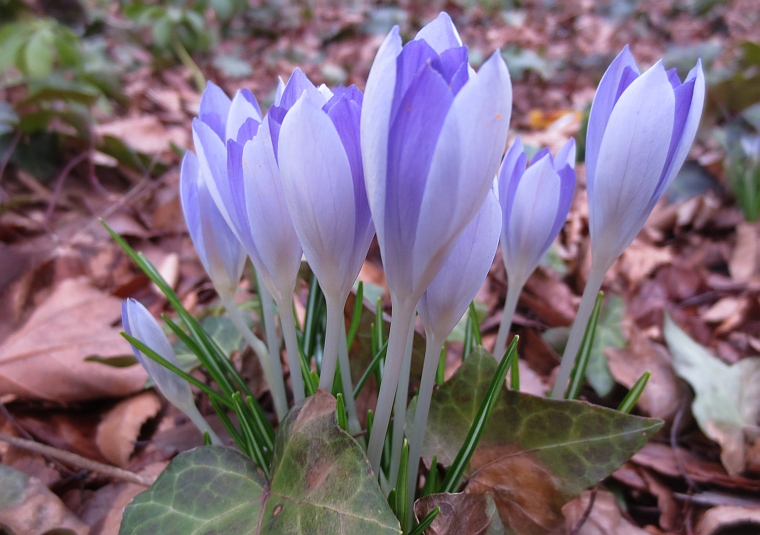
The island in the middle of Braddock Park features a fountain and a line of trees protected by a wrought-iron gate. Beneath the trees are patches of ivy and a few clumps of spring flowering bulbs. The first – these lavender-hued crocus – are a bright burst of happiness, and one that I was not expecting. We’re behind because of all the snow, but we’re getting there, and my heart jumped when it caught sight of these beauties.

I planted a great number of crocus in the backyard back in upstate NY, but with all the hungry squirrels and chipmunks it’s unlikely that many of them survived. For some reason if they make it through the first season they’ll usually last. It’s the first season that’s the most dangerous. The animals sense newly-disturbed ground and smell the seductive relatives of saffron, feeding upon the corms in the fading warmth of fall. We’ll see if any made it through the wilderness. I’ll remain hopeful.

I’ll also keep trying, because there is no greater harbinger of spring than these happy blooms. From the dreary brown and gray detritus of winter, the bursting of the crocus gladdens the weariest of hearts.

Continue reading ...

Apathy Breeds Beauty

Many years ago, I convinced my parents to buy me a Butterfly amaryllis for Christmas. At the time, it was a new introduction to the market, and was priced accordingly. Billed as a rare South American import, I cradled it lovingly in my hands before potting it up and setting it up in a prime southern-exposed window, beside a humidifier that kept the room in a near-tropical state. The plant promptly sent up two spindly leaves, the ends of which soon curled and burnt. It survived, but never thrived, despite my extra administrations. As for the exotic blooms, they never came. Eventually I gave up and it went the same way as other plants I’ve pampered and fussed over – such as a lady’s slipper orchid from White Flower Farm (the most expensive perennial I’ve ever purchased – dead after two years of watering with dechlorinated water. You try keeping that shit up in the heat of a Northeastern July).

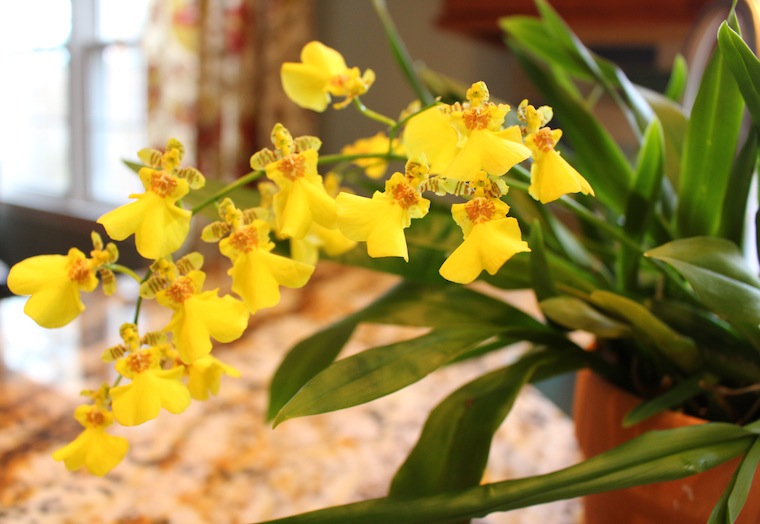
Sometimes, the more you coddle, the less you get. And vice versa – as seen in the photos of this Oncidium orchid. I picked it up from Trader Joe’s on a whim last year, to accentuate the new kitchen, and I’d planned on throwing it out once its bright blooms faded. After that happened, however, the foliage remained bright and green, and it seemed in good health, so I put it in the front window near the other houseplants and soon forgot about it except to water it once in a while.

This past summer, when remembering to water it again, I saw it had produced a flower spike that was just about to start blooming. I almost missed it. Then, just last week, the same thing – another flower stalk already in bloom. I quickly added a bit of Miracle Gro to its monthly watering, and felt a little bad at my apathy toward such a strong performer. (Plants get me all anthropomorphic – even more-so than animals.) I’m not sure what I’m doing right, as the humidity in the house is typically low at this time of the year. I think it’s a combination of unintentionally sparse watering habits, and a slightly potbound situation (a number of plants will only bloom once their roots start crowding in on themselves.) Whatever the reason, it’s pretty – and beauty is a harbinger of the upcoming season. At least indoors…

Continue reading ...

Bittersweet/Bitter

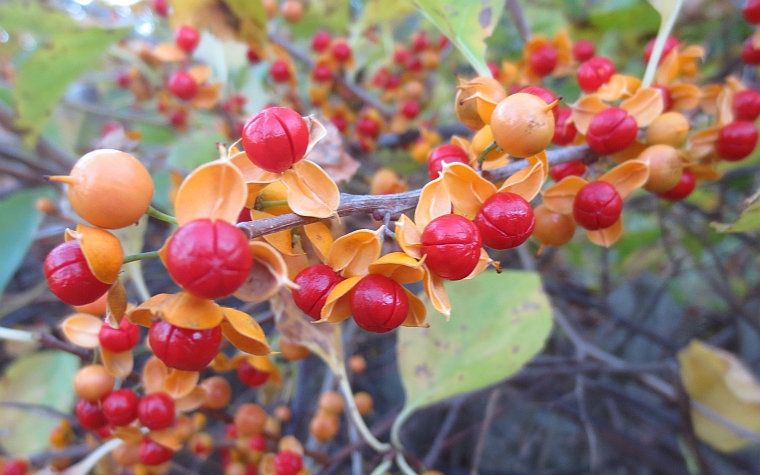
My friend JoAnn/Josie/JoJo-Dancer instructed me on how to pick bittersweet – that ubiquitous fall favorite that is actually becoming a noxious invasive in many parts of the country. Despite that, it brings a fall beauty to doorways and tabletops and mantles, if picked correctly. The time to cut them is when the “berries” turn yellow, but before they burst open to reveal their inner orange. Most of us (myself included) waited until they were in full color to clip, but if you wait that long they fall apart. If picked when intact and unpopped, they will open on their own accord and hold their color – and this beauty – for much longer.

At a time of the year when most things are beginning the brown and gray march toward a certain winter, these color bursts are a welcome bit of cheer, but their name is redolent of what’s really going on, so I’m going to include the musical clip below of Me-Shell NdegeOcello’s ‘Bitter.’ Many years ago it got me through a cheerless winter in Chicago, because sometimes you have to go through the pain to get out of it.

Until the winter arrives, however, I’m taking the bitter with the sweet, and keeping the color on the vine. There is more of fall to come.


Continue reading ...

A Long Washington Weekend ~ Pt. IV

My previous visits to the US Botanic Gardens were always restricted  to the interior – the large glass greenhouse that offered an other-worldly chance to get out of the city, especially on chilly February days. On this trip, however, and on a breezy but nice October day, we walked outside into the gardens that stretched beyond the main building.

An unexpected delight, they carried on the secret-garden aspect of the inside, offering further respite from the political machinations of this country. Meandering paths obscured by walls of high grasses and delicately manicured native shrubs and bushes invited the weary walker onward, while late-season surprises waited to reveal their stunning blooms.

First and foremost among surprises was this white lily. Long past the blooming period for most lilies, this unexpected diversion leaned over the walkway, insisting on being sniffed. Its perfume stopped the day for me, and made an instant memory.

A small pond hosted dragonflies and water lilies, along with the blue spires of this moisture-loving plant. The importance of a water element in a garden should never be underestimated.

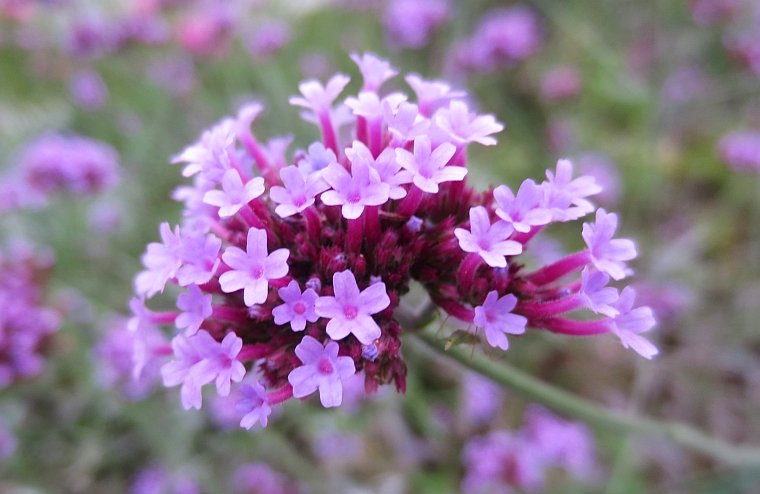
While many of the grasses had gone brilliantly to seed, waving their grains in the air like they just didn’t care, there were other plants still in full bloom, like this butterfly favorite.

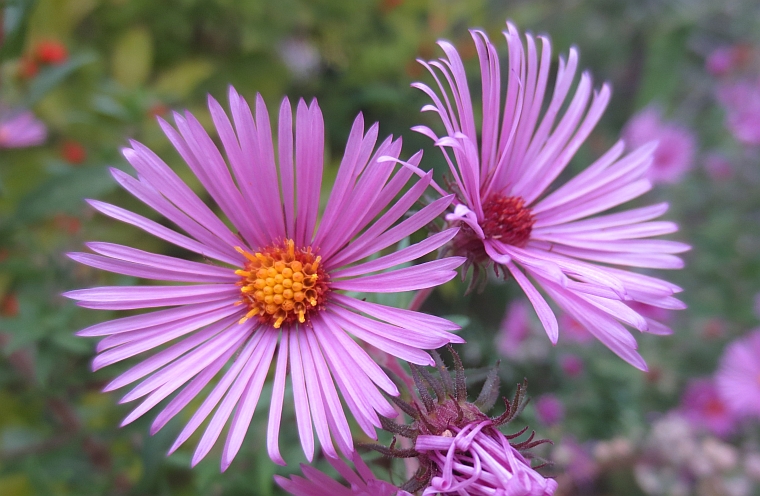
The real powerhouses at this time of the year were the asters, in bright purples and pinks.  This is their time to shine.

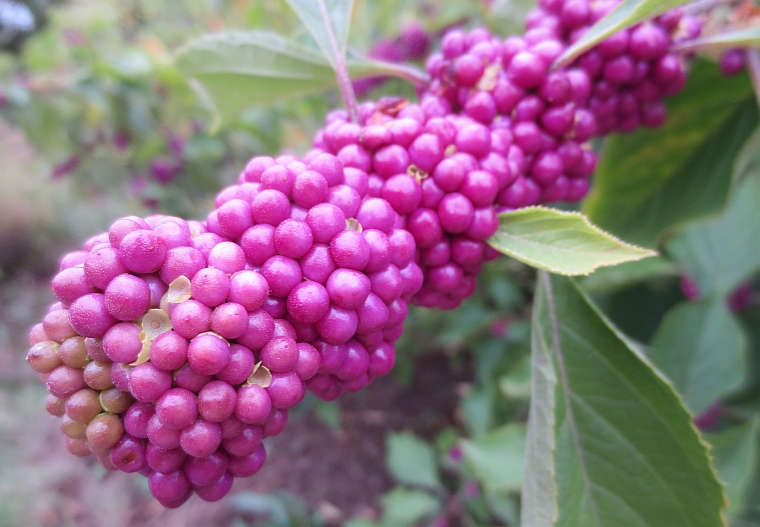
It’s also the time to reap the harvest of the beauty berry, electric in hue and bold enough to rival any blossom. The perfect finale to our time in the garden.

Continue reading ...

A Blue Extension of the Season

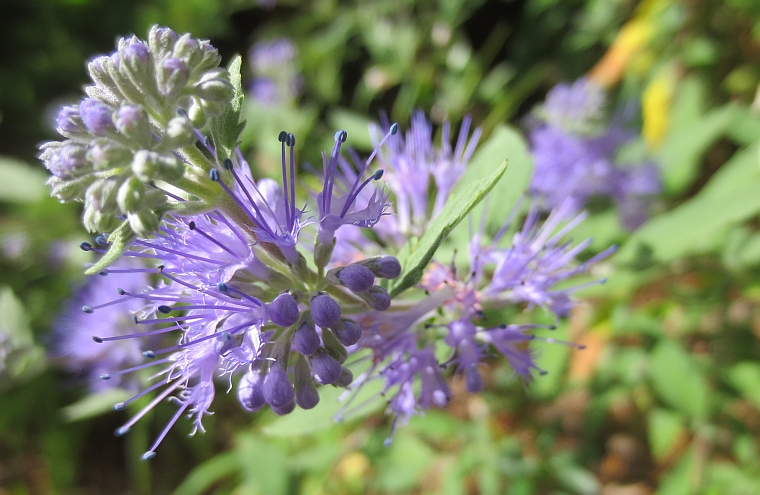
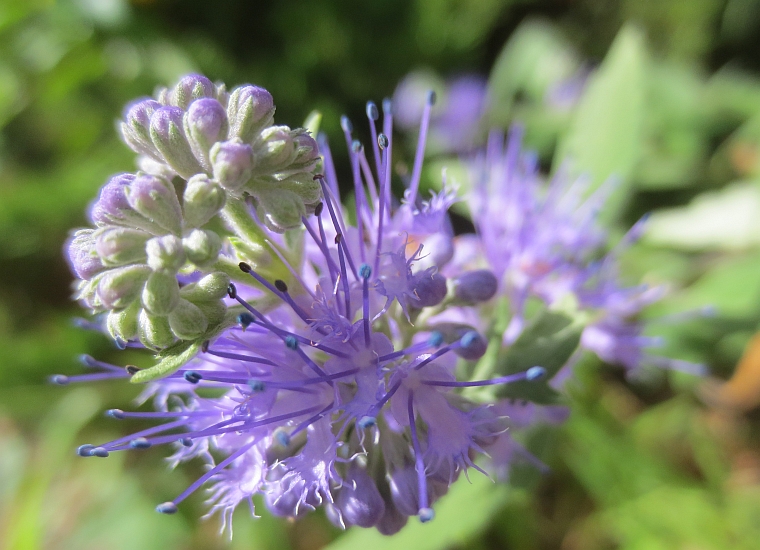
I have mixed feelings about plants that bloom this late in the season. Part of me is glad to see new colors and forms in the garden at this time, but another part has already given up. It’s why I only ever included a couple specimens of Sedum ‘Autumn Joy’. By the time the show starts it’s already time for the season to be over. Focus has already shifted indoors. The rest of the surrounding area is brown with the die-down of scorched ferns and wilted hydrangeas.

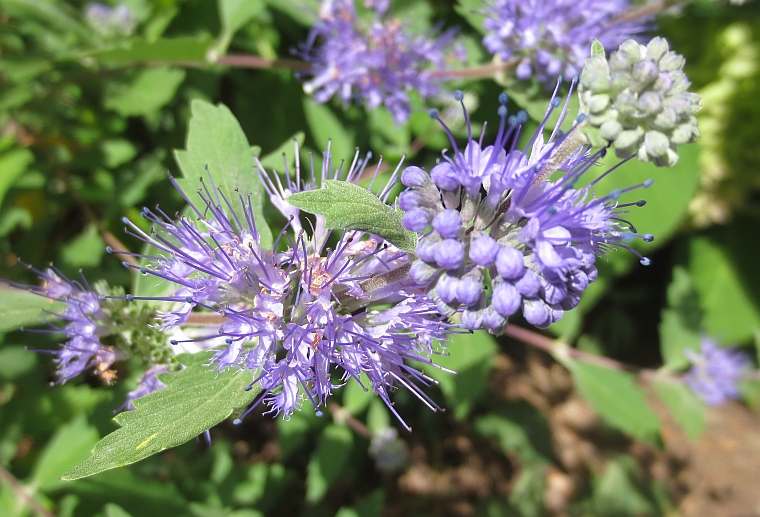
Yet there are joys and thrills of opening this late in the game. For starters, there isn’t much competition. Even the annuals, which will flower until the last possible moment, are looking ragged and worn. As noted, the ferns and other foliage have all been burnt and scorched by the high season. The plants that do begin their blooming cycle now are few and far between, which makes them all the more valued. One of the most striking late-bloomers is this Caryopteris – more commonly called Bluebeard. Not only is it rare in its late-hour show, it also offers one of the closest hues to blue that is produced in the natural world.

As I said, I’ve already pretty much written off the garden by this point in the year, but blooms like this remind me that as long as the sun lingers there is life – and some of it quite colorful and gorgeous. That’s a rather pleasant reminder, and a wonderful way to see the season through to the end.

Continue reading ...

Coleus So Colorful

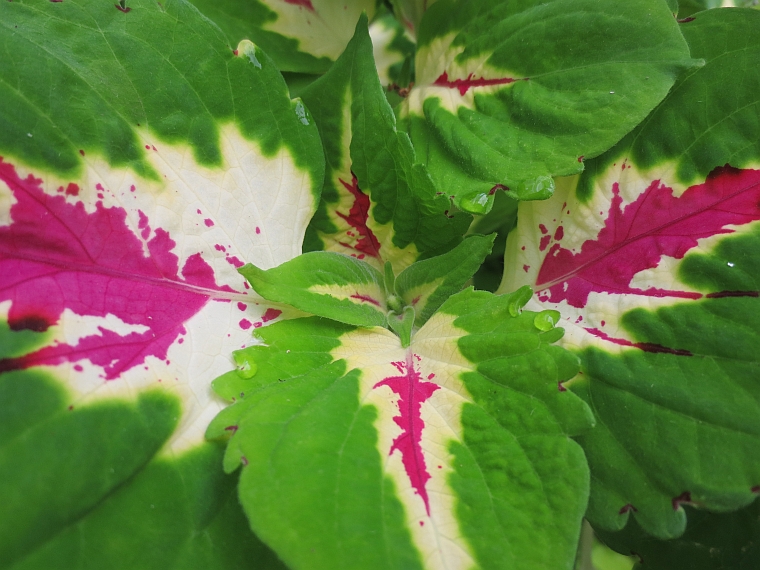
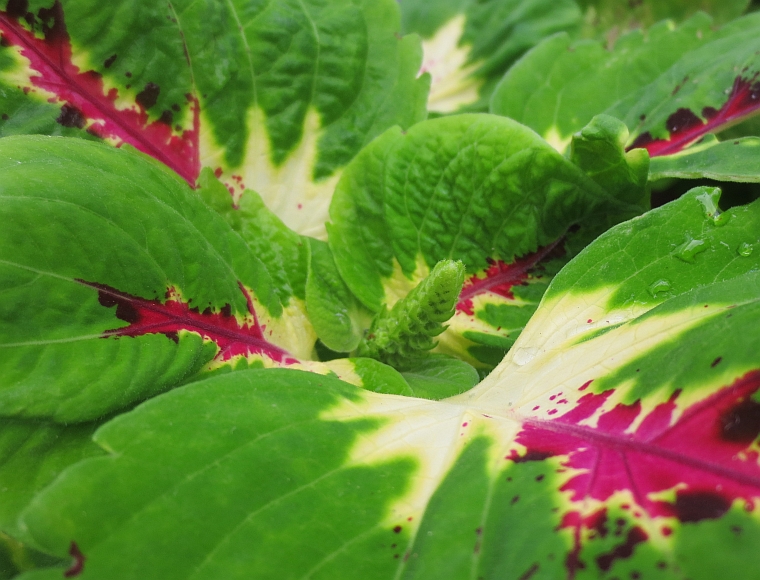
These easy-to-care-for annuals provide this fancy foliage until the frost will strike them down. Near the end of the season, I allow them to flower (something I prevent from happening earlier by pinching off the buds. This allows for bushier plants and a longer look for freshness. While flowering is pretty, it zaps a great deal of energy from the plant. A number of plants expire after flowering and going to seed. It takes that much energy.) By September, there’s no point in prolonging the inevitable, and so I let them develop their buds and flower.

In the case of this coleus, the blooms will be insubstantial, but interesting. They come in a blue-purple hue that contrasts dramatically with its foliage. Salvia-like and spiky, they are better viewed up-close. If these manage to make it out before the frost, I’ll try to capture the final show.

Continue reading ...

Stargazing

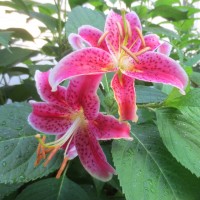
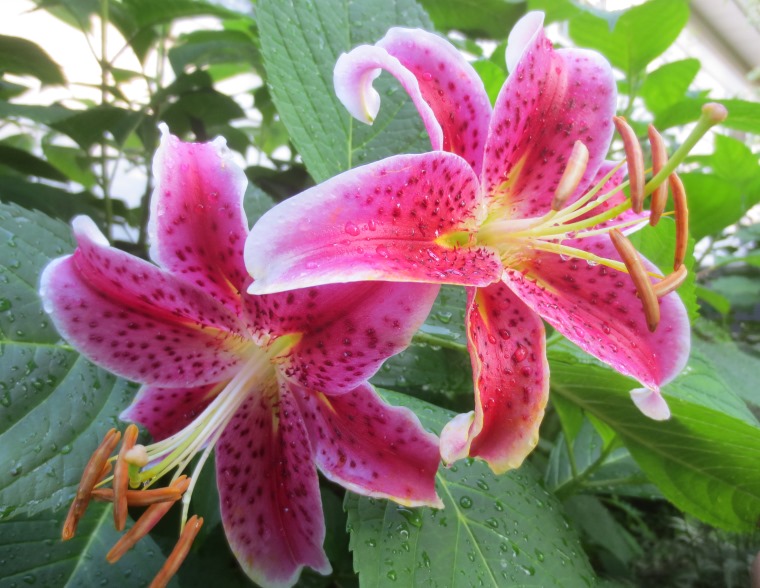
Behold, the Stargazer Lily (or at least a very similar cultivar ~ I’ve lost track over the years.) A staple of the higher-end bouquet you find in markets and florists, this powerhouse-flower comes with a rich fragrance, and some dangerous pollen if you don’t catch it in time (many cheeks and shirts have been stained in instances where unsuspecting sniffers have leaned in a bit too close.) This beauty was an unexpected surprise. It is the one remaining lily plant that the critters haven’t yet devoured. It’s at the base of a hydrangea that never blooms, so I always forget about it until it’s sometimes passed its peak. On this day, following a rainstorm, I was making the garden rounds when I caught it out of the corner of my eye. The bright pink colors were crying out for attention, while the perfume lassoed my nose.

These are relatively easy to grow (I honestly don’t do anything for this one, as I didn’t like where it was and didn’t care to invest any extra effort.) Because of their ubiquity, and their flashy and overpowering presence both in look and scent, they always seem a little out of place in our more subdued garden. Yet it makes a fine accent plant, and a great cut flower, so I may be putting a few more in. There’s always an extra jolt of gardening enthusiasm in the weeks before we put the garden to sleep for the season, and planting bulbs (particularly when I will most likely forget about them) always provides for pleasant surprises when the summer comes again.

Continue reading ...

Hot Pink Against A Cool Blue Sky

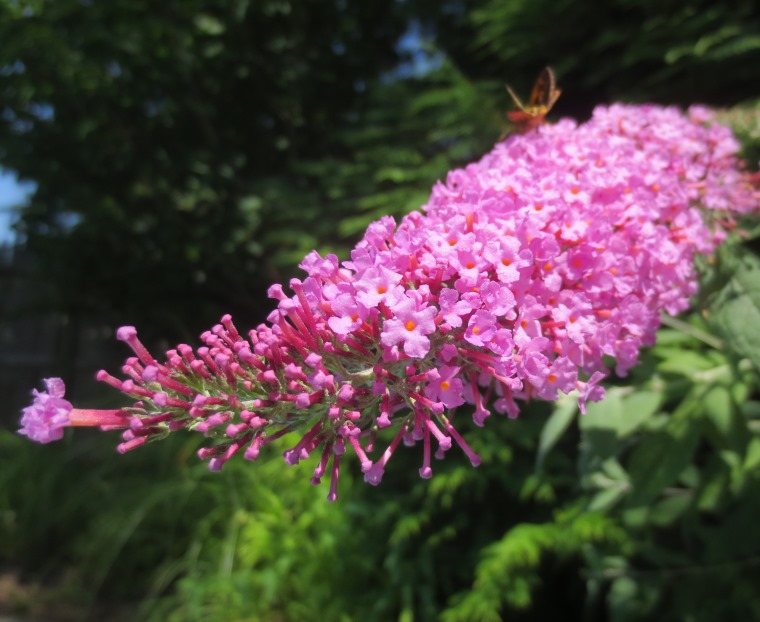
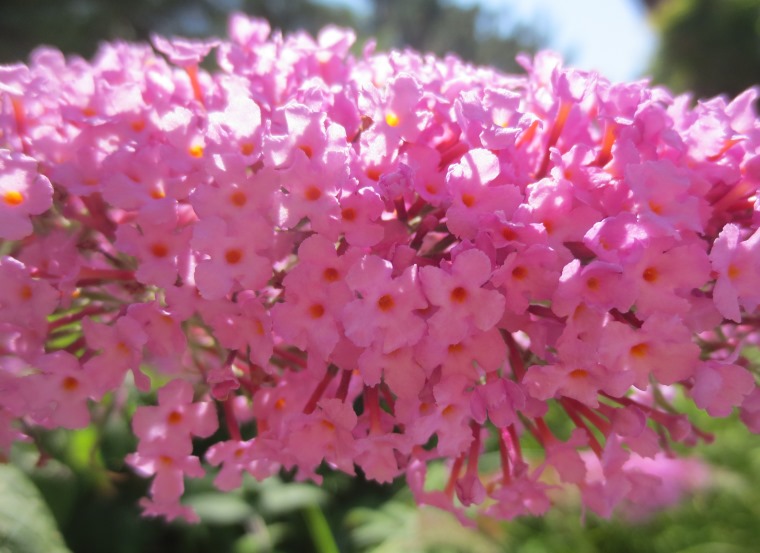
This neon pink beacon brings all the butterflies to the yard, and they’re like, it’s better than yours. It belongs to the aptly-monikered butterfly bush, around which the fluttering creatures congregate, unfurling their tongues into the deep-throated blossom bases. Attracting yellow swallowtails and magnificent monarchs, along with the elusive Karner Blue butterfly in the sky, it is a favorite among such flying brethren.

While it’s almost outgrown its position by the pool, I’m hesitant to move it as it continually puts on a decent show every year. That sort of performance and perseverance does not go unnoticed. I may try to establish a new one in a better spot, as they make wonderful magnets for wildlife, including the bewitching hummingbird moth.

Continue reading ...

A Late-Blooming Hosta

Most of the hostas have finished their blooming and are well into filling out their seed pods with plump futures. This variety, deliciously named ‘Guacamole,’ is a later-blooming variety, coming at a time of the year when most flowers are running out of steam. It’s a welcome sight, adding a bit of refreshment to a fatigued garden. Located in a quieter portion of the side yard, it inspires contemplation and reflection. It’s beneath the umbrage of a seven-sons-flower tree, which is fully in bud and about to intoxicate the bees with its own fragrance. Taken together, they are a reinvigorating reminder that the summer has not yet begun to leave.

Continue reading ...

Lavender Lust

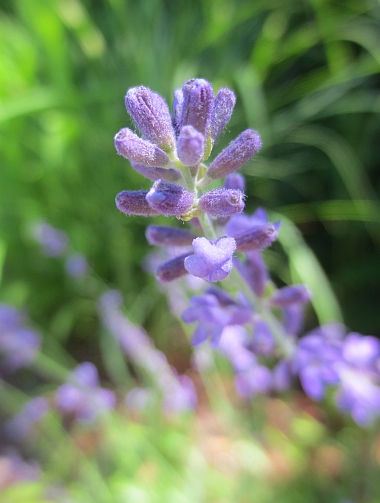
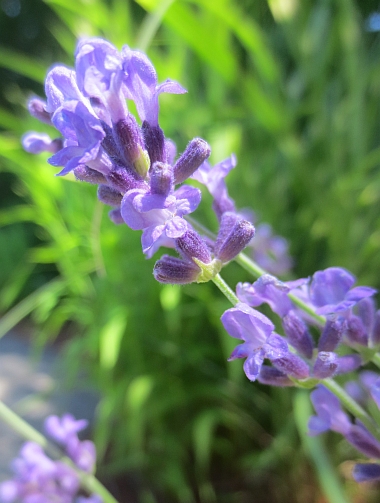
Even when the heat of day has rendered the concrete walkway around the pool unwalkable in bare feet, the lavender remains upright and true. Though the main flush of flowers has long since passed, these hardy plants will throw out a few random blooms from now until the fall. Long a signifier of peace and calm, lavender has been a favorite of mine since I was a kid. The fragrance alone is worth putting in a few plants, but the neat and tidy form, along with the soft gray-green foliage and enchanting blooms further recommend this as a necessary garden addition.

Its rustic elegance can be utilized in both formal and cottage-style gardens, and its silvery-gray hues lend a cooling aspect to the hottest days of summer. Individually, the bloom stalks are delicate and small – taken together they form a cloud of purple, a lavender haze that bees adore and worship. I don’t blame them.

Continue reading ...

My, What Big Ears You Have

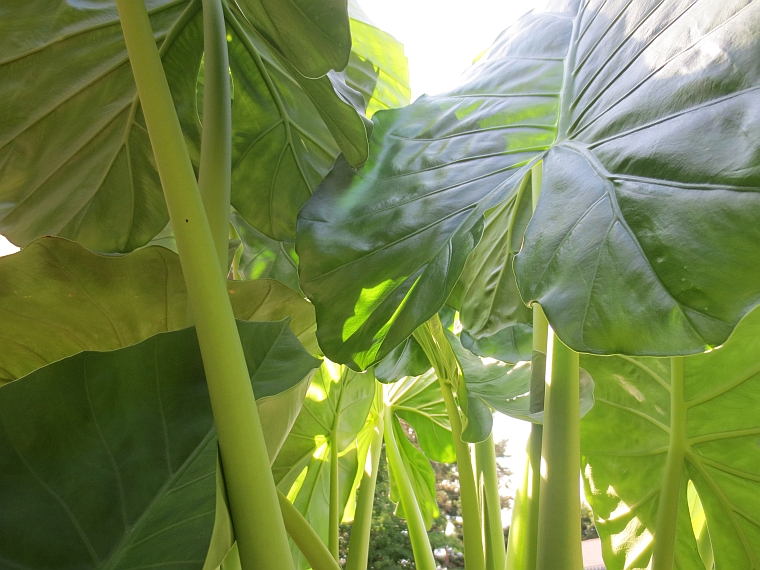
Tropical of form, gigantic of structure, and immense of leaf span, these plants are affectionately known as elephant ears. They provide the perfect backdrop for a pool or water feature, with their waxy and wavy leaves rising high into the sky and dwarfing all else around them. This is the first year I’ve successfully managed to grow them. Last year I tried starting them from a few sad corms that never quite took off, but this time I used plants that had already sprouted. I transplanted them into enormous pots to allow for ample root growth (and there is much; rumors of busted-out clay pots are easily believable). The results are spectacular, even if these photos offer but a glimpse of their glory.

At least three feet in length and width, the leaves are an accurate approximation of their whimsical namesake. Lending the patio a tropical aspect, they also have a personality that changes upon circumstances I have yet to figure out. At times the foliage stands up straight – erect and pointing to the sky – a rigid stance that gives a strong vertical flavor to the proceedings. At other points it relaxes, arching gracefully in soft curves, delicately bobbing in the breeze. I need to make further observation and tests to see if I can figure out what is going on. Both pots are relatively close to other plants, which may explain the phenomenon. Many plants will grow away from other encroaching plants, resulting in the rigid, vertical form I’ve seen this one occasionally take. It may also indicate a watering issue. Aside from the more obvious signs of wilting, some plants will change form when lacking or wanting water. Whatever the case, it’s a beautiful mystery that will play out over the rest of the season. I will keep my eyes on the ears.

Continue reading ...