Fresh & Fruity

Sangria has never been one of my favorite drinks – too messy, too much mixing of solids and liquids, too sweet – but when done this way, it was something palatable for everyone. This version was a ‘Tropical White Sangria’ – using white wine, peach schnapps, a bit of citrus vodka, and a ton of fresh fruit. Made the night before, the fruit exudes its own juice, and take a bit of the liquor in as well for a beautiful, and delicious, drink.
Don’t let its fruity appearance deceive you – this is one potent lady, drawing her power from the addition of citrus vodka and peach schnapps, and of course the white wine. The original recipe also called for a bit of seltzer water to be added just before serving, but it’s been forgotten the both times I’ve made it, and never missed.
Tropical White Wine Sangria

 ½ cup peach schnapps
 ½ cup citrus vodka
 1 (15 oz.) can pineapple rings, in own juice, not sweetened
 ½ cup juice, from pineapple can
 1 bottle dry white wine , like sauvignon blanc
 1/4 cup seltzer water
 1 kiwi peeled and sliced
 4 strawberries, quartered
 4 slices lemons
 4 slices oranges
 4 slices limes
 ½ cup raspberries (about a handful) ¬
 1 tablespoon granulated sugar

Do not open bottle of seltzer until ready to serve. Place slices of lemon, orange and lime in a large sangria pitcher and dust with the granulated sugar. Lightly mash with a wooden spoon until fruit begins to break down and sugar begins to dissolve. Cover fruit with pineapple juice. Quarter 3 of the pineapple slices and add to pitcher. Add remaining fruit, peach schnapps, and wine. Stir lightly, then refrigerate for at least 4 hours. Right before serving, add seltzer to pitcher. Garnish with orange or kiwi slices & serve with ice.

Continue reading ...

The Unsniffed Scent ~ My New Cologne

No, it’s not some mash-up of the Spicegirls and Tom Jones – ‘Spicebomb’ is the new cologne by Viktor & Rolf – a sort of male counterpart to their successful ‘Flowerbomb’ perfume. When the reviews first started trickling in, it sounded like something I would love – bergamot, a bit of grapefruit, and pink pepper to begin with – then a base of tobacco with a touch of leather. However, I’ve read of fragrances that included all my favorite scents, only to be disappointed, if not outright horrified by the end result (hello Prada).

On my last trip to Boston (and, I will admit, procuring Spicebomb was part of the impetus for that visit) I hit up Saks Fifth Avenue, which I had read was offering it for sale. The salesperson there crushed my dreams with one fell swoop when she said it would not in stock in Boston until August. I didn’t think it would be at Neiman Marcus, but I tried, and I even made a feeble, half-hearted stop at Barney’s on the off-chance they had something… all to no avail. The city of Boston did not have Spicebomb, and it didn’t look they were getting it anytime soon.

Now, here comes the ‘Do as I say, not as I do’ part of the blog. Normally, I strongly advise against buying cologne scent unsniffed. First off, because you will never really know what it smells like no matter how many fanciful terms of description they can conjure. Second, even if you have smelled it in a magazine or a sample, it will smell slightly different on your own skin, and everyone’s body chemistry produces varying olfactory reactions. Third, it is far too easy to fall prey to advertising (and yes, I’m talking about the debacle of the naked guy for Zino by Davidoff, the worst fragrance I ever bought and never used).

Still, when all the reviews sound like the perfect concoction of what I most want in a cologne, and the fact that I was not averse to Flowerbomb, I took a chance and ordered a bottle online. I know, I know… but it’s only good advice if I don’t take it. When it arrived from Nordstrom, I pulled the pin of the grenade bottle and prepared for the worst. Happily, luckily, and giddily, I loved what I smelled.

But don’t ever do what I just did. Because I said so.
Continue reading ...

The Madonna Timeline: Song #68 ~ ‘Fever’ – Late Winter/Early Spring 1993

{Note: The Madonna Timeline is an ongoing feature, where I put the iPod on shuffle, and write a little anecdote on whatever was going on in my life when that Madonna song was released and/or came to prominence in my mind.}

Never know how much I love you…
Never know how much I care…

Ahh, Fever. Like so many pop references, I only know Peggy Lee’s ‘Fever’ thanks to Madonna, and after hearing the original (and countless other covers), I really have no preference. Madonna’s version came out as the B-side to ‘Bad Girl’ in the first half of 1993, and at a time when the ‘Sex/Erotica’ backlash was at its worst. As such, an ‘Us’ magazine story recounted the tale of a gym whose patrons only got into the groove when they played the instrumental version of Madonna’s ‘Fever’ – a joke in and of itself.

While I remember the song when ‘Erotica’ first came out in the fall of 1992, and then a brief resurgence when she performed it on ‘Saturday Night Live’ and the Arsenio Hall Show in early 1993, my main memories came in the early spring of that year, when the CD Maxi-Single of ‘Bad Girl’ was on perpetual play, and much of it occupied by the ‘Fever’ remixes.

Catchy as hell, with vocals as dry as my favorite martini, this was not a landmark moment in Madonna’s career, but I do view it favorably, and as covers go she could have done a lot worse (bye bye Miss American Pie indeed). Still, it was mostly filler for the otherwise-brilliant ‘Erotica’ album – and totally unnecessary at that.

Of more import was the video, which went uncharacteristically ignored ~ a pitiful shame, as it stands as a stylist’s dream-stash of images. Jittery, hot, and soaked in flaming color, it set the stage for the brilliant cool-down of ‘Rain’.

What a lovely way to burn.

Song #68 ~ ‘Fever’ – Late Winter/Early Spring 1993


Continue reading ...

Naked, Wet, and a Mess

The erratic drumming of falling water beads, pounding incessantly on the aluminum shell of a window air conditioner and reverberating throughout the high-ceilinged room – this is the sound of a war waged by the rain, against my senses, and has been the bane and boon of a night in my Boston bedroom.
At first it is jarring, especially if the rain has been fine, or more of a mist, where the rivulets of water don’t begin running for hours after the overcast haze has begun. Then the first few attacks are startling and obnoxious, as a bit of disbelief gives rise to anger at the relentlessness of the random yet steady assault of drops. It would be torturous to some, but I’ve grown accustomed to it, and it comes with the territory of a rainy patch.
As the night wears on, and the rain refuses to let up, the tapping takes on a different tone, moving from agitated annoyance to reassuring comfort. The din becomes a buffer, especially when the silence has become overbearing. Disruption can be a welcome distraction from thought, the way those recordings of oceans or rainforests provide background noise to aid in sleep.
At the start of the irregular cadence of drips and pops and snare beats, I always think I’ll go crazy. I toss and turn a bit if sleep doesn’t come soon, half-cursing, half-muttering at the uninvited noise. I work out strategies of clever invention, cone-shaped objects designed to gently absorb the pitter-patter, or a simple tray where the first minute of rain pounds upon it, but eventually softens its own blow. In the end, the mind is distracted enough to allow for sleep to sneak in, and by the middle of the night it has become a comforting drone.
Then, upon waking to find a glass of water or padding across the hardwood to use the bathroom, the sound is a friend I didn’t realize I had, a balm on the scary silence the night usually affords.
A reminder that we are not in control of this world. A gentle tap on the shoulder that someone else – God or the universe or some other power – is still in command. An echo of every rainstorm that came before, a foreshadowing of every rainstorm to come.
Continue reading ...

A Virgin Massage Voyage

My first massage, courtesy of the Mandarin Oriental in Boston, was beyond anything I could have imagined. The only thing to which I can liken it is the last ten minutes of a really great yoga session, where all you have to do is to lay there and feel the peace and relaxation – only this goes on for as long as the massage lasts, and you don’t need to do any sort of strenuous exertion beforehand.

In fact, the only thing I had to do before the session was to enjoy the thermal experience that the Mandarin offers – in the form of a crystal steam room, vitality pool, and a rain shower that washed away any and all worries. But before that, there was the welcoming ceremony of herbal tea and a scented hot towel. Beside a peaceful waterfall, I removed my shoes and slipped on a pair of slippers. An attendant brought me back to the spa area and set me up with a locker and a tour of the facilities.

With its soothing lighting (tranquil and soft), sumptuous bathrobes (they knew the way to my heart), and insanely sensual offerings (the showers alone, with their intoxicating selection of body wash, shampoo and conditioner, were a revelation) the Spa at the Mandarin is an expert study in the art of rejuvenation and relaxation. Advised to arrive 45 minutes before my scheduled massage time, I immediately realized the benefits of this as I took a quick shower than immersed myself in the vitality pool. Warm water swirled amid a pulsating stream of hot bubbles, and for this alone the experience was worth it. After a glorious period of decompression, I headed into the crystal steam room for a spell before one final dip in the pool, and another shower (the body wash was just that good). For the last fifteen minutes before the massage, I stretched out in the relaxation room – and a more aptly-named space must not exist.

When my masseuse appeared – a soft-spoken smiling gentleman named Kenny who would prove to be my portal to nirvana – I was already in a state of calm, but I had no idea how much calmer things could get. He went over the process, offered me another cup of tea, and then it was time.

Now, I’m not one who enjoys the touch of strangers. I don’t like the accidental brush in the elevator, and I am adamantly opposed to social touching unless I’m three sheets to the wind (in which case I’m slightly more at ease with hugs and the like). But during the daytime hours, I recoil at contact, and even have a problem with people being remotely within my ‘personal space’. However, for a massage at the Mandarin, I was willing to suspend my issues, let go of my inhibitions, and simply enjoy the experience for what it was. Well, apparently the wrong people have been touching me all my life because this was the single more enjoyable thing I’ve done in a long time (and I’m selfish enough to partake in a lot of enjoyable things – hello Tom Ford Private Blends).

Between the invigorating essence of the Quintessence oil that was used, the expert maneuvering of the masseuse’s hands, and the over-riding calm of the whole atmosphere, I felt the closest to heaven that humans could hope to reach. I was an instant massage convert, and when it was over it felt like I had done the most addictive and pleasurable drug in the world. Floating back to the showers and vitality pool for one final round, I didn’t want it to end.

Many thanks to the incredible staff at the Mandarin Oriental, and a word/link of advice for anyone wondering what to get me ever again: see this Mandarin Oriental Spa Brochure. (It may have knocked the Tom Ford Private Blend collection down a notch or two on my gift wish-list.)
Continue reading ...

From Beard to Pornstache


Last week, in a deliberate act of pre-meditation and long-thought-out determination, I shaved my beard. I had been itching to do so for weeks, but it just didn’t feel like the right time – or the right weather – until last Wednesday night. Even though I’m such an image shifter, it was more fun that I thought it would be (a quick dramatic change isn’t as easy to pull off as one might imagine, even with years of practice), and this was a joyously instant turnabout.

I left a mustache (pornstache) for a brief bit and took some fun Tom of Finland/Freddie Mercury shots that probably verged closer to the Village People, but you can decide for yourself if and when I make up my mind to shred that last bit of good judgment and post them here. (One is already up on FaceBook and Twitter, so if you’re not friends or following me respectively, what are you waiting for?)

On the beard removal – it was also a bit more emotional than I had foreseen. Being that this was the first proper beard I’d ever grown, and that I’d become rather attached and protective of it (a barrage of insults will do that), I realized that I’d been delaying the shearing process because I was genuinely afraid to let it go. There is definitely some truth to the notion of beards being used as barriers, as well as something behind which one can hide.

Growing a beard made me feel both older and more distinguished, and instantly took me out of the gay guy’s impossible quest to maintain twinkhood. Now, I realize I haven’t been a twink in twenty years, no matter how tight the jeans or flattering the light, but it’s a dream we all keep in the back of our heads, admitted or not. Having a beard immediately allowed (forced) me to give up that ghost, and what followed was an exhilarating feeling of freedom. The shackles of trying to be forever-young were heavier than I realized, so used to them had I become over thirty-six years.

When it came off, I didn’t really see or feel the change right away. Sometimes you only get that in the reactions of others (and my husband is one of the least reactive people I know). It wasn’t until I went into work the next day that I realized what a change had been effected.

I did not feel naked, as some men claim. (Please, you don’t know from naked. I do.) I felt a little cleaner and lighter, less cluttered and hidden, and it was a change I needed. The beard may be back next Fall, but for now it’s going to be smooth sailing.

(The one drawback was that two days later I realized I’d have to shave again. And again. And again. And that, frankly, is a pain in the neck and the jawline.)

Continue reading ...

The Madonna Timeline: Song #67 ~ ‘X-Static Process’ – Spring 2003

{Note: The Madonna Timeline is an ongoing feature, where I put the iPod on shuffle, and write a little anecdote on whatever was going on in my life when that Madonna song was released and/or came to prominence in my mind.}

I’m not myself when you’re around
I’m not myself standing in a crowd
I’m not myself and I don’t know how
I’m not myself, myself right now…

“If you’re afraid of loneliness, don’t marry.” ~ Chekhov

The quiet plucking of a guitar begins this folk-like piece from Madonna’s over-maligned American Life album, and ‘X-Static Process’ is an ambivalent love song, under-laid with tones of melancholy and resignation, hints of despair and slivers of hope. It came at a time when she was supposedly-happily-married to Guy Ritchie, yet it stings of a disconcerting lack of fulfillment, and questions of self-identity. A whisper of a song, it is imbued with ambiguity, concerns of love and dependence, and the notion of self versus couple.

When I first heard it, I thought back to the beginning of every relationship I’ve ever been in ~ the first few days and weeks of hazy make-believe, when you pretend to be everything you think the other person wants, sacrificing a bit of yourself before making all the less-than-desirable parts apparent. It’s almost a trick of those fabled Victorian girls on the hunt for a husband, when all is the illusion of perfection, the notion of compliance ~ the perfumed entrapment of an insect-enticing flower before the wilting of disenchantment. And it’s always slightly deceptive, both to the suitors, and to oneself.

Jesus Christ will you look at me
Don’t know who I’m supposed to be
Don’t really know if I should give a damn
When you’re around, I don’t know who I am…

Back in the spring of 2003, Andy and I were one year into our current home. Settled, but still new, it was a spring of happiness and hope. Madonna sang this lullaby, harmonizing sweetly into the nights, as Andy slid into the bed beside me and we slumbered until the morning. That was back when he came to bed at a decent hour, back when we fell asleep together, back before his back fell apart again. It seems so long ago.

I’m not myself when you go quiet
I’m not myself all alone at night
I’m not myself, don’t know who to call
I’m not myself at all…

Nine years later – has it been that long? – I go to sleep alone. He says good-night, and then goes off into his own time. Partly due to back pain, partly due to I dont know what else. If I awaken at two or three in the morning, I will roll over, reach for him, and find cold empty blankets. At first, and for a long time, I couldn’t get to sleep for hours without him. It’s like the parent who’s waiting for their college-age kid, home for the summer, to come in for the night. It’s different when they’re away, but if they’re there, you wait. It’s a subconscious anxiety that’s both less and more, and for me it often doubled up on itself, knotting the nights into worry and fret, inducing restlessness and fucking up any idea of a normal schedule.

Jesus Christ will you look at me
Don’t know who I’m supposed to be
Don’t really know if I should give a damn
When you’re around, I don’t know who I am…

Some nights I would try to wait up for him. If I didn’t have work the next day, I’d stay up for a bit, watching television, hoping he’d tire sooner rather than later, but after too long of this it wore me down, and I would succumb to exhaustion or sickness. I’ll still do that on weekends, trying to join in the game like a lonely puppy, trying to keep up with the adults even when I can’t.

I always wished that I could find someone as beautiful as you
But in the process I forgot that I was special too…

It is lonely sleeping alone. Even if he joins me later, I’m still the one who goes to sleep on my own every night. It would seem the anti-thesis of a marriage, of a relationship. It used to bother me more, and part of me wonders if it’s bad that itâ’s slowly starting not to. How far is it from not sleeping in the same room, or the same city? This is the conundrum of marriage – together always, forever apart.

I can make the most beautiful bedroom in the world – paint it in soothing colors, choose the linens and pillows for ample comfort, find the perfectly-tufted head-board, and put on the softest silk pajamas – but it is only for myself. I go to bed alone. Whether here or in Boston – always alone. And if I think about it, that’s the way it’s always been. Back and forth the mind wrestles, a push and pull of mental fatigue, and still the clock ticks ~ 2 AM, 3 AM, 4 AM… How long until madness?

I’m not myself when you’re around
I’m not myself when you go quiet
I’m not myself all alone at night
I’m not myself standing in a crowd
I’m not myself and I don’t know how
I’m not myself, myself right now
Don’t know what I believe…

And then I think back to when we first met, and the way I’d stop in late at night and find him sitting quietly on his couch, in the dim glow of a candle or two, meditating and grounding himself. In a way, maybe this is who he is – a night owl – and my “normal” hours are against his natural rhythm. Maybe he’s simply returning to who he was before he met me. Maybe I’ve been wrong all along.

Jesus Christ will you look at me
Don’t know who I’m supposed to be
Don’t really know if I should give a damn
When you’re around, I don’t know who I am
I always wished that I could find someone as beautiful as you
But in the process I forgot that I was special too

I wonder if other marriages have these doubts. I wonder if I’m a bad husband. I wonder if this is not a big deal at all. I wonder if I’m just the fool who talks about it. But that’s what this sort of song is for. It posits the question, it provokes the thought, it settles nothing. That’s what makes it good, that’s what makes it last. Like a marriage ~ bending, accommodating, giving ~ it yields, it goes back and forth, and it returns, if we’re lucky, to love, to ourselves, to the only people we know how to be. It is, at its best, an ecstatic process after all ~ one without an end or a definitive happily-ever-after, and all the more joyous because of it.

I always wished that I could find someone as talented as you
But in the process I forgot that I was just as good as you

Song #67: ‘X-Static Process’ – Spring 2003

Continue reading ...

The Passing of a Poet ~ The Power of a Poem

Poet Adrienne Rich passed away last month. I only know a few of her poems, but one of them made a huge impact on my artistic view of the world. It was my junior year of college, second semester – right about this time of the year actually. I was enrolled in my first poetry course, and like so many other misinformed kids I thought it would be a breeze. Little did I know that poetry was one of the most difficult forms of writing to both execute and understand. The deceptively happy work of Emily Dickinson was revealed as a masked portal into the darkest psyche of a woman’s heart. The Rape of the Lock was seen as both frivolous and ruinous. And an ancient Grecian urn contained the key to an entire world of artistic understanding.

That poetry course illuminated the power of words, the intricacies of a single letter, the way a single comma or period could change everything that followed. It also showed me that I could and would never be a proper poet. There was too much going on, too much space for disaster, too many opportunities to fuck it up beyond all recognition. But I gained a greater appreciation for the art form, and for one poem in particular.

On a dismal early Spring day, not unlike the ones we’ve had this week, I made my way from the dorm to the small building that housed the poetry class. It was an early course, the way I liked it, and the campus was quiet. A few birds chirped in the misty upper-reaches of a barely-sprouting maple. Wet pavement and moss lined the short walk, echoes of a Grecian urn offering solace before the real warmth of Spring took hold, the solace of finding beauty in words.

Our professor, in his smoky, cigarette-stained voice, at once seductive and on the verge of ragged, read Adrienne Rich’s ‘The Ninth Symphony of Beethoven Understood At Last As a Sexual Message’:

A man in terror of impotence
or infertility, not knowing the difference
a man trying to tell something
howling from the climacteric
music of the entirely
isolated soul
yelling at Joy from the tunnel of the ego
music without the ghost
of another person in it, music
trying to tell something the man
does not want out, would keep if he could
gagged and bound and flogged with chords of Joy
where everything is silence and the
beating of a bloody fist upon
a splintered table

from Diving into the Wreck: Poems 1971-1972

Listening as he read, I had a visceral reaction to it. Having heard Beethoven’s ‘Ode to Joy’ symphony in church every Easter, having played it on the piano, and having a childhood idea of what it meant, I was not prepared for how the poem turned everything I thought I knew upside down. This wasn’t joy, this wasn’t celebration, this wasn’t happiness – this was rage, pent-up and released. This was a pounding, a thrashing, a violent explosion. This was fear and terror and a strident, desperate crashing of pain. Rich’s words rent me from the inside out, her voice channeling Beethoven, and anyone who had felt such fear in a secret, silent world.

It was a lesson in how art ~ true, everlasting art ~ survives and changes according to the time. Rich gave her own voice, and her own ears, to a man who couldn’t hear, who was no longer even alive, transforming his music into hers, reaching someone like me, who would have gone through life utterly unaware of any other sort of ‘Joy’ ~ assuming the superficial happiness otherwise attributed to Beethoven’s Ode, or even Emily Dickinson’s poems. It was my first experience with how one artist could reach out and respond to another, traversing time and space and boundaries, and connect in a way that culminated with another work of art.

As I neared my final year at Brandeis, it showed me how much I had yet to learn.
Continue reading ...

Madonna ~ MDNA: The Album Review

Leave it to a current zeitgeist lightning rod like Nicki Minaj to proclaim, “There’s only one queen, and that’s Madonna.” It’s a pretty accurate summation of the latest album from our reigning royalty. Like its prismatic cover art, MDNA is a kaleidoscopic view into the mental and musical psyche of Madonna, thirty years into her unprecedented career.

Rich, complex, and thrillingly diverse, this album, perhaps more than any other Madonna album, offers the most varied vocal styling she has ever exhibited – literally and figuratively. She’s almost unrecognizable in some spots, and it’s a powerful indication of her powers of reinvention and phoenix-like abilities that she can still summon such surprising sounds.

The dark, twisted, sometimes tumultuous collection of tracks is as revealing as it is catchy. She has yet to lyrically match the majestic heights and musical cohesiveness she mastered with an album like Ray of Light, but this comes closer to the revelatory confessional aspect of Like A Prayer that serious fans have been clamoring for (both were crafted in the aftermath of ruined marriages). This time around, she finds salvation and strength in the music, using it as her guide, her escape, and her inspiration.

Fleshed out with the genius combination of Martin Solveig, Benny Benassi, and William Orbit (one of her greatest collaborators, and the genius behind Ray of Light) MDNA offers compelling evidence that Madonna is very much at the top of her game. Opening with the Act of Contrition (the same prayer that closed out Like A Prayer), ‘Girl Gone Wild’ starts things off with a gleeful sense of abandon. “I’m about to go astray/ My inhibition’s gone away/ I feel like sinning…” and suddenly we are back to where it all began – on the dance-floor and in glorious defiance. For anyone who dared wonder whether this changed world would cause her to kow-tow in any way, Madonna brazenly deflects all ensuing wanna-bes and ex-husbands with this introductory slice of dance-pop, and the racy video already has tongues wagging like it’s 1992 all over again.

Rather than reining things in after that gate-busting salvo, she drives full-speed into controversial territory, in the ultra-violent gun-happy ‘Gang Bang’ – a track that would have gone straight into the banned bin at any point in the 90’s. The bad girl of Erotica is back, with a sinister bass-line and a sick beat, and some hilariously disturbing lines and barely-glossed-over rage. Yet for all its over-the-top psycho-drama, it rings slightly hollow, especially when compared to the more mesmerizing ‘I’m Addicted.’

“When did your name change from a word to a charm?… When did your name change from language to magic?” she asks her apparent infatuation, voicing “somewhere between a prayer and a shout.” We’ve all had those nights-at-the-club when we can barely remember how we got there, or how we got home. They’re dim, hazy, and forgettable – they bleed into one another, until you meet that certain someone and suddenly time stills, and they burn themselves into your memory, into your consciousness, and you can’t tell if it’s the music or the moment or some other mind-altering madness. It’s a trippy rush, and even though you know you’re high and drunk on the drug or the love, when the music pumps this hard it doesn’t much matter. “Something happens to me when I hear your voice/ Something happens to me and I have no choice,” she sings, her voice both rising and deepening as the music builds, “I need to hear your name/ Everything feels so strange/ I’m ready to take this chance/ I need to dance.” As the song climaxes and the chorus smashes over it all, ‘I’m Addicted’ offers the sort of spiritual and physical transcendence that can only come about on the crowded floor of a collectively-sweat-soaked night at the club, when the mood is just right and the music rides that crest to the culmination of its breaking point. Most albums might pause for a breather of some filler at this point, but not MDNA.

‘Turn Up the Radio’ is the song that should, by all rights, return her to her former chart glory, but even if it fails in that quest, it’s bound to be the summer anthem for gay clubs the world over. An unabashedly joyous romp, tailor-made for blaring in the car with the top down, ‘Radio’ gives us the carefree Madonna that most of us grew up loving.

“When the world starts to get you down/ And nothing seems to go your way/ And the noise of the maddening crowd/ Makes you feel like you’re going to go insane/ There’s the glow of a distant light/ Calling you to come outside/ To feel the wind in your face and your skin/ And it’s here I begin my story.” It’s a story she’s told before, but it’s worth hearing again in this shiny and new form.

‘Some Girls’ is a sort of backhanded ‘Express Yourself’, where the unity of girl power finds an ambivalent critique as Madonna sassily sings, “I’m not like all the rest/ Some girls are second best/Put your loving to the test.” Sometimes it’s not only the guys who seem out to get her, and this adds a dimension of tension to the increasingly complicated path she’s set forth upon. Luckily, things get as sweet as they are sticky with ‘Superstar’. This saccharine-sweet sugary confection, with dreamy background vocals by Madonna’s daughter Lola (even if barely worth the credit) imbues the album with a sense of hopeful romanticism that balances the darker tracks.

‘I Don’t Give A’ borders dangerously on showcasing the fact that Madonna will never make a convincing rapper, but she keeps it just this side of decent, wisely allowing Nicki Minaj to take over the real deal. She ticks off a laundry list of bluntly-put tasks, “Wake up ex-wife/ This is your life/ Children, on your own, planning on the telephone… Gotta call the babysitter/ Twitting on the elevator…” (funny because she doesn’t even have her own Twitter account) – and in the quick patter drops the big admissions. “I tried to be a good girl/ I tried to be your wife /Diminished myself, and I swallowed my light/ I tried to become all that you expect of me, and if it was a failure, I don’t give a…” In the end it’s all about self-empowerment, and nobody does that better than Madonna. Single mother of four, a corporation unto herself, the embodiment of the modern woman – she is our warrior queen: “I’m gonna be okay/ I don’t care what the people say/ I’m gonna be all right/ Gotta live fast, and I’m gonna live right.”

The melodic magic and sunny sixties retro-vibe of William Orbit finds guitar-laden salvation in ‘I’m A Sinner’ – a swirling pop song that will challenge anyone not to move along to it. Both silly and serious religious references find her back in the church setting, only she’s preaching the gospel of the groove, testifying to the beat, confessing in the glory of the other kind of rapture – and here is where the album soars, almost matching the spiritual abandon of ‘Like A Prayer’. ‘Sinner’ is rife with whispered Hail Marys and a list of saintly men, before the singer cheekily challenges, “All the saints and holy men/ Catch me before I sin again”. Who else but a woman named Madonna, a woman who burst onto the scene looking and acting nothing like a virgin, could so stand up to such iconic religious figureheads? She does it all with an irresistible hook and beat to boot, and ‘I’m A Sinner’ is an engaging song on a par with her best bits of pop finery.

Things turn slightly sour on ‘Love Spent’, which deals with the monetary madness of her life, mistrust, and the desire to be wanted for more than her money. Starting with an instrumental folk intro (sounds of Mr. Ritchie echoing in the pub) it rounds a dim corner to the introspective, which is where Madonna does some of her best, if not always popular, work. It’s hard not to think of her ex-husband in this mixture of regret and longing – the wish for what has already been lost or, perhaps worse, already given away. For love or money, begs the once-material girl: “You had all of me, you wanted more/ Would you have married me if I were poor?” she questions. “You played with my heart/ Til death do we part/ That’s what you said.”

By the end, she’s not so much blaming anyone as wishing for a deeper, richer connection: “I want you to take me like you took your money/ Take me in your arms until your last breath/ I want you to hold me like you hold your money/ Hold onto me until there’s nothing left.” It reeks of sadness and regret, tinged with anger and resentment, and the wish for something that transcended money and worldly concerns – and suddenly she is like any other divorced person, wondering where the love went. (Here’s one of the only points where the dense production threatens to drown out the sentiment, and there is reportedly an acoustic version of this that would be well worth hearing.)

If it’s heartache you’re looking to find, ‘Masterpiece’ offers a break in the rushing beats with a melancholy tale of an out-of-grasp object of affection and perfection. “It seems to me that’s what you’re like/ The look-but-please-don’t-touch-me type/ And honestly it can’t be fun to always be the chosen one.” She may be singing to someone else, but chances are she’s also talking to herself.

Gorgeously ending the standard edition of the album is ‘Falling Free’ – a timeless tale of lessons learned and freedom found – and lost and gained again. Madonna weaves a folk-like enchantment over sparse instrumentation, offering pure blissful relief and release from the previous wall of racing, breakneck beats. This is music that aches and weeps, quietly and beautifully. “Deep and pure, our hearts align/ And then I’m free, I’m free of mine/ When I let loose the need to know/ Then we’re both free, we’re free to go…” It is a mournful, elegiac note of acceptance, of forlorn forgiveness, of forging onward in the face of heartbreak. As the closing note of the main album, it rings of resignation, and as much as she wants to dance and distract, it’s an exquisite signifier that her real freedom might be found solely in her music – where it has resided for almost three decades. It’s the one thing she has yet to change.

The additional tracks of the Deluxe Edition offer further glimpses into her emotional state, and a few of these should have made it onto the album proper. Overlooking the relatively tame-in-context f-bombs in ‘I Fucked Up’, this is actually a very pretty bit of regret: “I made a mistake, Nobody does it better than myself/ I’m sorry, I’m not afraid to say/ I wish I could take it back but I can’t.” For the woman who made ‘I’m not sorry’ her mantra for so many years, this is a startling, and moving, admission. Owning up to her mistakes finds her in an uncharacteristic state of vulnerability, and as the drums carry her away amid a sea of “we could’ve”s, you realize that despite the glamorous benefits that likely come from being Madonna, she’s still just a middle-aged woman grappling with the end of a decade-long marriage. That she failed at something that once gave her such happiness and fulfillment puts her on the dangerous axis of self-love versus self-hatred, as exemplified by ‘Beautiful Killer’. It finds her straddling obsession and self-annihilation, and a character who would give up her life for an object of beauty. Nobody ever said Madonna wasn’t dramatic, and the whole thing plays out richly over a taut run of strings and a killer disco beat.

‘Best Friend’ is a sorrowful, skittering track that finds her pondering, “Maybe I challenged you a little bit too much/ We couldn’t have two drivers on the clutch.” Going further she reveals, “Every man that works in that door will be compared to you forevermore.” The non-stop beats and musical whirligigs can’t completely mask the sadness and regret at work here. “It wasn’t always perfect, but it wasn’t always bad,” she admits over a tension-laden cacophony of bleeps and blips.

An argument could be made that she should have switched out some filler on the standard album and substituted a couple of stellar deluxe tracks noted above to make an indomitable collection of immaculate perfection, but the entire song cycle is a ride well-worth taking. As Madonna herself once said, “You can’t get to one place without going through another.” MDNA reasserts her rightful place in the pop world, proving once again that music forms the most basic make-up of her being.

Grade: A

Continue reading ...

The Madonna Oeuvre ~ Part II


Bedtime Stories ~ 1994: A comeback album of sorts, following the backlash and fall-out of Erotica and the Sex book, this one find her returning quietly, in more gentle form, starting off with the subtle swing and crafty simplicity of lead single ‘Secret’. The strumming guitar lends a grounding aspect to this, while follow-up ‘Take A Bow’ raced up the charts with its saccharine Babyface-produced melodies and lovelorn lyrics. Overall, the album reverts to R&B over dance pop, and it works better than it should thanks to Madonna’s ability to uncannily produce a cohesive sounding record. In the beginning of her career she was not unrightly pegged as a singles artist, but by this time she knew her way around creating a proper album, and Bedtime Stories is a solid effort. Lullaby-ish sleepers like ‘Inside of Me’ and ‘Forbidden Love’ lent a gauzy beauty to the brokenhearted, while ‘Human Nature’ and ‘I’d Rather Be Your Lover’ offered convincing shades of defiant hip-hop. With its quieter agenda and more timely musical influences, it was an ingenious way to re-enter the pop scene.
Grade: B


Ray of Light ~ 1998: Gorgeously conceived, fully realized, and sonically sound, this is Madonna’s best album to date. From beginning to end, there is not one missed note, not one bad song, not one moment of irrelevant filler. Everything here is vital and necessary, and it is a musical journey founded as much on William Orbit’s chilly musical landscape as by Madonna’s somewhat uncharacteristic warmth and tenderness. The two combined for a combustible yet perfect alchemy of musical magic. Lead single ‘Frozen’ was one of her most stirring ballads, setting the soundscape for a spiritual journey of unprecedented proportion. The racing title track zooms along at break-neck pace, but with more worldly concerns than a simple turn on the dancefloor (though there was time for that too). The remaining singles (‘Power of Goodbye’ and ‘Nothing Really Matters’) were trickier to choose, only because there were so many good songs on the album, and most were more like art than pop music. As such, there’s a richness to this album that she has yet to match. From the moving opening salvo of ‘Drowned World/Substitute for Love’ to the grandiose chorus of ‘Sky Fits Heaven’ and the mesmerizing rush of ‘Skin’, this cycle of songs is her true masterpiece, weaving in questions of fame, desire, and one woman’s soul-searching journey through the world. It posits intensely personal questions of doubt and wonderment amid universal concerns, and remains intoxicating for its entire duration. Its quieter moments (‘To Have and Not To Hold’ and ‘Little Star’) absolutely shimmer, but it pulses and throbs too (‘Candy Perfume Girl’ and ‘Shanti/Ashtangi’). Whenever anyone questions Madonna’s musical ability, or wonders why I love her, I point them to this album.
Grade: A+


Music ~ 2000: Unwilling to completely let go of William Orbit’s magic, she held onto him for a few cuts on her 2000 album, but this one was mainly grand for its introduction of Mirwais to the Madonna canon, and they manage to make some beautiful Music together. That title track is epic and iconic at once, simple, direct, and to-the-point pleasing, finding Madonna at her most carefree and fun since the 80’s. This is when her vocoder phase began, and for the first time she allows her voice to be manipulated in the name of sound and effect. It works, for the most part, but it’s still when she sings plainly that she makes it matter, as in the brash ‘Don’t Tell Me’ and the moving ‘What It Feels Like For A Girl’. A bit of repetitive musical redundancy bogs down the album in some stretches (‘Nobody’s Perfect’ and ‘I Deserve It’), and she ends things on a decidedly dull note, ‘Gone’. All in all, a bit more filler than usual, and a bit of gliding on the glory that was Ray of Light.
Grade: B-


American Life ~ 2003: A controversial companion to Erotica, this one found Madonna at odds with the cultural war climate, and while she enjoyed acclaim and success by channeling such a perch in the past, this time it didn’t work in her favor. In some ways, radio turned against her here and never quite returned, even if it was for all the wrong reasons. In retrospect, this album got a bad rap, even if it contained a pretty bad one (I’m drinking a soy latte, I get a double shotte?) The title track was a little too jarring, and not entirely indicative of the electronic folk pastoral that was contained within, the majority of which is far better than most people want to admit. Mirwais helms most of this excursion, and his stuttering beats drive ‘Hollywood’ and ‘Nobody Knows Me’, as well as American Life’s only real hit single ‘Die Another Day’ (which came out well in advance of the album and avoided its war-tainted death-knell). Notably, the meat of this album was in its acoustic downtime. Songs like the choir-uplifted ‘Nothing Fails’, ‘Intervention’, and ‘X-Static Process’ give Madonna an almost folk-like platform to sing along with a guitar or two and make beautiful, if simple, melodies. In some ways, the whole thing may have been too serious and too earnest for its own good, but there are some stellar things going on regardless, and it’s worth a revisit.
Grade: B


Confessions on a Dancefloor ~ 2005: The dance diva returns to reclaim her throne, in top form, and carrying an Abba-sample to boot. ‘Hung Up’ heralds a disco throw-down for a new era, while ‘Sorry’ tears up the dance-floor more gleefully than anything since ‘Ray of Light’. The whole album is sequenced without pause, though the songs still manage to distinguish themselves from one another. The lightweight pop and soft-focus disco of ‘Get Together’, ‘Forbidden Love’ and ‘Jump’ are interspersed with a few serious moments (‘Isaac’, ‘Let It Will Be’) but the beat doesn’t slacken. Even with a clunker like ‘I Love New York’, the album chugs cohesively along, driven by the dance – the one thing (along with her music) that has been Madonna’s stock in trade all these years. The abandonment of American Life may have re-energized her – she sounds hungry again, and on the prowl – and no one finds her prey better than when Madonna is stalking with a dance beat on her back.
Grade: A


Hard Candy ~ 2008: Back into the R&B groove, if R&B even exists as a term or musical form anymore. Safely (and somewhat disappointingly) aligning herself with Timbaland, Pharrell, and Timberlake, she makes an album of music of the moment, with enough pop know-how to make some of the songs last. The jury’s still out on whether one of them will be lead single ‘4 Minutes’ that features Mr. Timberlake and a sassy horn blast. More likely to stand the test of time will be pop throwbacks such as ‘Heartbeat’ and ‘Beat Goes On’. She slows the pace and deepens the mood with ‘Miles Away’ and the devastating ‘Devil Wouldn’t Recognize You’, but almost blows it with the opening of ‘Candy Store’ – unremarkable both for its lackluster melody and silly lyrics. Fillers like ‘Dance 2Night’, ‘Voices’, and ‘Spanish Lesson’, while enjoyable, don’t add up to a classic Madonna album, but she puts the rest of it across on the strength of something like ‘Give It 2 Me’. It buys her some time, but that’s about all.
Grade: B-

Continue reading ...

The Madonna Oeuvre ~ Part I

This week sees the long-awaited new album by Madonna, and that’s all that really matters. In anticipation and honor of that, I’ve compiled a quick collection of mini-reviews on all her full-length studio albums. (Meaning I’m bypassing soundtracks and greatest hits collections – which admittedly excludes some notable work, but this is not the final say. One exception – I’m Breathless, which is both a bit of a soundtrack, and a proper full-length studio album that she co-wrote.) To begin, we’ll focus on the first decade of music (and I’ll even give them some Entertainment Weekly-like grades, based solely on my personal preference.)


Madonna ~ 1983: For her self-titled debut, she introduces herself as a dance-friendly R&B artist, a role she would return to again and again. Oddly enough, this may be my least favorite album. It came out just before I was cognizant of music, so I missed this first flush of fame and glory, and the only songs I still enjoy are the classic ‘Holiday’ and a little bit of ‘Borderline’. Some will argue that ‘Lucky Star’ is one of her greatest, but I disagree. Never liked it and never will.
Grade: C+


Like A Virgin ~ 1984: For many, this is the one and only Madonna album, and I believe it remains her best-selling album in the US. This was what made me, and countless others, fall in love with her – only it wasn’t the sexy come-ons or titillating titles, it was the pure gold of a few genius pop songs. From the jaunty opening sass and irony of ‘Material Girl’ to the racy title track, from the creamy-smooth coos and luscious laughter of ‘Angel’ to the cheeky, sartorially-sexy vibe of ‘Dress You Up’, there are myriad highlights here of an artist who defined the 80’s and made them her own. A few uneven moments (‘Pretender’ and ‘Shoo-Bee-Doo’ perhaps) slightly mar the genius at work, exposing an occasional reliance on rhyming clichés, but as a whole Like A Virgin remains a vital, and potent, collection of songs.
Grade: B+


True Blue ~ 1986: Worldwide, I think this was her best-selling album, though in the US it slightly paled in comparison to the white-hot Virgin. Personally, I liked this even more than her sophomore effort, and though steeped in the limits of 80’s synthesized instrumentation, it is a more cohesive album. The unlikely lead single was a ballad, ‘Live to Tell’, and to this day, it stands up as one of her finest. Followed by ‘Papa Don’t Preach’, the songs on True Blue were our first hint that Madonna could get serious and thoughtful, and make pop music that mattered. Solidifying the album’s status were two more stellar singles, ‘La Isla Bonita’ and ‘Open Your Heart’ – both examples of how to craft the perfect pop song. Even the filler (‘Where’s the Party’) astonished.
Grade: A-


Like A Prayer ~ 1989: Musical majesty at its finest. This is easily her best album of the 80’s – and probably her second-best of all time. The title song alone stands in history as one of the greatest, and most enduring, examples of musical pop art, and the entire album is a keystone of Madonna’s legacy. Lyrically confessional, musically adventurous (LAP largely eschewed the synthesized sounds of the 80’s for live, organic instrumentation, and even a Gospel choir), and emotionally charged, it found Madonna getting real while getting down. Like in ‘Express Yourself’ – a clarion call for girl power and an instant Madonna mantra, the song brought the bass and the funk, staking its independence in the wake of her divorce. Soul-revealing cuts like ‘Til Death Do Us Part’ and ‘Oh Father’ were buoyed by the sunnier sides of ‘Cherish’ and ‘Dear Jessie’, and the album brilliantly manages to balance light and dark, happiness and sorrow, and love and loss. Even the dud of its last song, ‘Act of Contrition’, can’t take away from its luster and glory.
Grade: A+


I’m Breathless ~ 1990: Not technically the soundtrack to the movie Dick Tracy, it was “From and Inspired By” the film, which explains the 180 degree turn to a jazzy, musical pastiche of 20’s and 30’s slanted music. Lead single ‘Vogue’ stood on its own, and grandly so (largely apart from the rest of the theme), while Madonna sings some songs by Broadway master Stephen Sondheim and makes them her own. Vocal lessons apparent, her voice extends deeper and far beyond the chirps of her first album, and her breathing and lines are more assured. Highlights include the Oscar-winning ”Sooner or Later’ and the saucy (though-by-now-quaint) ‘Hanky Panky’. This would be the closest Madonna would get to Broadway until Evita, and it marked a promising beginning, even if the fans weren’t so quick to embrace it. Personally, I loved it all – even ‘I’m Going Bananas’.
Grade: B+


Erotica ~ 1992: Dark, chilly, sexy, and adventurous, Erotica was under-rated from the start, and remains so to this day. It actually offered a more varied take on sex and love than it’s given credit for, with thrilling titles that delved into deeper and more complex themes than a roll in the hay would ever support on its own. From the vamping title track to the giddy racing dance-romp of follow-up ‘Deeper and Deeper’, Erotica found Madonna doing dance-pop as only she could, even as her themes scared off the less-experienced. There should have been more singles than ‘Bad Girl’ and ‘Rain’, two of the softer (but no less beautiful) ballads, but I think she may have wanted to rein things in at that point. It’s too bad, as ‘Thief of Hearts’ and ‘Words’ were hook-filled and bridge-tastic, and even an overdone cover of ‘Fever’ or a silly throw-away like ‘Bye Bye Baby’ sounded better than most of what was on the radio. Erotica closed her first decade of music with a dark, challenging flourish ~ alienating some, winning over others, and setting the stage, in ways both good and bad, for what was to come. The album, though, was a winner.
Grade: A-

Continue reading ...

The Madonna Timeline: Song #66 – ‘Rain’ ~ Fall 1992/Summer 1993

{Note: The Madonna Timeline is an ongoing feature, where I put the iPod on shuffle, and write a little anecdote on whatever was going on in my life when that Madonna song was released and/or came to prominence in my mind.}

I feel it
It’s coming…

It turns out I’ve already written about the next iPod selection for the Madonna Timeline, ‘Rain’, but it was before the official Timeline came into existence, so I’m putting the original up here now. It was written a couple of years ago, but it’s a memory that’s true, a memory that has lasted, and a memory that still matters.

Rain – feel it on my fingertips, hear it on my windowpane,
Your love’s coming down like rain.
Wash away my sorrow, take away my pain,
Your love’s coming down like rain.

Sixteen years ago I did not have my driver’s license. I was old enough to drive, I just hadn’t gotten around to making it officially legal, mostly because I didn’t care. Still, I loved sneaking out at night when my parents had gone to bed, putting the car in reverse, and starting it as the wheels eased out of the driveway.

When your lips are burning mine
And you take the time to tell me how you feel
When you listen to my words
And I know you’ve heard, I know it’s real
Rain is what this thunder brings
For the first time I can hear my heart sing
Call me a fool but I know I’m not
I’m gonna stand out here on the mountain top

That fall was difficult for me on a number of levels. It’s not worth going into depth about it – it was simply a lonely time, and the onslaught of dreary gray weather did nothing to abate my melancholy. As a cold rain began to come down, I drove out of the small city and onto the back roads of upstate New York.

Rain – feel it on my fingertips, hear it on my windowpane,
Your love’s coming down like rain.
Wash away my sorrow, take away my pain,
Your love’s coming down like rain.

The rain was tearing the leaves from the trees – dark brown ones from the lofty reaches of grand oaks were driven down by the wind. The car sped along the messy road. Back in my bedroom, a plastic bag, a large rubber band, and a bottle of sleeping pills awaited my return. A page of the suicide manual ‘Final Exit’ was marked, its instructions strangely void of emotion, no guidance on what to feel.

When you looked into my eyes and you said good-bye,
Could you see my tears?
When I turned the other way, did you hear me say,
I’d wait for all the dark clouds bursting in a perfect sky
You promised me when you said good-bye
That you’d return when the storm was done
And now I’ll wait for the light, I’ll wait for the sun…

The road turned, twisting itself along a line of trees. Rain pelted the windshield, a curtain of falling leaves parted for the car, and my sweaty palms and wet eyes glazed the glass between us. On the radio they were playing an as-yet-unreleased Madonna album, ‘Erotica’ (back when radio did that sort of thing). I would never get to hear it in its entirety, not if everything went according to plan. It was the one drawback to ending it that night. I could bitterly rejoice at skipping all my math homework due the next day, and defiantly put off cleaning my room – add it to the mess I was leaving – but I would not be able to hear the rest of Madonna’s music, not if I left tonight.

Rain – feel it on my fingertips, hear it on my windowpane,
Your love’s coming down like rain.
Wash away my sorrow, take away my pain,
Your love’s coming down like rain.

It was a simple ballad with a simple chord progression and a simple resounding theme of yearning, and if Madonna was having a rough go of it then how could anyone, much less myself, be expected to do any better?

Here comes the sun, here comes the sun
And I say, never go away…

So I decided to wait, at least until the album came out and I could get a proper listen, promising myself that I could always come back to where my head was at and do it right then.

Waiting is the hardest thing
(It’s strange I feel like I’ve known you before)
I tell myself that if I believe in you
(And I want to understand you)
In the dream of you
(More and more)
With all my heart and all my soul
(When I’m with you)
That by sheer force of will
(I feel like a magical child)
I will raise you from the ground
(Everything strange)
And without a sound you’ll appear
(Everything wild)
And surrender to me, to love

There would be other attempts at self-annihilation, and there will always be that part of me that sometimes wishes to go away, but for that moment, that night, the simple promise of a Madonna song was enough to bring me to another day. It was the night a Madonna song saved my life.

I feel it,
It’s coming,
Your love’s coming down like…
Rain.

Song #66 – ‘Rain’ ~ Fall 1992/Summer 1993

Continue reading ...

The Madonna Timeline: Song #65 ~ ‘Where’s the Party?’ – 1987

{Note: The Madonna Timeline is an ongoing feature, where I put the iPod on shuffle, and write a little anecdote on whatever was going on in my life when that Madonna song was released and/or came to prominence in my mind.}

Working Monday through Friday
Takes up all of my time
If I can get to the weekend
Everything will work out just fine
That’s when I can go crazy
That’s when I can have fun
Time to be with my baby
Time to come on down…

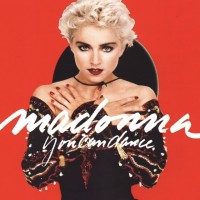
The year was probably 1987. A young boy dances around his bedroom to Madonna’s ‘You Can Dance’ remix album. He doesn’t know exactly what it’s like to work Monday through Friday, but school is a good approximation. When the weekend arrives, he has nowhere to go but his bedroom, and he has nothing to do but dance.

Where’s the party?
I want to free my soul
Where’s the party?
I want to lose control

A complete product of the 80’s, he is superficial, colorful (some might say gaudy), and just a little bit cold. There would always be something coolly clinical about him, something glossy and frigid, like the modern doo-dads being sold at the store that replaced Edna’s Edibles on ‘The Facts of Life’.

Couldn’t wait to get older
Thought I’d have so much fun
Guess I’m one of the grown-ups
Now I have to get the job done
People gave me the business,
I’m not living in fear
I’m just living in chaos
Gotta get away from here.

How he loved that silly show, even if his Mom thought it crass and crude. He just saw a group of girls growing up, and he always wanted to be part of something like that. For the rest of his school years, he saw himself as Blair, searching for the friend she found in Jo, all to no avail. At that age, friendship was all – friendship was everything. He hadn’t quite reached the era of romance.

Where’s the party?
I want to free my soul
Where’s the party?
I want to lose control

And so he danced – alone in his bedroom, with the door shut and the world blocked out. He roamed the canyons of his mind, while lost in visions of his favorite Swatch, mesmerized by the blinking of a decorative stoplight, lulled by the mechanical movement of a wave machine – surrounded by the bells and whistles of the 80’s. Dub versions, 7 inchers, 12 inchers, and more – he spun wildly round and round over the dirty cream-colored carpet before collapsing in an out-of-breath heap.

Don’t want to go on too fast
Don’t want to let the system get me down
I’ve got to find a way to make the good times last
And if you show me how,
I’m ready now…

The party was there, the party was then, and even if it was a party of one, the party still raged. On a Saturday night (I guess that makes it all right), he played and rewound and played again that gray crystal-like cassette, watching the rolls of glossy brown filament spin in tandem like some simple yet intricate clockwork. Outside, the dark night stood watch, as the dancing shadows of a boy played upon the blinds, and the safety of a well-lit childhood bedroom begged for a few more carefree years.

Song #65: ‘Where’s the Party?’ ~ 1987
Continue reading ...

The Bulging Briefs of David Beckham

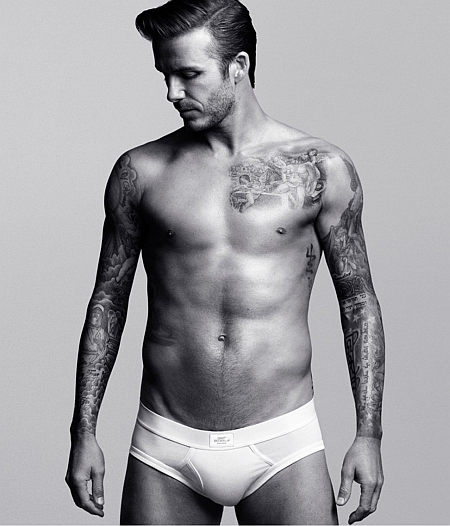
It may be blasphemy to say this, but is it really all that? Here is David Beckham in his tightey-whitey briefs – a product of his current Bodywear line for H&M. I managed to snag a few specimens last time I was at the mall (there wasn’t exactly a line or shortage for Mr. Beckham’s underwear in upstate New York), and my first impressions were not anything to blog about – at least not in any glowing-review sort of way.

The fit and design were flat, as if someone had simply taken two pieces of fabric shaped like briefs and trunks and simply sewed them together. There was no room for contours, no consideration for bulges or packages, and that’s the death-knell for a decent pair of underwear.

The trunks ride up on the thighs, which, if you don’t mind it, is not the worst thing in the world, but what’s the point of trunks if they’re just going to slide themselves into briefs? The briefs were better suited at staying put, but only because the fit was so tight.

Even the logo bothers me, with its Tom-Ford-wanna-be font, pierced through with an off-centered hole-punch to signify his football glory. It feels like a concept that fell slightly short of its goal, not quite abstract enough to arouse interest, but obscure to the point of annoyance.

If this is what I have to put up with to get into Beckham’s drawers, then I’m perfectly content with keeping them closed.


Continue reading ...