
Say what you may about Whitney Houston, the lady at her best could sing better than anyone else in the world. Far more than that, I have to believe that she did the best she could do, and it couldn’t have been easy all the time. I remember the first time I saw the clip above – back then I was just starting to tire of the Bobby Brown antics and the drug rumors and all the rest of it, but then she walked out onto that stage all by herself, and at the 01:12 mark I felt the incredible power and loneliness she must have felt – alone on that stage in the glaring lights – what it was like to put yourself out there for the whole world to judge and ridicule and condemn – to have a family and a career and the incredible pressure to be absolutely perfect in every way. The camera angle at that moment somehow captures that more than any words could have, and the simple way she turns this Dolly Parton song into an anthem of determination, of loving who you are going to love no matter what – well, it moved me. From that moment to this one, I was a fan of her talent, despite its accompanying demons. We all have them.
Category Archives: Music
September
2012
September
2012
The Madonna Timeline: Song #75 – ‘Oh Father’ – Fall 1991
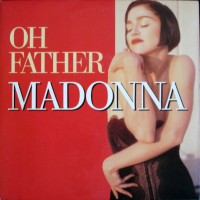
{Note: The Madonna Timeline is an ongoing feature, where I put the iPod on shuffle, and write a little anecdote on whatever was going on in my life when that Madonna song was released and/or came to prominence in my mind.}
It’s funny that way,
You can get used to the tears and the pain
What a child will believe
You never loved me…
A boy, who can’t be more than ten years old, is running around the house wearing five of his mother’s nightgowns, one on top of the other. Anything to lessen the sting, dull the impact. A silly child’s reasoning, whipped out of him soon enough – and a lesson that if you pretend enough that it hurts, it stops sooner. If you pretend the pain, it goes away. Sometimes, you don’t have to pretend. Sometimes the pain is only pretend because you no longer feel anything.
. . . . . . . . . . . . .
The years fly. I am no longer quite a boy, but nowhere near a man. I’m a petulant, trapped teenager, and we’re a dime a dozen, but I’m also different, and I don’t know why. On the mirror of my bathroom, I leave a note, scrawled in bold black marker, before I depart for the school day:
I WILL LEAVE THIS PLACE AND NEVER COME BACK.
It is my only way of survival. The thought of going away. The head game. It works. It gets me through the day. I return to find it there, still taped to the mirror. No one has seen it. I rip it down, and crumple it up. My body follows suit, crumpling to the floor, and I cry.
You can’t hurt me now
I got away from you, I never thought I would
You can’t make me cry,
You once had the power
I never felt so good about myself.
. . . . . . . . . . . . .
The day is dim. It must be November. The expanse of my parents’ backyard stretches out, running into a forest high with oak trees that have finally littered the ground with their brown mess. Piles of leaves dot the landscape, along with a scattering of filled bags like ghostly totems rising from the ground, but there is more to be done. I pause in my raking, surrounded by sudden silence in the descending darkness. I work alone. My brother is at some sports game or practice. I don’t play any sports. Looking up into the gray sky, I want to cry out. Under the burden of being a gay boy just coming of age, not knowing what the hell it was that I was feeling, what the hell might be wrong with me, I stand there in the darkening afternoon. The air feels like it might snow at any moment. My fingers grip the rake tighter. Anything to hold on.
What unnamed terrors lurked in the past to make me so weak? Maybe I was a sissy after all, maybe I was just a stupid faggot. When you’re a teenager, any of it might be true. All of it might be. You grasp whatever bits of flotsam float by in the most basic and desperate way of survival. You discard the rest, hoping you won’t need any of it later on in life. Who can foretell what kindness or cruelty will get you in the end, when all that matters is making it through the night?
Seems like yesterday
I lay down next to your boots and I prayed
For your anger to end
Oh Father I have sinned
Over the bathroom sink, my nose bleeds in torrents. Unstoppable blood flow, draining of strength, draining of worry, and some strange, sick comfort in the sight of all those bright red drops so vividly contrasting with the white ceramic sink. The taste metallic in my mouth, the liquid so ready to coalesce at the touch of air, yet not managing to clot on its own, on the inside, where I need it. I let it drip for a while, tired of trying to make it stop, leaning my cheek against the cold shiny veneer, and it runs down my face. I taste it again in the back of my mouth, gagging on the dissolving mess I have become. In the mirror, the watery, cracked vision of my face stares back, the eyes that will always look that haunted peer in on themselves.
You can’t hurt me now
I got away from you, I never thought I would
You can’t make me cry,
You once had the power
I never felt so good about myself.

It is strange the way we hurt each other, I think, the way that parents hurt their children, the way children hurt their parents, and how, if we’re extremely lucky, if we’re blessed enough to escape adolescence without serious harm or lifelong scars, we may find our way back to each other.
Oh Father
If you never wanted to live that way
If you never wanted to hurt me
Why am I running away?
There is so much pain in this world. How youth overcomes itself has always moved me. But in that time, at that moment, I couldn’t see that. The enormity of growing up is a burden that should never be placed on children. Such is childhood’s conundrum. It seems so unfair, and for a kid who never wanted to be a kid, doubly so.
Oh Father
If you never wanted to live that way
If you never wanted to hurt me
Why am I running away?
Some nights all you want is to be held and told that it’s going to be okay. That no matter how bad you’ve been, no matter what you’ve done, and no matter how little you might deserve it, that everyone will one day find their own happiness. Even if it never turns out to be true. But I didn’t have a voice to say all of that, or the ease of letting it out. I didn’t know how to put it into words, and boys didn’t say things like that anyway – especially if the boy is trying at any cost to hide who he might really be. From Father to Son we pass along the secret Code of Men. We don’t cry. We don’t talk about it. We don’t let anything bother us.
Maybe someday
When I look back I’ll be able to say
You didn’t mean to be cruel
Somebody hurt you too…
But there is secret sorrow then, hidden purging of tears in musty closets, in the woods behind the house, in the blanket-wrapped womb of night. Holding in that sort of angst, relentlessly pushing it back down inside, is a ruinous way to grow up. It eats you up. It hollows you out. It leaves you haunted.
You can’t hurt me now
I got away from you, I never thought I would
You can’t make me cry,
You once had the power
I never felt so good about myself.
I played this song over and over, daring my parents to listen, begging for someone to hear, to break through to me, to explain what was happening. I so desperately needed to be told that there was nothing wrong with me, but all I got – and all that I could give back – was silence. In the snowfall of that winter, when my best friend was halfway around the world, when I wasn’t speaking to my parents, a little bit of me died. I buried him beneath the frosty leaves, in the dark cold of the earth, where not even the worms or the centipedes of centuries past dared to burrow. Sometimes, in the spring, beneath the snowdrops and the bloodroot flowers, I look for him there.
I have not found him yet.
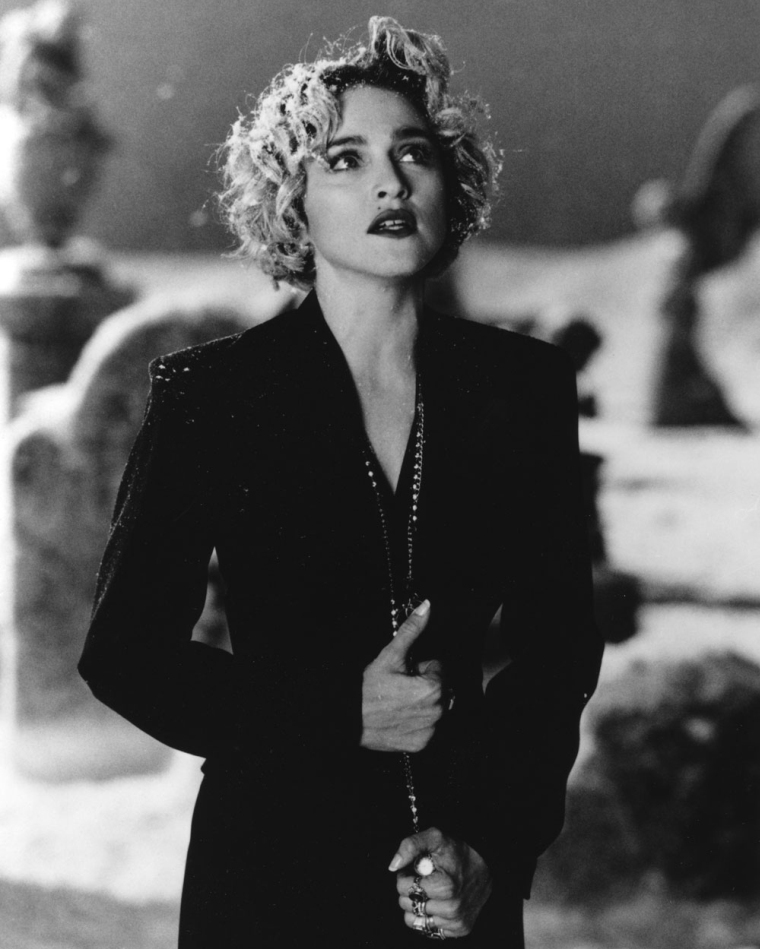
The Madonna Timeline #75: ‘Oh Father’ ~ Fall 1991
September
2012
The Fall I Fell for Shirley

If there’s one album that signifies the start of fall to me, it’s ‘Here’s to Life’ by Shirley Horn. It’s not that there are any specifically fall-themed songs, no ‘Flaming September’, ‘When October Goes’, or ‘November Rain’ but on a personal level it brings back the fall I first went to Brandeis, and Boston. I still remember the evening I purchased that CD. I’d walked around the city before winding up at the end of Newbury Street. I passed through the revolving door of Tower Records (in the space that is now a thoroughly-depressing Best Buy) and rode the escalator up to the second floor. Back then there was no iTunes or online music purchasing, so the music store was still vital. I’d peruse the CD singles section for hours, finding old forgotten Madonna singles, or discovering new ones. (That sense of surprise and discovery is one of the things I regret most about the arrival of the Internet.)
On this particular night, I passed a stand of new music, and one of the titles being displayed – Shirley Horn’s ‘Here’s to Life’ – was getting all the accolades. A woman with some fierce, black, opera-length gloves sat gazing out from the cover, and the praise being promoted on the sticker was grand. Today we don’t have to buy music without listening to it first – at that time a new CD was a crap shoot, but something impelled me to take a chance and buy it, sound unheard.
One day there’ll be a song or something in the air again
To catch me by surprise and you’ll be there again
A moment in what might have been…
In the solitude of that time, I learned how to be alone with myself, and all right with that. As much as I would fall for passing men, as infatuated and obsessed as I would sometimes become, I would always remember how to be alone if I had to be. And I would have to be, many times, and many nights. I remember the leaves of Harvard Square, swirling around my feet as I stood at the newsstand, browsing the magazines, hoping not to be called out for reading instead of buying them. The cafe across the street, where couples bundled up tightly in coats and hats, sat studying and reading, content simply to be in each other’s company, was as enticing as it was forbidden. I longed for the simplicity of that, the easy way people had with one another. I wondered if I would ever find it.
Over the wisdom of Ms. Horn’s occasionally raspy voice, the years of love and pain unfolded behind us. It would always be like this. I was old enough to understand, but too young to believe. I still thought there was a master key to all of it, a font of knowledge from which I had only to sip to find out the truth, the answer, the point. No one wants to realize that all the chasing and figuring out was for something that was in you all along – if I had been Dorothy I would have clocked Glinda for that almost-deadly exercise in futility.
And though I don’t know where
And don’t know when
I’ll find myself in love again
I promise there will always be
A little place no one will see
A tiny part deep in my heart
That stays in love with you.
September
2012
Mike Rickard Makes Us Sweat Again

My pal Mike Rickard just released his remix EP entitled ‘Dance Til You Sweat’ – a take-off on his original ‘Sweat’ album, from which these songs were culled. Continuing on that hot and sweaty theme, this is a collection designed to make you dance, with a pumping thread of dance beats that sonically unifies everything at work.

Too many remix projects sacrifice the melody for a throbbing beat, losing the integrity of the song in service of a seamless, soulless pounding. Rickard does the impossible by retaining the meat of his songs while giving them a driving renovation. The original ‘Sweat’ album was made to be remixed, and he’s finally done it, serving up a perfectly paced EP of some of the strongest cuts. The best part is that the songs remain largely intact, keeping their deeper messages (how to keep a long-term relationship hot and new, and the things that make up for that, as evidenced in ‘When the Hot Cools Down’) as well as their melodic magic (the gorgeous bridge and breakdown of ‘Only Love’) but also expanding their purpose. You can usually tell when a musician is involved in their remixes – it’s more organic, and it sounds much better. Mr. Rickard has seen to that on ‘Dance Til You Sweat’ – an EP that sets up the follow-up question perfectly: what will come next?
September
2012
Frank Ocean & John Mayer

Do you really expect me to believe that Frank Ocean found salvation at the pyramid of John Mayer? Mr. Mayer’s pyramid has been climbed by far too many ladies for this to ever be true. Regardless of how you read it, here’s the NSFW video (and NSFWWW.ALANILAGAN.COM given the naked boobies):
September
2012
Classic: Justin Timberlake’s Ass

Justin Timberlake has been rather quiet of late, at least musically – and I don’t believe I’ve seen any of his movies other than his voice-over for one of the ‘Shrek’ films – oh wait, there was ‘The Social Network’ and he was very good in that. I’ve seen some of his comedic acting chops on ‘Saturday Night Live’ (that was his ‘Dick in a Box’) but nothing else. His music was the area of his to which I paid the most attention (and even then it wasn’t much after he left N’Sync – yeah, I’m one of those gays – give me a boy band and I’ll sing and dance).

At any rate, here’s his naked butt, from one of those movies I have yet to watch, ‘Friends With Benefits’.

Personally, I don’t mind where he derives his most satisfactory creative fulfillment, as long as he does a few photo shoots (like the one that produced the picture below) aimed at the audience that comes here. Hey Justin, we’re you’re bread and butter. Spread some.

September
2012
Madonna: The MDNA Tour Review

Even when it comes to Madonna, I’m somewhat hesitant to describe anything related to pop culture as a truly “spiritual experienceâ€. Yet that is exactly the journey she takes us on for her current MDNA Tour. Watching from the sidelines of the TD Garden in Boston (and slightly behind the stage, thank you Ticketmaster), I felt the gradual upward trajectory of the show in a more fully realized manner than almost all of her previous tours. Say what you will about her singing or acting or on-and-off-again English accent, her power and command as a live performer have always been well-earned givens. The woman knows how to put on a show.
It opens hauntingly, with hooded monks in high-heels swinging an over-size incense holder while the Kalakan trio (whose soothing harmonies ground the show at integral points throughout the evening) intone an introductory chant. A convincing video backdrop of a Cathedral rises to the ceiling, a surprisingly effective use of technology that works wonders in filling the stage space with arresting visuals. To the bracing sound of shattered glass, a crowned and veiled Madonna takes aim at the audience with a rifle before blasting into ‘Girl Gone Wild’ with some slick and sick choreography. In some ways, it’s classic Madonna, cavorting in tight formation with shirtless dancers, as the briefest of references to ‘Material Girl’ and ‘Give It To Me’ give way again to the pounding beat of ‘Girl Gone Wild’. An ingenious set of platforms that rise and fall gives a powerful vertical element to the proceedings, (even if those of us behind the lights can still barely see).


The provocative gun-play of the set that has caused so much controversy thus far rears its head with ‘Revolver’ and ‘Gang Bang’, the former finding Madonna and her handkerchiefed band of girl friends brandishing fire-arms while her electronically-altered voice eerily rings out, “My love’s a revolver, my sex is a killer, Do you wanna die happy?†For ‘Gang Bang’ she hops atop a seedy hotel room scene, dispatching invading entrants with another gun and graphic splatters of blood on the video screens.

It’s an ultra-violent beginning that finds retribution in an all-too-brief snippet of ‘Papa Don’t Preach’, because when you go against patriarchal authority, the punishment is swift and inevitable – in this case, doled out by a set of frightening masked marauders who proceed to tie Madonna up and literally string her along a slack line, upon which she sings a disturbing version of ‘Hung Up’. She does a bit of perfunctory line-walking, barefooted and brazenly, because she gets her kicks when she’s walking the wire.


Closing out this gorgeously dark vignette is the defiant ‘I Don’t Give A’, in which Madonna boldly faces her audience head-on, a guitar strapped around her neck, and a middle-finger extended for all within sight. Nicki Minaj makes her first video-guest-appearance, decked out in religious garb, rapping and wrapping things up with the declarative, “There’s only one queen, and that’s Madonna.”
As the ominous chanting returns for its dramatic climax, Madonna rises slowly on a platform, as a cross glows crimson behind her. In a long career of successful visual-arrests, she captures yet another iconic image. The lights go dark for the briefest of moments (everyone knows Madonna shows just don’t stop) and the impact of this scene is stunningly powerful.
A rather dour interlude follows, with a mash-up of ‘Best Friend’ (an under-appreciated track from the deluxe edition of ‘MDNA’) and ‘Heartbeat’ (from 2008’s ‘Hard Candy’) to the accompaniment of graveyard scenes in moody black-and-white ~ a metaphorical death-knell for what came before, and a chance for Madonna to make the most drastic costume change of the evening, into a white and crimson majorette uniform. She marches up to center stage, leading a merry pep squad in front of cartoons of caricatured women subversively turned into images of power and humor. It’s a fun moment for fans old and new, echoing her triumphant Super Bowl performance and breathing new life into a classic song. She segues (ahem, seamlessly) into a quick snippet of Lady Gaga’s ‘Born This Way’ – not in an ungracious or unkind way at all, and even her final few lines of ‘She’s Not Me’ seem more tongue-in-cheek than antagonistic, a throwback to the cheeky minx who once wanted to ‘rule the world.’


A marching band descends from the rafters – no, really – for her latest Top Ten hit ‘Give Me All Your Luvin” and it’s a truly transformative version of the song, given extra pep and vigor – invigorating and effervescent – especially when delivered with all the energy and bombastic dance moves she pulls out of her too-fit-to-be-fair ass. The pom-pom popping routine she throws down at the apex of the runway brings the crowd to its first crescendo, a welcome relief and release from the serious beginning. The infectious energy continues with current single ‘Turn Up the Radio’.
While I initially thought this would be one of the more elaborately staged songs, she goes the opposite way, in a straight-forward  rendition sung from center stage, with nothing but a black outfit and guitar, and somehow it works, the music and the song taking flight, and the audience riding the crest of another colossal pop wave. Suddenly, I’m transported to catching a snippet of ‘The Virgin Tour’ on television some 25-plus years ago. I can still remember that Saturday afternoon, sitting in the wood-paneled family room and watching this dynamo of a woman singing and dancing with joyous abandon. I did a little dancing around the room that day too, and at each of my darkest moments of the past quarter of a century, there’s always been Madonna, imploring me to simply ‘Turn Up the Radio’ and promising the brief escape of a pop song, the momentary salvation of music.

The Basque vocalists of the Kalakan Trio resurface for a wonderfully re-imagined ‘Open Your Heart’, the 80s gem getting a sparkling, almost acoustic make-over. It grows into a rollicking highlight, building up to a rousing percussion-driven chance for the dancers (and her son Rocco) to step up their high-kicks a few more impressive notches. There is healing here, especially after that deliciously brutal start – healing and joy – and this turning point is one of almost spiritual transcendence. She traditionally pauses here, the first time she gets personal and talks, and it’s always a crap-shoot on what she’s going to say – gay rights, Pussy Riot, imprisonment – but tonight she keeps it on the light, and Boston-specific side.
“You guys are crazy!” she begins. “I’ve been coming to Boston every time I’ve been on tour,” she continues, extolling the virtues of freedom of expression, saying it’s okay to be gay and okay to be whomever you want to be, and that she hopes it will stay that way – a none-too-veiled reference to the upcoming Presidential election. She may not watch television, but the woman knows her current events. “Are you going to let crazy shit happen in this country” she asks, demanding a “Fuck No” response that we are all crazy enough to give her. “Are you going to let crazy shit happen in this country??!” Fuck No! “Except me!” she says with a devilish grin. A beautiful rendering of her Golden Globe-winning ballad ‘Masterpiece’ follows – and then a sexier, darker, cheekier, hotter-than-the-original version of ‘Justify My Love’ plays as a video interlude.

Photo by Kevin Mazur.
It’s a stylish intro for the Madonna of the now-almost-retro 90s, and no song opened that decade with a bigger bang than ‘Vogue’. It struts its stuff here in all its fashion-forward elegantly black and white glory, with Madonna updating her Gaultier bustier with a stiff leather cage-like structure, at once androgynous and fiercely feminine. A more-delicious-than-expected adult take on ‘Candy Shop’, featuring a few all-too-brief quotes from ‘Erotica’, continues the divine decadence, proof that Madonna’s live performance can lift her most mundane and melody-lacking songs, such as ‘Human Nature’. I understand that this is one of her ultimate non-victim fuck-off songs, but she does it much better when there’s a driving beat and actual melody (as in ‘Express Yourself’).Â
One of the most hotly-debated performance pieces is her new take on ‘Like A Virgin’. Having done everything from lampooning it Cyndi Lauper style, masturbating on a red velvet bed, Dietriching it out in top hat and tails, and riding a virtual horse, there’s not much more to be done for the song, but Madonna strips it down literally and figuratively, turning it into a plaintive piano waltz, and crumbling to the floor before enacting a dramatic tightening of a corset around her waist. This may be what’s polarizing audiences for the MDNA Tour. Madonna is not interested in looking back and chirping the same songs in the same way, and her artistic integrity, and own personal truth, are such that she never could.
Those who hate this anything-but-shiny-and-new version are those who haven’t taken the time to delve into the deeper, complex glories of the MDNA album. While there’s nothing wrong with wanting to hear your favorite Madonna classic performed in the style to which you’ve grown accustomed, there is little challenge in that for an artist like Madonna. ‘Like A Virgin’ is, at its heart, a wistful longing to be made whole again, to retrieve that innocence and freshness that time and life inevitably ebbs away, and, in this seering version, the realization that sometimes you simply cannot go back.

After this spell of darkness, and an equally moving/disturbing video montage for ‘Nobody Knows Me’, the power of the beat – and the dance music that brought so many of us to her in the first place – is a welcome rejoinder in ‘I’m Addicted’ , one of the top cuts off MDNA. Her Joan-of-Arc metallic costume of armor glistens in its Swarovski-crystal-studded magnificence, and her braided warrior-hairstyle is a brilliant match for the throbbing song.

Love has always been Madonna’s drug of choice, and as the lights swirl about the audience and the inevitable dance break explodes, love is not only a drug, but a battlefield as well – one that remains a dizzying fix for a woman who still seems to have a lot of fight left in her.
Hardcore Madonna fans like myself will love this tour because it’s so MDNA heavy (and that album is easily her best since 2005’s ‘Confessions on a Dance Floor’). Nothing exemplifies that more than the gleeful romp of ‘I’m A Sinner’, given an Indian slant as it morphs impossibly, yet perfectly, into a B-side (‘Cyberraga’) from the ‘Music’ sessions. That song was previously in the bottom-five of those I ever wanted to see done live, but here it works brilliantly with the backing of the Kalakan trio. Coupled with some breathtaking video backdrops, this is where the journey nears its completion, and we have indeed reached a new plane.

I can’t help but smile as Madonna shakes a tambourine along to the Kalakan Trio, and we ride that happiness into an absolutely magical moment of transport that soars with one of the greatest pop songs ever written.

“Life is a mystery, Everyone must stand alone,” she intones, yet we are all standing together. Giving a traditional and true reading of ‘Like A Prayer’, Madonna stages one of the grandest sing-a-longs of the night, touching us as if it was the very first time, made more powerfully poignant as it comes imbued with all of the ensuing years of hard-won wisdom. It brings together new and old fans alike, the entire arena standing and singing and basking in the joy of the moment.Â

The night ends with ‘Celebration’, a cut from her 2009 Greatest Hits collection of the same name (for those keeping track, that would be her third Greatest Hits compilation). With its musical echoes of opener ‘Girl Gone Wild’, it brings us full-circle, and it certainly does feel as if a journey has been completed – an ever-engaging, always challenging, entertaining-as-hell journey – and no other pop star has ever commanded a stage in such scintillating fashion.
There are those with greater musical talent, those with sharper dance skills, and those with more current relevance, but there is only one Madonna – and there always will be.
September
2012
We All Need A Little Wilson Phillips
Where was the convenience of buying one song at a time, a la iTunes, in the 1990s? I remain saddled with two complete Wilson Phillips albums, but upon rediscovering the harmonies here, I’m okay with it. That’s embarrassing enough, so I won’t get into the bedroom memories that accompany this song. Let’s just say that headphones were involved. Imagine the rest. ‘What is this power you’ve got over me? What is this power?’ (I’d say it’s the guy in the black Speedo.)
September
2012
Erasure and Manhattan Nocturne
“You can always tell, I think, with adults, who felt loved as a child and who did not; it’s in their eyes and walk and speech. There’s a certain brutal clarity. You can almost smell it.” – Colin Harrison
In some spring of the late 1990s I was listening to this Erasure song and reading ‘Manhattan Nocturne’ by Colin Harrison. Like Barbra Streisand, Erasure was never a favorite of mine, but Mr. Harrison – now there was an artist I could love. In those solitary nights, as the condo quietly waited for morning to come, I would read and marvel at his way with words, and, more importantly to me, his understanding of the human spirit – how dark it could go, how low we could sink, and how the smallest sliver of hope sometimes remained, but often didn’t.
“It was not as if I was not myself – oh no, I was myself, I was my other self, the self that wishes to carry on a secret dialogue with all that is evil in human nature. Some men do not struggle with this in themselves. They seem to have a certain grace. They are happy – or rather, they are content. They swing tennis rackets in the sunlight and get the oil checked regularly and laugh when the audience laughs. They accept limits. They are not interested in what might come up from the dark, cold hole of human possibility.” – Colin Harrison
It was not uplifting, it did not offer solutions, it did not even attempt to extend some bit of solace, but it was honest, it was real, and it was the very truth I wanted to confront. For more than Mr. Harrison dazzled me with his writing skills, he astounded in his portrayal of how different people survived in such a shitty world. Writers who get that, who show us the very worst so unflinchingly, have always impressed me. Whatever the reason, they seem to have more compassion than me, and so I strive to find that love of humanity by reading their work.
“There are people who enjoy degradation, or who seek it thinking they will enjoy it, or who seek it because it is the way they know how to have pleasure. After all, the experience is theirs. Perhaps they lived through the degradation and found pleasure in that realization. Or perhaps they found that in degradation there is a releasing of oneself; one is powerless; responsibility is taken away. I am not describing what occurs during the actual event, but the subsequent thought about the event that accumulates in a person’s mind.” – Colin Harrison
At that young age, I could have no way of knowing first-hand what he was talking about, but somehow I could sense what was coming. In a way, I look at that time as a way of fortifying myself for the heartache that would follow. It would be vain, foolish, to think I would escape unscathed, to think that true love would beat a steady and straight path to my door, then knock upon it and wait, even if I was not ready. That sort of faith in love would prove ruinous. This is what I tried to teach myself by reading his words. This is what I tried to impress upon my heart.
There are some life-lessons that can’t be learned from a book.
“In my experience, men and women who have a kind of brutal fortitude have been made that by a sequence of events, until the person passes beyond a point of no return. They learn that life requires the ability to coldly stand pain of one kind or another… They will do what is necessary to survive; they will conceal and protect their vulnerabilities, except from those who cannot hurt them. Above all, they will press their advantage when it presents itself.” – Colin Harrison
August
2012
Song for the Middle of a Summer Night
I’m a traitor to a beautiful cause…
In the back of a station wagon, we steal kisses in the night. Moths flutter in the fading headlights, swimming in the sultry wet air. A sweet fragrance, some unseen flower unfurling in the dark, rides on the blackness. It is the summer of our unrealized content.
How long will it take to get used to me?
Strange stirrings in the night. Stranger danger. And we devour each other, tongues lapping and darting in tandem, rising and falling with our breathing, thrilling before settling into something deeper. A sigh. An intake. A wish to say it.
Oh yes I love you, but today I could hate you, I could hurt you…
Nestling into a moist neck, matted hair, rustling eyelashes, and squeezing eyes so tightly closed it feels like crying or happiness so great it hurts. When all you want is to be held…
It’s not enough to believe in love…
Deep in the heart of the night ~ this summer night ~ when the air is still warm, I hug you closer. My hands on your chest, our foreheads touch, and we can barely see each other. We are so young. It aches to be so young. We do not see ahead – ahead is even darker than this night, and so we cling closer, knowing somehow that the summer will not last, could never last.
God made me to her own design by planning too many flaws…
I’ve got too many flaws…
Morning will come soon, and then the Fall.
August
2012
The Madonna Timeline: Song #74 ~ ‘Dear Jessie’ – Spring 1991
{Note: The Madonna Timeline is an ongoing feature, where I put the iPod on shuffle, and write a little anecdote on whatever was going on in my life when that Madonna song was released and/or came to prominence in my mind.}
Baby face don’t grow so fast
Make a special wish that will always last
Rub this magic lantern
He will make your dreams come true, for you
Ride the rainbow to the other side
Catch a falling star and then take a ride
To the river that sings and the clover
That brings good luck to you, it’s all true…
Once upon a time I played the oboe. I wasn’t horrendous at it, but I certainly wasn’t the best. The oboe is not an easy instrument to play, and its temperamental home-made double-reed nastiness is not the easiest thing to master, but I did my best. No teacher in the Amsterdam School District had a strong-enough background in the oboe, so if I was to excel I had to get private lessons from someone outside the area. My goal, half-concocted by my parents to pad my extracurricular activities for my college career, was to make it into the Empire State Youth Orchestra.
Thus began my oboe lessons under the tutelage of a Mrs. Green, who lived a few towns away, in Ballston Spa. It was about a 45 minute trek through the back roads and winding woods of upstate New York, heading from Amsterdam towards Saratoga. Not at all an unpleasant ride, if you’re making it for happier reasons than weekly instrumental lessons, and not the most fun in the treachery of winter, but a pretty enough journey nonetheless.
It can also be a long road when a tortured adolescent is not speaking to his family, so perhaps both my Mom and I were glad for the silence-filler of Madonna on perpetual play. For some reason, this song stands out as representative of those journeys, especially in the spring to summer of 1991.
A cut from her majestic ‘Like A Prayer’ album, this was Madonna at her most sensitive and thoughtful, singing whimsical lyrics in a love letter to childhood. With its orchestral intro, string-laden melody, and brass bridge breakdown, this was closest to a ‘classical music’ song that Madonna has ever attempted. As such, it’s an anomaly in the Madonna canon, but a gorgeous one.
Pink elephants and lemonade,
Dear Jessie hear the laughter running through the love parade
Candy kisses and a sunny day,
Dear Jessie see the roses raining on the love parade.
The back-story is that Madonna wrote this for the daughter of her main producing partner at the time, Pat Leonard (the person responsible for some of her most powerful and iconic songs, such as ‘Like A Prayer’, ‘Live to Tell’, and ‘Papa Don’t Preach’.) In that respect, it marks one of the only Madonna songs that is clearly about a specific, and named, person; usually she takes the universal route, one of the calling cards of lasting pop songs. Leonard was an integral part of the now classical period from 1986 to 1989 that cemented Madonna as an icon, and this song is the least she could have done for his child.
It doubles as an ode to innocence and the magic of being a child. So much of Madonna’s persona has been tinged with a childlike, slightly mischievous, impetuous nature (the very anti-thesis of the coldly calculating woman that many mistakenly believe her to be) that this is, remarkably, a rather revelatory dreamscape of pretend.
If the land of make believe
Is inside your heart, it will never leave
There’s a golden gate where the fairies all wait
And dancing moons, for you
Close your eyes and you’ll be there
Where the mermaids sing as they comb their hair
Like a fountain of gold, you can never grow old
Where dreams are made, your love parade
Pink elephants and lemonade,
Dear Jessie hear the laughter running through the love parade
Candy kisses and a sunny day,
Dear Jessie see the roses raining on the love parade.
For me, it was a last grasp at a childhood that was fading just as that Spring and Summer matured. In the car on the way to those oboe lessons, the afternoon sun rendered dappled beneath the bright green canopy, I sat in the backseat, reading or grabbing a nap or simply looking out the window, watching for the tell-tale signs of the seasons. The land seemed greener then, less hot and dry, and summers stretched out without any end in sight.
I honed my oboe skills, learning to make my own reeds by hand, running beeswax alonog the string, soaking the stems until malleable, delicately shaving off the tips to find the perfect sound. Reed-making was as much about luck as science for me, a tricky little part of being a decent oboe player. While other oboe-players ordered pre-made reeds, I was not allowed such ease, and it made me a better player. I understand the result of hard work, and how much more it meant. That summer, I practiced and improved, and by Fall I was ready to audition. Even if I wasn’t as good as the first oboist (I eventually made it into the Repertory Orchestra, and then the Youth Orchestra), I had the satisfaction of knowing how to make a double reed, the pride in crafting my own sound, from my own hands.
On the merry-go-round of lovers and white turtle doves
Leprechauns floating by, this is your lullaby
Sugarplum fingertips kissing your honey lips
Close your eyes sleepy head, is it time for your bed
Never forget what I’ve said, hang on, you’re already there…
Close your eyes and you’ll be there
Where the mermaids sing as they comb their hair
Like a fountain of gold you can never grow old
Where dreams are made, your love parade
It paid off, and whether it was the oboe or my grades or my application essays, I made it into every college to which I applied. (I still remember the recruiter from Boston College challenging me as to what extra stuff I had to offer the school, to which I said I was in several orchestras: “Yeah, but unless you play something like the oboe you’re not that different from everyone else – what instrument do you play?” Yeah, the oboe.)
My heart, however, did not belong to the instrument. I didn’t like performing in concerts (I was a nervous wreck), and I didn’t have the drive or ambition to go much further than the college orchestra at Brandeis (which I was dragged into after much kicking and screaming, and only for one year). I also didn’t have the love for the oboe that a truly great musician must have. The orchestral stints, the practicing, the reed-making – they were simply a means to an end – the end result being getting into a good school. It was a cold and calculated move, devoid of the passion and heat of which any worthy artistic endeavor should be comprised. There was a lesson there too, a very valuable one.
I’d gone into Brandeis with a vague notion, mostly instilled by my parents, that I should major in something scientific. While it was no secret they’d have been thrilled if I went into the medical field, I wanted nothing to do with that. Up until that moment, I’d done what I supposed to do – and my oboe playing, even with its moments of enjoyment, was not something I would have pursued on my own. When given the chance to give it up, I did. Not with anger or resentment, but with the realization that it wasn’t for me.
The same went for my scientific career. After a tough ‘Brain: From Molecules to Perception’ course, in which I managed to go from an ‘F’ to an ‘A’ in the course of a semester, I had to admit that my strengths were not in the sciences, but in the realm of words. It was exactly the opposite of the vision my parents had for, and about, me. I went to my adviser, and changed my major at the end of the second semester. I felt relief, freedom, happiness, and hope. It was the first of many moves where I went against what I was supposed to do, and in the end became richer for it.
Pink elephants and lemonade,
Dear Jessie hear the laughter running through the love parade
Candy kisses and a sunny day,
Dear Jessie see the roses raining on the love parade.
Madonna was leaving her past behind too, saying good-bye to the 80’s – the decade in which she ‘ruled the world’ – and entering the brave new world of the last decade of the century. The rocky period of adulthood loomed ahead of both of us. For now, though, there was this song of childhood. We could hold onto it for a little while longer.
Your dreams are made inside the love parade
It’s a holiday inside your love parade.
Song #74: ‘Dear Jessie’ – Spring 1991
July
2012
The Madonna Timeline: Song #73 – ‘Turn Up the Radio’ ~ Summer 2012
{Note: The Madonna Timeline is an ongoing feature, where I put the iPod on shuffle, and write a little anecdote on whatever was going on in my life when that Madonna song was released and/or came to prominence in my mind.}
Looks like I jumped the gun on this one by talking about it a few days in advance, but I had no way of knowing that the next random selection of the iPod would be the one I just referenced a week or two ago. This is a historic occasion, as it marks the first time the Madonna Timeline selection lines up perfectly with the current Madonna single. It’s a testament to her endurance, and a fantastic selection for a summer anthem.
When the world starts to get you down,
And nothing seems to go your way,
And the noise from the maddening crowd
Makes you feel like you’re going to go insane
There’s a glow of a distant light
Calling you to come outside
To feel the wind in your face and your skin
And it’s here I begin my story…
This is, at first glance, classic carefree Madonna at her dance-poppy best – a return to her ‘Holiday’ roots, where it all began some 30 odd years ago. (For those who doubt her legendary status, think about this: it just entered the Billboard Dance chart as her 60th entry there. That’s right, 60.)
Turn up the radio
Turn up the radio
Don’t ask me where I wanna go
We gotta turn up the radio
Madonna has never been one to look back – it’s one of her most admirable qualities, and the very thing that has kept her forward-moving career on that one singular track. A lot of her fans would have her simply repeat former-glories, but that’s never been her way. Even if she winks back at what she’s done (as she does both in this song and its accompanying video), she’s never been about the past.
It was time that I opened my eyes
I’m leaving the past behind
Nothing’s ever what it seems
Including this time and this crazy dream.
She’s also been about the power of a pop song to transcend its limited boundaries, becoming an epiphany unto itself – the very act of escapism as its own goal – and ‘Turn Up the Radio’ re-asserts her mastery of the genre. I’m not going to claim there’s anything ground-breaking here, and those who have never been under her spell may cry banality (like they always do when dissecting her lyrics), but the glorious majesty of a catchy melody wins out. Score one for ear candy over lyrical dinner. And yet there may be something deeper here…
I’m stuck like a moth to a flame
I’m so tired of playing this game
I don’t know how I got to this stage
Let me out of my cage cause I’m dying
Turn up the radio
Turn up the radio
Don’t ask me where I wanna go
We gotta turn up the radio
At first I thought this was going to be a straight-forward reading of a perfectly-crafted summer pop ditty. The infectiousness is there, the timeliness is present, the video is a slightly nostalgic reminder of the simple premise of having a good time, but the last few times I was listening to this (in the shower, of course, and in the car), a new reading struck me.
I just wanna get in my car
I wanna go fast and I gotta go far
Don’t ask me to explain how I feel
‘Cause I don’t want to say where I’m going…
Maybe it was the rocky start to this season, and the resulting melancholy (the nightmare of jury duty still haunts me), but it suddenly seemed that this song wasn’t just about having a good time, it was about insisting upon it – begging, pleading, and crying for it. This wasn’t a simple ode to a joyful moment. This was a desperate cry for escape and deliverance.
It brought to mind Adrienne Rich’s poem ‘The Ninth Symphony of Beethoven Understood At Last As a Sexual Message’ in which the poet turns the ‘Ode of Joy’ by Beethoven into a harrowing description of rage and anger. This was what I was thinking about when trying desperately to get back into the song, to find the joy again. I found myself singing, and then screaming, along with these very lyrics, this part right here, and I couldn’t tell the tears from the shower water or the rain, I just pounded wet fists against whatever would withstand them.
Turn down the noise and turn up the volume
Don’t have a choice cause the temperature’s pounding
As the percussion trampled with its stomping beat and the music raced to its inevitable release, I tried tearing a hole in my despondence, ripping away at the heart that gave both light and darkness, inconceivable happiness and inconsolable sorrow, in a dance of desperation ~ a dance to the death of something.
If leaving this place is the last thing I do,
Then I want to escape with a person just like you
The torrents fall down, the world crashes around, and like flotsam I feel like I’m floating in the lost abyss of an open sea, drifting and flailing and powerless to the ebb and flow of a life swirled beyond my control.
Bopping around like a moth to a flame,
I’m so sick and tired of playing this game
And I cling desperately onto the silly things that once mattered, that once seemed to make all the difference, and nothing seems to help. It is all so pointless, so futile, so damning – and so we fight for the fun and escape, for the way out of our miserable little lives, for the only way we know how.
We gotta have fun, if that’s all that we do
Gotta shake up the system
And break all the rules,
Gotta turn up the radio until the speakers blow.
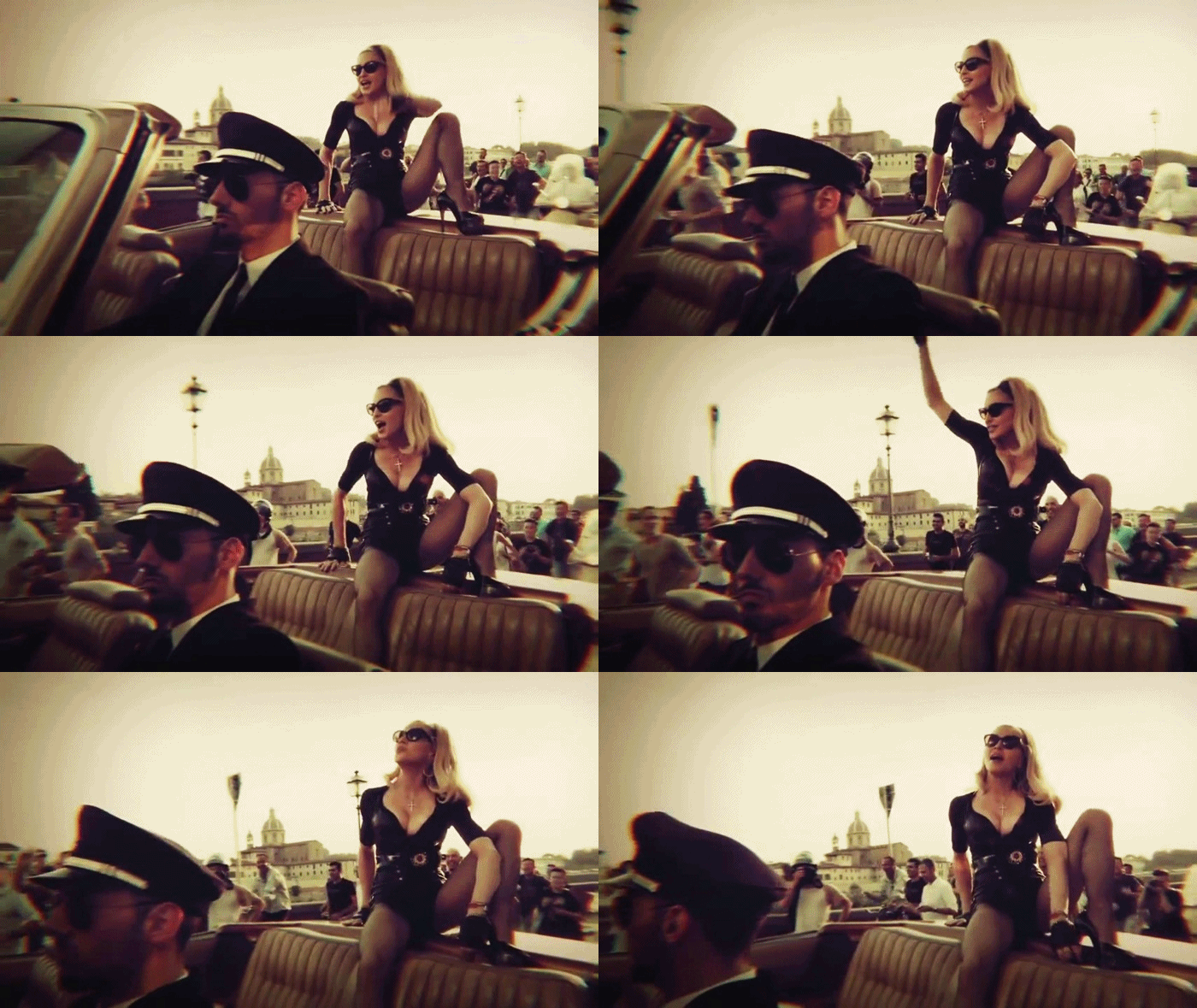
Song #73: ‘Turn Up the Radio’ – Summer 2012
July
2012
The Madonna Timeline: Song #71 ~ ‘What It Feels Like For a Girl’ – Late Winter 2001
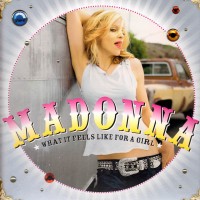
{Note: The Madonna Timeline is an ongoing feature, where I put the iPod on shuffle, and write a little anecdote on whatever was going on in my life when that Madonna song was released and/or came to prominence in my mind.}
Girls can wear jeans, cut their hair short, wear shirts and boots, cause it’s okay to look like a boy. But for a boy to look like a girl is degrading, because you think that being a girl is degrading. But secretly, you’d love to know what it’s like, wouldn’t you? What it feels like for a girl…
So quotes Madonna in the intro for her 2001 single ‘What It Feels Like For A Girl’, from the autumnal ‘Music’ album. It’s an excerpt from ‘The Cement Garden’ and it’s brilliant, throwing a defiantly-feminist slant into the whole equation, and investing the proceedings with more than a dollop of serious intent.
Silky smooth
Lips as sweet as candy, baby
Tight blue jeans
Skin that shows in patches
Strong inside but you don’t know it
Good little girls they never show it
When you open up your mouth to speak
Could you be a little weak?
Do you know what it feels like for a girl?
Do you know what it feels like in this world, for a girl?
Above gently-percolating beats, and the fluid, musical techno-wizardry of Guy Sigsworth, the melody is a loose and light one, almost at odds with the rage boiling just under the surface of the words at play. It is a plaintive cry for understanding, coupled with the realization that there may never be understanding – the conundrum of being a girl in today’s world – and, perhaps, yesterday’s world- expressed through the words and music of a woman who’s been every girl: Material Girl, Bad Girl, Mer Girl, and Girl Gone Wild.
The way Madonna conveys that ache and yearning is the hallmark of what makes her so amazing, not just as a woman, but as an artist. Within this song is both an admittance of vulnerability and a beacon of self-sufficiency – the power and the weakness of being a girl.
Hair that twirls on finger tips so gently, baby
Hands that rest on jutting hips repenting…
Hurt that’s not supposed to show
And tears that fall when no one knows
When you’re trying hard to be your best
Could you be a little less?
Do you know what it feels like for a girl?
Do you know what it feels like in this world
What it feels like for a girl?
She has said she wrote it while pregnant with her first son and thinking of her first daughter, wondering how it must be for a girl growing up in this world ~ how hard, how beautiful, how sad. As she matures into her mid-fifties, no one knows that difficult journey better than Madonna. Now, as attacks come based solely on her age, and the fact that she’s a female (how else to explain the cruelty of jabs about her arms, her body, her refusal to go away?) the song has an even deeper meaning. This is one of the great, and often over-looked, strengths of a Madonna song – they evolve through the years, taking on different meanings, and revealing nuances that grow and bloom as time unfurls.
To controversially accompany the song, Madonna filmed a gritty Guy Ritchie-directed video, set rather sorely to a harder-edged remix, which works in one way, but might have been much more powerful with the gorgeousness of the original track as its backing. Juxtaposed with all the intense imagery, the beats become the focus, and the lyrics are shamefully lost. Still, it’s a wild, entertaining ride, with numerous little dirty winks at the audience, and it demands repeat viewings to get it all in.
Strong inside but you don’t know it
Good little girls they never show it
When you open up your mouth to speak
Could you be a little weak?
The song was released in the late winter of 2001, just before Madonna was set to embark on her first tour in eight years, ‘The Drowned World Tour‘. In that pocket of time just before spring arrives, heartache resonates a little more, and the hopeless/hopeful push and pull of this song, and its shuffling undertones of melancholy, may be more deeply felt.
Do you know what it feels like for a girl?
Do you know what it feels like in this world… for a girl?
Song #71: ‘What It Feels Like For a Girl’ ~ Late Winter 2001
July
2012
The Madonna Challenge to Isaac
Indulge me, if you will, in a little moment of common-sense assumption: what self-respecting citizen of this universe does not know ‘Like A Prayer’ by Madonna? It was the first Madonna song that won both critical and popular acclaim, topping the charts when it was released, and it remains one of her most beloved songs by fans and non-fans alike. (Even those “people†who don’t like Madonna tend to give it up for ‘Like A Prayer’.) So you can imagine my delight when, on an unlikely evening of karaoke at a local bar, I saw that my pal Isaac was going to perform the song, kamikaze-style.
Is it really possible to kamikaze someone with a Madonna song? Especially ‘Like A Prayer’? I repeat, who doesn’t know it?
Enter Isaac.
I was stunned. It took a few minutes for me to collect myself (and the second of my two-for-one drinks), before I cautiously made my way over to Isaac and used all my self-control not to slap him on behalf of the Church of Pop Culture and the Lady of Creamy Smooth Pop Icon Goddessness. He offered apologies and amends – and promised to make it up by learning one Madonna song (my choice) should we ever find ourselves in a karaoke situation together again. I felt that was fair. The only question that remains is which song…
In 2005 Madonna included a song called ‘Isaac‘ on her Confessions on a Dancefloor album, but I think that might prove a bit too obscure for a karaoke song, even if it was named after him. I toyed with her Sondheim work forDick Tracy, thinking that might be more suited to Isaac’s theatrical speed, as well as her turn as Evita by way of Andrew Llloyd Webber, but both of those diluted the Madonna I knew – the Madonna of ‘Like A Prayer’, and the Madonna that Isaac had so sacrilegiously blasphemed. For him to make proper atonement, it would have to be something more pop, more dance-like, more… Madonna.
He asked that I take into consideration his range of keys, but that proved almost impossible to tell by the wretched atrocity perpetrated upon ‘Like A Prayer’. However, to be fair and give him a fighting chance, I’m going to give him the choice of five:
Sorry – It fits the theme of redemption.
Dress You Up – Straight-up Classic Madonna at her pop best.
Hanky Panky – Because a spanky is the least he deserves, (and it would be hilarious to see him, or anyone, sing this).
Ray of Light – Not the easiest song to sing (even Madonna gets tripped up sometimes), but a crowd-pleaser if done right.
Open Your Heart – It’s just a great fucking pop song.
He can decide which one best suits his voice. Don’t ever let it be said that I don’t give people a chance. Isaac, learn this lesson well, and you’ll live to tell.
June
2012
The Gay Religious Experience
This is one of the very first songs I danced to at a gay club in Boston. It was at Chaps, which was still on Huntington, right across from the Copley Marriott. A few retail co-workers (shout-out to the Fanueil Hall Structure crew) were going, and having recently turned 21 I decided to join them. (Aside from a one-time-only chalked-license night at the Branch one previous summer, I was never one for under-age drinking.) Once I turned legal, I didn’t go crazy, so I had been of age for a couple of months before really utilizing it.
My poison then was the White Russian. Yeah, I was once that kid, but at least it was better than the amaretto sours I started on. (We won’t mention Boones here.) After my third, I was relaxed enough to join my friends on the dance-floor. I had been to one or two gay dance clubs before, but had watched the dancing from a distance.
Thanks to countless choreographed danced numbers practiced in the carpeted world of my childhood bedroom, I could cut a rug as well as the next gay guy, so the dancing never intimidated me. And even the tiers of men watching from the elevated section above didn’t phase me. There was a certain freedom from worry in a gay club that straight people will never understand. Even if they spend a few nights in a gay bar, they can never know what it’s like to have spent a lifetime in a straight world, only to have that oppressive tension (even if nothing ever happened) lifted. Maybe that’s why gay clubs are so much more exciting than straight ones – everyone is just relieved and happy to be there, and we’re going to have the time of our lives no matter what.
I don’t remember all the songs we danced to – just this one – as this was the climax of the night, the song playing when everyone was collectively moving en masse, when for a few brief moments the whole becomes greater than the sum of its parts. It’s the time when even the shy guys will take their shirts off and swing them in the air with gleeful abandon (most, not me). As we moved in unison, dancing and jumping and clapping to the music, I thought surely there was salvation here, surely this was heaven, surely this was the closest I’d come to a religious experience.
I remember that night to this day, so important was it to my initiation into the gay world. While I would never be a regular club kid, I would always enjoy the occasional night out, and when Chaps moved over to the theatre district, it was never quite the same (nor was it as easy a drunken walk home). That moment, and its place in my life, had passed. But we had that time together – all the men and women in that darkened room, with a throbbing strobe light, the pounding beats, and that feeling of shared elation.


