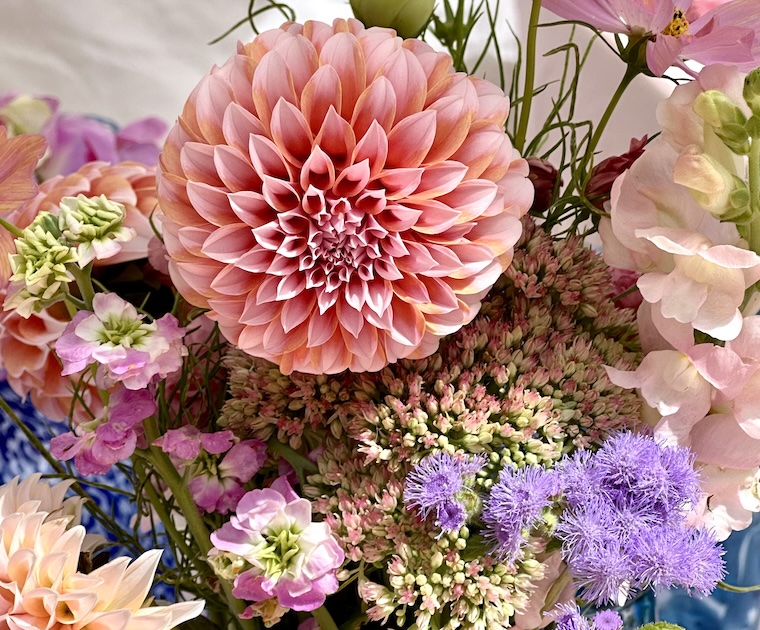
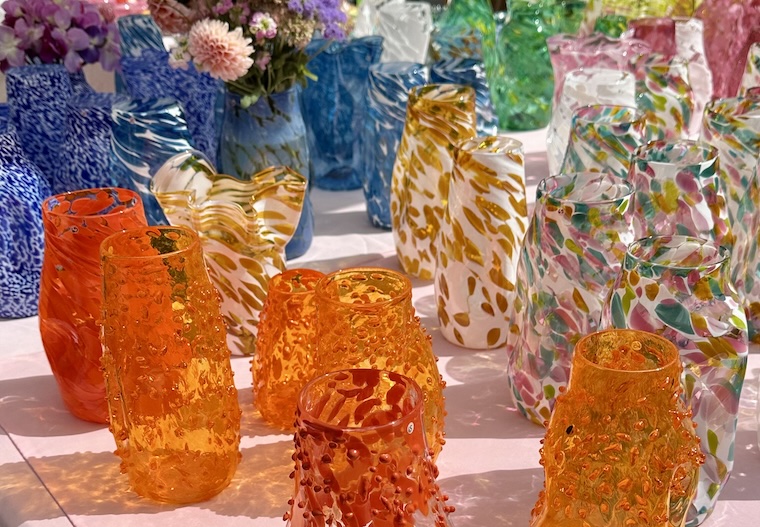
While they make a big impact in bouquets, as seen below, the dahlia is rightfully insistent on being allowed to stand indelibly on its own – demanding such a stance when its petals are seemingly painted by some magical stroke of heaven. A reluctant ensemble player then, almost apologetic for its grand magnificence – and why should any of us dim our lights just to make those around us feel better about themselves? Somewhere along the line some of us learned not to shine as brightly as our natural talents would allow, not to draw attention to ourselves and what brilliance we could produce, because others were uncomfortable or didn’t understand it. That’s the foolish ignorance of society rearing its ugly and inept head. Don’t ever dim your own light because anyone around you is unwilling or unable to match it. The ones who matter will celebrate you no matter what; the ones who don’t will squawk and attack, and it will be up to you to ignore and move on without them. No more apologizing for being our own fabulous selves.
Whether you find yourself in a big bouquet or alone in a single bud vase, don’t stop shining, don’t stop thrilling, and don’t ever stop being the one and only person you were born to be. Paint your petals, land your punches, and be entirely and utterly your one true self. You know who you are – and if you don’t, find the fuck out. It’s your right. It’s your destiny. It’s your life – and you’re only given one here. Don’t squander it trying to be smaller or less bright for anyone else, ever.
Reaching the end of summer means letting go of all the things we may have held onto until now – such as this new Speedo which was on a crazy sale from Parke & Ronen. The sequin shirt is from the same place – a last bit of sparkle from a summer that was never quite as sparkling as I wanted it to be, but that in hindsight glowed in a different and perhaps more resonant way. While I sort through the more serious aspects of that (thank you therapy) it’s time for a late-summer dance break, which is the sort of scene you want when you’re in sequins (and a Speedo, I suppose).
We’ve already had our last summer dance – and an extended last summer dance reprise – but there’s still some summer left for another boogie, and for that I’m turning to this jam by Daft Punk. It feels like I’m ready to dance into the next era… the bad sort of funk is lifting, and another sort of funk is about to begin.
Let the music in tonight Just turn on the music Let the music of your life Give life back to music
A good song is enough to turn more than the beat around -sometimes it can turn an entire summer on its head and remind us of the celebration that this season was supposed to be. And the only thing that stopped summer joy was my own overly-thinking mind – until I realized how I felt was entirely up to me. Mind over matter works, if you remember to make it work. And if you don’t, then just remember to dance – always remember to dance – for those moments when the body has to lead the mind.
Let the music in tonight Just turn on the music Let the music of your life Give life back to music
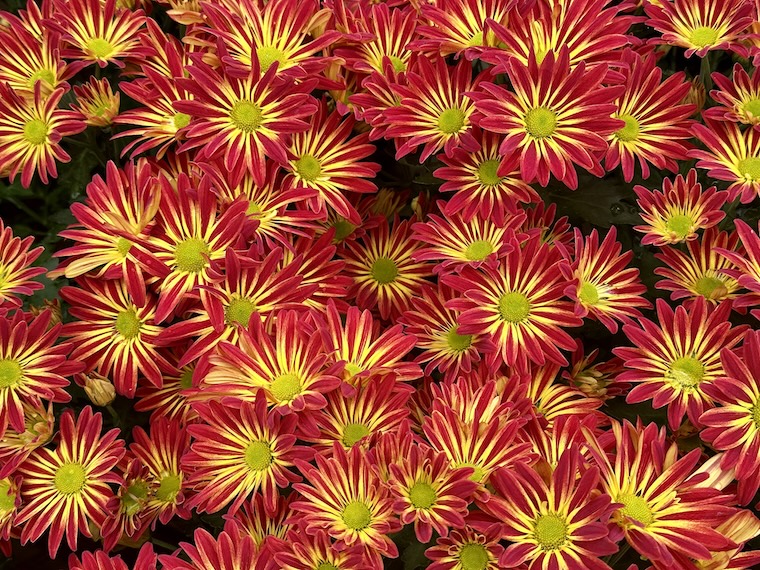
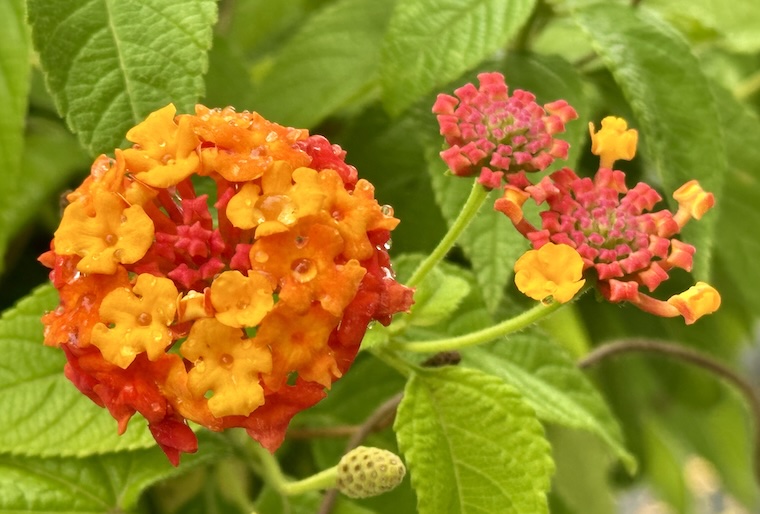
With the plentiful supply of both water and sun this past summer, the annuals are still going strongly in most gardens (and garden centers, which is where these photos were taken). Usually the flowers are slowing down at this point in the season, so this show is very much appreciated, especially with its strong and saturated hues. With the sun lower in the sky, the richness is only amplified. Lantana is one of those magical flowers that manages to have almost an entire rainbow within its blooms.
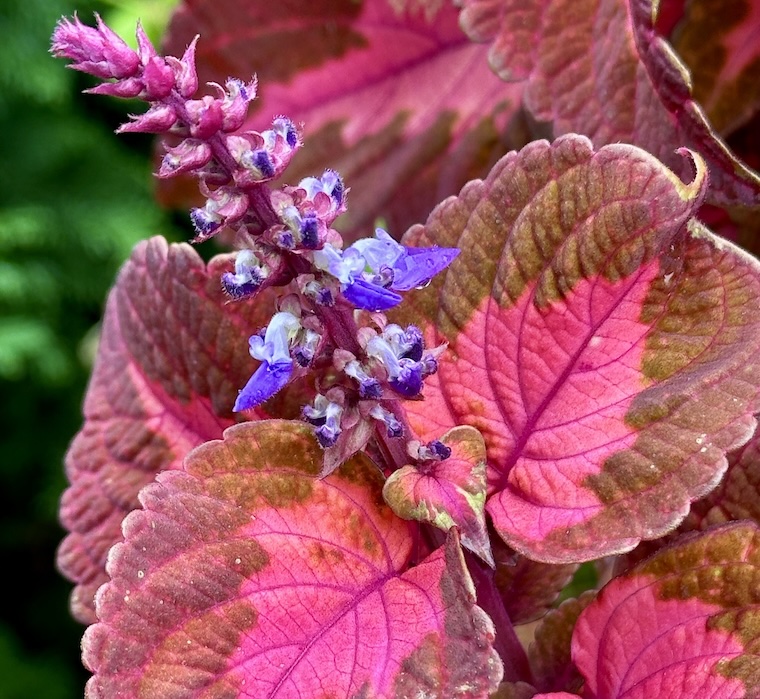
As seen above, the coleus is going to bloom – something most would typically discourage to promote leaf growth and bushiness, but which is welcome now for the grand summer finale. I’ve let the Thai basil in our garden go to bloom too, enjoying its dark violet shade for an unexpected flash of color. It’s the end of summer again – it’s time to let go and let bloom.
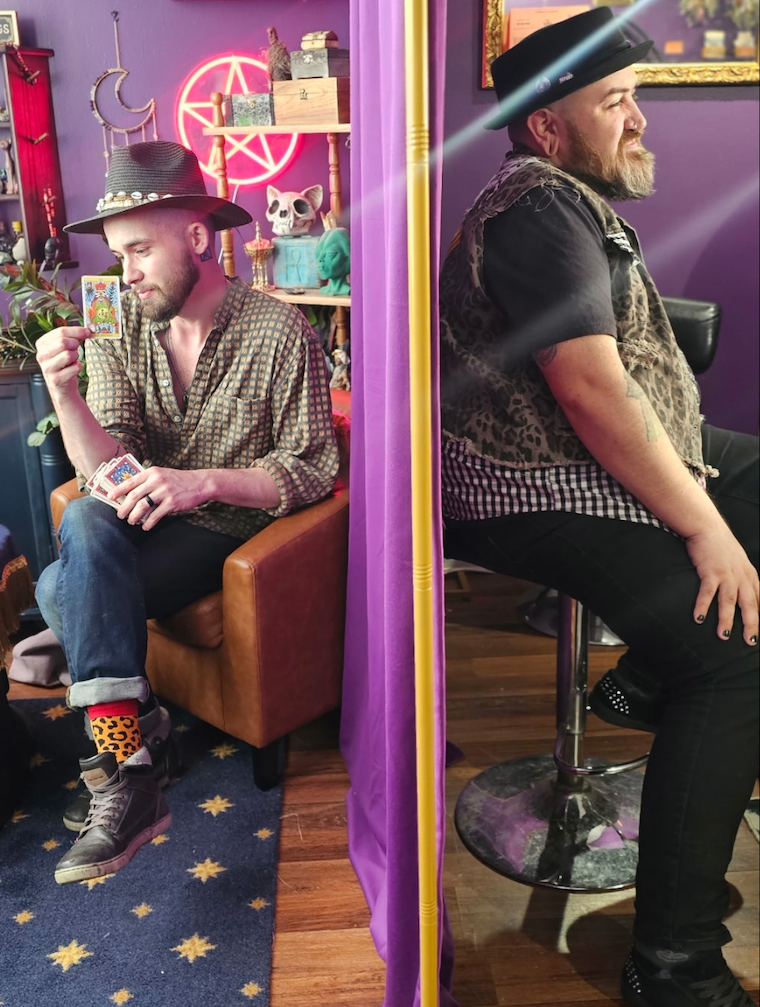
Far more than those sparkling blue eyes and that magical method of hand motions when sprinkling powders and potions over candle work, the first thing one notices when they meet Scottie Dwyer is a sense of warmth and calm that envelops his immediate atmosphere. It’s one of the gifts that gives his readings such potent and meaningful import, as well as imparting his grateful clients with a reason to return. Along with his husband Matthew, Scottie is founder and proprietor of Odd House, where you can find all sorts of wondrous queer-centric ritual supplies and alternative apparel. The Dwyers have recently opened Odd House right on River Street in Troy, NY on a charming stretch that is happily bustling with weekend traffic and giddy visitors spilling over from the weekly Farmer’s Market. Giving back to the city they call home and becoming part of Troy’s fascinating fabric of generous souls, the Dwyers find sustenance and inspiration in their community.
Known also as Kemetic Mender, a name he uses honoring the neopagan practices of centuries-old Egyptian beliefs, Scottie embraces an inner divine feminine energy he gets from working with ancient Egyptian goddesses. He does Tarot card and crystal ball readings at Odd House, where he sits with anyone interested in connecting with loved ones who have passed in an effort to help them heal things and work their way through the next stages of life. He believes that a shifting mindset that leads to realizing your own self-worth is one of the key take-aways his readings provide, allowing people to find their spirit teams and receive messages on what best to work on to help remove anything blocking us from accessing our energy. Clients have referred to working with Scottie as something akin to getting a hug from the universe; he provides a connection to the idea that there is always more at work than we may realize, and paying attention and focusing on what we may have only sensed or barely perceived is a way to advance our own spiritual life and work, while embracing our own sense of self. For all these extraordinary reasons, Scottie Dwyer is our Dazzler of the Day.
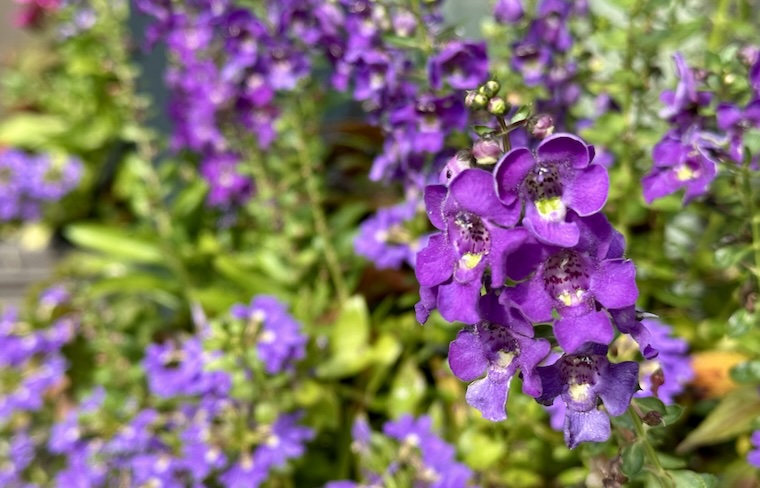
The final week of summer is upon us; I offer this purple visage because purple is what we wear when we grow old – and this summer has most definitely grown old, and I’ve certainly grown older along with it. With this stretch of growth came some hard-won wisdom, so it was not without its rewards. Whether they will be worth the work and sacrifice has yet to be seen – on with this weekly blog recap to maybe make some sense out of it… though most likely not.
Late-summer Sundays don’t get all the glory they deserve. Last gasps of the last summer weekends, I tend to file them away as quickly as possible, even as they’re happening, throwing them out like a baby with the bathwater (not that I’m against that, by the way) perhaps somewhat prematurely in an effort to stave off the hurt and worry that comes with them (Sundays, not babies).
This one was filled by rain in the morning, and the last hours of a weekend with my niece (more on that to come). Then the sun fought valiantly to return, starting with some heat and humidity – the stickiness a welcome reminder of July, even as I’m ready to turn over the last leaf before fall – before reappearing for the end of the afternoon and heating things up again. Still, I know this is
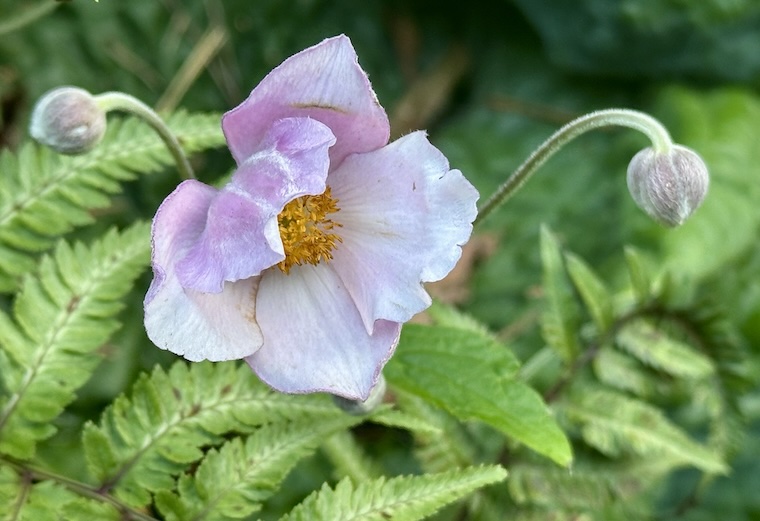
Like the person who captured its meek afternoon form here, this anemone flower – the first of the season in our garden – turned bashful and spent before I could capture it in its earlier incarnation of freshness and fully-open glory. I’d noticed it in the morning but forgot to get a pic until the sun had almost gone down. A bit of browning, and the petals turned inward, indicated it was just about done with its show. I’m not sure how long it may have been in bloom – I didn’t even realize we still had an anemone plant in that area, so this was an unexpected delight – the very best sort of delight.
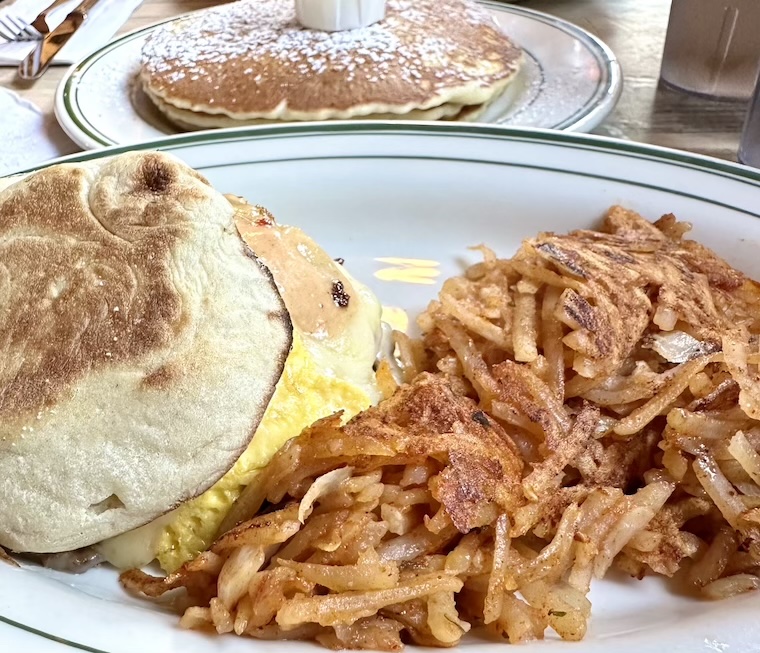
It struck me that I was especially sorry to see the Labor Day weekend come to a close. We’d had such a good time, with nary a bit of drama or disagreement, that I didn’t want it to end. We took our time finishing our plates, glad for the extra pancakes – grateful for their sweetness, and the prolonged opportunity for a bit more conversation.
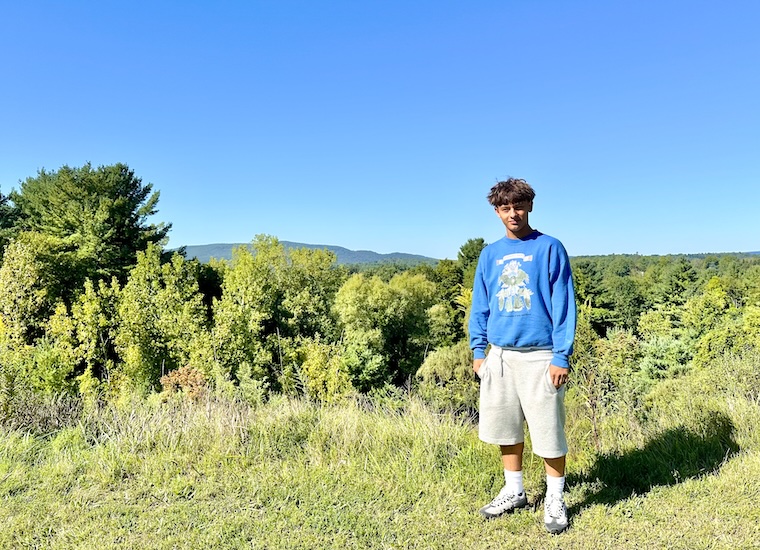
After packing the car and bidding adieu to the condo (until my return to town to rendezvous with Chris next weekend) we decided to make one more stop along the way – the outlets at Lee, MA – where the beauty of the Berkshires meets some basic retail offerings.
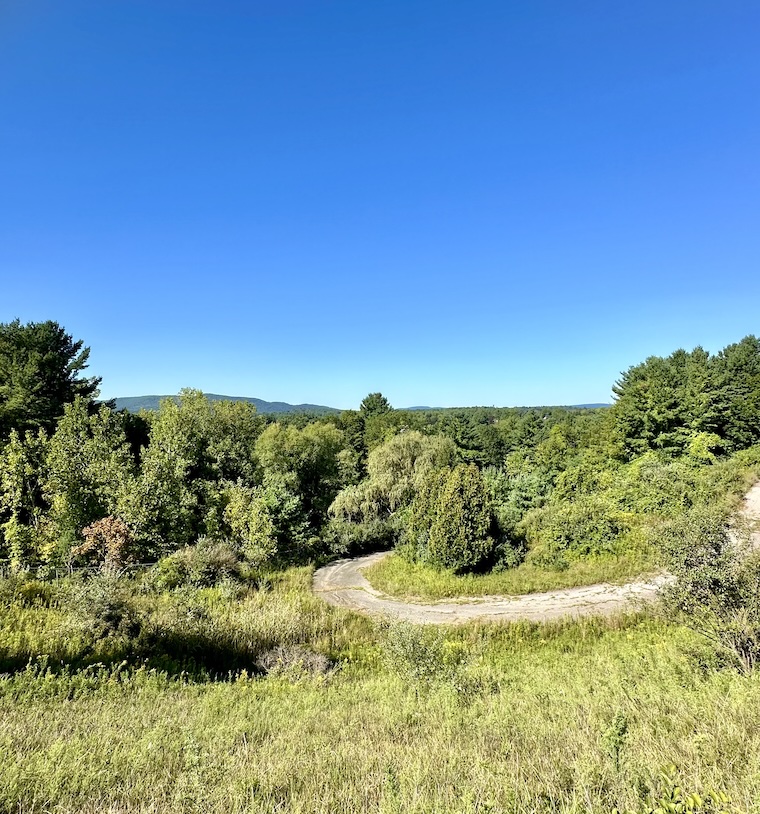
Behind the outlets, near our parking spot, a winding path curved into the forest below. I’m not sure where Noah’s path might take him in the years to come, but he seems to have a good sense of self, and a strong moral compass, and I’ll always be here to guide him whenever he might ask.
It was a good weekend with my nephew, and he already texted that he wants to go back soon.
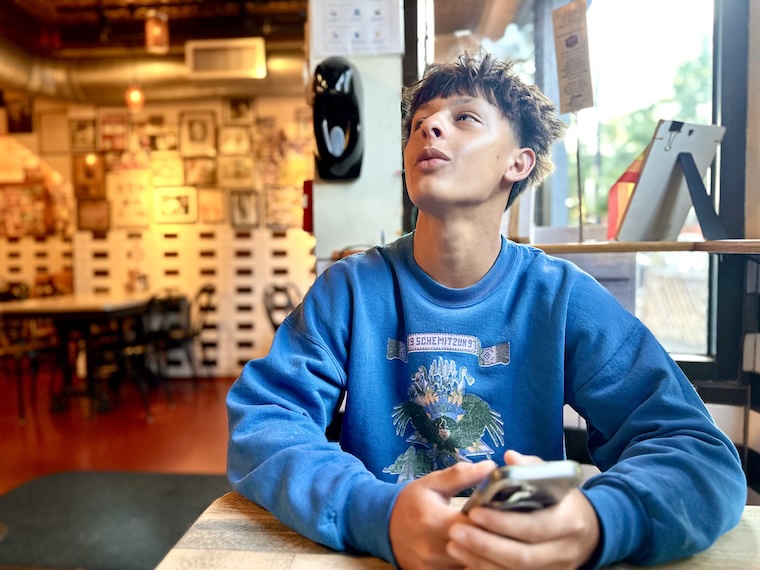
We opened the next morning with a breakfast at Mike’s City Diner on Washington – a longer walk than nearby Charlie’s, but the day was already shining in sunny style, and walking among beauty makes for easy talking. It had only been a few weeks since I’d been there, but it was Noah’s first time, so an introduction seemed apt. We took our time as the place slowly started to fill up, then made our way further into the South End for the next planned excursion.
Sunday mornings at the SoWa Market were how I used to close out my weekends in Boston, and it’s been a few years since I’ve gone. On this day Noah was up for the visit since he likes a vintage hunt, and I thought they still had a vintage market somewhere. We browsed the food stands and stores, then found some t-shirts and a suede coat to go with my own upcoming autumnal theme.
As we sat down for a breakfast dessert of ice cream (a rule-bending habit we had started the night before) a bank of gray storm clouds looked to be moving in, but they seemed isolated enough not to cause an issue. We discussed where we want to go next, and Noah mentioned that he usually ends up near the harbor at some point on each of his trips here, so we headed in that direction. After making it only a few blocks, the rain began – at first just a bit, with only a few drops, then it got a little heavier so we hustled into a canopied park, sitting down on a dry bench beneath some trees. I thought we might wait it out, but it only seemed to get heavier, and without umbrellas or jackets we were at the mercy of the sky, so we made a quickened walk for whatever nearby restaurant could be found. Eventually, we found Citrus & Salt, ducking in just as the heaviest downpour arrived.
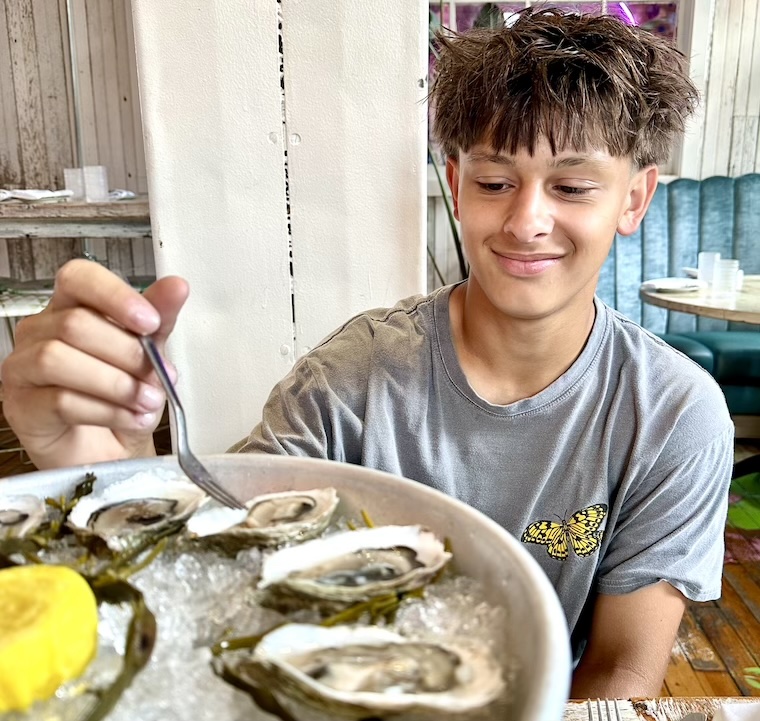
While we had only eaten a couple of hours before, a snack seemed good since we had some storm time to pass, so I told Noah I’d order some guacamole and asked if he liked oysters. He said he never had them before but he would try. One of my nephew’s many admirable attributes is that he is willing to try any sort of food you might suggest, and more often than not he ends up liking it and adding it to his repertoire. It makes for fun dining experiences, and on this day we shared a plate of oysters – his first, continuing his own culinarily adventurous weekend.
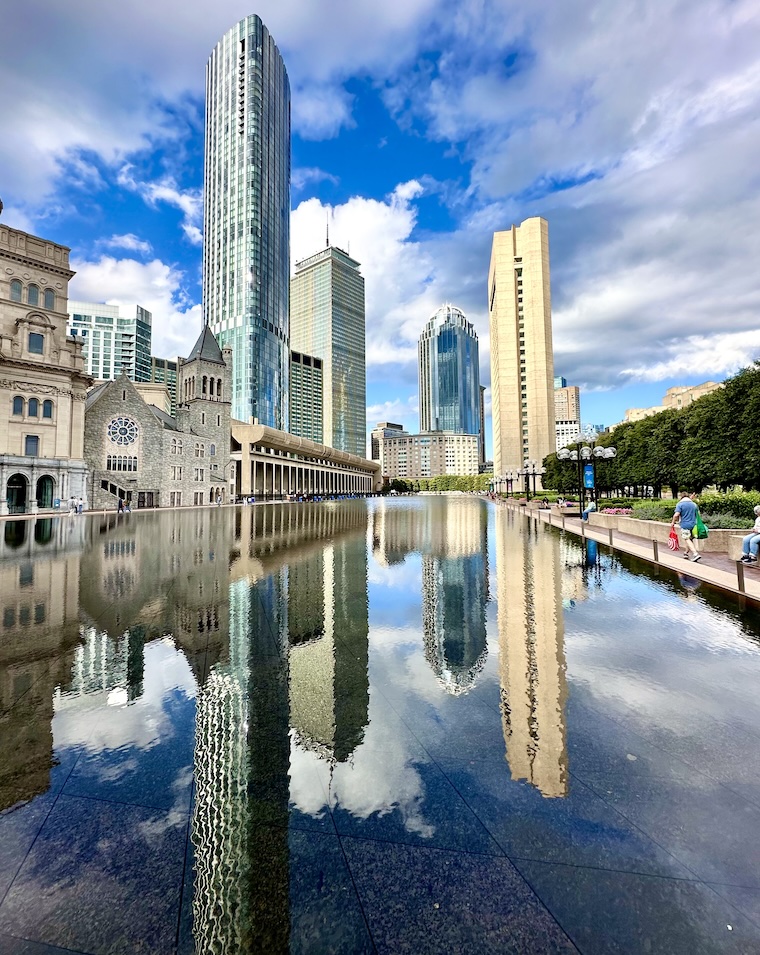
As our impromptu meal concluded, the sun came back out and the sky shone blue again, so we continued our way toward the harbor, where we detoured through Fanueil Hall, then found the path to the Charles River and followed it back toward Copley.
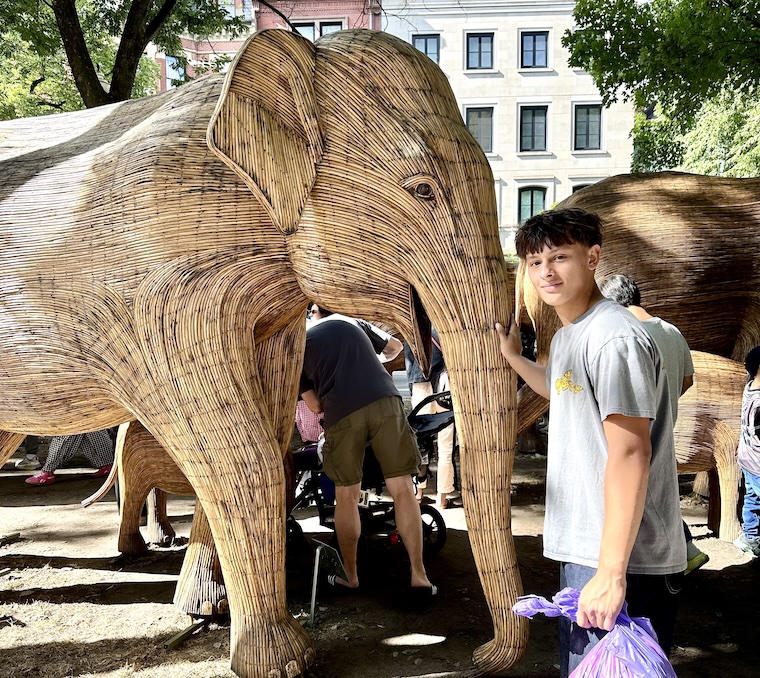
Passing Commonwealth, I remembered the elephants were in town, and as I hadn’t seen them yet it seemed the perfect time, and the perfect company, with which to meet them.
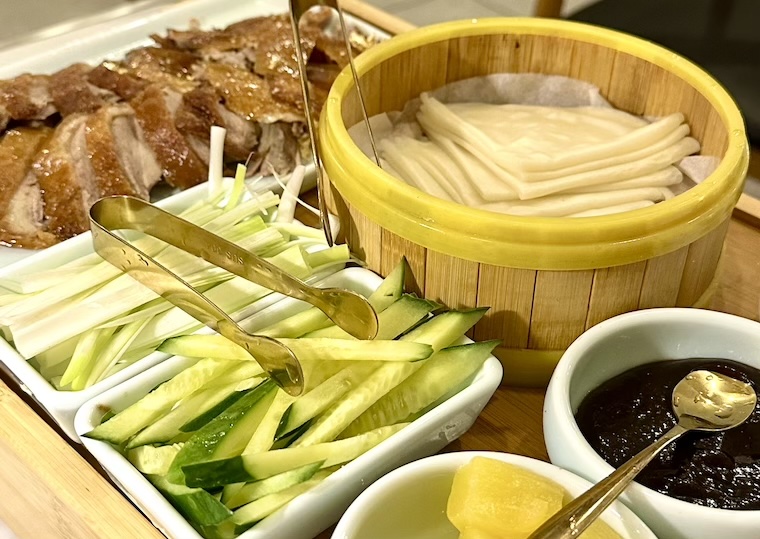
Returning to the condo for an afternoon siesta, I looked up place that offered Peking Duck to make up for our change of plans the night before and found Novo Lantern which was a much closer walk than Chinatown, so I made a reservation for us. This was Noah’s second first try at a new dish, and he ended up loving it as much as I did. The first time I had Peking duck was with my Uncle Ding – and the second was with my Uncle Roberto – so perhaps it’s a Filipino Uncle thing.
Noah and I had a deep discussion about things over our assembly of the duck – the very best sort of conversation that you can have with a cherished family member – the kind that makes you feel alive and grateful and happy, the kind that makes you feel like this is what life should be like always. He’s a good guy. I feel lucky that he’s growing into such a decent young man, and that he still likes spending time with his crazy Uncle, whom he counted as the most interesting person he knows. Such praise deserved a treat, so I took him to Aquitaine for a dessert of chocolate bread pudding, then we called it a night…
While we didn’t have them over as much as we usually do in the summer, the twins were game for one last weekend of fun before the fall season starts officially. Noah was available for a trip to Boston, so we drove over for Labor Day weekend – as was our previous tradition. (Emi will join us for this weekend’s visit and a trip to Vermont.) Now that they are sixteen years old, it’s sometimes easier to do separate visits with them, as there is less competitive in-fighting and more quality one-on-one time. In this instance, Noah and I made the most of a pretty fine weekend in my favorite city.
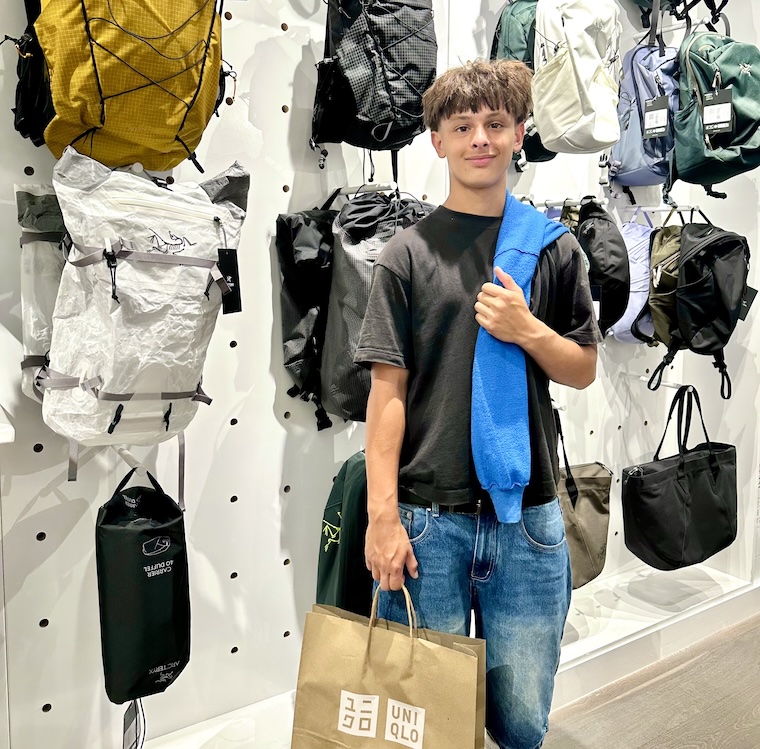
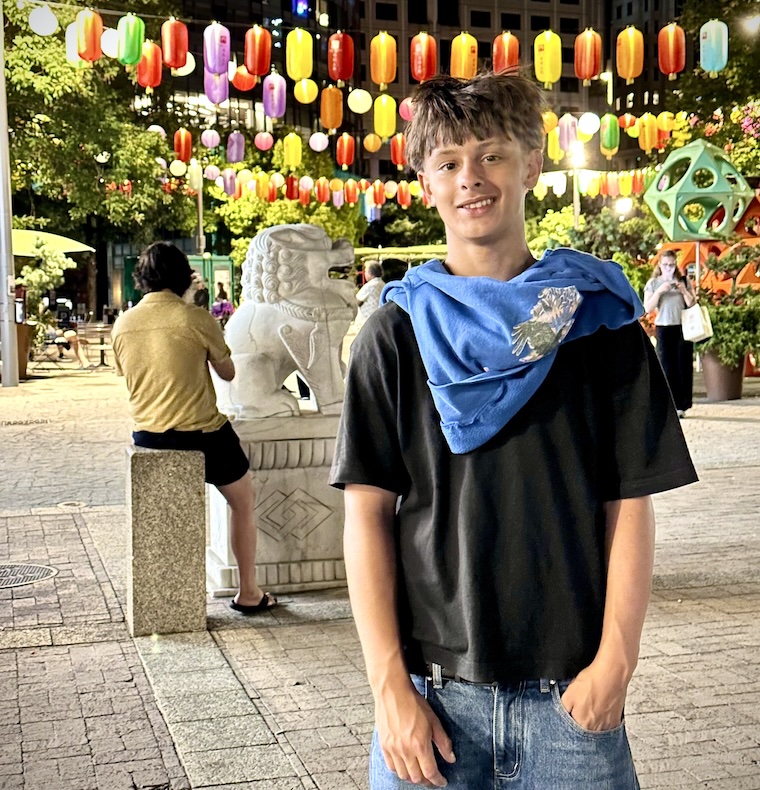
Like any good Guncle worth his weight in retail therapy, I took Noah shopping along Newbury Street to get our bearings. It was actually his idea, as he wanted to find some clothing items after my questioning what his fall fashion theme was going to be (and insisting that he have one).
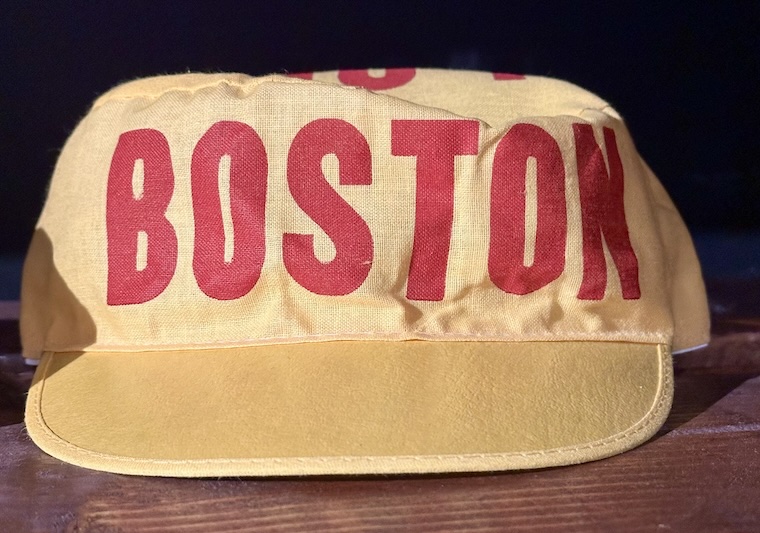
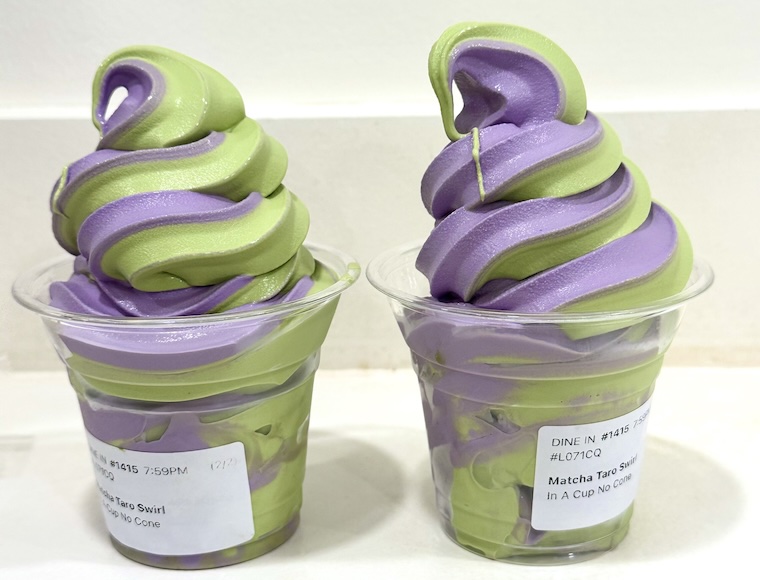
We stopped in a vintage shop, along with Arc’teryx and Uniqlo, and then began the walk to Chinatown where we had our stomachs set on Peking Duck. First, however, we found a matcha ice cream place and decided that no one was going to stop us from getting dessert first. That’s the beauty of these last weekends of summer – there are no rules, and anything goes. It would set our adventurous tone for the weekend.
Grateful for the walk to burn some of this matcha and taro swirl off, we made our way past the Public Garden and Boston Common, then took a careful perusal of Chinatown to see where we might find Peking duck.
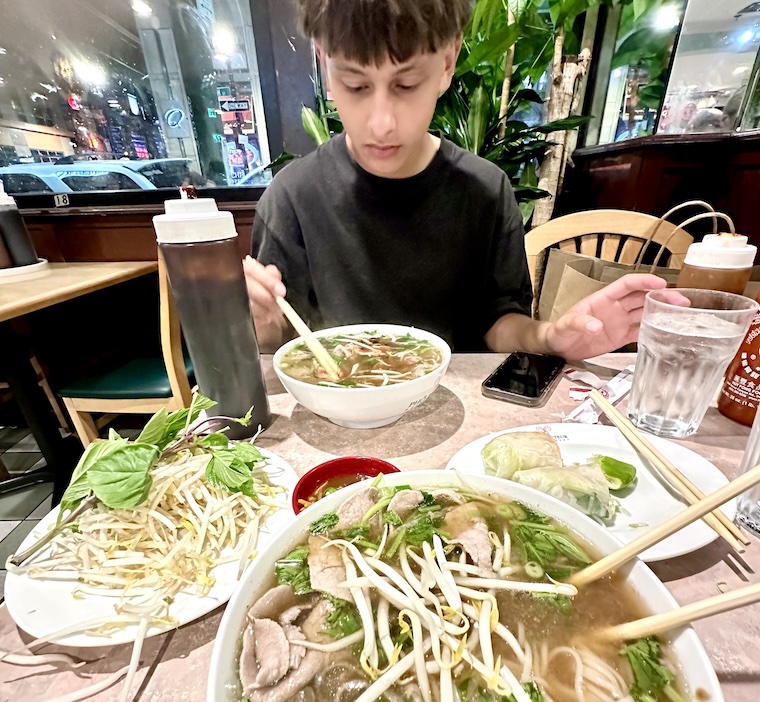
As we passed the best place for pho (Pho Pasteur), Noah said maybe we should get that. I mentioned that a bowl of pho is always the kick-off to fall for me, so I was game, but we were both still torn between that and the duck. As it was getting late – and apparently even Chinatown closes up early these days – we ran the time down and ended up finding the last few minutes of food service at Pho Pasteur, which decided the dinner.
So it was that my first bowl of pho for this fall season was shared with my nephew Noah – and I can’t think of a finer dining companion. We had a good talk – and it set the practice for several good talks over meals, one of my favorite things to do. Noah seemed to enjoy it as well, and after finishing our bowls we each felt stuffed enough to warrant a walk home. We fell asleep almost immediately after the long day, preparing for the next morning…
Emi joins us tomorrow for a weekend of autumnal welcome – we are scheduled to see ‘Practical Magic 2′ then, and I have a weekend of magical moments laid out before us. It’s a bit of a throwback to the fall days when I’d take the twins on a treasure hunt around the yard, excavating all the items I’d carefully hidden and then drew out for them to find with a treasure map. Those innocent acts feel quaint, and soon it will be time for Jaxon to have his treasure hunting days. For now, Emi is arriving tomorrow and we are set to travel to Vermont for a day of almost-fall fun. I’ve already updated the attic room for her stay, reflecting the shift to autumn hues and decor.
Last weekend was Noah’s turn, and I’ll be posting those adventures starting on Saturday – after which a recap of Emi’s adventures should be set to begin. They are growing up fast… too fast… but they still have fun with their crazy Uncle, and he still loves spending time with them. In fact, the older they get, the better we get along – mostly because I can talk to them on my level (which is basically that of a teenage girl who doesn’t want to grow up).
When the morning threatens rain, when the sky is overcast and lazy, a cup of matcha is precisely what I need, with its slow-release caffeine bump – unlike the jolt of coffee that so wreaks havoc with my system. This week I could use a little caffeine – just a little – as sleepless nights give way to exhausted mornings and lethargic afternoons. End of summer blues, perhaps. A general dissatisfaction with a miserable world in which there is no accountability so why does anyone care about fucking anything anymore?
This morning I have a therapy appointment – delayed by a week, and maybe you can already tell. Lots to talk about, lots to discuss, and none of it to be shared with you. If you want that kind of dirt (and you totally do) you’ll have to pay me. Dearly. In the meantime, there’s matcha.