Category Archives: Food

Halibut & Citrus

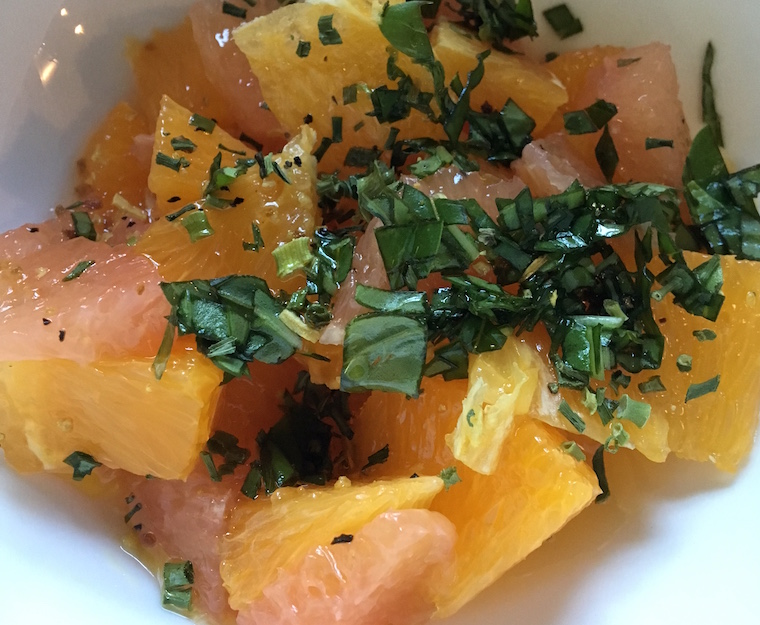
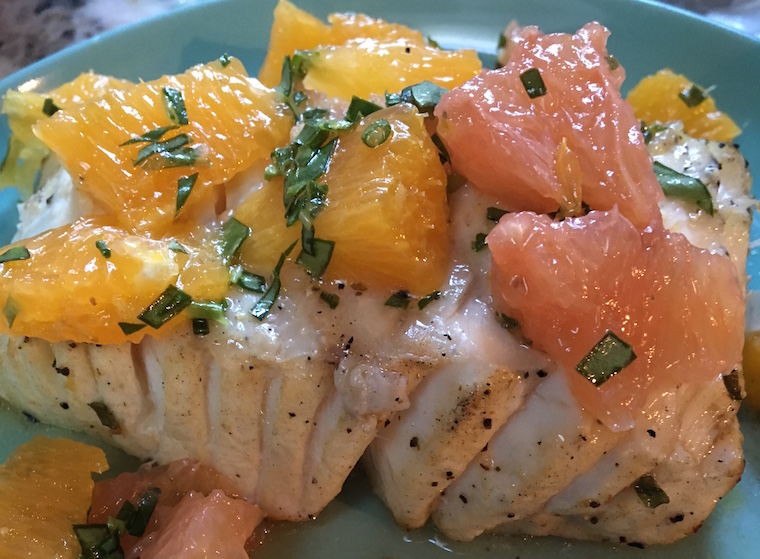
A simple sumer dinner on the grill can be had if you find a good piece of halibut and slice up some citrus. Here we have a grapefruit and orange salsa of sorts, with some cranberry-pear white balsamic vinegar, olive oil, and fresh basil. Slicing off the bitter peel and dividing membrane is what makes this extra sweet, balanced by the tart, savory edge of the vinegar.

As for the halibut, I’m told the trick is not to overcook it – four minutes on one side and three and a half on the other was ample, and the result was a delicate and juicy piece of fish. A simple quick marinade of grapefruit juice, olive oil, fresh basil and salt and pepper (too long and the citrus can wreak havoc with the halibut) was all that it took to make a perfect meal.

Continue reading ...

Fruit Salad

I am coming back around to the fruit salad, especially since eating healthier is one of today’s goals. It’s always been a favorite of mine, particularly in the summer months when so many things are ripe and fresh, but I rarely make one because I can’t face all that cutting and chopping. There is just so much cutting and chopping, so much sticky juice going all over cutting boards and counters, and blah, chop, blah, chop, blah… I’m over it before I even began.

If someone else wants to do it, however, and hollow out a watermelon with a melon-baller, I’m all in.

I just love a fruit salad.

Continue reading ...

Boston Wedding Anniversary #7 ~ Part 6

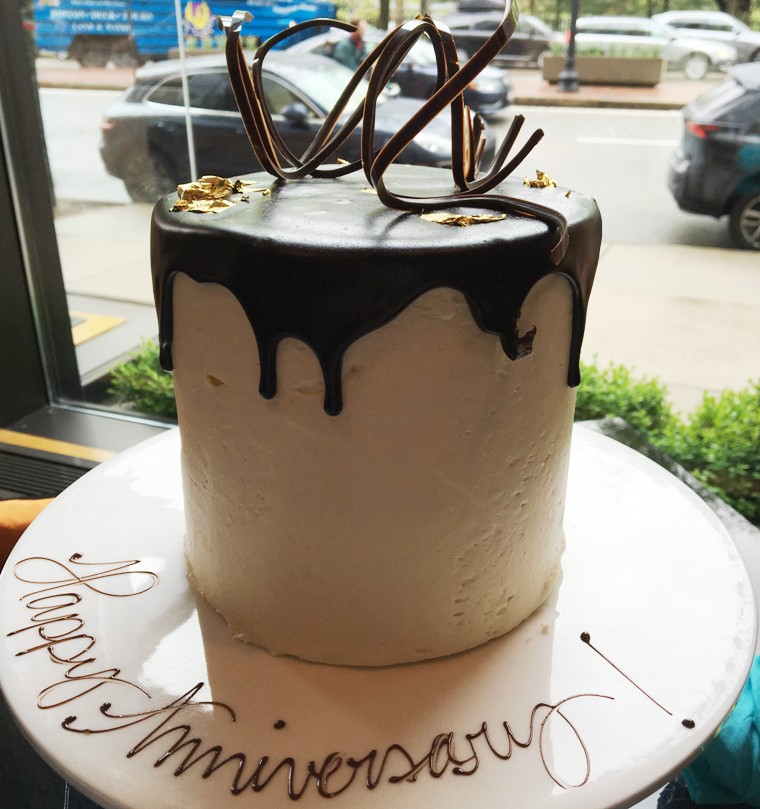
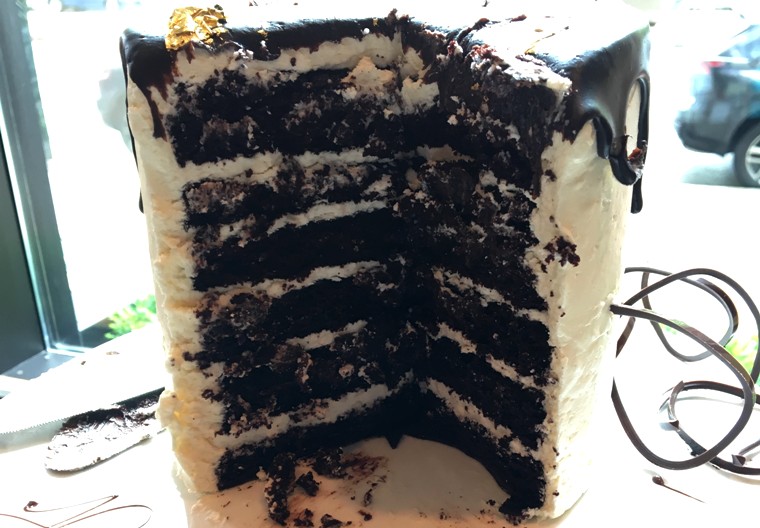
After our wedding ceremony seven years ago, our dear family friend Elaine took us out to the Bristol Lounge at the Four Seasons for a wedding lunch. The meal was divine (they are known for some impeccable burgers) but what took it into stratospheric heights was a sky-high/mile-high/heaven-high chocolate cake. It was a multi-layered decadent experience that must have required its own course for how to slice it ~ so high did it rise. It was more than enough to feed every member of our party.

Ever since that moment, when we each took a piece of this decadent chocolate goodness, we’ve been seeking out such sweet salvation, but everything has proven elusively out of reach. Andy has come close a couple of times, but nothing could match the towering magnificence of that cake. It has remained a delicious memory all this time.

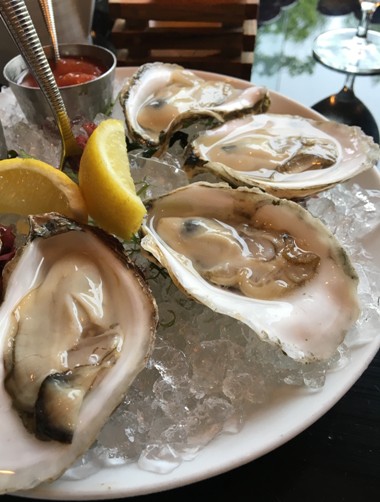
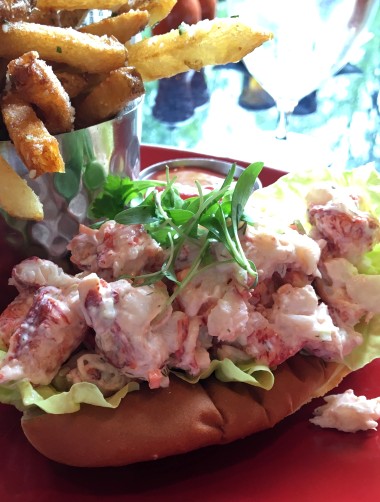
For our anniversary lunch, I settled in for an oceanic-slanted treat, beginning with the raw oysters you see here, and following it up with a lovely lobster roll (and truffle parmesan fries). We were slated to have a meaty dinner at Boston Chops later that evening, so I stayed seaside for my selection. Andy went with a spicy chicken offering for his choice. We looked out over Boylston to the Boston Public Garden. The rain had started up again, and our timing worked out perfectly. Not so much for the couple that was also trying to get married. Their party stood huddled beneath a makeshift white tent. (I will always be grateful for the beautiful day we were lucky enough to have had.)

As we were putting aside our napkins, our server appeared with the towering delight you see here. Someone had gotten wind of how much we had enjoyed this cake the first time around, and had been good enough to send out a new one for our anniversary. The Four Seasons has some fiercely impressive customer service, and I have to put out this public note of thanks and gratitude for such gracious and thoughtful gift. (I also sent them a traditional hand-written thank-you note because that’s my style, and it was the least I could do for such a wonderful treat.) We are not worthy, but we will spread word of this goodness as far and wide as we can.

It was a highlight of our wedding weekend, and it was a highlight of our 7th anniversary. Boston has always made us feel loved.

Our stomachs more than satiated, we walked back to the condo to prepare for our evening: an early showing of ‘The Bridges of Madison County’ at the SpeakEasy Stage Company, followed by cocktails in the South End, then dinner at Boston Chops. The perfect Saturday plan…

Continue reading ...

Stuffing the Cabbage

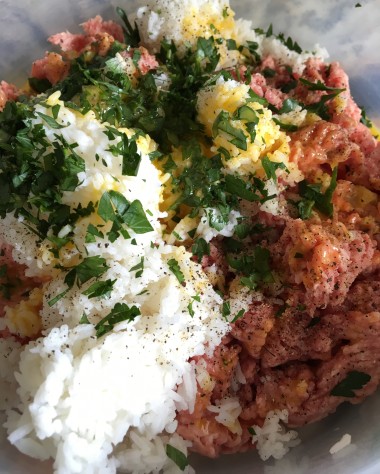
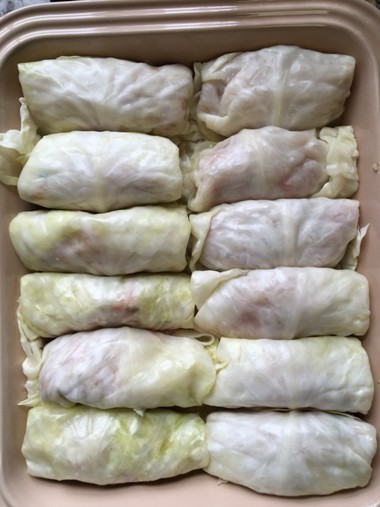
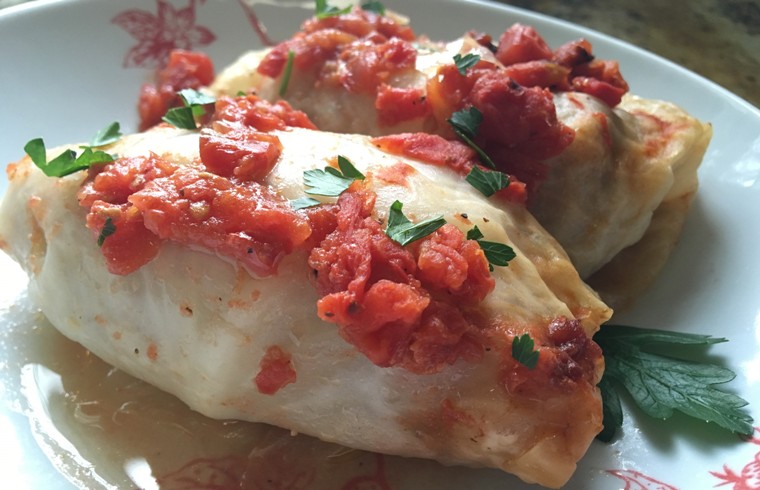
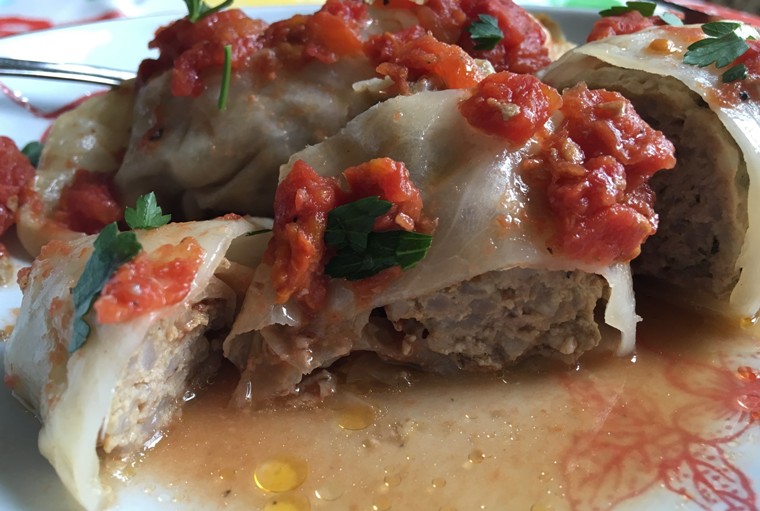
Galumpki, Halupki, whatever-you-want-to-call-itpki – this is stuffed cabbage, and it’s one of those dishes that I tried as a youngster but didn’t instantly enjoy. I put it from my mind until a co-worker brought some in and I tasted it as an adult. What a difference. I enjoyed it so much I promptly went home and made some myself. (She used bacon in hers, which gave her the edge on taste; I was just happy mine stayed together.)

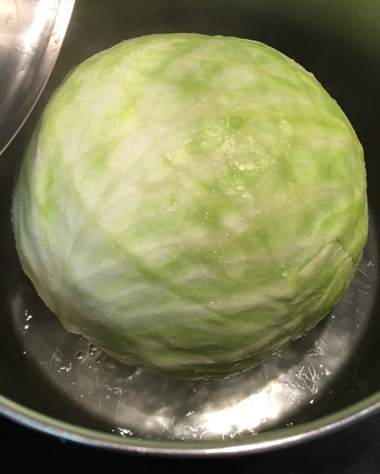
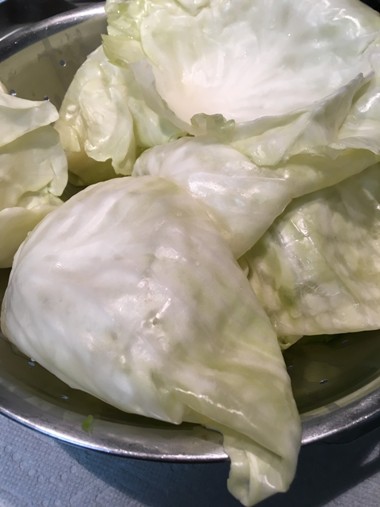
The hardest part (aside from sticking my bare hands into a bowl full of raw meat, eggs, and cooked rice) was getting the leaves off of the cabbage, though once I got the hang of it, things went smoothly. (The trick, after boiling/steaming a cored cabbage head, was to use a large carving fork and hold the cabbage on that while you delicately peel the steaming leaves off one by one. When they stop coming off easily, boil/steam for a few more minutes, following this process until you’re down to the inner part where they’re too small and crumpled to use.)

There are tons of variations on this dish, which makes messing up difficult to do. Those are the kinds of recipes I enjoy most: the ones with lots of room for error. As I mentioned, my co-worker put bacon in and on top of hers – and I will try that next time. For my first attempt, I wanted to focus on technique and simplicity.

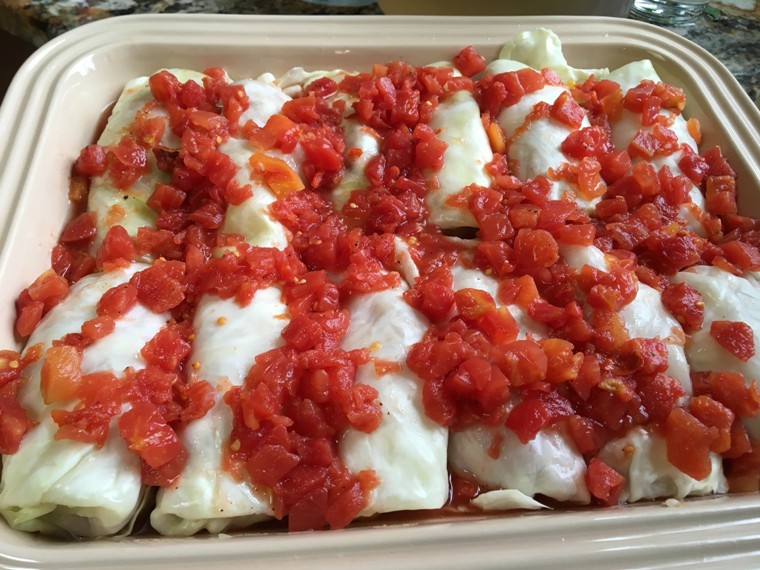
They rolled up better than I anticipated, and the recipe I used called for the tomato/vinegar/sugar mixture to be poured on top of the rolled meat packages (I guess some people mix this into the meat mixture too).

They actually turned out decent. The biggest pain was the cabbage leaves, but with a little practice that should be simpler in the future. I’ll wait until fall to try them again, however, as they feel more like a comfort food.

Besides, with all the steaming and baking and twirling a cabbage head on the end of fork, I was sweating when it was finally done. Not the sort of scene for a coming summer.

Continue reading ...

Fry Me A River

My parents gifted Andy and I with a deep fryer this past Christmas, and the past few weeks have been occupied with almost incessant frying expeditions – mostly of the potato sort. The main purpose of requesting this additional kitchen item (which we really don’t need) was to make French fries, and I think I have it down.

There are several tips and tricks gleaned from online looking that helped me out: the first step is to cut the potatoes as you like (but however you slice them be sure they’re a uniform shape and size for even frying), then soak them in water for at least half an hour beforehand. Dry them thoroughly then put them into a fryer heated to 275 degrees. Fry for five minutes, stirring occasionally to ensure even cooking. Drain and place on paper towels, then do another batch. (Smaller batches also ensure that the oil stays true to temperature (though this fryer automatically adjusts to maintain it). After allowing to cool, raise the oil temperature to 350 degrees and repeat, with another five minute coking time. Drain, place on paper towels, and immediately sprinkle with sea salt and preferred seasoning.

I served them with a choice of garlic aioli or balsamic vinegar ketchup. Each was divine. It’s the double frying step that seems to make all the difference. Andy got a little fancier, executing a delicious panko-encrusted fried turkey parmesan dish, as well as the eggplant parmesan pictured here. While this deep fryer is doing nothing to help my summer pool body, it’s more than merrily brought joy to my dining options. My next challenge may be one of the greatest: lumpia. It’s my party and I’ll fry if I want to.

Continue reading ...

Southwestern Fare Flare

Though they were all over my TripAdvisor account, I neglected putting food stories up during my desert postings, so here’s a quick visual feast for anyone needing a dose of goodies. Needless to say, as one can easily see here, I ate quite well during my desert sojourn, and will bring some inspiration back for a couple of May meals. After all, May is for margaritas.


Continue reading ...

Italian Winner

Andy pounded out a few turkey breasts and breaded them with panko before dropping them into our new deep fryer. They cooked up perfectly, and formed the decadent homestyle topping for a bed of pasta and Andy’s own marinara sauce. I made a side of rappini in olive oil and garlic, with some extra fennel thrown in for good measure, and the slight bitterness of the greens was a glorious counterpart to the pasta and breaded turkey. It was a simple meal, but substantial and filling – the very best thing to have at this seasonal crux in the year.

Continue reading ...

Fry Some, Eat One

Mom and Dad gifted us with a deep-fryer this past Christmas, and during this week’s snowstorm I finally had an opportunity to try it out. I’ve been frying things over the years, to mostly disastrous results. I never used a thermometer to check the temperature, so it was either too cold or way too hot. The trick, from what I read, is to make sure that food items get cooked quickly enough to get a crunchy exterior, while not taking in too much oil. That largely happens when you have the temperature and the timing correct. (I can still remember the night I almost burned the Boston condo down trying my hand at fried chicken. I thought the trickiest part would be the paper bag shake, but it was really how to navigate the spattering oil and thick smoke that had the smoke detector exhausted by the time it was all over. The worst part was that the chicken, even with its perfect buttermilk dressing, was burnt on the outside and bloody on the inside.)

The deep fryer fixed all those flaws, maintaining its temperature and still staying spatter-free. The potatoes I’d cut up went in and started bubbling like you see on the cooking shows, and after a few minutes they came out perfectly golden (or as Gram liked to say, good and brown). It was a rare culinary success, and I hurriedly sprinkled them with sea salt before they cooled. Served with an aioli and ketchup, they were reminiscent of the fries I’ve had at Five Guys, so I’d say I pulled it off. Next adventure: fried artichoke hearts. Wish me luck.

Continue reading ...

A Meal for for Lent

For those of you who still do fish on Fridays, this simple dinner plan is perfect. Steam some rice, sauté some Swiss chard in olive oil, garlic and a couple pats of butter, and roast a piece of sea bass in a little pool of olive oil, rice vinegar, soy sauce, salt & pepper. That’s it. If you use a rice cooker, that’s the longest part of this process. In other words, it’s quick and easy, simple and delicious – just the sort of thing we need for these wintry days of Lent.

Continue reading ...

Lentils are Delicious

It turns out that lentils are more than just a fairy tale footnote, and this recipe for a lentil soup is absolute proof of that. As long as winter hangs on, and the chilly first days of spring retain a frigid core, there will be a need for soup and similar comfort food. The rustic ingredients magically transform into a soup that is a hearty and filling as it is tasty. The broth turns an inky midnight/violet shade as the lentils cook – a delicious hue that is tempered once the red tomatoes go in. While every ingredients counts here, it is perhaps the fresh parsley and grated parmesan that makes the big difference in the end. (Those two bay leaves are a necessity to work their magic as well.) If you’re looking for a way to make the end of winter just a little more bearable, this is my secret weapon. Wield it well. (It comes from a wonderful cookbook, ‘Good Cooking’ by Jill Dupleix.)

Abruzzese Lentil Soup

Ingredients:

  • 1 ¼ cups small green lentils
  • 2 garlic cloves, smashed
  • 2 bay leaves
  • 1 onion, peeled and sliced finely
  • 2 celery stalks, finely sliced
  • 2 carrots, peeled and diced
  • 2 Tbsp. olive oil
  • 14-oz can crushed tomatoes
  • 14-oz can chickpeas, drained
  • Sea salt & pepper
  • 2 Tbsp chopped fresh parsley
  • Freshly-grated Parmesan cheese for serving

Rinse lentils, then place in pan with garlic, bay leaves and 6 cups cold water. Cook until almost tender (about 30 minutes), skimming occasionally. Finely slice onion and celery, and dice the carrots. Heat olive oil in large saucepan. Add onion, celery and carrots and cook, stirring often, for ten minutes.

Add vegetables and tomatoes to lentils and stir well. Simmer until nice and soupy, about 20 minutes. Add chickpeas, sea salt and pepper, and simmer for at least 10 minutes longer, adding extra water as necessary. Stir in chopped parsley and ladle into warm soup bowls. Served with grated Parmesan on top.

Continue reading ...

The Forgiving Frittata

If you’re looking for an exact recipe for a frittata, look elsewhere. The whole point of a frittata is that it is a very forgiving dish – it bends and yields to whatever is in the fridge, and however you prefer to make it. I’ve made this a coupe of time – each one different – and each one delicious. I prefer it to an omelet, as there’s no tricky flip or roll involved. (Of course, if Andy’s going to be making it, I’ll take the omelet.)

For the frittata, you can fill it with whatever you like. If you’re using a meat (I’ve tried sausage and bacon to great effect), you can chop it up and render the fat directly in a 12-inch pan (oven-safe and non-stick) to be used for the final dish. For any vegetables you want to use, I’d saute them in a separate pan (you don’t want all that moisture going into the frittata) until they’re relatively soft.

In another bowl, I whisked 8 eggs and about half a cup of heavy cream. (The fat’s important, so don’t go skim.) To this, I added salt and pepper, and any fresh herbs that work for you. When the meat’s finished cooking, and still on medium heat, add the eggs and vegetables and stir everything gently together. As the edges pull away from the pan and the eggs start to set, put the whole thing into a 350-degree oven until it’s set to your liking. (About 8 to 10 minutes for a firm frittata.)

Let it rest for a bit before cutting, then top with more fresh herbs.

Continue reading ...

Scintillating Scallions

Scallions, more commonly referred to as green onions, don’t seem to enjoy as much popularity as they deserve. I love where they fall on the onion spectrum, somewhere between a traditional onion and the chive. I also love how much color they add to any dish (it’s best to use a decent amount of the foliage for precisely this reason). Their flavor is delicate, but important. They add an onion-like touch without the harshness of the real thing. I enjoy them with eggs, and fresh dill and parsley for a bright omelet – or as a topping on kimchi fried rice or a pungent pho. Such a garnish may seem optional, but it provides an integral flavor, texture, and freshness to any savory dish. The lesson here is that the scallion should never be underestimated. A good lesson for all of our stalwart ingredients, and a testament to the power of fresh ingredients.

Continue reading ...

The Hot Hues of the Pennsylvania Dutch

Ever since seeing a photo of the finished product, I’ve wanted to try my hand at these pickled beets and eggs. With our first brunch in need of something with a little pizzazz, I set about to see what magic the Pennsylvania Dutch had crafted. This one requires a bit of forethought and planning, as it is essential that the 48-hour soaking period be honored in order to achieve the colorful brilliance you see here.

Billed as a “gift from the Amish” (and all of my close friends know my affinity with the Amish), here is the old-fashioned recipe in case you want to recreate it.

Pennsylvania Dutch Pickled Beets & Eggs

  • 8 eggs (hard boiled)
  • 2 (15 oz.) cans whole pickled beets, juice reserved
  • 1 onion, chopped
  • 1 cup white sugar
  • ¾ cup cider vinegar
  • ½ teaspoon salt
  • 1 pinch black pepper
  • 2 bay leaves
  • 12 whole cloves
  1. Place eggs in saucepan and cover with water. Bring to a boil. Cover, remove from heat and let eggs sit in hot water for 10 to 12 minutes. Removed from hot water, cool, and peel.
  2. Place beets onion and peeled eggs in a non-reactive glass or plastic container. Set aside.
  3. In medium size non-reactive saucepan, combine sugar, 1 cup reserved beet juice, vinegar, salt, pepper, bay leaves, and cloves. Bring to a boil, lower heat, and simmer 5 minutes.
  4. Pour hot liquid over beets and eggs. Cover and refrigerate 48 hours before using. (Stir or shake once or twice a day for even color to soak through.)

This is not a recipe for everyone, but it would make a great side-dish for Easter, thanks to the way the beet color seeps into the eggs. Once they are cut open, it’s the sort of combination that doesn’t seem real for something you can eat, but there it is, a wondrous collision of hot pink and sunny egg-yolk yellow.

Continue reading ...

Hosting Sunday Brunch

Can you believe that we’ve never hosted a Sunday brunch until now? My friend Chris voiced his incredulity, and when I pondered it my own mind boggled a bit too. We’ve had weekend guests who have shared in breakfast and brunch-like meals, but never have we had people over specifically with the intent of brunching. This was the first time, and though it came off without a hitch, it was a lot of work, so we likely won’t be doing this with any regularity.

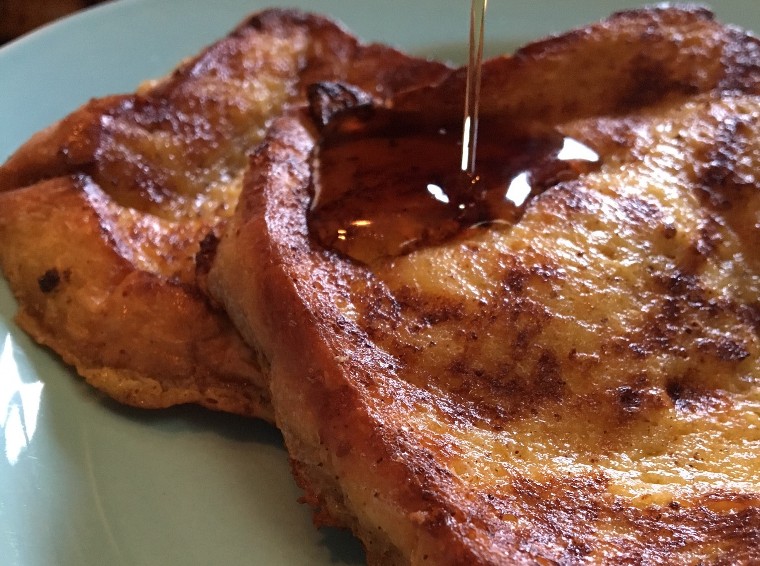
The unlikely centerpiece was a bowl of Pennsylvania Dutch pickled beets and eggs, but that was so pretty it deserved its own post (to follow later today). It also required a 48-hour prep time, which gives you an indication of the forethought and planning that is required – such as the baked French toast you can see above. I’m not a fan of making French toast because of all the smoke and mess, so a baked version was much more to my liking. It could (and actually should) be prepared the night beforehand, so the bread can soak up the batter.

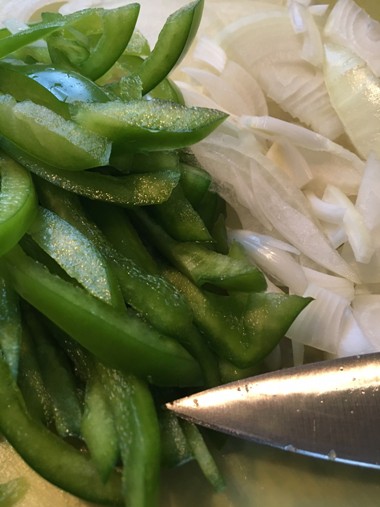
The home fries (with onion and yellow peppers) and the frittata had to be made right before serving, which is where the stress of the whole thing surfaces. Both, however, won’t be harmed by waiting around for an hour or so – and some people prefer a room temperature frittata anyway.

This was my first freaking frittata and it was fabulous, if I do say so myself. Following the advice of various frittata experts, I cooked up the vegetables separately to eliminate a lot of the excess liquid they would otherwise bring to the dish, and it turned out quite nicely.

The deviled eggs (half with horseradish) were provided by Suzie, and I always find that the secret to getting really good deviled eggs is to ask someone else to do them. I provided the traditional brunch libations (Bloody Marys and mimosas).

We brought out the waffle-maker (as we do once or twice a year) and other people baked them up.

Is it worth having a waffle-maker if you’re only going to use it once a year? The answer is yes. At least on this morning. I’ll sing a different song when I trip over it in the attic again.

It was a grand time, and it turns out that the key to a great brunch isn’t so much about the food or fanciness of the dinnerware, but rather in the family and friends we were lucky enough to assemble. We’ll do it again when spring returns.

Word.

Continue reading ...

The Power of Simplicity

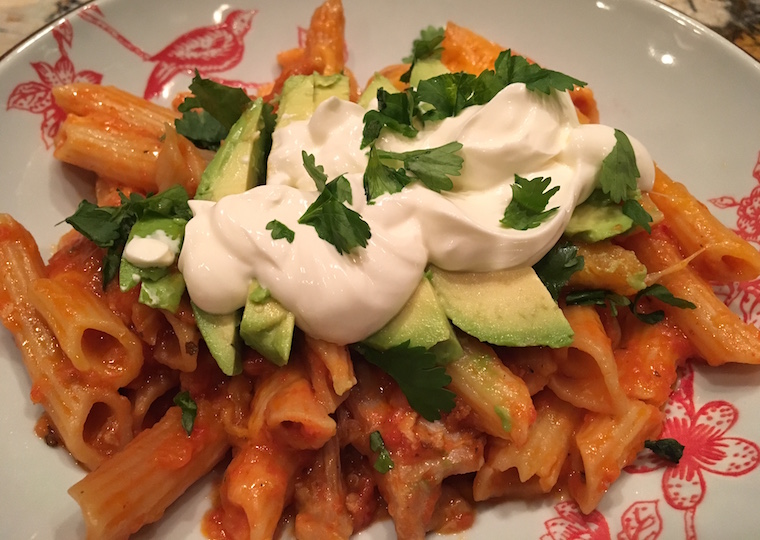
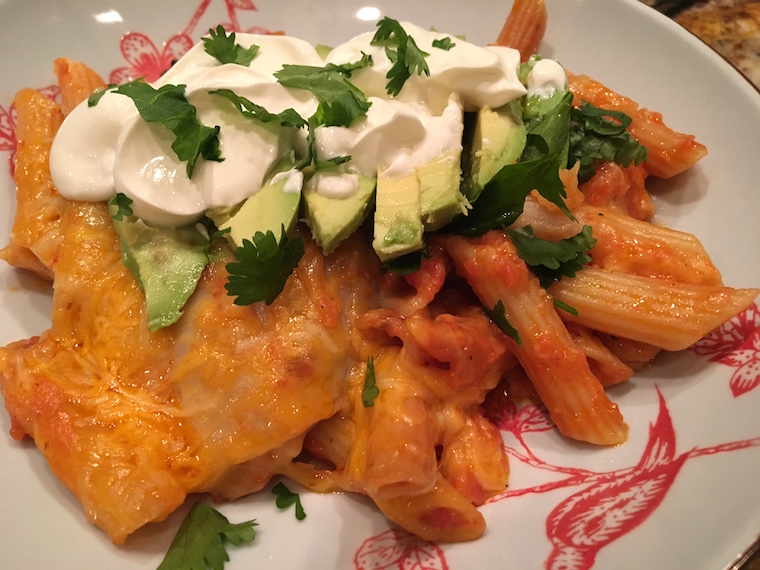
This dish was one of the first I ever learned to make, way back in Andy’s kitchen in Guilderland circa 2000, and was one of the first dinners I ever cooked for him. It’s simple enough, and very forgiving, so I won’t waste time with exact measurements or ratios. It begins with a sweet onion, diced and cooked in some olive oil on medium heat to the point of translucency. To that, add some garlic and a can or two of tomatoes, diced or chopped however you like. Boil this for a bit, then add a serving of vodka, and let boil off a bit more. Add some cream and Parmigiano-Reggiano and a decent bunch of roughly-chopped fresh basil. That last piece is the most important part, lending it a pesto zing that sends it soaring. Serve with penne and you’re done.

Food is the way to the heart.

Continue reading ...