Category Archives: Literature

A Love of Tragedy

How foolish and simpleminded I had been to have so loudly proclaimed to the world that art was the object of my desire! Art! No! Watching you being forced to leave me, you, for whom I felt such a strong attraction, such a great affection, such a great… dare I speak it… love… I knew I would spend the rest of my life in the pursuit of something grander than art, grander than happiness. Yes, I would spend my life in the pursuit of tragedy. And I knew, too, that for me somehow tragedy and love would forever be wed. It may be true for us all that there is no tragedy without love, and no love without tragedy. ~ Louis Edwards, ‘Oscar Wilde Discovers America’


Continue reading ...

Wilde Inspiration

The act of creating art is an act of violence – it is the willful destruction of nothingness. All true art is violence. Are all acts of violence art? No. of course not. Some acts of violence are. But for the inartistic, the creation of violence is usually a crude substitute for the creation of art. Violence is usually not art because it merely destroys one form of nothingness and replaces it with another. True art always fills the void. ~ Louis Edwards, ‘Oscar Wilde Discovers America’

Man wants to create art. For some, as I’ve stated, violence serves as an alternative. So any place where one finds a dearth of art, one will surely find a wealth of actual physical violence. ~ Louis Edwards, ‘Oscar Wilde Discovers America’

I shall seek to regain your attentiveness. I shall give you something new. Maybe not today – but soon. Don’t you give up on me just yet. Keep listening. And I shall find a way to win you back. ~ Louis Edwards, ‘Oscar Wilde Discovers America’

Continue reading ...

Count On It

“I’ll bury my grief deep inside me and I’ll make it so secret and obscure that you won’t even have to take the trouble to sympathize with me.” ~ Alexandre Dumas

“I ought to have left without seeing you again, like the benefactor in a novel, but such virtue was beyond my strength because I’m a weak and vain man, because it does me good to see gratitude, joy and affection in the eyes of my fellow men. I’m leaving now, and I carry my egotism to the point of saying: Don’t forget me, my friends, for you will probably never see me again.” ~ Alexandre Dumas

“I will always be what I am. That is why I tell you things you have never heard before, even from the lips of a king, for kings have need of you and other men are afraid of you.” ~ Alexandre Dumas

Continue reading ...

A Dangerous Thing

He was bored by his own necessary lies. How he longed to tell them exactly what he was! He wondered suddenly what would happen if every man like himself were to be natural and honest. Life would certainly be better for everyone in a world where sex was thought of as something natural and not fearsome, and men could love men naturally, in the way they were meant to, as well as to love women naturally, in the way they were meant to. But even as he sat at the table, pondering freedom, he knew that it was a dangerous thing to be an honest man; finally he lacked the courage. ~ Gore Vidal, The City and the Pillar
Continue reading ...

Sprawled Naked

“The body in the mirror forces me to turn and face it. And I look at my body, which is under sentence of death. It is lean, hard, and cold, the incarnation of a mystery. And I do not know what moves in this body, what this body is searching. It is trapped in my mirror as it is trapped in time and it hurries toward revelation….” ~ James Baldwin, Giovanni’s Room

“I long to make this prophecy come true. I long to crack that mirror and be free. I look at my sex, my troubling sex, and wonder how it can be redeemed, how I can save it from the knife. The journey to the grave is already begun, the journey to corruption is, always, already, half over. Yet, the key to my salvation, which cannot save my body, is hidden in my flesh.” ~ James Baldwin, Giovanni’s Room

“Then the door is before him. There is darkness all around him, there is silence in him. Then the door opens and he stands alone, the whole world falling away from him. And the brief corner of the sky seems to be shrieking, though he does not hear a sound. Then the earth tilts, he is thrown forward on his face in darkness, and his journey begins.” ~ James Baldwin, Giovanni’s Room

“I move at last from the mirror and begin to cover that nakedness which I must hold sacred, though it be ever so vile, which must be scoured perpetually with the salt of my life. I must believe, I must believe, that the heavy grace of God, which has brought me to this place, is all that can carry me out of it.” ~ James Baldwin, Giovanni’s Room

Continue reading ...

Unpacking, Undressing

“For I am – or I was – one of those people who pride themselves on their willpower, on their ability to make a decision and carry it through. This virtue, like most virtues, is ambiguity itself. People who believe that they are strong-willed and the masters of their destiny can only continue to believe this by becoming specialists in self-deception. Their decisions are not really decisions at all – a real decision makes one humble, one knows that it is at the mercy of more things than can be named – but elaborate systems of evasion, of illusion, designed to make themselves and the world appear to be what they and the world are not.” ~ James Baldwin, Giovanni’s Room

“What happened was that, all unconscious of what this ennui meant, I wearied of the motion, wearied of the joyless seas of alcohol, wearied of the blunt, bluff, hearty, and totally meaningless friendships, wearied of wandering through the forests of desperate women, wearied of the work, which fed me only in the most brutally literal sense. Perhaps, as we say in America, I wanted to find myself. This is an interesting phrase, not current as far as I know in the language of any other people, which certainly does not mean what it says but betrays a nagging suspicion that something has been misplaced. I think now that if I had had any intimation that the self I was going to find would turn out to be only the same self from which I had spent so much time in flight, I would have stayed at home. But, again, I think I knew, at the very bottom of my heart, exactly what I was doing…” ~ James Baldwin, Giovanni’s Room

“He made me think of home – perhaps home is not a place but simply an irrevocable condition.” ~ James Baldwin, Giovanni’s Room


Continue reading ...

Happy Fucking Valentine’s Day

It’s a tradition of mine to read a little – okay, a lot – of Dorothy Parker on Valentine’s Day. It grounds me, and reminds me of all those Valentine’s Days spent without a Goddamn Valentine – but in a healthy, independent, if slightly-bitter, way. And even though I’ve had a Valentine for the last dozen years, I still read a bit of Ms. Parker on this Hallmark holiday because it never hurts to be reminded from whence we came. Besides, this one goes out to all my single friends, and there’s absolutely nothing wrong with being single. Nobody knew that better than Ms. Parker, in her own way.

A Portrait

Because my love is quick to come and go-
A little here, and then a little there-
What use are any words of mine to swear
My heart is stubborn, and my spirit slow
Of weathering the drip and drive of woe?
What is my oath, when you have but to bare
My little, easy loves; and I can dare
Only to shrug, and answer, “They are so”?

You do not know how heavy a heart it is
That hangs about my neck- a clumsy stone
Cut with a birth, a death, a bridal-day.
Each time I love, I find it still my own,
Who take it, now to that lad, now to this,
Seeking to give the wretched thing away.

~ Dorothy Parker

 
Ballade at Thirty-five

This, no song of an ingenue,
This, no ballad of innocence;
This, the rhyme of a lady who
Followed ever her natural bents.
This, a solo of sapience,
This, a chantey of sophistry,
This, the sum of experiments, —
I loved them until they loved me.

Decked in garments of sable hue,
Daubed with ashes of myriad Lents,
Wearing shower bouquets of rue,
Walk I ever in penitence.
Oft I roam, as my heart repents,
Through God’s acre of memory,
Marking stones, in my reverence,
“I loved them until they loved me.”

Pictures pass me in long review,–
Marching columns of dead events.
I was tender, and, often, true;
Ever a prey to coincidence.
Always knew I the consequence;
Always saw what the end would be.
We’re as Nature has made us — hence
I loved them until they loved me.

~ Dorothy Parker


Chant For Dark Hours

Some men, some men
Cannot pass a
Book shop.
(Lady, make your mind up, and wait your life away.)

Some men, some men
Cannot pass a
Crap game.
(He said he’d come at moonrise, and here’s another day!)

Some men, some men
Cannot pass a
Bar-room.
(Wait about, and hang about, and that’s the way it goes.)

Some men, some men
Cannot pass a
Woman.
(Heaven never send me another one of those!)

Some men, some men
Cannot pass a
Golf course.
(Read a book, and sew a seam, and slumber if you can.)

Some men, some men
Cannot pass a
Haberdasher’s.
(All your life you wait around for some damn man!)

~ Dorothy Parker


Distance

Were you to cross the world, my dear,
To work or love or fight,
I could be calm and wistful here,
And close my eyes at night.

It were a sweet and gallant pain
To be a sea apart;
But, oh, to have you down the lane
Is bitter to my heart.

~ Dorothy Parker


Inscription for the Ceiling of a Bedroom

Daily dawns another day;
I must up, to make my way.
Though I dress and drink and eat,
Move my fingers and my feet,
Learn a little, here and there,
Weep and laugh and sweat and swear,
Hear a song, or watch a stage,
Leave some words upon a page,
Claim a foe, or hail a friend-
Bed awaits me at the end.

Though I go in pride and strength,
I’ll come back to bed at length.
Though I walk in blinded woe,
Back to bed I’m bound to go.
High my heart, or bowed my head,
All my days but lead to bed.
Up, and out, and on; and then
Ever back to bed again,
Summer, Winter, Spring, and Fall-
I’m a fool to rise at all!

~ Dorothy Parker

Continue reading ...

An Even Shorter History of a Prince

I realized I could live a moral life, that I should, as an adult, live a life dictated by duty. If I chose I could find beauty by living in the real world; I could probably find beauty by working day after day at meaningful drudge. I often had that anxious, desolate feeling that I was wasting my time, that I was wasting an afternoon, a weekend, a whole life, by not choosing to do the right thing – the work that would simultaneously wear me out and sustain me. I was striving for the, ah, mature life. Here, I said to myself, I’ve been waylaid by the most sinful temptations, and if I don’t change now I might wander around forever wadded up with stupidity of my own making. I’d gotten distracted by laziness, by narcissism, and I’d also become clever in a despicable way, clever like a mild version of Milton’s Satan, Satan-lite, if you will. I could think rationally, but without any sort of spirituality. I was disconnected from anything moral, or from a sense of awe.

~ Jane Hamilton, The Short History of a Prince
Continue reading ...

Mapping the Body

One of the reasons mapping the body is more popular than mapping the mind is that our fast-paced and reductionist world does not really take kindly to paradoxical people, who are inevitably demanding, after all, of our attention… Paradox is difficult… Paradox also engenders mystery and enigma. Confronted, however, with so many contradictory qualities and characteristics, most of us tend to assume that only some are real, that others are assumed, and at once fixate on which are which. And we make the further assumption, because we all know only too well how much quicker we all are to claim our virtues than their darker opposites, that it is the brighter of the contradictions that is phony, and that the person’s darker traits disclose the real person underneath. ~ Douglass Shand-Tucci

Continue reading ...

The Exquisite Disdain

Even now, after all those ad campaigns, after all we’ve learned how about bad it really and truly gets, there is the glamour of self-destruction, imperishable, gem-hard, like some cursed ancient talisman that cannot be destroyed by any known means. Still, still, the ones who go down can seem as if they’re more complicatedly, more dangerously, attuned to the sadness and, yes, the impossible grandeur. They’re romantic, goddamn them; we just can’t get it up in quite the same way for the sober and sensible, the dogged achievers, for all the good they do. We don’t adore them with the exquisite disdain we can bring to the addicts and miscreants.
~ Michael Cunningham, By Nightfall

Continue reading ...

A Poetic Preamble for 13

Thirteen Ways of Looking At A Blackbird
By Wallace Stevens

I
Among twenty snowy mountains,
The only moving thing
Was the eye of the blackbird.

II
I was of three minds,
Like a tree
In which there are three blackbirds.

III
The blackbird whirled in the autumn winds.
It was a small part of the pantomime.

IV
A man and a woman
Are one.
A man and a woman and a blackbird
Are one.

V
I do not know which to prefer,
The beauty of inflections
Or the beauty of innuendoes,
The blackbird whistling
Or just after.

VI
Icicles filled the long window
With barbaric glass.
The shadow of the blackbird
Crossed it, to and fro.
The mood
Traced in the shadow
An indecipherable cause.

VII
O thin men of Haddam,
Why do you imagine golden birds?
Do you not see how the blackbird
Walks around the feet
Of the women about you?

VIII
I know noble accents
And lucid, inescapable rhythms;
But I know, too,
That the blackbird is involved
In what I know.

IX
When the blackbird flew out of sight,
It marked the edge
Of one of many circles.

X
At the sight of blackbirds
Flying in a green light,
Even the bawds of euphony
Would cry out sharply.

XI
He rode over Connecticut
In a glass coach.
Once, a fear pierced him,
In that he mistook
The shadow of his equipage
For blackbirds.

XII
The river is moving.
The blackbird must be flying.

XIII
It was evening all afternoon.
It was snowing
And it was going to snow.
The blackbird sat
In the cedar-limbs.

Continue reading ...

Giving Good Head(s)

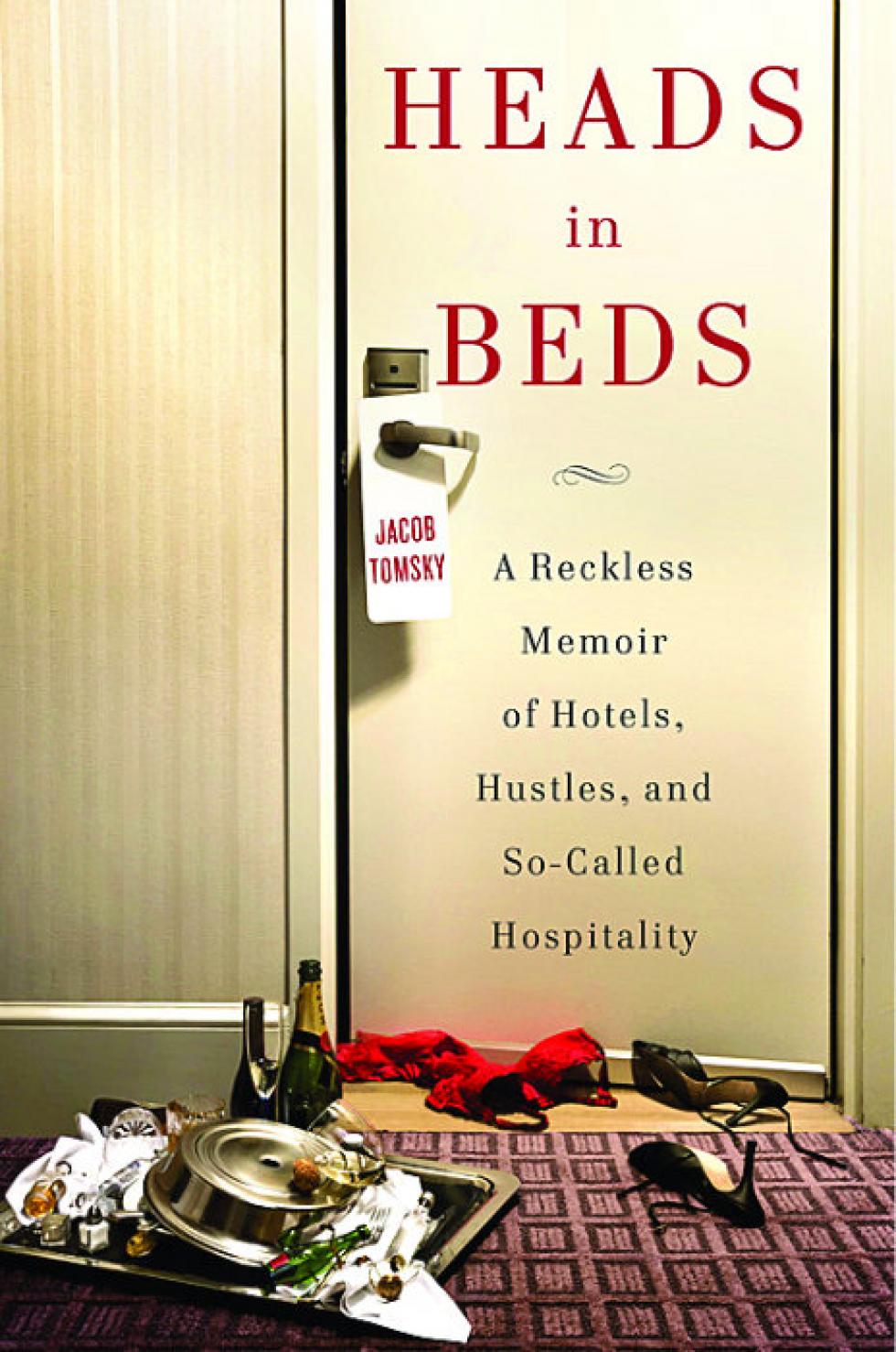
Given my druthers, I’d live in a hotel. Everything about them fascinates me – and I travel as much to experience a new location as I do to experience a new property. Given that, ‘Heads in Beds’ is my new favorite book. It’s the story of Jacob Tomsky’s hotel adventures, and his journey from a parking valet to a front desk agent, and it held me captivated from page one. At turns riotous, clever, despondent, and inspiring, the tale has you rooting for Tomsky as he navigates the often-soul-sucking service world, where the customer is always (yet never) right. While most of us only know what it’s like to be on the receiving side of the counter, it’s a testament to Tomsky’s voice and narrative that we feel like one of the insiders. If anything, this book is a powerful defense of those helping us out on a daily basis, and a much-needed reminder that no one is better than anyone else just because they have more money.

That’s the most potent part of the proceedings, and the thing that stayed with me long after I finished the last page. Tomsky brings a nobility to hotel service, and a sense of honor to employment. Kindness and loyalty are, today, mostly forgotten virtues. Compassion is largely gone too. He never loses sight of those traits, even in the face of rude clients, unbearable managers, and shady co-workers. It comes through, even in the most disturbing and hilarious stories, mostly due to his erudite, witty way with words, blended in an impossibly seamless way with his raw New York/New Orleans vernacular. North and South, silly and serious, compassionate and cold, Tomsky manages a fine balancing act with his prose, while liberally sprinkling enough helpful hints to aid the most hapless hotel guest into getting superior service. Sometimes all it takes is some genuine kindness. Some genuine gratuity doesn’t hurt either – and if there’s one concrete take-away I’ll bring to my next hotel stay, it’s the latter.

I’ve always thought of myself as a decent tipper – nothing less than twenty percent to wait-staff (unless I witness cruelty or apathetic ineptitude), twenty-five to thirty percent for a good haircut (that doesn’t involve a lot of mindless chatter or ear-nicking) – and I always remember to tip the bell-men, housekeepers, and taxi-drivers (as well as the guys who get the taxi-drivers to stop). Thanks to ‘Heads in Beds’, I’ve learned to tip the front desk agents as well – which will bode well for future trips.

My cheap friends usually scoff at this, but tipping, to me, is never a waste. Maybe it’s a superstitious desire on my behalf to build up good karma (God knows I need all the help I can get), but it’s also about knowing what it’s like to be in a service position. Four years in retail (and a brief but life-altering two weeks as a bus-boy) schooled me on what it’s like to deal with the public. There should be a mandatory life-course for everyone: in order to receive service, you must first work in a service position for at least a year. The world would be a better place for that.

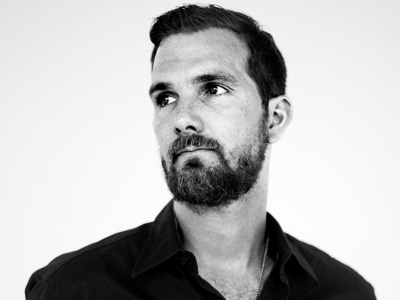
Author Jacob Tomsky

Tomsky gives a face to the faceless, reminding all of us guests that behind the uniform and name-tag is another human being. In Tomsky’s case, it’s a guy who only wants to help you out while making a living providing exceptional service. In the end, ‘Heads in Beds’ will not only leave you a better hotel guest, but a better person. That’s worth more than a Benny.

Continue reading ...

A Plague on Both Your Houses

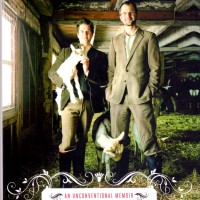
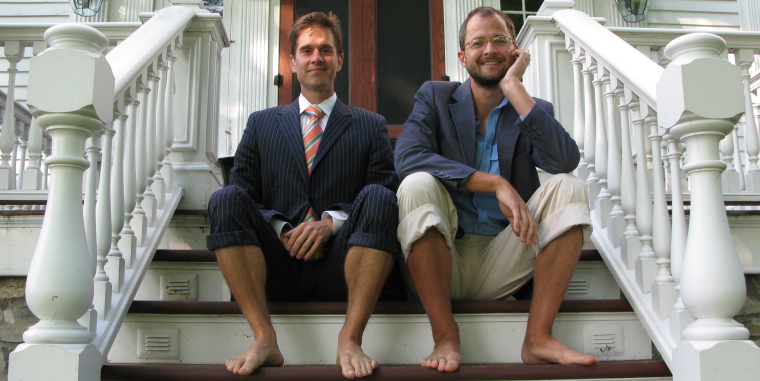
The warning comes at the very beginning – at once a challenge and a disclaimer: “This book is not about living your dream. It will not inspire you. You will not be emboldened to attempt anything more than making a fresh pot of coffee.” This is the world of ‘The Bucolic Plague: How Two Manhattanites Became Gentlemen Farmers’ by Josh Kilmer-Purcell. It’s a defiant and unlikely way to start, as well as a nifty (and effective) bit of reverse psychology. Yet that’s not what draws me in – I’m instantly a fan of the self-deprecating (and at times self-lancing) style of Kilmer-Purcell’s prose. With an explosive opening salvo soaked in goat shit, the book begins with the kind of hilarious drama only a former drag queen could so gorgeously conjure, but quickly quiets down into the strange yet satisfying journey from New York City to the tiny town of Sharon Springs, NY. Along the way, a cast of colorful characters, and the steady guiding hand of his practically-perfect partner Dr. Brent Ridge, come together to illuminate the path they took on their way to becoming the Beekman Boys.

On the weekend before Halloween, I find myself sitting on the porch of the American Hotel and delving into ‘The Bucolic Plague’ while on our first trip to Sharon Springs, NY. A few doors down was the Beekman 1802 Mercantile, an impossibly charming store where all sorts of soaps and goat milk deliciousness were on display, tickling the eye and nose and belly with their rich goodness. A woman named Megan had been at the register, welcoming Andy and I to the store and to the town, and we perused the sweetly-scented surroundings before settling on some soap. The next day I returned to browse again (it turns out there really isn’t that much to do in Sharon Springs) at which point I pick up the signed copy of the book, which now rests in my hands as I rock the remainder of the day away. Another lovely lady, Maria, had been watching over the shop that day, her friendly smile and exuberant description and invitation to the then-upcoming Victorian Stroll was infectious – it seems in Sharon Springs everyone is instantly a friend, and I wonder why it can’t be like that everywhere.

Back on the porch, I am already fifty pages into the book when I realize it is dinner time. Such is the spell cast by an intoxicating writer. I will finish the book quickly in a few sittings, enthralled by the journey of thee two gentlemen. It is a nifty keepsake from our weekend in Sharon Springs, but far more than that it is an inspiration. Just as Oprah Winfrey and Martha Stewart wield their power over a nation of people striving for their ‘Best Life’, so too do the Beekman Boys hold sway over those of us misfits just looking for little ways to make our lives better. Oddly enough, the book succeeds most in doing exactly what Kilmer-Purcell purports it won’t do, in the form of motivating and inspiring. Their story, beneath the surface, may not be the slice of super-successful perfection that we demand from our public figures, but because of that it’s more relatable, and the home-grown jewels they’ve produced are more precious.

While the procurement and running of the Beekman Farm and Mansion provide the narrative drive of ‘The Bucolic Plague’, it’s the relationship between Josh and Brent that forms the underlying foundation to the proceedings. Never heavy-handed or over-wrought with anything other than brutal honesty, it is tinged with a keen sensitivity to the trials and tribulations of any long-term couple. The book shifts on the dynamics between the two men – tense here, hopeful there – evolving and revolving around what it takes to stay in love, what it takes to pursue your dreams, and what it takes to try for both.

The best part may be that there is no definitive happy ending – and so their journey continues, luckily enough to be documented on The Fabulous Beekman Boys (on the Cooking Channel) as well as their (as of this writing) ongoing success on The Amazing Race (a show only the Beekman Boys could get me to sit through, and one that turns out to be highly addictive – a good-enough reason why I don’t usually watch TV.) More than that though, and no matter how things go at the Beekman Mansion, this book is a badly-needed reminder of what it means to inhabit this world, how we must help each other, how the things we once thought mattered change and become something else. It is a gorgeously rendered literary bouquet, as transitory and fleeting in its beauty as it is resonant and lasting in its spirit.

Near the end comes the beginning ~ of understanding, and of all the things that brought them to purchase the Beekman mansion: “Because we’re vain, kindhearted, ambitious, shallow, deep, humble, trendy, old-fashioned, rich, poor, proud, and vulnerable. Those are merely the beginnings of the reasons we bought the Beekman.”

We want so much for things to be perfect, for our lives to be exactly as those idealized on the covers of magazines and the eponymous talk-shows of lifestyle gurus, but that’s not the way most of us can live. The best we can hope for – and the greatest we can achieve – is happiness. The love of another person. The joy of another Spring. The bloom of another flower. Nothing is ever perfect ~ and why would we want it to be?

Continue reading ...

The Longest Read of My Life

A friend had warned me that I would grow tired of it before it was over. I scoffed at the notion – at page 200 I was still enthralled with the Dickensian atmosphere of ‘An Instance of the Fingerpost’ by Iain Pears, and loving the historical world of Restoration England in the 1600’s. Yet he insisted that I would soon find the book unnecessarily long. I fought him for a bit, then let it go, content with the knowledge that if I was enjoying a book a few hundred pages in, I wouldn’t find it tough to finish in the least. Then I looked forward to composing a snotty little told-you-so message proving myself right for the cajillionth time.

As it turns out, by page 400 I was starting to wonder if I might be wrong. And by the time the FOURTH narrator began his take on the tale, I had to admit defeat. It was getting difficult to trudge through the last couple of hundred pages. But I did it, even if it took me three times longer than it normally does to finish a book. This post is dedicated to James, who was right when I was wrong ~ which happened at just about the 500 page mark as he had predicted. (And essential component of growing up is learning how to accept when you’re wrong. Perhaps there is hope for me after all.)

Continue reading ...

Like A Virgin Suicide

“It didn’t matter in the end how old they had been, or that they were girls, but only that we had loved them, and that they hadn’t heard us calling, still do not hear us, up here in the tree house with our thinning hair and soft bellies, calling them out of those rooms where they went to be alone for all time, alone in suicide, which is deeper than death, and where we will never find the pieces to put them back together.” ~ Jeffrey Eugenides, ‘The Virgin Suicides’
 
Jeffrey Eugenides wrote one of my favorite books, ‘The Virgin Suicides’. At the time of its release, it resonated on a number of levels. Above all else, I fell in love with the beauty of his words – the way he put them together, both sprawling yet sparingly. In the claustrophobic world of the Lisbon sisters, he created an entire universe of the pain and ache of being young and seeing no way out of it. Life expanded and pronounced itself in the details of being a girl – and a boy who watched a girl. In the grooves of a record, in the chopping down of a tree, in the bathroom of adolescent secrets.
 
While browsing the bookstore the other day, I came upon his latest work “The Marriage Plot” which I happily snatched up for our upcoming trip to Maine. Though I wasn’t the biggest fan of ‘Middlesex’, I’m hoping that this new one has a few gems in it. I tend to be a fan of individual books rather than authors – in the same way that I enjoy singles over albums. Obviously there are exceptions, and notable ones at that ~ Edith Wharton, Gregory Maguire, Shirley Horn, and Madonna to name a few masters and mistresses of words and music ~ but for the most part I get too tired of one voice or sound after a while, and feel the need for change. That restlessness was something the Lisbon sisters couldn’t overcome, not in that house, and not in that time.
 
“They had killed themselves over our dying forests, over manatees maimed by propellers as they surfaced to drink from garden hoses; they had killed themselves at the sight of used tires stacked higher than the pyramids; they had killed themselves over the failure to find a love none of us could ever be. In the end, the tortures tearing the Lisbon girls pointed to a simple reasoned refusal to accept the world as it was handed down to them, so full of flaws.” ~ Jeffrey Eugenides, ‘The Virgin Suicides’
Continue reading ...