Category Archives: Music

Erasure and Manhattan Nocturne

“You can always tell, I think, with adults, who felt loved as a child and who did not; it’s in their eyes and walk and speech. There’s a certain brutal clarity. You can almost smell it.” – Colin Harrison

In some spring of the late 1990s I was listening to this Erasure song and reading ‘Manhattan Nocturne’ by Colin Harrison. Like Barbra Streisand, Erasure was never a favorite of mine, but Mr. Harrison – now there was an artist I could love. In those solitary nights, as the condo quietly waited for morning to come, I would read and marvel at his way with words, and, more importantly to me, his understanding of the human spirit – how dark it could go, how low we could sink, and how the smallest sliver of hope sometimes remained, but often didn’t.

“It was not as if I was not myself – oh no, I was myself, I was my other self, the self that wishes to carry on a secret dialogue with all that is evil in human nature. Some men do not struggle with this in themselves. They seem to have a certain grace. They are happy – or rather, they are content. They swing tennis rackets in the sunlight and get the oil checked regularly and laugh when the audience laughs. They accept limits. They are not interested in what might come up from the dark, cold hole of human possibility.” – Colin Harrison

It was not uplifting, it did not offer solutions, it did not even attempt to extend some bit of solace, but it was honest, it was real, and it was the very truth I wanted to confront. For more than Mr. Harrison dazzled me with his writing skills, he astounded in his portrayal of how different people survived in such a shitty world. Writers who get that, who show us the very worst so unflinchingly, have always impressed me. Whatever the reason, they seem to have more compassion than me, and so I strive to find that love of humanity by reading their work.

“There are people who enjoy degradation, or who seek it thinking they will enjoy it, or who seek it because it is the way they know how to have pleasure. After all, the experience is theirs. Perhaps they lived through the degradation and found pleasure in that realization. Or perhaps they found that in degradation there is a releasing of oneself; one is powerless; responsibility is taken away. I am not describing what occurs during the actual event, but the subsequent thought about the event that accumulates in a person’s mind.” – Colin Harrison

At that young age, I could have no way of knowing first-hand what he was talking about, but somehow I could sense what was coming. In a way, I look at that time as a way of fortifying myself for the heartache that would follow. It would be vain, foolish, to think I would escape unscathed, to think that true love would beat a steady and straight path to my door, then knock upon it and wait, even if I was not ready. That sort of faith in love would prove ruinous. This is what I tried to teach myself by reading his words. This is what I tried to impress upon my heart.

There are some life-lessons that can’t be learned from a book.

“In my experience, men and women who have a kind of brutal fortitude have been made that by a sequence of events, until the person passes beyond a point of no return. They learn that life requires the ability to coldly stand pain of one kind or another… They will do what is necessary to survive; they will conceal and protect their vulnerabilities, except from those who cannot hurt them. Above all, they will press their advantage when it presents itself.” – Colin Harrison

Continue reading ...

You’re So Fucking Special

Every year around this time, for obvious reasons, I indulge in a little bit of looking back. It’s not a stance I favor, for more obvious reasons. Yet here we are again, approaching the end of August – the turn of summer – and we pause for this moment of reflection. My bags are packed, Andy is in the bedroom finishing his own packing, and I am listening to this song, wondering if anybody else is listening.

It’s a tricky time, this end of August. It’s still summer, but the winds have changed, the sun has shifted its slant and angle in the sky – and the sky… the sky… becomes its truest blue. Everything glows differently at the end of summer.

I don’t care if it hurts…
I want to have control…
I want a perfect body…
I want a perfect soul…

I want you to notice when I’m not around.

Continue reading ...

Wait, Mika Is Gay?

I will not believe it.

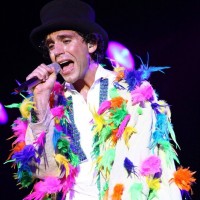
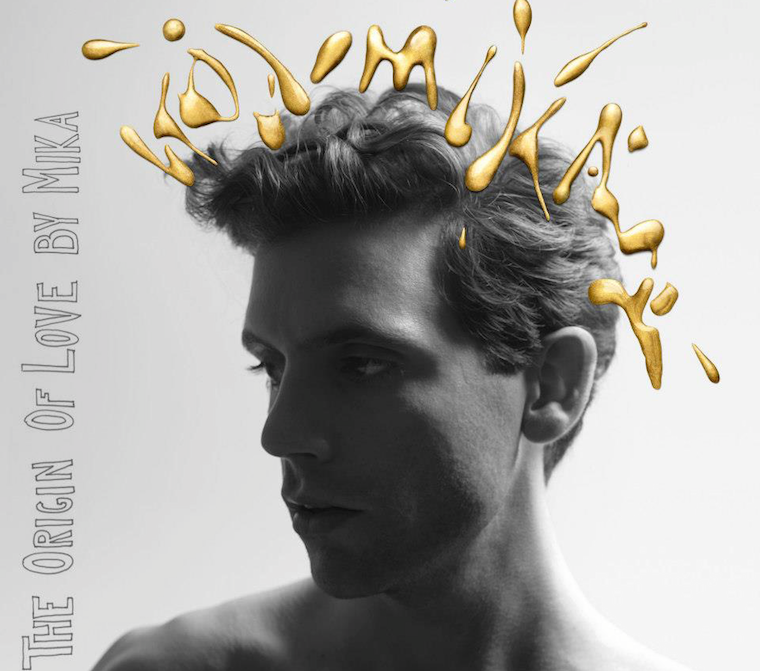
Seriously, I think it’s great. I have nothing against gay people. Besides, I’ve been a fan of Mika’s music more than I ever cared about who he slept with. He’s an amazing musician, and his second album was just as powerful and exciting as his first. I’m not sure how his next one (The Origin of Love) is going to add up, based on the lead single (which failed to wow me as instantly as his previous lead-offs did). But the proof will be in the entire body of songs, and I’m always open to listening.

Continue reading ...

Song for the Middle of a Summer Night

I’m a traitor to a beautiful cause…

In the back of a station wagon, we steal kisses in the night. Moths flutter in the fading headlights, swimming in the sultry wet air. A sweet fragrance, some unseen flower unfurling in the dark, rides on the blackness. It is the summer of our unrealized content.

How long will it take to get used to me?

Strange stirrings in the night. Stranger danger. And we devour each other, tongues lapping and darting in tandem, rising and falling with our breathing, thrilling before settling into something deeper. A sigh. An intake. A wish to say it.

Oh yes I love you, but today I could hate you, I could hurt you…

Nestling into a moist neck, matted hair, rustling eyelashes, and squeezing eyes so tightly closed it feels like crying or happiness so great it hurts. When all you want is to be held…

It’s not enough to believe in love…

Deep in the heart of the night ~ this summer night ~ when the air is still warm, I hug you closer. My hands on your chest, our foreheads touch, and we can barely see each other. We are so young. It aches to be so young. We do not see ahead – ahead is even darker than this night, and so we cling closer, knowing somehow that the summer will not last, could never last.

God made me to her own design by planning too many flaws…
I’ve got too many flaws…

Morning will come soon, and then the Fall.

Continue reading ...

The Madonna Timeline: Song #74 ~ ‘Dear Jessie’ – Spring 1991

{Note: The Madonna Timeline is an ongoing feature, where I put the iPod on shuffle, and write a little anecdote on whatever was going on in my life when that Madonna song was released and/or came to prominence in my mind.}


Baby face don’t grow so fast
Make a special wish that will always last
Rub this magic lantern
He will make your dreams come true, for you
Ride the rainbow to the other side
Catch a falling star and then take a ride
To the river that sings and the clover
That brings good luck to you, it’s all true…

Once upon a time I played the oboe. I wasn’t horrendous at it, but I certainly wasn’t the best. The oboe is not an easy instrument to play, and its temperamental home-made double-reed nastiness is not the easiest thing to master, but I did my best. No teacher in the Amsterdam School District had a strong-enough background in the oboe, so if I was to excel I had to get private lessons from someone outside the area. My goal, half-concocted by my parents to pad my extracurricular activities for my college career, was to make it into the Empire State Youth Orchestra.

Thus began my oboe lessons under the tutelage of a Mrs. Green, who lived a few towns away, in Ballston Spa. It was about a 45 minute trek through the back roads and winding woods of upstate New York, heading from Amsterdam towards Saratoga. Not at all an unpleasant ride, if you’re making it for happier reasons than weekly instrumental lessons, and not the most fun in the treachery of winter, but a pretty enough journey nonetheless.

It can also be a long road when a tortured adolescent is not speaking to his family, so perhaps both my Mom and I were glad for the silence-filler of Madonna on perpetual play. For some reason, this song stands out as representative of those journeys, especially in the spring to summer of 1991.

A cut from her majestic ‘Like A Prayer’ album, this was Madonna at her most sensitive and thoughtful, singing whimsical lyrics in a love letter to childhood. With its orchestral intro, string-laden melody, and brass bridge breakdown, this was closest to a ‘classical music’ song that Madonna has ever attempted. As such, it’s an anomaly in the Madonna canon, but a gorgeous one.

Pink elephants and lemonade,
Dear Jessie hear the laughter running through the love parade
Candy kisses and a sunny day,
Dear Jessie see the roses raining on the love parade.

The back-story is that Madonna wrote this for the daughter of her main producing partner at the time, Pat Leonard (the person responsible for some of her most powerful and iconic songs, such as ‘Like A Prayer’, ‘Live to Tell’, and ‘Papa Don’t Preach’.) In that respect, it marks one of the only Madonna songs that is clearly about a specific, and named, person; usually she takes the universal route, one of the calling cards of lasting pop songs. Leonard was an integral part of the now classical period from 1986 to 1989 that cemented Madonna as an icon, and this song is the least she could have done for his child.

It doubles as an ode to innocence and the magic of being a child. So much of Madonna’s persona has been tinged with a childlike, slightly mischievous, impetuous nature (the very anti-thesis of the coldly calculating woman that many mistakenly believe her to be) that this is, remarkably, a rather revelatory dreamscape of pretend.

If the land of make believe
Is inside your heart, it will never leave
There’s a golden gate where the fairies all wait
And dancing moons, for you
Close your eyes and you’ll be there
Where the mermaids sing as they comb their hair
Like a fountain of gold, you can never grow old
Where dreams are made, your love parade
Pink elephants and lemonade,
Dear Jessie hear the laughter running through the love parade
Candy kisses and a sunny day,
Dear Jessie see the roses raining on the love parade.

For me, it was a last grasp at a childhood that was fading just as that Spring and Summer matured. In the car on the way to those oboe lessons, the afternoon sun rendered dappled beneath the bright green canopy, I sat in the backseat, reading or grabbing a nap or simply looking out the window, watching for the tell-tale signs of the seasons. The land seemed greener then, less hot and dry, and summers stretched out without any end in sight.

I honed my oboe skills, learning to make my own reeds by hand, running beeswax alonog the string, soaking the stems until malleable, delicately shaving off the tips to find the perfect sound. Reed-making was as much about luck as science for me, a tricky little part of being a decent oboe player. While other oboe-players ordered pre-made reeds, I was not allowed such ease, and it made me a better player. I understand the result of hard work, and how much more it meant. That summer, I practiced and improved, and by Fall I was ready to audition. Even if I wasn’t as good as the first oboist (I eventually made it into the Repertory Orchestra, and then the Youth Orchestra), I had the satisfaction of knowing how to make a double reed, the pride in crafting my own sound, from my own hands.

On the merry-go-round of lovers and white turtle doves
Leprechauns floating by, this is your lullaby
Sugarplum fingertips kissing your honey lips
Close your eyes sleepy head, is it time for your bed
Never forget what I’ve said, hang on, you’re already there…
Close your eyes and you’ll be there
Where the mermaids sing as they comb their hair
Like a fountain of gold you can never grow old
Where dreams are made, your love parade

It paid off, and whether it was the oboe or my grades or my application essays, I made it into every college to which I applied. (I still remember the recruiter from Boston College challenging me as to what extra stuff I had to offer the school, to which I said I was in several orchestras: “Yeah, but unless you play something like the oboe you’re not that different from everyone else – what instrument do you play?” Yeah, the oboe.)

My heart, however, did not belong to the instrument. I didn’t like performing in concerts (I was a nervous wreck), and I didn’t have the drive or ambition to go much further than the college orchestra at Brandeis (which I was dragged into after much kicking and screaming, and only for one year). I also didn’t have the love for the oboe that a truly great musician must have. The orchestral stints, the practicing, the reed-making – they were simply a means to an end – the end result being getting into a good school. It was a cold and calculated move, devoid of the passion and heat of which any worthy artistic endeavor should be comprised. There was a lesson there too, a very valuable one.

I’d gone into Brandeis with a vague notion, mostly instilled by my parents, that I should major in something scientific. While it was no secret they’d have been thrilled if I went into the medical field, I wanted nothing to do with that. Up until that moment, I’d done what I supposed to do – and my oboe playing, even with its moments of enjoyment, was not something I would have pursued on my own. When given the chance to give it up, I did. Not with anger or resentment, but with the realization that it wasn’t for me.

The same went for my scientific career. After a tough ‘Brain: From Molecules to Perception’ course, in which I managed to go from an ‘F’ to an ‘A’ in the course of a semester, I had to admit that my strengths were not in the sciences, but in the realm of words. It was exactly the opposite of the vision my parents had for, and about, me. I went to my adviser, and changed my major at the end of the second semester. I felt relief, freedom, happiness, and hope. It was the first of many moves where I went against what I was supposed to do, and in the end became richer for it.

Pink elephants and lemonade,
Dear Jessie hear the laughter running through the love parade
Candy kisses and a sunny day,
Dear Jessie see the roses raining on the love parade.

Madonna was leaving her past behind too, saying good-bye to the 80’s – the decade in which she ‘ruled the world’ – and entering the brave new world of the last decade of the century. The rocky period of adulthood loomed ahead of both of us. For now, though, there was this song of childhood. We could hold onto it for a little while longer.

Your dreams are made inside the love parade
It’s a holiday inside your love parade.
Song #74: ‘Dear Jessie’ – Spring 1991
Continue reading ...

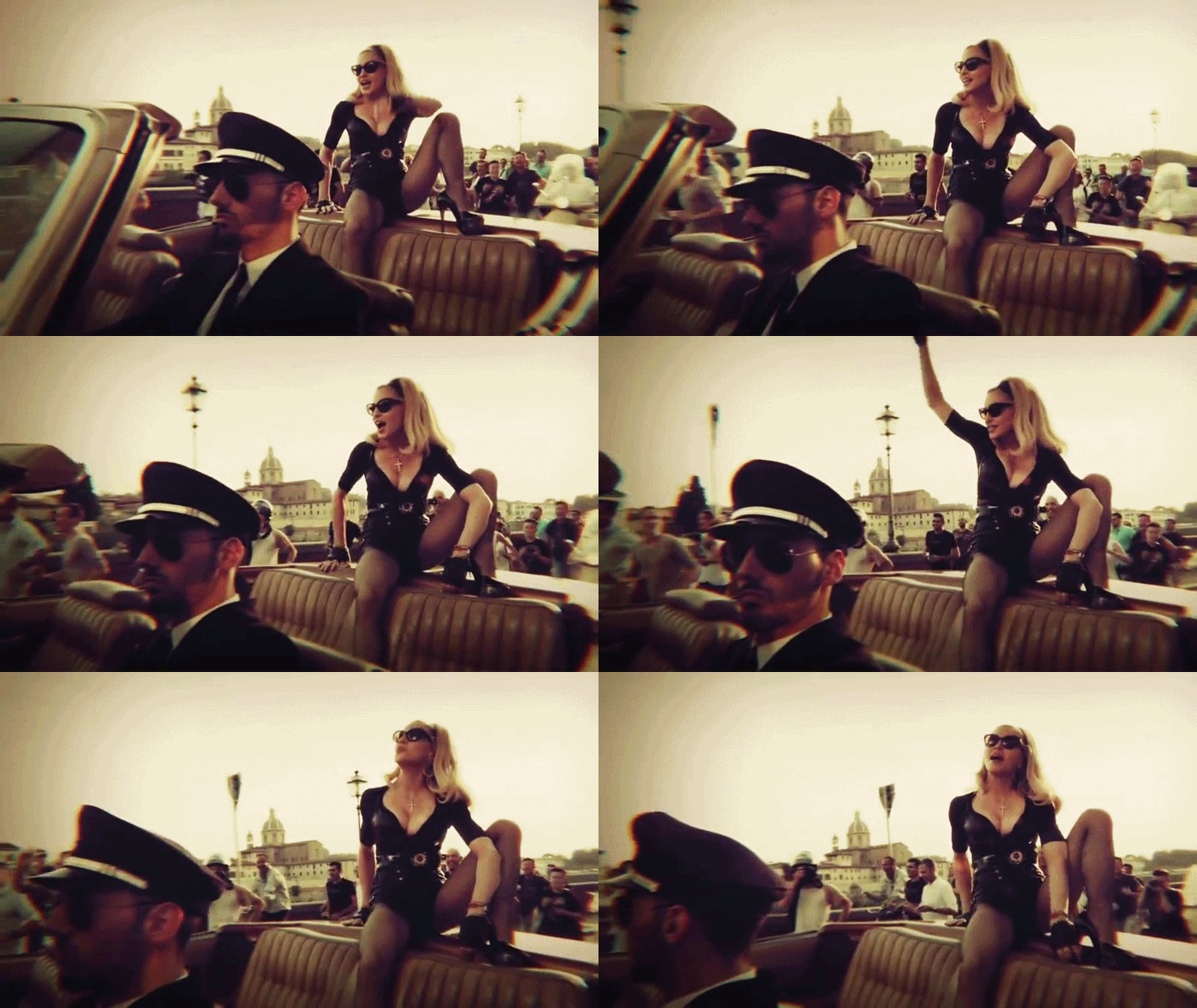
The Madonna Timeline: Song #73 – ‘Turn Up the Radio’ ~ Summer 2012

{Note: The Madonna Timeline is an ongoing feature, where I put the iPod on shuffle, and write a little anecdote on whatever was going on in my life when that Madonna song was released and/or came to prominence in my mind.}

Looks like I jumped the gun on this one by talking about it a few days in advance, but I had no way of knowing that the next random selection of the iPod would be the one I just referenced a week or two ago. This is a historic occasion, as it marks the first time the Madonna Timeline selection lines up perfectly with the current Madonna single. It’s a testament to her endurance, and a fantastic selection for a summer anthem.

When the world starts to get you down,
And nothing seems to go your way,
And the noise from the maddening crowd
Makes you feel like you’re going to go insane
There’s a glow of a distant light
Calling you to come outside
To feel the wind in your face and your skin
And it’s here I begin my story…

This is, at first glance, classic carefree Madonna at her dance-poppy best – a return to her ‘Holiday’ roots, where it all began some 30 odd years ago. (For those who doubt her legendary status, think about this: it just entered the Billboard Dance chart as her 60th entry there. That’s right, 60.)

Turn up the radio
Turn up the radio
Don’t ask me where I wanna go
We gotta turn up the radio

Madonna has never been one to look back – it’s one of her most admirable qualities, and the very thing that has kept her forward-moving career on that one singular track. A lot of her fans would have her simply repeat former-glories, but that’s never been her way. Even if she winks back at what she’s done (as she does both in this song and its accompanying video), she’s never been about the past.

It was time that I opened my eyes
I’m leaving the past behind
Nothing’s ever what it seems
Including this time and this crazy dream.

She’s also been about the power of a pop song to transcend its limited boundaries, becoming an epiphany unto itself – the very act of escapism as its own goal – and ‘Turn Up the Radio’ re-asserts her mastery of the genre. I’m not going to claim there’s anything ground-breaking here, and those who have never been under her spell may cry banality (like they always do when dissecting her lyrics), but the glorious majesty of a catchy melody wins out. Score one for ear candy over lyrical dinner. And yet there may be something deeper here…

I’m stuck like a moth to a flame
I’m so tired of playing this game
I don’t know how I got to this stage
Let me out of my cage cause I’m dying
Turn up the radio
Turn up the radio
Don’t ask me where I wanna go
We gotta turn up the radio

At first I thought this was going to be a straight-forward reading of a perfectly-crafted summer pop ditty. The infectiousness is there, the timeliness is present, the video is a slightly nostalgic reminder of the simple premise of having a good time, but the last few times I was listening to this (in the shower, of course, and in the car), a new reading struck me.

I just wanna get in my car
I wanna go fast and I gotta go far
Don’t ask me to explain how I feel
‘Cause I don’t want to say where I’m going…

Maybe it was the rocky start to this season, and the resulting melancholy (the nightmare of jury duty still haunts me), but it suddenly seemed that this song wasn’t just about having a good time, it was about insisting upon it – begging, pleading, and crying for it. This wasn’t a simple ode to a joyful moment. This was a desperate cry for escape and deliverance.

It brought to mind Adrienne Rich’s poem ‘The Ninth Symphony of Beethoven Understood At Last As a Sexual Message’ in which the poet turns the ‘Ode of Joy’ by Beethoven into a harrowing description of rage and anger. This was what I was thinking about when trying desperately to get back into the song, to find the joy again. I found myself singing, and then screaming, along with these very lyrics, this part right here, and I couldn’t tell the tears from the shower water or the rain, I just pounded wet fists against whatever would withstand them.

Turn down the noise and turn up the volume
Don’t have a choice cause the temperature’s pounding

As the percussion trampled with its stomping beat and the music raced to its inevitable release, I tried tearing a hole in my despondence, ripping away at the heart that gave both light and darkness, inconceivable happiness and inconsolable sorrow, in a dance of desperation ~ a dance to the death of something.

If leaving this place is the last thing I do,
Then I want to escape with a person just like you

The torrents fall down, the world crashes around, and like flotsam I feel like I’m floating in the lost abyss of an open sea, drifting and flailing and powerless to the ebb and flow of a life swirled beyond my control.

Bopping around like a moth to a flame,
I’m so sick and tired of playing this game

And I cling desperately onto the silly things that once mattered, that once seemed to make all the difference, and nothing seems to help. It is all so pointless, so futile, so damning – and so we fight for the fun and escape, for the way out of our miserable little lives, for the only way we know how.

We gotta have fun, if that’s all that we do
Gotta shake up the system
And break all the rules,
Gotta turn up the radio until the speakers blow.

Song #73: ‘Turn Up the Radio’ – Summer 2012

Continue reading ...

The Madonna Timeline: Song #72 – ‘I Want You’ ~ Fall 1995

{Note: The Madonna Timeline is an ongoing feature, where I put the iPod on shuffle, and write a little anecdote on whatever was going on in my life when that Madonna song was released and/or came to prominence in my mind.}

I want you the right way
I want you, but I want you to want me too
Want you to want me baby
Just like I want you…

The Fall of 1995 marked a transition period for Madonna. After the chilly years following the Erotica/Sex furor, she had rebounded slightly and was on the precipice of making one of her signature transformations (into Eva Peron). In preparation for that, she released a collection of her ballads, entitled ‘Something to Remember’. Personally, I’ve felt the key to Madonna has always been hidden within her slow songs, when lyrically she gets to be a little more introspective, and sonically we hear the strain and heartache in her voice.

As with her other best-of collections, there were a few new tracks, and the album kicks off with one of them, ‘I Want You’ – a slowed-down trippy take on Marvin Gaye’s soulful classic. Given the Massive Attack treatment, it picks up where ‘Bedtime Stories’ left off – in that sizzling electro-fizzing soundscape that is both intimate and distant. In her great pantheon of moody music, this may be one of her moodiest. As such, it was one of my favorites at the time it came out, though the ensuing years have lessened its scope and power.

I’ll give you all the love I want in return
But half a love is all I feel, sweet darling
It’s too bad, it’s just too sad
You don’t want me no more
But I’m gonna change your mind
Some way, somehow…

There will always be something beautiful about solitude for those of us who have had to endure it. It’s not always pretty, it’s not always easy, it’s not always fun, but it carries its own beauty. The beauty of longing.

Most of us have had those moments, waiting for the phone to ring when it never does, yearning and hoping and fighting the hopeless battle to fight all those feelings, giving in and giving up, crying to yourself, and crying into your pillow, and draining your body of tears and fluid and the ability to feel.

How much have I wanted, how much have I yearned, and how much was ever returned? That kind of deficit can never be made up, no matter how many people come to love you. A whole world of love can never fill that emptiness, and when someone tries, when someone starts to love you back, you’re never entirely sure what to do with it.

One way love is just a fantasy
To share is precious, pure and fair
Don’t play with something you should cherish for life
Oh baby, don’t you wanna care?
Ain’t it lonely out there?

I don’t recognize that person anymore. Vestiges certainly remain, after-effects linger, but for the most part he is gone. Practicality, maturity, or simple exhaustion wore out those charged emotional fields years ago. Overwhelmingly, this has been a good thing. At odd times, I miss it. I miss him. I miss the ability to access that kind of ferocious pain, those nights of endless want, these moments of heightened feeling. I miss the sense of being alive… I miss the sense of want.

From our earliest cognition, it is what most of us have done: we want. Whether love or material possessions or understanding or compassion or comfort or happiness, it has always come down to want. Selfish, demanding, all-encompassing want – for him, for her, for those, for that, for more and more and ever more – for life. At the risk of all, I want for everything. It is the human condition. It will never be enough.

I want you, the right way
Want me, baby
Don’t play with something
You should cherish for life.
Song #72 – ‘I Want You’ ~ Fall 1995
Continue reading ...

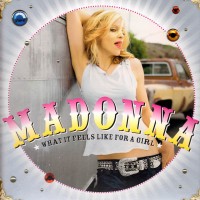
The Madonna Timeline: Song #71 ~ ‘What It Feels Like For a Girl’ – Late Winter 2001

{Note: The Madonna Timeline is an ongoing feature, where I put the iPod on shuffle, and write a little anecdote on whatever was going on in my life when that Madonna song was released and/or came to prominence in my mind.}

Girls can wear jeans, cut their hair short, wear shirts and boots, cause it’s okay to look like a boy. But for a boy to look like a girl is degrading, because you think that being a girl is degrading. But secretly, you’d love to know what it’s like, wouldn’t you? What it feels like for a girl…

So quotes Madonna in the intro for her 2001 single ‘What It Feels Like For A Girl’, from the autumnal ‘Music’ album. It’s an excerpt from ‘The Cement Garden’ and it’s brilliant, throwing a defiantly-feminist slant into the whole equation, and investing the proceedings with more than a dollop of serious intent.

Silky smooth
Lips as sweet as candy, baby
Tight blue jeans
Skin that shows in patches
Strong inside but you don’t know it
Good little girls they never show it
When you open up your mouth to speak
Could you be a little weak?
Do you know what it feels like for a girl?
Do you know what it feels like in this world, for a girl?

Above gently-percolating beats, and the fluid, musical techno-wizardry of Guy Sigsworth, the melody is a loose and light one, almost at odds with the rage boiling just under the surface of the words at play. It is a plaintive cry for understanding, coupled with the realization that there may never be understanding – the conundrum of being a girl in today’s world – and, perhaps, yesterday’s world- expressed through the words and music of a woman who’s been every girl: Material Girl, Bad Girl, Mer Girl, and Girl Gone Wild.

The way Madonna conveys that ache and yearning is the hallmark of what makes her so amazing, not just as a woman, but as an artist. Within this song is both an admittance of vulnerability and a beacon of self-sufficiency – the power and the weakness of being a girl.

Hair that twirls on finger tips so gently, baby
Hands that rest on jutting hips repenting…
Hurt that’s not supposed to show
And tears that fall when no one knows
When you’re trying hard to be your best
Could you be a little less?
Do you know what it feels like for a girl?
Do you know what it feels like in this world
What it feels like for a girl?

She has said she wrote it while pregnant with her first son and thinking of her first daughter, wondering how it must be for a girl growing up in this world ~ how hard, how beautiful, how sad. As she matures into her mid-fifties, no one knows that difficult journey better than Madonna. Now, as attacks come based solely on her age, and the fact that she’s a female (how else to explain the cruelty of jabs about her arms, her body, her refusal to go away?) the song has an even deeper meaning. This is one of the great, and often over-looked, strengths of a Madonna song – they evolve through the years, taking on different meanings, and revealing nuances that grow and bloom as time unfurls.

To controversially accompany the song, Madonna filmed a gritty Guy Ritchie-directed video, set rather sorely to a harder-edged remix, which works in one way, but might have been much more powerful with the gorgeousness of the original track as its backing. Juxtaposed with all the intense imagery, the beats become the focus, and the lyrics are shamefully lost. Still, it’s a wild, entertaining ride, with numerous little dirty winks at the audience, and it demands repeat viewings to get it all in.

Strong inside but you don’t know it
Good little girls they never show it
When you open up your mouth to speak
Could you be a little weak?

The song was released in the late winter of 2001, just before Madonna was set to embark on her first tour in eight years, ‘The Drowned World Tour‘. In that pocket of time just before spring arrives, heartache resonates a little more, and the hopeless/hopeful push and pull of this song, and its shuffling undertones of melancholy, may be more deeply felt.

Do you know what it feels like for a girl?
Do you know what it feels like in this world… for a girl?

Song #71: ‘What It Feels Like For a Girl’ ~ Late Winter 2001
Continue reading ...

The Madonna Challenge to Isaac

Indulge me, if you will, in a little moment of common-sense assumption: what self-respecting citizen of this universe does not know ‘Like A Prayer’ by Madonna? It was the first Madonna song that won both critical and popular acclaim, topping the charts when it was released, and it remains one of her most beloved songs by fans and non-fans alike. (Even those “people” who don’t like Madonna tend to give it up for ‘Like A Prayer’.) So you can imagine my delight when, on an unlikely evening of karaoke at a local bar, I saw that my pal Isaac was going to perform the song, kamikaze-style.

Is it really possible to kamikaze someone with a Madonna song? Especially ‘Like A Prayer’? I repeat, who doesn’t know it?

Enter Isaac.

After knocking out a couple of Doors’ ditties, surely he’d transform ‘Like A Prayer’ into a highlight of the evening, leaving us aghast at his expert musical maneuverings, imbuing the song with a new grace and power, igniting the chorus with vocal stylings and flourishes the likes of which haven’t been heard since the glory days of the rat pack, melding past and present, rock and pop, into an orgiastic amalgamation of pure unadulterated funky freshness.That is not quite what happened. Words like ‘travesty’, ‘disaster’, and ‘debacle’ seem too quaint for what we witnessed that night. The wreck of a performance found Isaac begging for someone to salvage something of the song, to no avail. The damage was done, the words seemed to be highlighted faster than he could read and fit them into the song, the hapless people trying to help him at the end could only barely bring things up to a base level of ‘horrendous’.

I was stunned. It took a few minutes for me to collect myself (and the second of my two-for-one drinks), before I cautiously made my way over to Isaac and used all my self-control not to slap him on behalf of the Church of Pop Culture and the Lady of Creamy Smooth Pop Icon Goddessness. He offered apologies and amends – and promised to make it up by learning one Madonna song (my choice) should we ever find ourselves in a karaoke situation together again. I felt that was fair. The only question that remains is which song…

In 2005 Madonna included a song called ‘Isaac‘ on her Confessions on a Dancefloor album, but I think that might prove a bit too obscure for a karaoke song, even if it was named after him. I toyed with her Sondheim work forDick Tracy, thinking that might be more suited to Isaac’s theatrical speed, as well as her turn as Evita by way of Andrew Llloyd Webber, but both of those diluted the Madonna I knew – the Madonna of ‘Like A Prayer’, and the Madonna that Isaac had so sacrilegiously blasphemed. For him to make proper atonement, it would have to be something more pop, more dance-like, more… Madonna.

He asked that I take into consideration his range of keys, but that proved almost impossible to tell by the wretched atrocity perpetrated upon ‘Like A Prayer’. However, to be fair and give him a fighting chance, I’m going to give him the choice of five:

Sorry – It fits the theme of redemption.
Dress You Up – Straight-up Classic Madonna at her pop best.
Hanky Panky – Because a spanky is the least he deserves, (and it would be hilarious to see him, or anyone, sing this).
Ray of Light – Not the easiest song to sing (even Madonna gets tripped up sometimes), but a crowd-pleaser if done right.
Open Your Heart – It’s just a great fucking pop song.

He can decide which one best suits his voice. Don’t ever let it be said that I don’t give people a chance. Isaac, learn this lesson well, and you’ll live to tell.

Continue reading ...

The Gay Religious Experience

This is one of the very first songs I danced to at a gay club in Boston. It was at Chaps, which was still on Huntington, right across from the Copley Marriott. A few retail co-workers (shout-out to the Fanueil Hall Structure crew) were going, and having recently turned 21 I decided to join them. (Aside from a one-time-only chalked-license night at the Branch one previous summer, I was never one for under-age drinking.) Once I turned legal, I didn’t go crazy, so I had been of age for a couple of months before really utilizing it.

My poison then was the White Russian. Yeah, I was once that kid, but at least it was better than the amaretto sours I started on. (We won’t mention Boones here.) After my third, I was relaxed enough to join my friends on the dance-floor. I had been to one or two gay dance clubs before, but had watched the dancing from a distance.

Thanks to countless choreographed danced numbers practiced in the carpeted world of my childhood bedroom, I could cut a rug as well as the next gay guy, so the dancing never intimidated me. And even the tiers of men watching from the elevated section above didn’t phase me. There was a certain freedom from worry in a gay club that straight people will never understand. Even if they spend a few nights in a gay bar, they can never know what it’s like to have spent a lifetime in a straight world, only to have that oppressive tension (even if nothing ever happened) lifted. Maybe that’s why gay clubs are so much more exciting than straight ones – everyone is just relieved and happy to be there, and we’re going to have the time of our lives no matter what.

I don’t remember all the songs we danced to – just this one – as this was the climax of the night, the song playing when everyone was collectively moving en masse, when for a few brief moments the whole becomes greater than the sum of its parts. It’s the time when even the shy guys will take their shirts off and swing them in the air with gleeful abandon (most, not me). As we moved in unison, dancing and jumping and clapping to the music, I thought surely there was salvation here, surely this was heaven, surely this was the closest I’d come to a religious experience.

I remember that night to this day, so important was it to my initiation into the gay world. While I would never be a regular club kid, I would always enjoy the occasional night out, and when Chaps moved over to the theatre district, it was never quite the same (nor was it as easy a drunken walk home). That moment, and its place in my life, had passed. But we had that time together – all the men and women in that darkened room, with a throbbing strobe light, the pounding beats, and that feeling of shared elation.

Continue reading ...

The Madonna Timeline: Song #70 ~ ‘Sorry’ – Winter 2006

{Note: The Madonna Timeline is an ongoing feature, where I put the iPod on shuffle, and write a little anecdote on whatever was going on in my life when that Madonna song was released and/or came to prominence in my mind.}

I’ve heard it all before
I’ve heard it all before…
I don’t wanna hear, I don’t wanna know
Please don’t say you’re sorry
I’ve heard it all before
And I can take care of myself
I don’t wanna hear, I don’t wanna know
Please don’t say ‘Forgive me’
I’ve seen it all before
And I can’t take it anymore.

Driving, pedal to the metal, through the cruel winter of upstate New York. I’m upset at something or someone, and it’s a righteous resentment, a wrathful anger. I’m mad at the world, my rage will not be contained, and the only way out is through this song. It is not the first time a Madonna song proves a savior and a means of survival, and it likely won’t be the last.

You’re not half the man you think you are
Save your words because you’ve gone too far
I’ve listened to your lies and all your stories (Listened to your stories)
You’re not half the man you’d like to be
I don’t wanna hear, I don’t wanna know
Please don’t say you’re sorry
I’ve heard it all before
And I can take care of myself
I don’t wanna hear, I don’t wanna know
Please don’t say ‘Forgive me’
I’ve seen it all before
And I can’t take it anymore.

By the time this song was released, I’d already been with Andy for about five years, so it had been a while since a man had done me wrong, but not long enough to have me forget. Some kinds of pain cannot be forgotten. Most of us have been there at some point or another, whether we like to admit it or not. The more calm people may have a better way of dealing with it ~ weeping quietly to themselves or categorically eradicating that person from their lives ~ while others may thrash and crash and burn everything around them. I’m somewhere in the middle, having done a little of all of the above. Usually though, I’ll put my anger into a thinly-veiled post, or take a ride and play something like ‘Sorry’ at ear-throttling volume, singing (well, screaming) along with the words, until the anger exits my system, or at least dissipates a bit before returning home.

Don’t explain yourself ’cause talk is cheap
There’s more important things than hearing you speak
You stayed because I made it so convenient (made it so convenient)
Don’t explain yourself, you’ll never see.

While the song is clearly aimed at a lover-done-her-wrong (at that point in her life it would likely have been Guy Ritchie), I don’t always use it as the soundtrack for any grumpiness on Andy’s part. More often it’s for anger directed at wrong-doings by the world, or work or something equivocally unimportant. That’s why a relatively-silly song like this works. I save my serious anger and disappointment for the ballads.

I don’t wanna hear, I don’t wanna know
Please don’t say you’re sorry
I’ve heard it all before
And I can take care of myself
I don’t wanna hear, I don’t wanna know
Please don’t say ‘Forgive me’
I’ve seen it all before
And I can’t take it anymore.

This is one of my favorite Madonna songs – maybe not Top Ten, but possibly Top Twenty (the only thing missing may be a sung-through bridge) – and at the time it came out (2005/2006) it was her best since ‘Music’. Nobody throws a dance-floor tantrum better than Madonna, as exemplified by the roller-skating video follow-up to ‘Hung Up’. It prompted a slight resurgence in corsets, and even a bump in Farrah Fawcett feathers. It’s also fun as hell, cheeky as ever, and a reminder of what Madonna does best.

I’ve heard it all before
I’ve heard it all before.
Song #70: ‘Sorry’ ~ Winter 2006
Continue reading ...

The Madonna Timeline: Song #68 ~ ‘Fever’ – Late Winter/Early Spring 1993

{Note: The Madonna Timeline is an ongoing feature, where I put the iPod on shuffle, and write a little anecdote on whatever was going on in my life when that Madonna song was released and/or came to prominence in my mind.}

Never know how much I love you…
Never know how much I care…

Ahh, Fever. Like so many pop references, I only know Peggy Lee’s ‘Fever’ thanks to Madonna, and after hearing the original (and countless other covers), I really have no preference. Madonna’s version came out as the B-side to ‘Bad Girl’ in the first half of 1993, and at a time when the ‘Sex/Erotica’ backlash was at its worst. As such, an ‘Us’ magazine story recounted the tale of a gym whose patrons only got into the groove when they played the instrumental version of Madonna’s ‘Fever’ – a joke in and of itself.

While I remember the song when ‘Erotica’ first came out in the fall of 1992, and then a brief resurgence when she performed it on ‘Saturday Night Live’ and the Arsenio Hall Show in early 1993, my main memories came in the early spring of that year, when the CD Maxi-Single of ‘Bad Girl’ was on perpetual play, and much of it occupied by the ‘Fever’ remixes.

Catchy as hell, with vocals as dry as my favorite martini, this was not a landmark moment in Madonna’s career, but I do view it favorably, and as covers go she could have done a lot worse (bye bye Miss American Pie indeed). Still, it was mostly filler for the otherwise-brilliant ‘Erotica’ album – and totally unnecessary at that.

Of more import was the video, which went uncharacteristically ignored ~ a pitiful shame, as it stands as a stylist’s dream-stash of images. Jittery, hot, and soaked in flaming color, it set the stage for the brilliant cool-down of ‘Rain’.

What a lovely way to burn.

Song #68 ~ ‘Fever’ – Late Winter/Early Spring 1993


Continue reading ...

The Madonna Timeline: Song #67 ~ ‘X-Static Process’ – Spring 2003

{Note: The Madonna Timeline is an ongoing feature, where I put the iPod on shuffle, and write a little anecdote on whatever was going on in my life when that Madonna song was released and/or came to prominence in my mind.}

I’m not myself when you’re around
I’m not myself standing in a crowd
I’m not myself and I don’t know how
I’m not myself, myself right now…

“If you’re afraid of loneliness, don’t marry.” ~ Chekhov

The quiet plucking of a guitar begins this folk-like piece from Madonna’s over-maligned American Life album, and ‘X-Static Process’ is an ambivalent love song, under-laid with tones of melancholy and resignation, hints of despair and slivers of hope. It came at a time when she was supposedly-happily-married to Guy Ritchie, yet it stings of a disconcerting lack of fulfillment, and questions of self-identity. A whisper of a song, it is imbued with ambiguity, concerns of love and dependence, and the notion of self versus couple.

When I first heard it, I thought back to the beginning of every relationship I’ve ever been in ~ the first few days and weeks of hazy make-believe, when you pretend to be everything you think the other person wants, sacrificing a bit of yourself before making all the less-than-desirable parts apparent. It’s almost a trick of those fabled Victorian girls on the hunt for a husband, when all is the illusion of perfection, the notion of compliance ~ the perfumed entrapment of an insect-enticing flower before the wilting of disenchantment. And it’s always slightly deceptive, both to the suitors, and to oneself.

Jesus Christ will you look at me
Don’t know who I’m supposed to be
Don’t really know if I should give a damn
When you’re around, I don’t know who I am…

Back in the spring of 2003, Andy and I were one year into our current home. Settled, but still new, it was a spring of happiness and hope. Madonna sang this lullaby, harmonizing sweetly into the nights, as Andy slid into the bed beside me and we slumbered until the morning. That was back when he came to bed at a decent hour, back when we fell asleep together, back before his back fell apart again. It seems so long ago.

I’m not myself when you go quiet
I’m not myself all alone at night
I’m not myself, don’t know who to call
I’m not myself at all…

Nine years later – has it been that long? – I go to sleep alone. He says good-night, and then goes off into his own time. Partly due to back pain, partly due to I dont know what else. If I awaken at two or three in the morning, I will roll over, reach for him, and find cold empty blankets. At first, and for a long time, I couldn’t get to sleep for hours without him. It’s like the parent who’s waiting for their college-age kid, home for the summer, to come in for the night. It’s different when they’re away, but if they’re there, you wait. It’s a subconscious anxiety that’s both less and more, and for me it often doubled up on itself, knotting the nights into worry and fret, inducing restlessness and fucking up any idea of a normal schedule.

Jesus Christ will you look at me
Don’t know who I’m supposed to be
Don’t really know if I should give a damn
When you’re around, I don’t know who I am…

Some nights I would try to wait up for him. If I didn’t have work the next day, I’d stay up for a bit, watching television, hoping he’d tire sooner rather than later, but after too long of this it wore me down, and I would succumb to exhaustion or sickness. I’ll still do that on weekends, trying to join in the game like a lonely puppy, trying to keep up with the adults even when I can’t.

I always wished that I could find someone as beautiful as you
But in the process I forgot that I was special too…

It is lonely sleeping alone. Even if he joins me later, I’m still the one who goes to sleep on my own every night. It would seem the anti-thesis of a marriage, of a relationship. It used to bother me more, and part of me wonders if it’s bad that itâ’s slowly starting not to. How far is it from not sleeping in the same room, or the same city? This is the conundrum of marriage – together always, forever apart.

I can make the most beautiful bedroom in the world – paint it in soothing colors, choose the linens and pillows for ample comfort, find the perfectly-tufted head-board, and put on the softest silk pajamas – but it is only for myself. I go to bed alone. Whether here or in Boston – always alone. And if I think about it, that’s the way it’s always been. Back and forth the mind wrestles, a push and pull of mental fatigue, and still the clock ticks ~ 2 AM, 3 AM, 4 AM… How long until madness?

I’m not myself when you’re around
I’m not myself when you go quiet
I’m not myself all alone at night
I’m not myself standing in a crowd
I’m not myself and I don’t know how
I’m not myself, myself right now
Don’t know what I believe…

And then I think back to when we first met, and the way I’d stop in late at night and find him sitting quietly on his couch, in the dim glow of a candle or two, meditating and grounding himself. In a way, maybe this is who he is – a night owl – and my “normal” hours are against his natural rhythm. Maybe he’s simply returning to who he was before he met me. Maybe I’ve been wrong all along.

Jesus Christ will you look at me
Don’t know who I’m supposed to be
Don’t really know if I should give a damn
When you’re around, I don’t know who I am
I always wished that I could find someone as beautiful as you
But in the process I forgot that I was special too

I wonder if other marriages have these doubts. I wonder if I’m a bad husband. I wonder if this is not a big deal at all. I wonder if I’m just the fool who talks about it. But that’s what this sort of song is for. It posits the question, it provokes the thought, it settles nothing. That’s what makes it good, that’s what makes it last. Like a marriage ~ bending, accommodating, giving ~ it yields, it goes back and forth, and it returns, if we’re lucky, to love, to ourselves, to the only people we know how to be. It is, at its best, an ecstatic process after all ~ one without an end or a definitive happily-ever-after, and all the more joyous because of it.

I always wished that I could find someone as talented as you
But in the process I forgot that I was just as good as you

Song #67: ‘X-Static Process’ – Spring 2003

Continue reading ...

Madonna ~ MDNA: The Album Review

Leave it to a current zeitgeist lightning rod like Nicki Minaj to proclaim, “There’s only one queen, and that’s Madonna.” It’s a pretty accurate summation of the latest album from our reigning royalty. Like its prismatic cover art, MDNA is a kaleidoscopic view into the mental and musical psyche of Madonna, thirty years into her unprecedented career.

Rich, complex, and thrillingly diverse, this album, perhaps more than any other Madonna album, offers the most varied vocal styling she has ever exhibited – literally and figuratively. She’s almost unrecognizable in some spots, and it’s a powerful indication of her powers of reinvention and phoenix-like abilities that she can still summon such surprising sounds.

The dark, twisted, sometimes tumultuous collection of tracks is as revealing as it is catchy. She has yet to lyrically match the majestic heights and musical cohesiveness she mastered with an album like Ray of Light, but this comes closer to the revelatory confessional aspect of Like A Prayer that serious fans have been clamoring for (both were crafted in the aftermath of ruined marriages). This time around, she finds salvation and strength in the music, using it as her guide, her escape, and her inspiration.

Fleshed out with the genius combination of Martin Solveig, Benny Benassi, and William Orbit (one of her greatest collaborators, and the genius behind Ray of Light) MDNA offers compelling evidence that Madonna is very much at the top of her game. Opening with the Act of Contrition (the same prayer that closed out Like A Prayer), ‘Girl Gone Wild’ starts things off with a gleeful sense of abandon. “I’m about to go astray/ My inhibition’s gone away/ I feel like sinning…” and suddenly we are back to where it all began – on the dance-floor and in glorious defiance. For anyone who dared wonder whether this changed world would cause her to kow-tow in any way, Madonna brazenly deflects all ensuing wanna-bes and ex-husbands with this introductory slice of dance-pop, and the racy video already has tongues wagging like it’s 1992 all over again.

Rather than reining things in after that gate-busting salvo, she drives full-speed into controversial territory, in the ultra-violent gun-happy ‘Gang Bang’ – a track that would have gone straight into the banned bin at any point in the 90’s. The bad girl of Erotica is back, with a sinister bass-line and a sick beat, and some hilariously disturbing lines and barely-glossed-over rage. Yet for all its over-the-top psycho-drama, it rings slightly hollow, especially when compared to the more mesmerizing ‘I’m Addicted.’

“When did your name change from a word to a charm?… When did your name change from language to magic?” she asks her apparent infatuation, voicing “somewhere between a prayer and a shout.” We’ve all had those nights-at-the-club when we can barely remember how we got there, or how we got home. They’re dim, hazy, and forgettable – they bleed into one another, until you meet that certain someone and suddenly time stills, and they burn themselves into your memory, into your consciousness, and you can’t tell if it’s the music or the moment or some other mind-altering madness. It’s a trippy rush, and even though you know you’re high and drunk on the drug or the love, when the music pumps this hard it doesn’t much matter. “Something happens to me when I hear your voice/ Something happens to me and I have no choice,” she sings, her voice both rising and deepening as the music builds, “I need to hear your name/ Everything feels so strange/ I’m ready to take this chance/ I need to dance.” As the song climaxes and the chorus smashes over it all, ‘I’m Addicted’ offers the sort of spiritual and physical transcendence that can only come about on the crowded floor of a collectively-sweat-soaked night at the club, when the mood is just right and the music rides that crest to the culmination of its breaking point. Most albums might pause for a breather of some filler at this point, but not MDNA.

‘Turn Up the Radio’ is the song that should, by all rights, return her to her former chart glory, but even if it fails in that quest, it’s bound to be the summer anthem for gay clubs the world over. An unabashedly joyous romp, tailor-made for blaring in the car with the top down, ‘Radio’ gives us the carefree Madonna that most of us grew up loving.

“When the world starts to get you down/ And nothing seems to go your way/ And the noise of the maddening crowd/ Makes you feel like you’re going to go insane/ There’s the glow of a distant light/ Calling you to come outside/ To feel the wind in your face and your skin/ And it’s here I begin my story.” It’s a story she’s told before, but it’s worth hearing again in this shiny and new form.

‘Some Girls’ is a sort of backhanded ‘Express Yourself’, where the unity of girl power finds an ambivalent critique as Madonna sassily sings, “I’m not like all the rest/ Some girls are second best/Put your loving to the test.” Sometimes it’s not only the guys who seem out to get her, and this adds a dimension of tension to the increasingly complicated path she’s set forth upon. Luckily, things get as sweet as they are sticky with ‘Superstar’. This saccharine-sweet sugary confection, with dreamy background vocals by Madonna’s daughter Lola (even if barely worth the credit) imbues the album with a sense of hopeful romanticism that balances the darker tracks.

‘I Don’t Give A’ borders dangerously on showcasing the fact that Madonna will never make a convincing rapper, but she keeps it just this side of decent, wisely allowing Nicki Minaj to take over the real deal. She ticks off a laundry list of bluntly-put tasks, “Wake up ex-wife/ This is your life/ Children, on your own, planning on the telephone… Gotta call the babysitter/ Twitting on the elevator…” (funny because she doesn’t even have her own Twitter account) – and in the quick patter drops the big admissions. “I tried to be a good girl/ I tried to be your wife /Diminished myself, and I swallowed my light/ I tried to become all that you expect of me, and if it was a failure, I don’t give a…” In the end it’s all about self-empowerment, and nobody does that better than Madonna. Single mother of four, a corporation unto herself, the embodiment of the modern woman – she is our warrior queen: “I’m gonna be okay/ I don’t care what the people say/ I’m gonna be all right/ Gotta live fast, and I’m gonna live right.”

The melodic magic and sunny sixties retro-vibe of William Orbit finds guitar-laden salvation in ‘I’m A Sinner’ – a swirling pop song that will challenge anyone not to move along to it. Both silly and serious religious references find her back in the church setting, only she’s preaching the gospel of the groove, testifying to the beat, confessing in the glory of the other kind of rapture – and here is where the album soars, almost matching the spiritual abandon of ‘Like A Prayer’. ‘Sinner’ is rife with whispered Hail Marys and a list of saintly men, before the singer cheekily challenges, “All the saints and holy men/ Catch me before I sin again”. Who else but a woman named Madonna, a woman who burst onto the scene looking and acting nothing like a virgin, could so stand up to such iconic religious figureheads? She does it all with an irresistible hook and beat to boot, and ‘I’m A Sinner’ is an engaging song on a par with her best bits of pop finery.

Things turn slightly sour on ‘Love Spent’, which deals with the monetary madness of her life, mistrust, and the desire to be wanted for more than her money. Starting with an instrumental folk intro (sounds of Mr. Ritchie echoing in the pub) it rounds a dim corner to the introspective, which is where Madonna does some of her best, if not always popular, work. It’s hard not to think of her ex-husband in this mixture of regret and longing – the wish for what has already been lost or, perhaps worse, already given away. For love or money, begs the once-material girl: “You had all of me, you wanted more/ Would you have married me if I were poor?” she questions. “You played with my heart/ Til death do we part/ That’s what you said.”

By the end, she’s not so much blaming anyone as wishing for a deeper, richer connection: “I want you to take me like you took your money/ Take me in your arms until your last breath/ I want you to hold me like you hold your money/ Hold onto me until there’s nothing left.” It reeks of sadness and regret, tinged with anger and resentment, and the wish for something that transcended money and worldly concerns – and suddenly she is like any other divorced person, wondering where the love went. (Here’s one of the only points where the dense production threatens to drown out the sentiment, and there is reportedly an acoustic version of this that would be well worth hearing.)

If it’s heartache you’re looking to find, ‘Masterpiece’ offers a break in the rushing beats with a melancholy tale of an out-of-grasp object of affection and perfection. “It seems to me that’s what you’re like/ The look-but-please-don’t-touch-me type/ And honestly it can’t be fun to always be the chosen one.” She may be singing to someone else, but chances are she’s also talking to herself.

Gorgeously ending the standard edition of the album is ‘Falling Free’ – a timeless tale of lessons learned and freedom found – and lost and gained again. Madonna weaves a folk-like enchantment over sparse instrumentation, offering pure blissful relief and release from the previous wall of racing, breakneck beats. This is music that aches and weeps, quietly and beautifully. “Deep and pure, our hearts align/ And then I’m free, I’m free of mine/ When I let loose the need to know/ Then we’re both free, we’re free to go…” It is a mournful, elegiac note of acceptance, of forlorn forgiveness, of forging onward in the face of heartbreak. As the closing note of the main album, it rings of resignation, and as much as she wants to dance and distract, it’s an exquisite signifier that her real freedom might be found solely in her music – where it has resided for almost three decades. It’s the one thing she has yet to change.

The additional tracks of the Deluxe Edition offer further glimpses into her emotional state, and a few of these should have made it onto the album proper. Overlooking the relatively tame-in-context f-bombs in ‘I Fucked Up’, this is actually a very pretty bit of regret: “I made a mistake, Nobody does it better than myself/ I’m sorry, I’m not afraid to say/ I wish I could take it back but I can’t.” For the woman who made ‘I’m not sorry’ her mantra for so many years, this is a startling, and moving, admission. Owning up to her mistakes finds her in an uncharacteristic state of vulnerability, and as the drums carry her away amid a sea of “we could’ve”s, you realize that despite the glamorous benefits that likely come from being Madonna, she’s still just a middle-aged woman grappling with the end of a decade-long marriage. That she failed at something that once gave her such happiness and fulfillment puts her on the dangerous axis of self-love versus self-hatred, as exemplified by ‘Beautiful Killer’. It finds her straddling obsession and self-annihilation, and a character who would give up her life for an object of beauty. Nobody ever said Madonna wasn’t dramatic, and the whole thing plays out richly over a taut run of strings and a killer disco beat.

‘Best Friend’ is a sorrowful, skittering track that finds her pondering, “Maybe I challenged you a little bit too much/ We couldn’t have two drivers on the clutch.” Going further she reveals, “Every man that works in that door will be compared to you forevermore.” The non-stop beats and musical whirligigs can’t completely mask the sadness and regret at work here. “It wasn’t always perfect, but it wasn’t always bad,” she admits over a tension-laden cacophony of bleeps and blips.

An argument could be made that she should have switched out some filler on the standard album and substituted a couple of stellar deluxe tracks noted above to make an indomitable collection of immaculate perfection, but the entire song cycle is a ride well-worth taking. As Madonna herself once said, “You can’t get to one place without going through another.” MDNA reasserts her rightful place in the pop world, proving once again that music forms the most basic make-up of her being.

Grade: A

Continue reading ...

The Madonna Oeuvre ~ Part II


Bedtime Stories ~ 1994: A comeback album of sorts, following the backlash and fall-out of Erotica and the Sex book, this one find her returning quietly, in more gentle form, starting off with the subtle swing and crafty simplicity of lead single ‘Secret’. The strumming guitar lends a grounding aspect to this, while follow-up ‘Take A Bow’ raced up the charts with its saccharine Babyface-produced melodies and lovelorn lyrics. Overall, the album reverts to R&B over dance pop, and it works better than it should thanks to Madonna’s ability to uncannily produce a cohesive sounding record. In the beginning of her career she was not unrightly pegged as a singles artist, but by this time she knew her way around creating a proper album, and Bedtime Stories is a solid effort. Lullaby-ish sleepers like ‘Inside of Me’ and ‘Forbidden Love’ lent a gauzy beauty to the brokenhearted, while ‘Human Nature’ and ‘I’d Rather Be Your Lover’ offered convincing shades of defiant hip-hop. With its quieter agenda and more timely musical influences, it was an ingenious way to re-enter the pop scene.
Grade: B


Ray of Light ~ 1998: Gorgeously conceived, fully realized, and sonically sound, this is Madonna’s best album to date. From beginning to end, there is not one missed note, not one bad song, not one moment of irrelevant filler. Everything here is vital and necessary, and it is a musical journey founded as much on William Orbit’s chilly musical landscape as by Madonna’s somewhat uncharacteristic warmth and tenderness. The two combined for a combustible yet perfect alchemy of musical magic. Lead single ‘Frozen’ was one of her most stirring ballads, setting the soundscape for a spiritual journey of unprecedented proportion. The racing title track zooms along at break-neck pace, but with more worldly concerns than a simple turn on the dancefloor (though there was time for that too). The remaining singles (‘Power of Goodbye’ and ‘Nothing Really Matters’) were trickier to choose, only because there were so many good songs on the album, and most were more like art than pop music. As such, there’s a richness to this album that she has yet to match. From the moving opening salvo of ‘Drowned World/Substitute for Love’ to the grandiose chorus of ‘Sky Fits Heaven’ and the mesmerizing rush of ‘Skin’, this cycle of songs is her true masterpiece, weaving in questions of fame, desire, and one woman’s soul-searching journey through the world. It posits intensely personal questions of doubt and wonderment amid universal concerns, and remains intoxicating for its entire duration. Its quieter moments (‘To Have and Not To Hold’ and ‘Little Star’) absolutely shimmer, but it pulses and throbs too (‘Candy Perfume Girl’ and ‘Shanti/Ashtangi’). Whenever anyone questions Madonna’s musical ability, or wonders why I love her, I point them to this album.
Grade: A+


Music ~ 2000: Unwilling to completely let go of William Orbit’s magic, she held onto him for a few cuts on her 2000 album, but this one was mainly grand for its introduction of Mirwais to the Madonna canon, and they manage to make some beautiful Music together. That title track is epic and iconic at once, simple, direct, and to-the-point pleasing, finding Madonna at her most carefree and fun since the 80’s. This is when her vocoder phase began, and for the first time she allows her voice to be manipulated in the name of sound and effect. It works, for the most part, but it’s still when she sings plainly that she makes it matter, as in the brash ‘Don’t Tell Me’ and the moving ‘What It Feels Like For A Girl’. A bit of repetitive musical redundancy bogs down the album in some stretches (‘Nobody’s Perfect’ and ‘I Deserve It’), and she ends things on a decidedly dull note, ‘Gone’. All in all, a bit more filler than usual, and a bit of gliding on the glory that was Ray of Light.
Grade: B-


American Life ~ 2003: A controversial companion to Erotica, this one found Madonna at odds with the cultural war climate, and while she enjoyed acclaim and success by channeling such a perch in the past, this time it didn’t work in her favor. In some ways, radio turned against her here and never quite returned, even if it was for all the wrong reasons. In retrospect, this album got a bad rap, even if it contained a pretty bad one (I’m drinking a soy latte, I get a double shotte?) The title track was a little too jarring, and not entirely indicative of the electronic folk pastoral that was contained within, the majority of which is far better than most people want to admit. Mirwais helms most of this excursion, and his stuttering beats drive ‘Hollywood’ and ‘Nobody Knows Me’, as well as American Life’s only real hit single ‘Die Another Day’ (which came out well in advance of the album and avoided its war-tainted death-knell). Notably, the meat of this album was in its acoustic downtime. Songs like the choir-uplifted ‘Nothing Fails’, ‘Intervention’, and ‘X-Static Process’ give Madonna an almost folk-like platform to sing along with a guitar or two and make beautiful, if simple, melodies. In some ways, the whole thing may have been too serious and too earnest for its own good, but there are some stellar things going on regardless, and it’s worth a revisit.
Grade: B


Confessions on a Dancefloor ~ 2005: The dance diva returns to reclaim her throne, in top form, and carrying an Abba-sample to boot. ‘Hung Up’ heralds a disco throw-down for a new era, while ‘Sorry’ tears up the dance-floor more gleefully than anything since ‘Ray of Light’. The whole album is sequenced without pause, though the songs still manage to distinguish themselves from one another. The lightweight pop and soft-focus disco of ‘Get Together’, ‘Forbidden Love’ and ‘Jump’ are interspersed with a few serious moments (‘Isaac’, ‘Let It Will Be’) but the beat doesn’t slacken. Even with a clunker like ‘I Love New York’, the album chugs cohesively along, driven by the dance – the one thing (along with her music) that has been Madonna’s stock in trade all these years. The abandonment of American Life may have re-energized her – she sounds hungry again, and on the prowl – and no one finds her prey better than when Madonna is stalking with a dance beat on her back.
Grade: A


Hard Candy ~ 2008: Back into the R&B groove, if R&B even exists as a term or musical form anymore. Safely (and somewhat disappointingly) aligning herself with Timbaland, Pharrell, and Timberlake, she makes an album of music of the moment, with enough pop know-how to make some of the songs last. The jury’s still out on whether one of them will be lead single ‘4 Minutes’ that features Mr. Timberlake and a sassy horn blast. More likely to stand the test of time will be pop throwbacks such as ‘Heartbeat’ and ‘Beat Goes On’. She slows the pace and deepens the mood with ‘Miles Away’ and the devastating ‘Devil Wouldn’t Recognize You’, but almost blows it with the opening of ‘Candy Store’ – unremarkable both for its lackluster melody and silly lyrics. Fillers like ‘Dance 2Night’, ‘Voices’, and ‘Spanish Lesson’, while enjoyable, don’t add up to a classic Madonna album, but she puts the rest of it across on the strength of something like ‘Give It 2 Me’. It buys her some time, but that’s about all.
Grade: B-

Continue reading ...