Category Archives: Literature

Summer Reading 2018: ‘The Summer That Melted Everything’

It’s been a while since I’ve been this excited about a book, but Tiffany McDaniel’s ‘The Summer That Melted Everything’ is going to be a favorite for years to come, with pages already dog-eared for all the passages I want and need to remember. Even better, it’s a timely summer read, and, like certain songs, there’s something about the summer that makes it mean a little bit more.

“Why, upon hearing the word devil, did I just imagine the monster? Why did I fail to see a lake? A flower growing by that lake? A mantis praying on the very top of a rock? A foolish mistake, it is, to expect the beast, because sometimes, sometimes, it is the flower’s turn to own the name.” ~ Tiffany McDaniel

The summer of 1984 finds a small Ohio town besieged by both a heat wave and a little boy portending to be the devil. Such is the start of this exquisite novel, which and the promise of a powerful summer read is suddenly fulfilled. Reminiscent of ‘To Kill A Mockingbird‘ in the best possible ways, this is an updated take on morality and humanity, one that posits the impossible questions of what makes a person good and what truly constitutes evil. In addition to that eternal power play, there is McDaniel’s uncanny use of time, as she weaves tales within tales, shifting perspective and time frame in a way that never feels jarring. Even the smallest fragments of fables – such as the brief recounting of what the devil himself may have seen over his years – are powerful ruminations on what the world does to us, and what we in turn do to each other.

“I was once told writing in a journal could help me. Something about putting the pain on the page. So I got one and finished it in a day. I looked back to see what I’d written. Nothing but little lines, swooping and curving. Not one word. And yet didn’t it say everything? The way their smiles did? All the dark, all the hurt, scooped up, carried by curve.” ~ Tiffany McDaniel

I’m not going to delve into any more specifics about plotline or character, because it’s so much better if you read it yourself and enjoy each and every revelation. Then be sure to spread the good word. McDaniel says everything better than I ever could, so I’ll leave you with one of my favorite passages:

“Being the devil made him a target, but it also meant he had a power he didn’t have when he was just a boy. People looked at him, listened to what he said. Being the devil made him important. Made him visible. And isn’t that the biggest tragedy of all? When a boy has to be the devil to be significant?” ~ Tiffany McDaniel
Continue reading ...

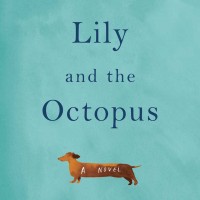
The Wonder of ‘Lily and the Octopus’ by Steven Rowley

If you’re looking for a good book to see you through this last stretch of winter, dive into ‘Lily and the Octopus’ by Steven Rowley. A work of heartbreaking beauty and love, this is much more than a story of a man and his dog – it’s a moving treatise on how we deal with loss.

Opening with a discussion on the various merits of the Ryans (Reynolds, Gosling, but not Phillippe), the Matts (Bomer and Damon), the Toms (Brady and Hardy), and the Chrises (Evans, Pine, Pratt and Hemsworth), it’s a veritable greatest hits of hunks, and an enthralling way to begin. This is no ordinary tale, filled as it is with whimsy and wit. Soon, we discover that Lily is a dachshund, Ted Flask is her adoring owner, and the octopus is an unwelcome visitor about to wreak the worst kind of havoc in their companionship.

While odd for some non-animal-lovers (Rowley anthropomorphizes Lily to such an extent that she plays board games, talks about guys, and even mans the steering wheel of a ship), for anyone who’s enjoyed the love and adoration of a pet, it’s not such a far cry from the truth. There are deeper layers of meaning at work here, particularly in the dream scenes, and an over-the-top voyage that strongly echoes the fight against one’s own nature in ‘Moby Dick’. More impressive than that, however, is the exploration of the gradual acceptance of grief for love lost. This encompasses all kinds of love – romantic, familial, unrequited and unconditional – and what happens when it ends, for whatever reason.

‘Lily and the Octopus’ reminds us that sometimes we need to break down, that it’s ok to cry, and if you love someone with all your heart, that love doesn’t ever really go away.

Continue reading ...

A Winter Poem

THE SNOW-STORM
By Ralph Waldo Emerson
Announced by all the trumpets of the sky,
Arrives the snow, and, driving o’er the fields,
Seems nowhere to alight: the whited air
Hides hills and woods, the river, and the heaven,
And veils the farm-house at the garden’s end.
The sled and traveller stopped, the courier’s feet
Delayed, all friends shut out, the housemates sit
Around the radiant fireplace, enclosed
In a tumultuous privacy of storm.
Come see the north wind’s masonry.
Out of an unseen quarry evermore
Furnished with tile, the fierce artificer
Curves his white bastions with projected roof
Round every windward stake, or tree, or door.
Speeding, the myriad-handed, his wild work
So fanciful, so savage, nought cares he
For number or proportion. Mockingly,
On coop or kennel he hangs Parian wreaths;
A swan-like form invests the hidden thorn;
Fills up the farmer’s lane from wall to wall,
Maugre the farmer’s sighs; and, at the gate,
A tapering turret overtops the work.
And when his hours are numbered, and the world
Is all his own, retiring, as he were not,
Leaves, when the sun appears, astonished Art
To mimic in slow structures, stone by stone,
Built in an age, the mad wind’s night-work,
Continue reading ...

A Fall Poem by Mary Oliver

Lines Written in the Days of Growing Darkness

Every year we have been
witness to it: how the
world descends
into a rich mash, in order that
it may resume.
And therefore
who would cry out

to the petals on the ground
to stay,
knowing, as we must,
how the vivacity of what was is married

to the vitality of what will be?
I don’t say
it’s easy, but
what else will do

if the love one claims to have for the world
be true?
So let us go on

though the sun be swinging east,
and the ponds be cold and black,
and the sweets of the year be doomed.

— Mary Oliver

Continue reading ...

The Place I Want to Get Back To

“The Place I Want to Get Back To” by Mary Oliver

The place I want to get back to
is where
in the pinewoods
in the moments between
the darkness
and first light
two deer
came walking down the hill
and when they saw me
they said to each other, okay,
this one is okay,
let’s see who she is
and why she is sitting
on the ground like that,
so quiet, as if
asleep, or in a dream,
but, anyway, harmless;
and so they came
on their slender legs
and gazed upon me
not unlike the way
I go out to the dunes and look
and look and look
into the faces of the flowers;
and then one of them leaned forward
and nuzzled my hand, and what can my life
bring to me that could exceed
that brief moment?
For twenty years
I have gone every day to the same woods,
not waiting, exactly, just lingering.
Such gifts, bestowed,
can’t be repeated.
If you want to talk about this
come to visit. I live in the house
near the corner, which I have named
Gratitude.

~ Mary Oliver

Continue reading ...

My First ‘Porn’ Review

When the title of a memoir is “Porn Again” and the cover depicts the author holding a cock with both hands, one expects a cheeky and salacious romp. What one gets in Josh Sabarra’s case is a whole lot more. There are hot moments to be had for sure, but what lingers after the heat is the layered depth of a Hollywood success story, from a kid who felt like a chubby, queer outsider and who willfully turned himself into something beautiful. The journey of finding out what true beauty is forms the core of his memoir, and the roller coaster ride it took to get there is only partially superficial.

Originally intended as a lightweight summer-read for my beach vacation, “Porn Again” establishes itself as something far greater as early as Chapter 2: Hard To Be Good, in which Sabarra recalls his re-enacting of a flight safety demonstration for several teacher aides: “While their delight more likely came from the sight of a six-year-old boy in shorts, a military hat and glowing high heels spouting pre-flight rhetoric, I was uninhibited and not yet aware of how gender roles applied to the way I moved through the world.”

The awakening of that awareness is the poignant touchstone for this book, and most LGBT youth will empathize with such a tender time. When he is called out as a “homo” at summer camp after simply putting his arm around a fellow camper, the arrival of shame is swift and cutting, and forms the impetus to a mode of survival many of us know all too well: “From the torment, I could feel edges of my personality emerge – pieces inside of me that would sharpen my tongue and fine-tune an innate wit that could eventually slice through unworthy opponents in seconds. A wall of defense was rising from the ground, and my internal artillery was being loaded for the coming years of battle.”

Yet through it all, Sabarra couldn’t help but let elements of his authentic self shine through, such as when he stages his own Hollywood-themed Bar Mitzvah. The act and the party itself may have been tell-tale signs, but it was all still a show for him. “The show was spectacular,” he writes, “but there was nothing of interest underneath. Did it matter, I thought, as long as the outward presentation was enough to grab people’s attention? Was the heart and soul below the surface really that important? Maybe a distracting razzle-dazzle act was my path; perhaps I was the human embodiment of what had just occurred.”

The quest for putting on a good show translates into body issues, and he begins a series of plastic surgery stints designed to achieve the perfection he feels will validate his life. It’s the first time I didn’t think of cosmetic surgery as some vain, unnecessary whim. As Sabarra explains his reasons, it suddenly becomes apparent that this runs much deeper: “I hadn’t processed the cumulative impact of how much I was bullied because of my sexuality. My self-esteem didn’t survive the verbal beatings I had been getting since I was seven, and my attempt to make my outside beautiful and glamorous was the way to bring it back to life now.”

Such self-esteem issues are not uncommon for LGBT youth, and it bleeds into adulthood for some of us too. After successfully navigating his way to a high-powered Hollywood position at an unprecedentedly-young age, Sabarra was still a virgin as he entered his 30’s. That a book entitled “Porn Again”, and carrying such chapter titles as ‘Cumming of Age’, ‘Hard to Swallow’, ‘Things Cum Up’ and ‘Circle Jerk’ has a protagonist who remains a virgin at the ripe age of 31 is a wink and testament to the marketing skills and wisdom of its writer. It’s also a nifty reminder that things are not always what they appear, a lesson that runs throughout the book as Sabarra goes from navigating the shark-infested waters of Hollywood to the shark-infested waters of the gay dating scene.

It’s a gratifying journey, filled with the pathos that, even at this stage in our awareness, sometimes comes from coming out. Most touching in perhaps the entire book is the way in which Sabarra’s family initially dealt with his sexuality. They did the best they could, and their love and concern is apparent even if they were unable to act at the time. A chilling holiday plan for Sabarra to hide his boyfriend from an elderly grandparent is especially heart-wrenching:

“When someone asks you to disguise who you are… it crushes you to a million little pieces. It’s like you’re a damaged collectible that people want to trade in for a shiny, new model they’d be proud to display,” he writes. “For years… many people who suspected I was gay made comments and slurs. That was the reason I knew to keep it secret and let my quick wit be my shield. When your own family reiterates this messaging of ignorant bullies, albeit unknowingly, the sting is hard to bear – especially when you’re in your thirties and finally feel free enough to step into yourself.”

Passages like that make this into so much more than porn. It is the power of Sabarra’s writing, and ability to laugh at himself, that makes such a sexy, enjoyable romp as satisfying and fulfilling as it is entertaining.

{Visit Josh Sabarra’s website here.}


Continue reading ...

Summer Soul (Of An Octopus)

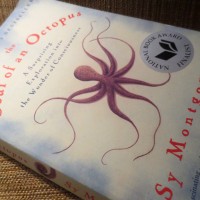
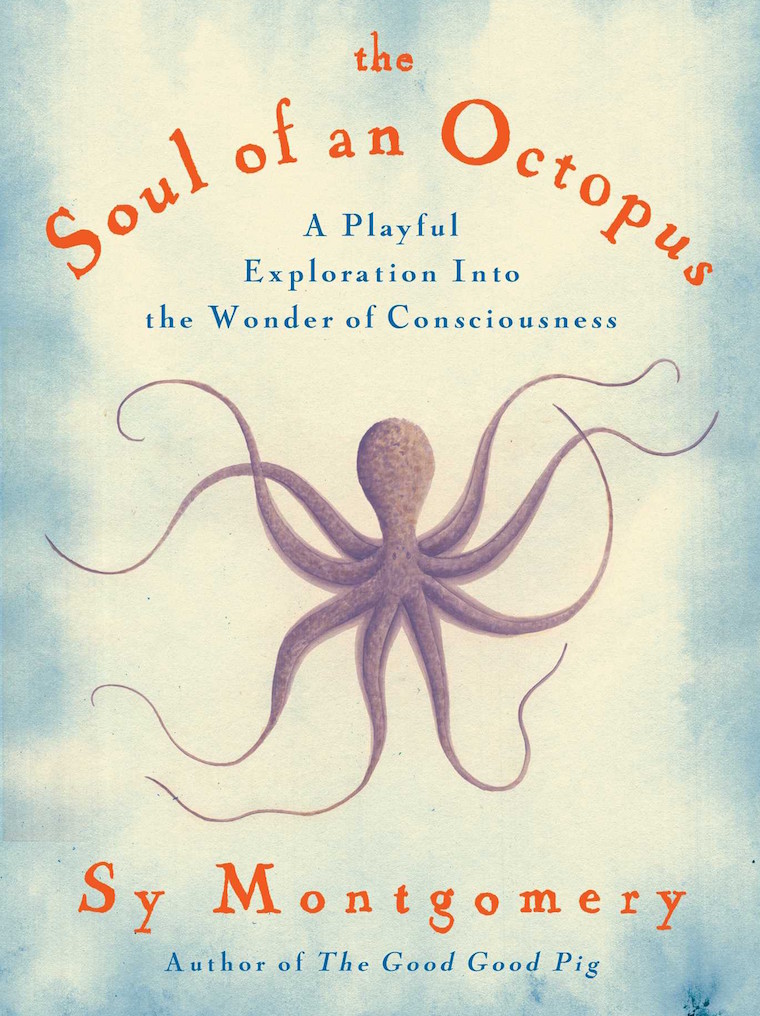
The universe has a way of making little winks, signifying whether we are on the right path and if things are properly aligned. Most of us chalk it up to coincidence and chance, but I’ve always felt there was something deeper at work, some grander scheme of a destined plan where everything happens for a reason. Case in point was the sudden proliferation of the octopus as I began one of my favorite reads this summer: ‘The Soul of an Octopus’ by Sy Montgomery. Once I started this, fittingly on the beach, I could not put it down. The ocean and its inhabitants have perennially intrigued me, and the octopus especially has been an animal of fascination and wonder, given its intelligence and shapeshifting prowess. In fact, the eight-armed creature is one of the premiere tricksters of the animal kingdom, and Montgomery manages to demystify and investigate this ‘Surprising Exploration into the Wonder of Consciousness.’

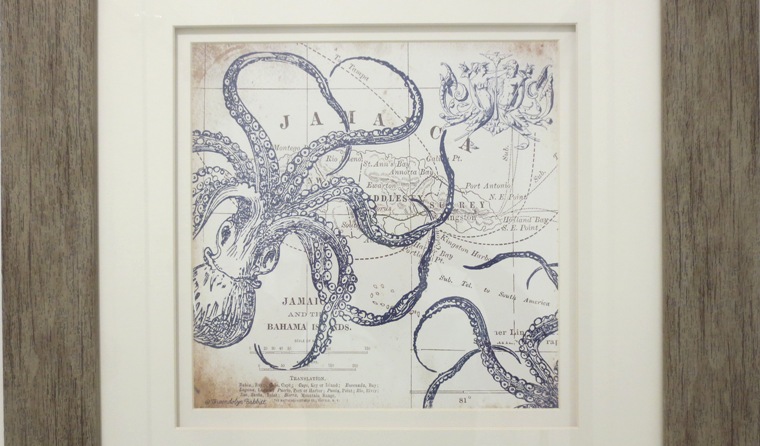
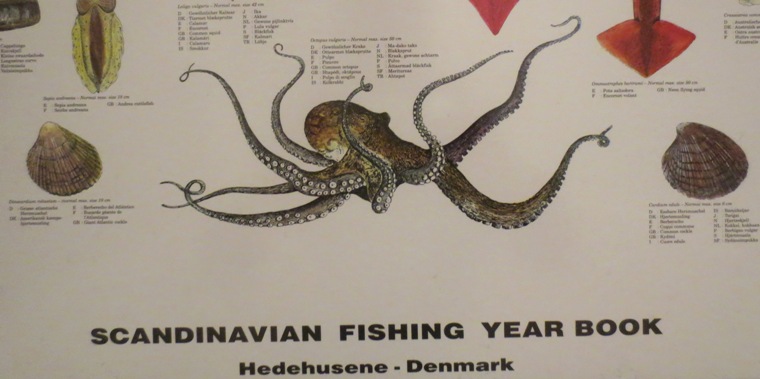
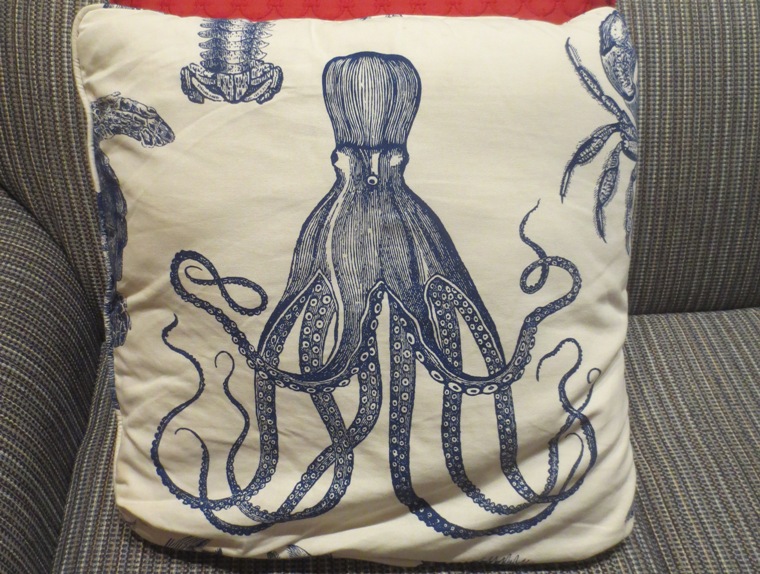
It’s a marvelous book for anyone looking to delve further into the curious relations between humans and animals, and especially for those of us beholden to the magic and mystery of the octopus. As I turned the pages during our seaside stay, suddenly I found octopuses everywhere: in a print on the hotel wall, in a restaurant poster, on a bathroom rug, and even on a lobby throw pillow.

Reassuring proof that we are all connected somehow, and that there are no accidents. The trick is in deciphering why… Why ‘The Soul of an Octopus’? Why the octopus itself?

More importantly, why does the summer have to end?

Continue reading ...

Summer Reads 2016

On my summer bedside table reading list:

The Whale: A Love Story‘ by Mark Beauregard

Porn Again‘ by Josh Sabarra

Harry Potter and the Cursed Child’ by J.K. Rowling

The Soul of an Octopus‘ by Sy Montgomery

“The best moments in reading are when you come across something – a thought, a feeling, a way of looking at things – which you had thought special and particular to you. Now here it is, set down by someone else, a person you have never met, someone even who is long dead. And it is as if a hand has come out and taken yours.” – Alan Bennett, The History Boys

Continue reading ...

Ode on a Grecian Urn

It was, rather expectedly, in a poetry class where I first read this epic work of Keats. Now, when all things are going Greek this summer, it fits in well with some statuesque posing.

Ode On A Grecian Urn

By John Keats

Thou still unravish’d bride of quietness,

Thou foster-child of silence and slow time,

Sylvan historian, who canst thus express

A flowery tale more sweetly than our rhyme:

What leaf-fring’d legend haunts about thy shape

Of deities or mortals, or of both,

In Tempe or the dales of Arcady?

What men or gods are these? What maidens loth?

What mad pursuit? What struggle to escape?

What pipes and timbrels? What wild ecstasy?


Heard melodies are sweet, but those unheard

Are sweeter; therefore, ye soft pipes, play on;

Not to the sensual ear, but, more endear’d,

Pipe to the spirit ditties of no tone:

Fair youth, beneath the trees, thou canst not leave

Thy song, nor ever can those trees be bare;

Bold Lover, never, never canst thou kiss,

Though winning near the goal yet, do not grieve;

She cannot fade, though thou hast not thy bliss,

For ever wilt thou love, and she be fair!


Ah, happy, happy boughs! that cannot shed

Your leaves, nor ever bid the Spring adieu;

And, happy melodist, unwearied,

For ever piping songs for ever new;

More happy love! more happy, happy love!

For ever warm and still to be enjoy’d,

For ever panting, and for ever young;

All breathing human passion far above,

That leaves a heart high-sorrowful and cloy’d,

A burning forehead, and a parching tongue.


Who are these coming to the sacrifice?

To what green altar, O mysterious priest,

Lead’st thou that heifer lowing at the skies,

And all her silken flanks with garlands drest?

What little town by river or sea shore,

Or mountain-built with peaceful citadel,

Is emptied of this folk, this pious morn?

And, little town, thy streets for evermore

Will silent be; and not a soul to tell

Why thou art desolate, can e’er return.


O Attic shape! Fair attitude! with brede

Of marble men and maidens overwrought,

With forest branches and the trodden weed;

Thou, silent form, dost tease us out of thought

As doth eternity: Cold Pastoral!

When old age shall this generation waste,

Thou shalt remain, in midst of other woe

Than ours, a friend to man, to whom thou say’st,

“Beauty is truth, truth beauty, that is all

Ye know on earth, and all ye need to know.”

Continue reading ...

A Porny Summer Read

Recently added to my summer reading queue is this sizzling memoir by Josh Sabarra. He’s been featured here as the Hunk of the Day, but this is one Renaissance man who will likely be seen a lot more. (As David Beckham and Ben Cohen have been quiet of late, we are on the lookout for the next hunky conglomerate.) As mentioned, I’ll be reading his ‘Porn Again: A Memoir’ on the beach this summer (and writing a review when the vacation is over), thanks in part to this powerful teaser in his own words:

“I struggled for decades to find myself and to be comfortable in my own skin.  As I approached the beginning of the second half of my life, I thought that my stories might inspire people to step into themselves and entertain at the same time.

During the writing process, I learned that I had been borrowing my sense of self for so long.  I looked to food, plastic surgery, my career, my lovers and my celebrity friendships to try to make myself appealing to other people.  I finally realized that I am enough, on my own terms.” – Josh Sabarra

In addition to his novel (and another one on the way) he’s the sex columnist for ‘Gay Times’ magazine (and I’m secretly hoping he’ll write a Special Guest Blog for this little website – pretty please with a cherry on top?)

Continue reading ...

Bedroom Domain

“Waking up begins with saying am and now. That which has awoken then lies for a while staring up at the ceiling and down into itself until it has recognized I, and therefrom deduced I am, I am now. Here comes next, and is at least negatively reassuring; because here, this morning, is where it has expected to find itself: what’s called at home.” ~ Christopher Isherwood

“I don’t know if you’ve ever felt like that. That you wanted to sleep for a thousand years. Or just not exist. Or just not be aware that you do exist. Or something like that. I think wanting that is very morbid, but I want it when I get like this. That’s why I’m trying not to think. I just want it all to stop spinning.” ~ Stephen Chbosky

I love sleep. My life has the tendency to fall apart when I’m awake, you know?” ~ Ernest Hemingway

“It doesn’t matter what you do in the bedroom as long as you don’t do it in the street and frighten the horses.” ~ Daphne Fielding

“Before you sleep, read something that is exquisite, and worth remembering.” ~ Desiderius Erasmus

Continue reading ...

Memory Erosion

One of the more disturbing aspects of growing older (and into the dreaded middle-age) is a rapidly-encroaching inability to focus as well as I once did. To that end, I’ve been getting into anthologies and collections of short stories, where I can keep track of a plot or cast of characters without having to make a key with a list of names and descriptions so I won’t forget. (Yes, I have begun to do that.)

It’s strange how my memory works. I can recall events quite vividly from 1994, but ask me what I did two days ago and it’s gone with the wind. Luckily, there are plenty of collections that contain shorter tales and stories for the weaker of mind, including the one pictured here.

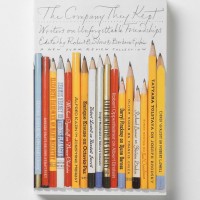
My friend Chris just sent me this great little book: ‘The Company They Kept: Writers on Unforgettable Friendships’ as edited by Robert B. Silvers and Barbara Epstein. It’s a fascinating, and often quite moving, series of memories of friendships between writers. Some focus more on the writing aspect, others more on the friendship, and together they comprise a rich and enthralling experience. That it was given to me by one of my dearest friends makes it all the more resonant, and perhaps one day I’ll tell that story of friendship (with disguised names to protect the guilt of the other party). And though my modern day memory may be fading, I remember every moment of those first few days of friendship, first planted on a trip to Puerto Rico, and cultivated with travels and talks from San Francisco to New York to Miami to Washington.

It may be time to make new memories.

Continue reading ...

Another Literary Wonderland

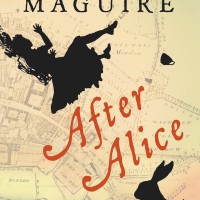
There’s a literary wonderland that is conjured whenever Gregory Maguire releases a new book, and that wonderland is a literal thing in his latest work ‘After Alice’ – his enchantingly twisted take on Alice’s own Wonderland. Rather than give away any juicy plot-points or spoil any secrets with a shaky synopsis, I’ll simply highlight my favorite passage, the one that spoke most deeply to me, and the one that echoes the sentiments of certain folks who love books and try valiantly to share that love with others.

Only, sometimes, in the text of a book here and there, we tap the page with a finger and say, “This is what my lost days were like. Something like this.” But even as we turn to the fellow in the bed beside us to say, “Yes, this passage here,” whatever it is we recognized has already disguised itself, changed in that split instant. There is no hope that our companion can see what we, just for a moment, saw anew and hailed with a startled, glad heart. Literary pleasure, and a sense of recognition and identification, real though they are, burn off like alcohol in the flame of the next heated moment.” ~ Gregory Maguire, ‘After Alice’

Many are the books I’ve read and tried to press into the minds of others, and many are the unread books that friends have routinely and quietly ignored when I’ve brought them to their attention. Far from making me feel less alone, most great books leave me feeling an acute sense of loneliness – in the unshared resonance or recognition of some carefully-crafted passage of remarkable beauty, or some thread of a theme that they have no interest in pursuing. In reading a book that speaks to me, I mostly find friends and family falling by the wayside, and my only companion along the way being the author, ever unknown to me. I remain even more unknown to her or him.

And so I sit here and ponder what, if any, point these words serve, and on a greater more philosophical bent, what any of this website means. If not for some spark of recognition, some tenuous connection in the dark web in which we are both currently bound, why do it at all? At times like this, I find it best to pause and let the question come up again in the light of day. Things seem less dramatic and do-or-die in the morning. When faced with the machinations of greeting the day – the relief of a steaming stream of urine, the river of a bedside glass of water chasing the throat-lodged frog away, the simple cracking of the arms as you wrap a robe around yourself to hold onto some last remnant of bedded warmth (and we haven’t even touched upon breakfast yet) – it is enough simply to get going again.
Such is a Wednesday morning… after Alice.
Continue reading ...

Emily Dickinson Was Not A Pussy

Somewhere along our literary history, people started to think of Emily Dickinson’s poetry as cute and harmless fluff. In truth, it was far darker and more sinister than surface readings or historical reputation would allow. As is often the case with poets and poetry, things were never as simple as they seemed. Ms. Dickinson was a complex character, and her work often delved into the introspective reaches of the soul. What she brought up was not always pretty or nice, and she didn’t disguise it as such. It just took the rest of us a little longer to catch on.

One need not be a Chamber to be Haunted
One need not be a House
The Brain has Corridors surpassing 
Material Place

Far safer, of a Midnight Meeting
External Ghost
Than its interior Confronting
That Cooler Host.

Far safer, through an Abbey gallop,
The Stones a’chase
Than Unarmed, one’s a’self encounter
In lonesome Place

Ourself behind ourself, concealed
Should startle most
Assassin hid in our Apartment
Be Horror’s least.

The Body borrows a Revolver 
He bolts the Door 
O’erlooking a superior spectre
Or More

~ Emily Dickinson

Continue reading ...

The Turning

Only vaguely do I remember reading ‘The Turn of the Screw’ in one of my college courses. Henry James did very little for  me. Sometimes emotional constipation can’t help but seep into a writer’s work (surely this blog has been in need of an enema more often than not) and while it makes for an interesting tension, it’s a tension that I’d rather do without. Still, he knows how to build suspense, and on this eve of Halloween, that is wonderfully apt.

“It may be, of course, above all, that what suddenly broke into this gives the previous time a charm of stillness—that hush in which something gathers or crouches. The change was actually like the spring of a beast.” ― Henry James

“I could only get on at all by taking “nature” into my confidence and my account, by treating my monstrous ordeal as a push in a direction unusual, of course, and unpleasant, but demanding, after all, for a fair front, only another turn of the screw of ordinary human virtue.” 
― Henry James

“Of course I was under the spell, and the wonderful part is that, even at the time, I perfectly knew I was. But I gave myself up to it; it was an antidote to any pain, and I had more pains than one.” 
― Henry James

“I take up my own pen again – the pen of all my old unforgettable efforts and sacred struggles. To myself – today – I need say no more. Large and full and high the future still opens. It is now indeed that I may do the work of my life. And I will.” 
― Henry James

Continue reading ...