Category Archives: Food

Pad Thai in the Comfort of Home

Taking pancakes out of the equation, I can do a decent job when rustling up some grub for dinner. Not being able to go out for dinner for months, and not being the biggest fan of take-out, we’ve been doing a lot more cooking than usual. I’ve also been working from home, which makes marinating and prepping things in the morning much easier than texting Andy and asking him to defrost the chicken because I forgot about it. That said, approaching the three-month mark of being home means that some of the luster of cooking dinner every night has dulled, but when I had a hankering for Pad Thai, and no idea of where to look for take-out, I decided to try my hand at making it.

A few years ago when JoAnn was visiting I made us up a batch of vegetable Pad Thai, and I remember it being a rather arduous process – lots of cutting, lots of tofu, and lots of delicate maneuverings that seemed counter-productive to reproducing a simple street dish. This time I sought out a simpler recipe – and you can find any number of variations on the web so seek out one that works for you. The main choices are chicken, shrimp or tofu – or any combination of them. Rice noodles are the base, and I used a chopped shallot and two scrambled eggs sliced into little ribbons. The secret is in the sauce, which in this case was equal parts fish sauce, brown sugar, and tamarind sauce (some say you can use rice vinegar in place of tamarind, but just go find some at an Asian market because the taste is important).

The garnishes are vital to this dish: crushed peanuts (which you must roast first for a lovelier flavor), cilantro, fresh bean sprouts, chopped scallions and lime wedges. I incorporated these into the whole dish at the end of the cooking – healthy portions of each, stirring them throughout the dish while the noodles and protein was still steaming hot. I love cilantro so I topped it with a bit more of that, along with extra roasted peanut pieces. Make your own choices throughout the cooking process – this is a forgiving dish to which you can bring your own variations.

It was a comfort dinner when such food was needed to lift the spirits.

Continue reading ...

A Quiet Anniversary Marks Ten Years

For the first time in our married life, Andy and I did not celebrate our wedding anniversary in Boston, because these are not typical times. Surprisingly, it may have meant a little more, and not only because it was our tenth. After ten years, there’s not much new to discover, but as we sat on a sunny and slightly chilly deck near a cherry tree in full bloom, I was surprised at the tenderness I felt for Andy, even after all these years, and probably because of them. The longer a fire burns, even when it slumbers and only smolders, the stronger it sometimes feels. 

Mom had gifted us come calamari to cook since we wouldn’t be able to go out, so we made that as an appetizer. It wasn’t bad, and I made a roasted red pepper aioli, and poured out some pre-made sweet chili sauce. 

A hibiscus grapefruit mocktail, christened with a cherry, provided a pretty portal into the coming summer season. Andy and I discussed pool liner plans, and the notion of sun and fun, even in solitude, made for a happy moment of promise. The twinkle of a sparkling summer, even in the distance on this cool afternoon, lent another layer of giddiness to the appetizer. 

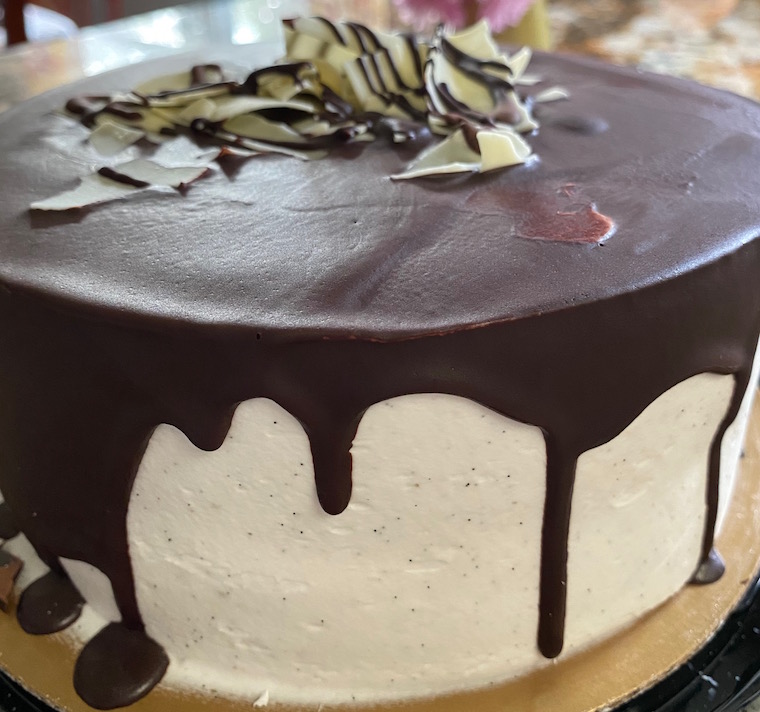
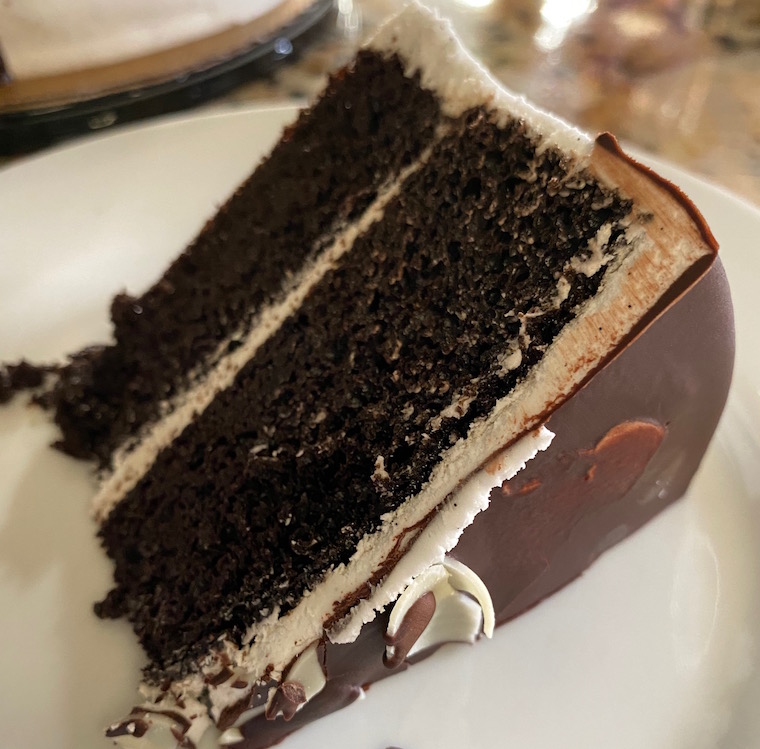
Andy put a couple of chateaubriand cuts on the grill, which turned out perfectly, then it was time for the closest we could get to that glorious chocolate wedding cake we had in Boston ten years ago. 

A tuxedo cake from Price Chopper may sound both glamorous and decidedly not glamorous at the same time, but it was enchanting enough, and made for more than a fine substitute. On nights such as a tenth anniversary, it’s not the food that matters, it’s the company. 

We’ll return to Boston to honor our anniversary another time. For now, we placed a proverbial marker beneath a gorgeous cherry in bloom, beside a long-blooming group of jonquils, their season extended by the cool weather, because there is balance and purpose to everything that’s meant to be. 

Continue reading ...

Dressed Up By Leaves of Coriander

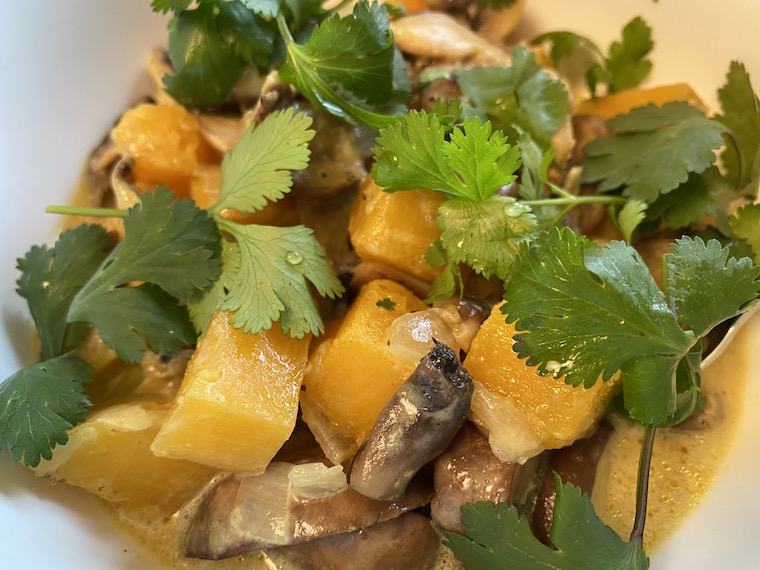
A winter squash and mushroom curry stew is made into something spectacular with a dressing of fresh coriander leaves. (If you call it coriander you can spoil many a cilantro-hater’s dining experience, as I am wont to do.) This recipe felt more like fall and winter to me, but we had a string of rainy and dreary days last week, and it was easy to find some butternut squash and mushrooms, so here we have it. The coriander makes it much more spring-like, especially when kept intact and not chopped. 

Continue reading ...

The Short Life of Shortbread in My Kitchen: A Recipe

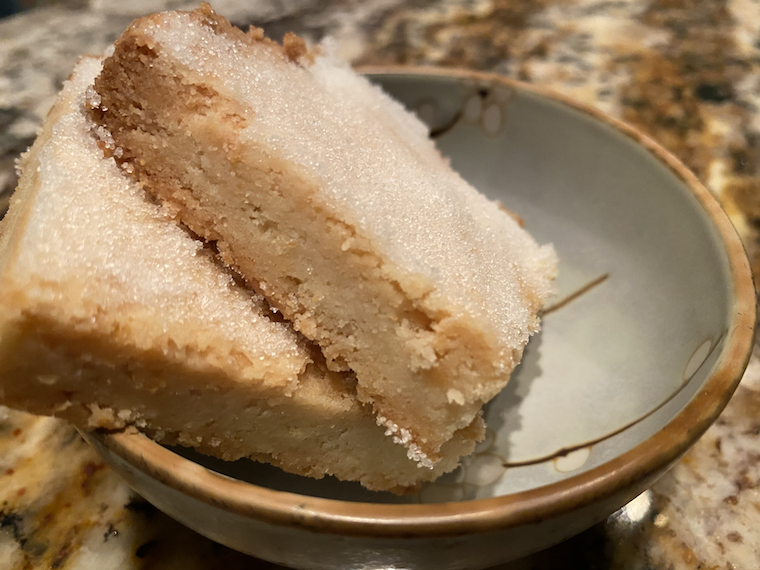
Like many people, I find myself cooking and baking way more now that I’m staying home, and it’s become a bit problematic. For instance, the other day I made a quick batch of shortbread from a New York Times recipe and ate half of it in one sitting. Given that there are two sticks of butter in the recipe, I literally had a full stick of butter in my stomach, which cannot be good for anything. But if you need shortbread in a big hurry, this recipe is a godsend.

Heat the oven to 350 degrees and line an 8- or 9-inch square pan with parchment paper. No other lubricant necessary. In a bowl, whisk 2 cups all-purpose flour, 1/4 cup rice flour (or ¼ cup cornstarch, or use more all-purpose flour), 1/4 cup granulated sugar, and 1/2 teaspoon salt. Stir in a cup of melted unsalted butter. Press the dough into the pan, and bake it until golden on top, 35 to 45 minutes. As soon as it comes out of the oven, sprinkle a generous helping of sugar on top. Cut the shortbread into bars in the pan without delay or it was be impossible to cut without destroying it later. 

Is it as simple as it sounds and did it turn out decently? Yes and God yes. Dangerously so. The recipe’s author also indicates a few intriguing amendments can be added. A teaspoon of grated citrus zest (I actually did this variation, using a lemon), a teaspoon of vanilla, or a teaspoon of ground cardamom are all possibilities.

Now seems a good time to remind everyone that I have yet to see a shortage on fruits or vegetables in the grocery store.

Continue reading ...

Fuck Pancakes

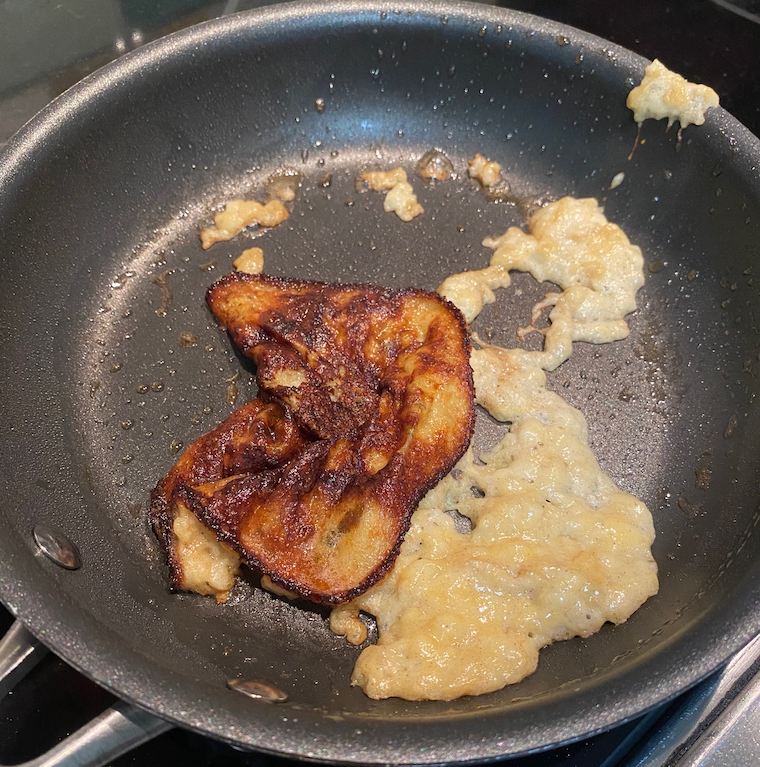
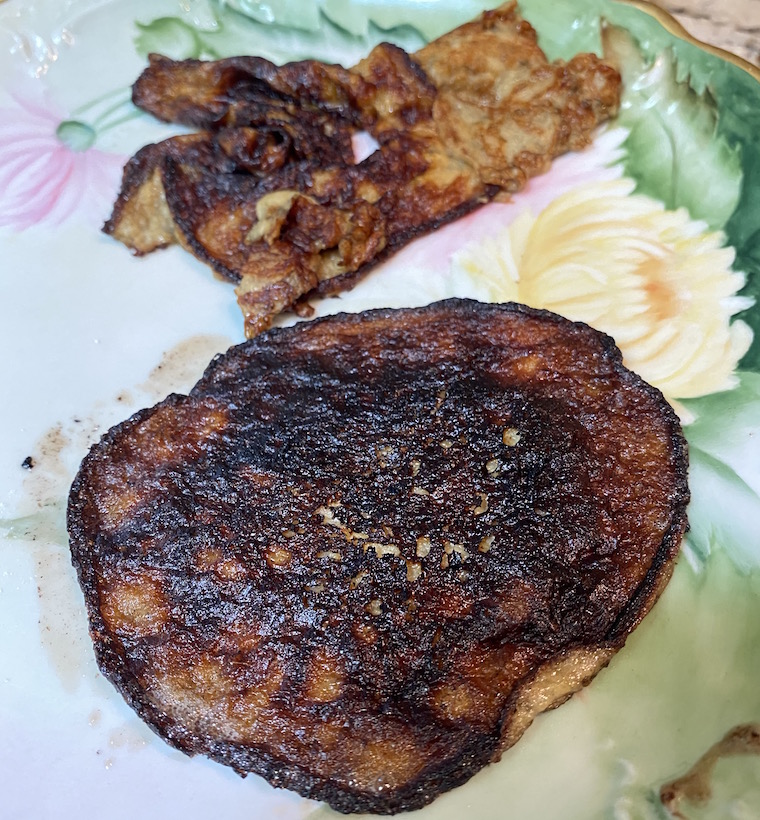
Forget about ‘fetch’ – the only thing not ever going to happen is me making pancakes from scratch that aren’t disasters. I’m not going to pretend false humility or modesty at this moment: I’m pretty fucking awesome at a pretty extensive number of things. The one thing I remain unable to consistently accomplish is making a simple fucking pancake. (I have come close in the past, but just this once.)

Maybe it’s the heat, maybe it’s the ingredients, maybe it’s the pan, maybe it’s just my fucking ineptitude to operate when a runny batter rears its wet head – whatever the case, I can’t do it.  And it’s not just the first pancake either, though I appreciate the condolences. That’s ok. I mean, I’m ok with it now. And I’m sure I could work and work and practice and perfect – but I’d rather accept this defeat, especially as it means someone else will have the opportunity to make them.

Now, if you want your pancake burnt on the outside and raw in the middle – not such an easy thing to do, by the way – you’ve come to the right guy. I’ll give you that charred-semi-semolina magic anytime. If you want it profanity-free, that’s gonna cost you fucking extra.

FYI – I’m completely aware that the protective seal from the fancy-ass syrup bottle is on the plate. It fell there when I was trying to be fucking fancy and it just felt right to leave it there.

Continue reading ...

Getting High Off More One-Pot Stops

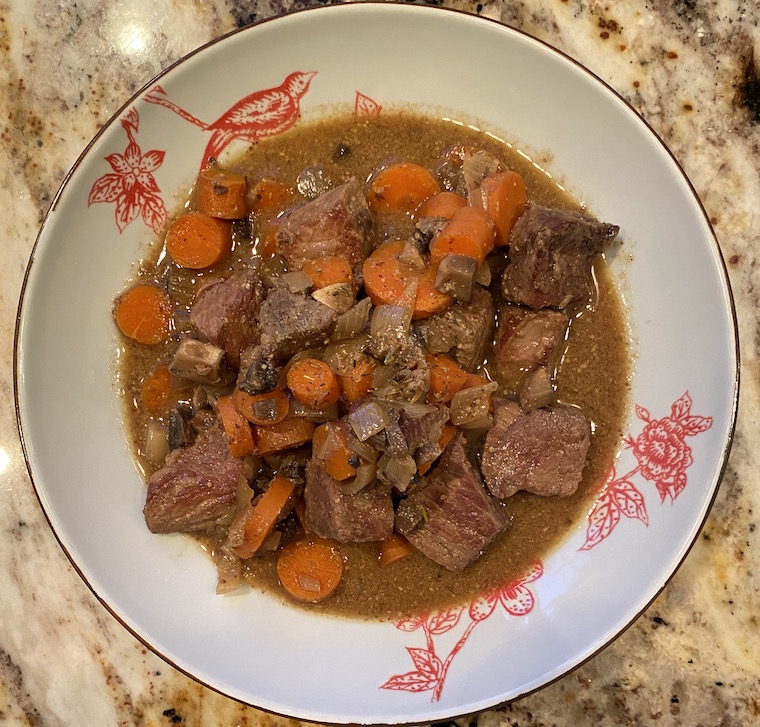
Like many others, I’ve been on a cooking kick of late given that there’s not much else we can do while waiting for the weather to warm up a bit and work in the yard. Be that as it may, I’m not averse to simplifying things in the kitchen as much as possible, so a recent New York Times supplement that included ’24 Brilliant Recipes for Everyone Who Hates Doing the Dishes’ has been a godsend. Thus far I’ve made my way through six of them – the latest being this Dijon and Cognac Beef Stew, which was as scrumptious as it was simple. [To date this pork chop endeavor has been my favorite.]

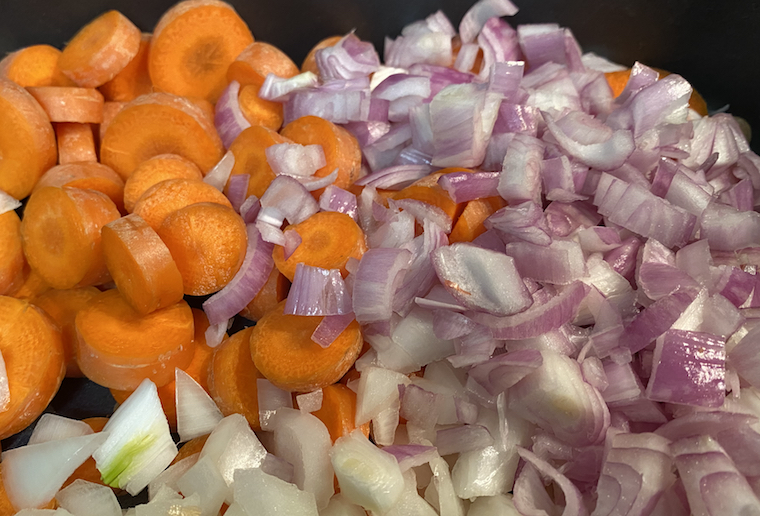
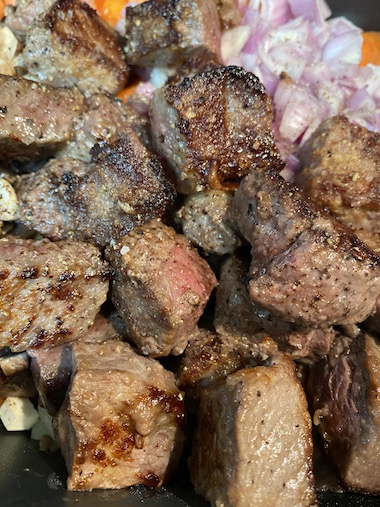
The cognac beef stew seen here is basically just some stew beef, seasoned and coated in a dusting of flour before being nicely browned in the rendered wonder of some salt pork, then some onion and shallots and carrots and mushrooms, and finally some cognac, beef stock, Dijon mustard, Pommery mustard and red wine. (Confession: I omitted the Pommery mustard and just used a bit more of the Dijon we had because ours seemed to have enough whole-grains in it, and I don’t really know what Pommery mustard is. I feel more badly about the sinful omission of the red wine because we didn’t have an open bottle, but I would definitely add it if you have some on hand.)

This recipe could also be done in a slow-cooker, which is the way I did it, because if you can do it in a slow cooker, just do it in a slow cooker! Technically, our slow cooker will saute too, but I used one pan for browning the meat and cooking the veggies and it worked out with minimal clean-up.

I’ve got my eye on a Shrimp Scampi with Orzo next…

Continue reading ...

Taking the Bore Out of Bulgur

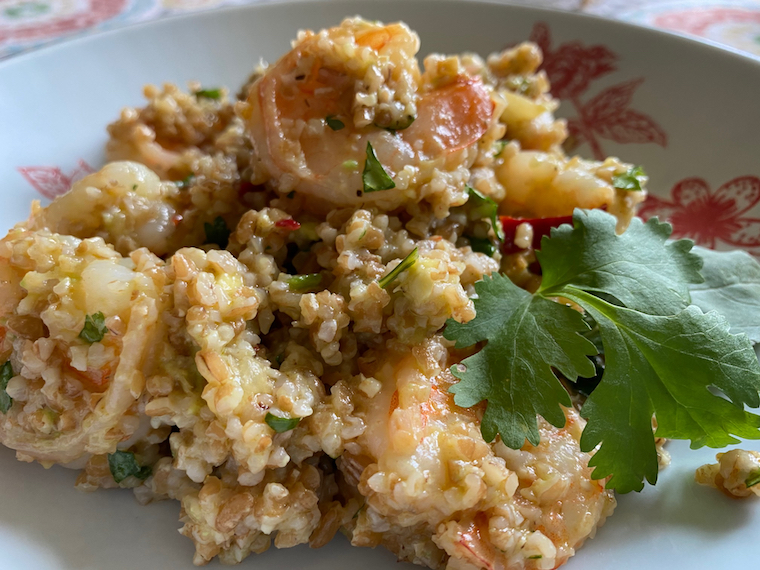
There’s nothing very exciting about bulgur on its own. Whole wheat grain that doesn’t require much cooking to prepare is about as thrilling as it sounds. Before you go to sleep, however, give it a whirl with some eye-opening additions, such as preserved lemon, garlic shrimp and a big handful of fresh cilantro, and you’ve got a suddenly exciting dish that is ample enough to stand on its own as an entree. 

This is basically just some bulgur soaked in boiling water and left alone for half an hour or so, then mixed with some shrimp sautéed in garlic and butter, a healthy pour of olive oil, a small preserved lemon finely chopped (or half of a large one), and some chopped avocado. A good handful of freshly-chopped cilantro is the final touch for this bright meal – perfect for spring and summer because of its minimal cooking time. Be generous with the salt and pepper too – the bulgur wants it. 

Continue reading ...

A Cozy Bowl of Mung Beans

This is one of those dishes that took years for me to grow into, like lobster, pizza and Fritos. (Yes, there was a time in my life when I didn’t like any of those things.) But time changes us, and tastes evolve and grow, so when Andy was introduced to the Filipino mung bean recipe that my Mom made and instantly loved them, I gave them another shot. Back when I was a kid, I didn’t see the point to them – they were bland and dull. I couldn’t taste the subtle earthy nuances of the beans, nor enjoy the healthy benefits of the swirls of spinach running through them. Now I enjoy them, particularly on spring days that retain the brutal sting of winter, as we’ve had of late. They are a comfort food, reminding me of grand family gatherings of Filipino relatives, when Tagalog was shouted back and forth across crowded dining room tables, and my brother and I could slip away unnoticed and undetected to do our spying and secret mayhem.

My Mom gave us a package of mung beans several years ago, and in the great pantry cleanout forced by the current state of affairs, I brought them out and asked her to send me the recipe she used. We needed comfort food more than ever, and a healthy pot of beans would last several days in a household of two.

A 12 oz package of mung beans is all you need to begin. It can go right into a cooking pot, then cover the beans with water and bring to a boil. Once boiling, turn heat to low and continue to add water as the beans soak it up and cook for about 45 minutes. You want a stew-like consistency (but add more or less as suits you).

Next, chop up a small-medium onion and sauté in some olive oil. (I also added some fresh ginger and garlic to the onions for additional flavor, but this was not part of my Mom’s original recipe.) If you have a small tomato on hand, chop that up and add it to the sauté pan. If mung beans are soft at this point, add all the vegetables to the pot and stir. At this point, I added a lot of salt (it’s necessary to combat the blandness) and a number of turns of pepper.

The final part is a bag of spinach or some chopped Swiss chard, which goes in for the last few minutes of cooking, until it is just wilted. Serve in a bowl, or atop a bed of rice as you like.

Continue reading ...

The New Best Banana Bread Recipe

“There is more than one peanut butter and banana sandwich in the world.” ~ Violet Newstead, ‘9 to 5’

That’s basically the only brush I had with the combination of bananas and peanut butter, and the only one I really wanted to have. (I was not one of those kids whose Moms packed a peanut butter and fluff sandwich – a Fluffer-nutter if I recall, not a bad nickname now that I think about it, but a gross concoction to my childhood mind.) Over the last few years, however, I’ve become even more open to strange combinations, particularly where peanut butter has been concerned. [See this hot dog and peanut butter combo that was rather delectable.] As for peanut butter and bananas, it makes more sense than the hot dog marriage, so the notion of adding peanut butter to a banana bread recipe wasn’t immediately repellant. Coupled with this amazing recipe I found online from Two Peas & Their Pod, it turns out we had all the available ingredients on hand for a quick mid-morning baking session.

It’s really just like adding a creamier version of butter, and it mixed surprisingly well with the bananas. The one thing I did change was the addition of a half-cup of white chocolate chips, because we had some of those on hand and I’m in the mood to use up all the odds and ends that have been in our cupboards for, don’t judge me, years in some cases. While I was obliterating part of my childhood beliefs by putting bananas and peanut butter together, I allowed my younger self a nod by not adding any nuts to the bread. I couldn’t stand nuts in muffins or brownies or similar sweets back then, so here’s to that boy.

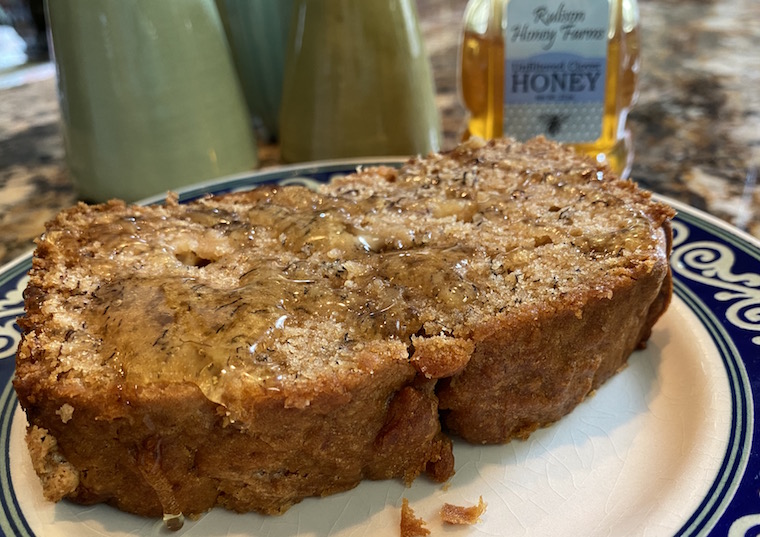
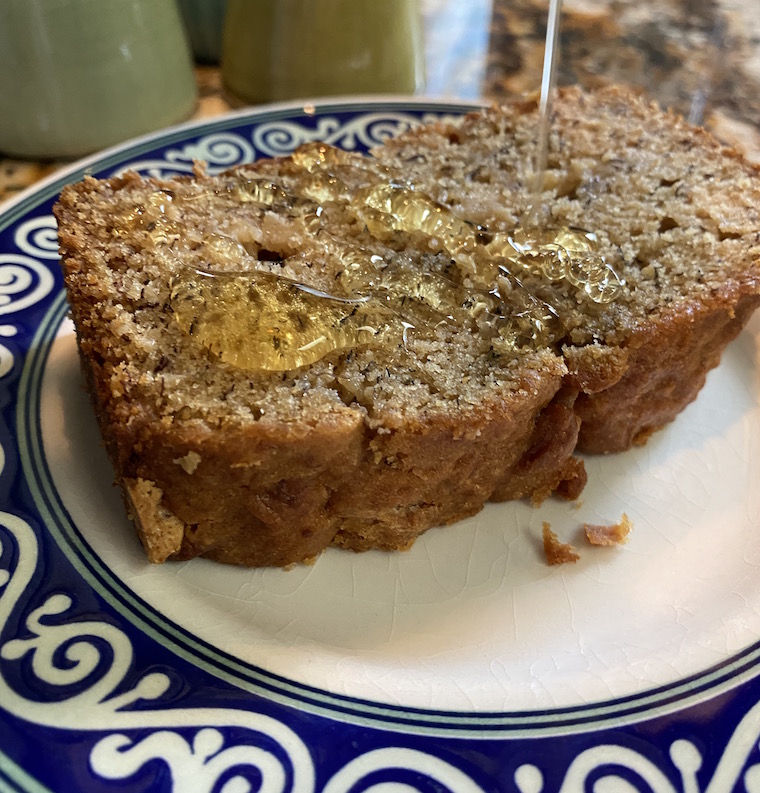
I baked this on the lower end of the recommended time and it was done by then. Our oven usually takes longer to bake things, so watch near the end. They turned out deliciously – moist and light (I also did minimal mixing when adding the dry ingredients to the wet) and the flavor was divine. A decadent addition of peanut butter or honey was advised, so I went with the latter. A slice of warm peanut butter banana bread with some honey is precisely what these blustery days of spring require.

Continue reading ...

Today’s Grocery Store Avoidance Project

Planning to indulge in another batch of babinka, I found that our cupboards were bare of sweetened condensed milk, so I looked to the interwebs for lessons on a proper substitute. Turns out a substitute is entirely unnecessary, as I can make the damn thing legit from milk and sugar. (A pretty high ‘DUH’ factor is present in that realization.) Am I the only one shocked and awed by the fact that we can make our own sweetened condensed milk?

It’s as simple as heating up 2 cups of milk and 2/3 cup sugar on low until the sugar dissolves (I’ve read either low fat or whole milk works fine) and then bringing it up to medium for a gentle simmer for 35 – 40 minutes. (Don’t stir or shake the mix while it simmers or some crazy crystal shit will happen. Hey, I’m just relaying what magic I read.) Pour into a heat safe storage container and let cool. It keeps for a few weeks – which also works to extend the life of milk. Bonus!

We’ll get to homemade buttermilk in our next Grocery Store Avoidance Project. Sounds like it’s just as exciting, and perhaps even easier.

Continue reading ...

Babinka: A Subtle Filipino Dessert

Some desserts are pretty and sweet. They shout with their pastel beauty, proclaiming their sweetness for all the world to see. Other desserts are quiet about things, content to blend into the background and softly coo to those looking for a more subtle experience. It took me years to grow out of that sickly-sweet-loving dessert group, and there are most certainly days when nothing but a super-sweet piece of funfetti cake with a mile of frosting will do. For the rest of the time, when I need something with just a hint or dusting of sugar, I turn to a dish like babinka.

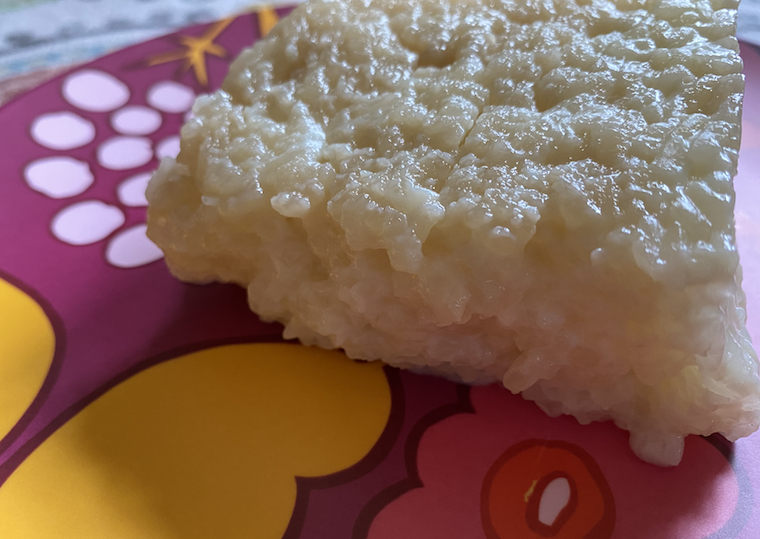
There are a bazillion variations on this Filipino dessert, and a gazillion different names, but it’s basically a sweet sticky rice that is sweetened with condensed milk and some form of sugar, then baked to meld the flavors and solidify into a gelatinous mass that manages to stay intact and chewy.

My Mom brought a bag of babinka ingredients and a recipe card when last she visited us (it feels so long ago) and I finally got around to making my first batch. She likes to enjoy a square of this for breakfast in the winter, which is indeed a good idea. I like mine as an after-lunch dessert, or a snack at any other time of the day really.

Here’s the recipe if you want something simple and plain, but sweet enough to qualify as a dessert.

Ingredients:

2 cups sweet sticky rice

4 cups water

1 can sweetened condensed milk

1 can coconut milk (solid portion only)

Brown or light brown sugar (3/4 cup packed, or to taste)

Method:

Cook the rice in the water until done (I used a rice cooker). It seemed to be a little more watery than usual, but I just added the milk and solid coconut right into the rice and stirred and it started to come together. Pour this into an 8” x 8” baking dish and sprinkle with the brown sugar, as much or as little as you like. Bake at 325 degrees for about 20 to 25 minutes. Allow to cool for at least half an hour (it will come together if allowed to sit a while). Cut and serve in squares as desired.

Continue reading ...

Pork Chops & Peter Brady

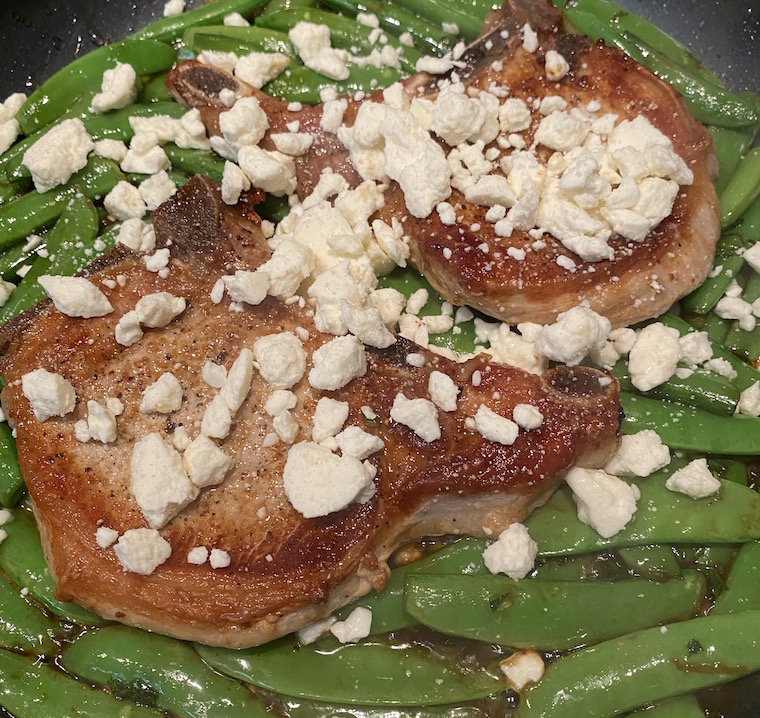
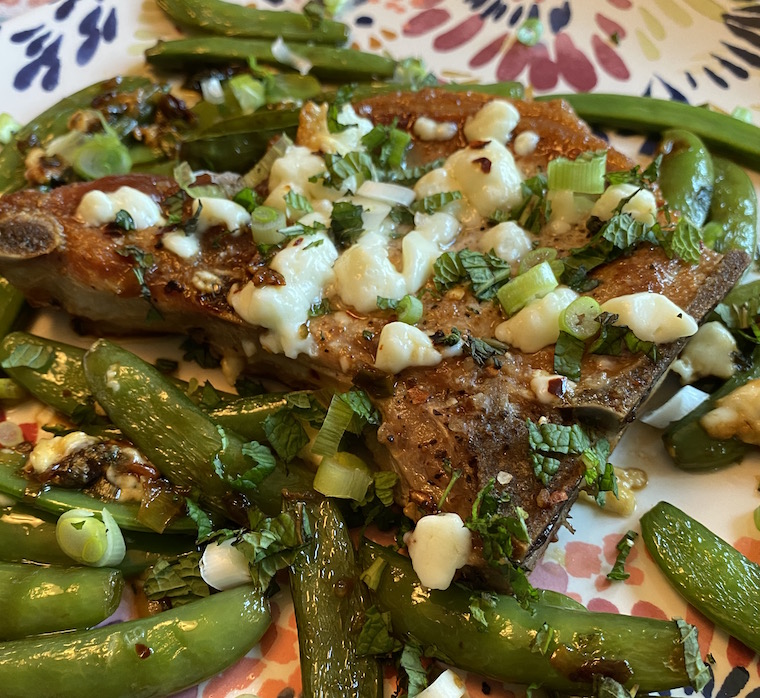
Damn the damn Brady Bunch: ever since Peter Brady pushed ‘pork chops and applesauce’ into the pop culture lexicon, I’ve been unable to shake his voice whenever a pork chop comes into play. Today, however, I did just that, because this recipe turned out so well I couldn’t be distracted by anything else. If you’re looking for an easy but impressive Sunday dinner, look no further. It comes from that collection of 24 one-pot dinners that was recently in The New York Times. This one was Pork Chops with Feta, Snap Peas, and Mint. And that’s basically it. I didn’t expect something so simplistic to taste so good, but that’s the magic of the best recipes, and this definitely ranks up there with the best.

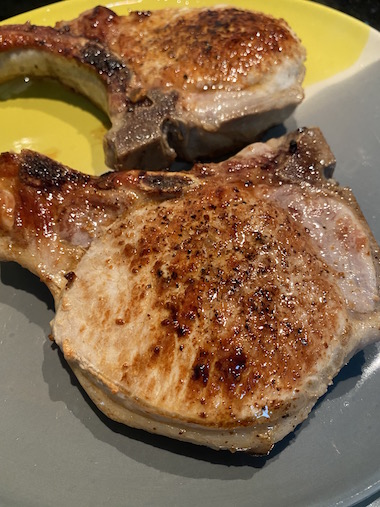
You must begin with a pair of bone-in pork chops. Season liberally with salt and pepper on both sides then sear them in a medium-hot skillet with a couple tablespoons of olive oil, 4-5 minutes each side, and absolutely do not touch them once they make contact with a glorious sizzle. Cover after both sides are done with their sear and cook on low for 3 minutes more, then remove chops to a plate.

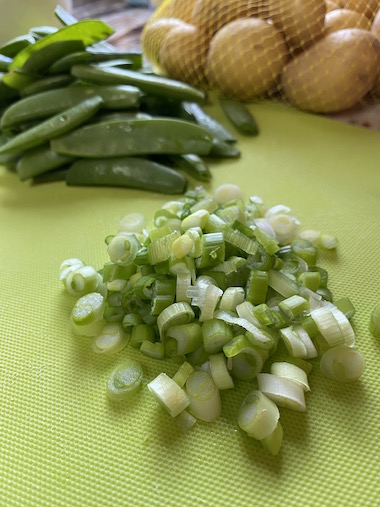
Add four chopped scallions, 2 cups of snap peas, ½ cup of freshly-chopped mint, some red pepper flakes and a bit more salt and pepper and sauté for 2-3 minutes. Make room for the chops and nestle them back in so they are directly in contact with the pan again. Sprinkle ½ cup of feta on top (this is the very best part.) Cover and cook for another five minutes or so.

Carefully transfer the chops to a plate and let rest for five more minutes. Add the peas and squeeze some fresh lemon juice over it all, then top with fresh scallions and chopped mint. Again, I don’t know how it works, but it turns out delicious. And you’ve only soiled one skillet!

Continue reading ...

One Pot Stop, Just the Way I Like It

The New York Times recently published a special cooking section with “24 Brilliant Recipes For Everyone Who Hates Doing the Dishes” which obviously caught my attention. It’s a collection of recipes that only require one pot, pan or skillet to cook to completion. That is my kind of cooking, and it should speak to anyone who has to do the dishes (which admittedly isn’t always me). A quick google search will put you in touch to links for these recipes, because in all honesty I just don’t feel like typing all that shit out. If you want to eat, you’re going to have to put in a little effort too. And maybe get a subscription – I already have one so maybe I get access that non-subscribers don’t. 

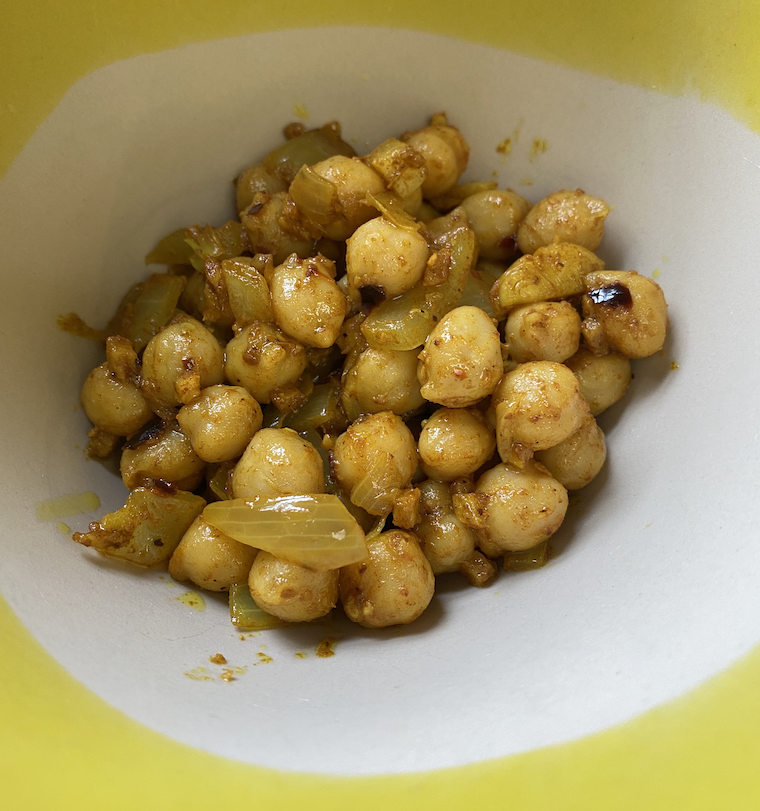
I started with the recipe for ‘Sausages and Brussels Sprouts with Honey Mustard’ which was excellent, especially at the tail-end of winter when the wind was still whipping around and the ground remained frozen. Besides, how can one go wrong with sausage? It’s a wonderful thing. For the second dinner, and the one featured in the photos here, I opted to try the ‘Spiced Chickpea Stew with Coconut and Turmeric’. 

From the first time my five or six year old self strode into Pepe’s Italian Restaurant in a little house in Amsterdam, New York, I’ve loved garbanzo beans. In that long-since closed happy place of childhood memories, they marinated the garbanzos in a delicious mix of spices, onions, and some special marinade that tenderized and flavored them in a manner I have to find or replicate to this day. A stew of garbanzos sounded like it was tailor-made for me, and since I love coconut milk, and the healthy servings of turmeric, garlic, ginger and red pepper flakes that went into the recipe, I expected great things from this. Mostly, those great expectations were almost met, but perhaps I wanted a bit more. 

The best part of the stew was the addition of the yogurt and mint leaves – both of which were oh-so-much-more than mere garnishes: thanks to the spiciness of the dish, that substantial dollop of yogurt and its requisite sprinkling of chopped mint were integral for tempering the heat. Just something to keep in mind if you want to try this one out. 

Continue reading ...

Chicken Soup for the Stomach and the Soul

As the final dredges of the flu limped through my weary system, I mustered the energy to make a quick soup. Andy asked if I wanted the chicken defrosted that morning, but I wasn’t sure I’d be up for it so I didn’t bother. Now, I began the assembly and figured I could find some beans for protein if there wasn’t chicken.

Gray skies sputtered a bit of wet snow and rain, but nothing to substantial. There was a gloominess, however, and a bit of soup was always an antidote for this. I spiced up the base with garlic and ginger, then added onions and carrots and some miso paste instead of salt. Thinking better of the beans, I texted Andy, who was already en route to the market, to see if there were some cheap cuts of chicken already thawed and a helping of kale. We needed vitamins to continue the trajectory to better health.

I found some red kidney beans and added them anyway – I loved the color they gave. Andy arrived with the kale and a chicken roaster, which worked out perfectly. The soup base had cooked and was ready, and once the kale cooked for a bit I added the chicken and it was the ideal combination.

It takes two to make a soup go right.

Continue reading ...

Fiddle These Fishcakes

Despite their rather unimaginative yet perfectly succinct name, these ‘Quick Asian Fishcakes’ are brought to you by the original Naked Chef, Jamie Oliver. His ‘Quick & Easy Meals’ series offers simple but insanely good recipes that usually use five or less ingredients. In my limited cooking experience, the simple recipes are typically the best, as they tend to make the most of their ingredients, allowing the natural flavors to shine and work together in magical alchemy.

As someone who is a big fan of all sorts of cakes – chocolate, almond, crab, pound and otherwise – I’ve been largely reticent to try my hand at making a fishcake. I just assumed it would fall apart like most of most kitchen endeavors of late. (Stay tuned for a massive Jello fail tale right on the heels of this mixed rainbow success.)

As for these fishcakes, Mr. Oliver lays out a simple process with even simpler ingredients. A single stalk of lemon grass is “whacked” on the counter, the outer tough layers removed, then it is chopped into fine bits. A thick inch of ginger is chopped finely as well, as is a half cup of fresh cilantro. A piece of skinless salmon is placed on top of the mixed ingredients, half of which is chopped into half-inch cubes, the other half is basically pulverized with enough cuts of the knife to turn it into a mushy mash. Add some salt and pepper then mix all the salmon together and divide into however many fishcakes you want to make. (I opted for two larger ones.) I was skeptical about the lack of a binding agent, but the mashed half of the salmon acts as such, and the end result is proof of this. I used sesame oil to keep things true to the Asian flavors, and fried each about four minutes per side. They stayed intact, to my happy surprise, but even better was the flavor. Topped with some sweet red chili sauce, this is going to be my new staple. If you can chop, you can do this.
Continue reading ...