Category Archives: Mindfulness

Studying Our Shadows

More wisdom from Dr. Elaine N. Aron’s ‘The Highly Sensitive Person’ comes in her description of how some of us acknowledge the darker parts of our personality, and how studying and understanding these traits is more helpful than whitewashing or wishing them away. Putting on a happy face has never worked well for me, so this makes a great deal of sense. For those who tend to dwell on the rosy side of life without humbly admitting to their own failings and faults, this is a lesson that usually gets missed. 

“In getting to know our shadow, the idea is that it is better to acknowledge our unpleasant or unethical aspects and keep an eye on them rather than to throw them out the front door “for good,” only to have them slip in the back when we’re not looking. Usually the people who are the most dangerous and in danger, morally speaking, are those who are certain they would never do anything wrong, who are totally self-righteous and have no idea that they have a shadow or what it is like.” ~ Dr. Elaine N. Aron, ‘The Highly Sensitive Person’

Continue reading ...

The Highly Sensitive Person

While the idea of being considered a ‘highly sensitive person’ irks me to no end, the book describing such a person resonated strongly with me, and I’m not averse to acknowledging many of the traits of an ‘HSP’. Dr. Elaine N. Aron wrote about HSPs in ‘The Highly Sensitive Person: How to Thrive When the World Overwhelms You’ and it’s an interesting read for anyone who has felt socially anxious or inhibited. It explained quite a bit of confusing episodes in my childhood and past, while illuminating ways to combat such issues in the present. Dr. Aron also makes a compelling argument for the importance of such HSPs in the world, especially today. When all seems to be falling apart around us, this may be a good time to consider the quieter and more introspective ways some of us navigate through life. 

“I like the way that anthropologists speak of ritual leadership and ritual space. Ritual leaders create for others those experiences which can only take place within a ritual, sacred, or transitional space, set aside from the mundane world. Experiences in this sort of space are transformative and give meaning. Without them life becomes drab and empty. The ritual leader marks off and protects the space, prepares others to enter it, guides them while there, and helps them return to society with the right meaning from the experience. Traditionally, these were often initiation experiences marking life’s great transition – into adulthood, marriage, parenthood, elderhood, and death. Others were meant to heal, to bring a vision or revelation that gave direction, or to move one into closer harmony with the divine. 

Today sacred spaces are quickly made mundane. They require great privacy and care if they are to survive. They are as likely to be created in the offices of certain psychotherapists as in churches, as likely to occur in a gathering of men or women dissatisfied with their religion as in a community practicing its traditions, as likely to be signaled by a slight change in topic or tone in a conversation as by the donning of shamanic costume and the outline of a ceremonial circle. The boundaries of sacred space today are always shifting, symbolic, and rarely visible.” ~ Dr. Elaine N. Aron, ‘The Highly Sensitive Person’

Continue reading ...

When Staying Afloat Must Be Enough

With Mercury about to enter retrograde motion, work threatening to overwhelm, and family and fiends keeping me on my toes, this week, like many recent weeks, has been about staying afloat and getting through the damn days. On a recent rainy morning, the sky all dim and overcast, the struggle of merely getting out of bed was more than real, and rather than fight it, I immediately went into what not constitutes my stress-reaction ~ a slow mode of Ujjayi breathing.

Narrowing the wind-pipe, I slowly inhaled, the distant sounds of the ocean replicated as Andy stirred sightly beside me. Pausing for the slightest bit at the crest, I then slowly exhaled, taking about twice as long as the inhale – about seven seconds in and fourteen seconds out. Beginning the day in this manner, and continuing this style of breathing as I prepared for the office, would set the tone and see me through whatever the world had in store. It’s a benefit of consistent meditation to be able to slide into such a mode whenever a bit of calm is needed, and I was suddenly grateful for the practice. 

Continue reading ...

Rest. Relax. Rejuvenate.

“We humans have lost the wisdom of genuinely resting and relaxing. We worry too much. We don’t allow our bodies to heal, and we don’t allow our minds and hearts to heal.” ~ Thich Nhat Hanh

It was during my third breaking point on Monday alone when I realized there would be no end to the breaking points. The idea of getting through one more obstacle in the hope that it would be the last one – I suddenly saw it as the folly it was, and in that instant the lifting began. We go through so many things without letting others know, especially those of us who aren’t accustomed to asking for help or admitting failure. And for those whom the world views as gliding through life so easy and effortlessly – well, those may very well be the ones who are closest to drowning. 

Stress and worry are the constant companions of adulthood, but there are those who have found a way of dealing with them without letting them weigh down or overwhelm their daily existence. These are the wise ones who have embraced the importance of recharging their batteries, of making time for relaxation and rest. They are the ones who have found how to release regret and anger and annoyance – to acknowledge and then genuinely set them free. They have found ways of play, of laughing at the absurdity of life, and how we as humans just pile more nonsense and silliness on top of everything until it’s one big mess. They’re the ones who seem to have it all figured out. 

“It’s very important that we re-learn the art of resting and relaxing. Not only does it help prevent the onset of many illnesses that develop through chronic tension and worrying; it allows us to clear our minds, focus, and find creative solutions to problems.” ~ Thich Nhat Hanh

As we near the warmer months, and the coming of summer, the seasons will soon turn to those of fun and enjoyment – the traditional time of vacations and relaxation. Summer eases all, with its lazy, hazy days of heat and humidity, when the mere act of walking from one room to another seems to take a Herculean effort. Summer is funny and wonderful that way, and fraught with lessons I’m still trying to master. I can’t wait to keep trying. 

“We will be more successful in all our endeavors if we can let go of the habit of running all the time, and take little pauses to relax and re-center ourselves. And we’ll also have a lot more joy in living.” ~ Thich Nhat Hanh

Continue reading ...

Sharing the Practice

For the past 75 days, I’ve been reading and doing my best to try one meditation practice per day, from Matthew Sockolov’s ‘Practicing Mindfulness’, and while I admit that I didn’t fully execute each and every one, I did the majority, and added them to my daily meditation. Unlike some things in life, where excess may lead to harm, the more one meditates, the better one gets. 

Sockolov offers practical and easy meditation practices, and this book is good for anyone new to meditation. While most are designed for ten to fifteen minutes of focused practice, I found that a big-ask for the beginner. When I started out, I was at two minutes a day – for over four decades I’d been trained to occupy every single minute of the day with action or thought. That doesn’t go away the instant you decide to start meditating. I took it a couple of minutes at a time for a couple of weeks before I gradually increased – maybe an extra minute after a few days, then two extra minutes – until I began to be comfortable with the stillness and the silence. 

Many of the meditations that Sockolov describes can be whittled down to a few minutes for those still not quite comfortable with a longer practice. I found these a decent supplement to my daily 20 minutes, and they offer a helpful entry point for anyone looking to start simply, and for those looking to bring the practice into everyday life. 

Continue reading ...

Beside A Stream, A Momentary Meditation

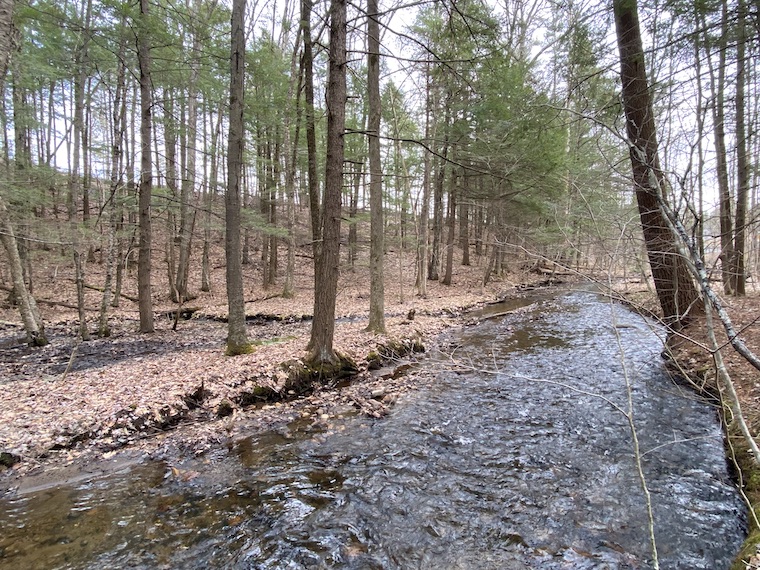
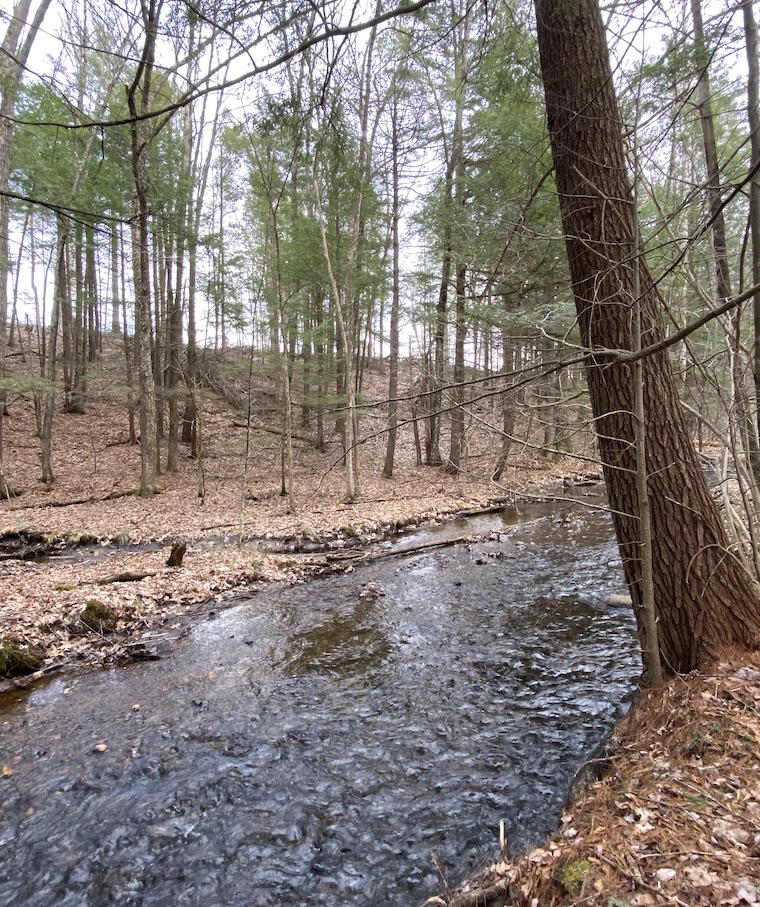
Arriving to the dinner destination earlier than our time of reservation, I drove past the restaurant and turned off  the main road as the car behind me impatiently passed. Down a road hidden from the main drag by an outcropping of rocks and a thickly-grown forest of pine, I found a little space for the car. After parking there, I crossed over to the stream you see in the photos. I stepped carefully down a small but steep bank where the top points of daylilies were just jutting through a blanket of brown leaves. Ahead of me, the water moved, and I heard a few tiny waterfalls lend their music to the quiet afternoon. 

It was still light out, which was still somewhat of a new sensation at that hour, and I paused beside this stream. For all my superficial trappings, and for all my perceived glamour, I am most at home and at ease in a scene like this, when I am completely alone in some natural space. It brings me back to boyhood, when I would traipse through the forests near our house for hours, back when a kid could do that and no one would worry whether he was still alive. 

On this day, I stood still , watching and listening to the water rushing by me. It was a moment of reverence and honor. Any wooded patch cut through by a stream often carries a sense of hushed solemnity to it. It was also, as brief and fleeting as it may have been, a moment of meditation, and I realized it then and there. Taking in a deep breath and letting it slowly out, I felt a gratitude for being in such a space. Within that singular moment, everything was as it should be, and I understood that I would take that feeling with me – that it would be a gift of the forest, in the way the forest has always given me peace

Continue reading ...

Sakura Sunday Meditation

If you need an ambient background for your meditation (silence is oppressive to some people) I would like to suggest this collection of Japanese flute melodies, accompanied by a harp. It put me in the mind of the cherry blossoms that I forced this week. They don’t bloom as big or as boisterously as when they come into their own naturally outside, but even the smaller and more delicate blooms are appreciated at this point. We are desperate for spring, and the sooner it arrives, the better. If that means a little nudging and coaxing, such as with these forced blooms, so be it

As another week gets underway, and Sunday can be seen as both an ending and a beginning, I lower myself onto the floor, cross my legs beneath me in lotus-fashion, and begin the daily meditation. May the calm and serenity I find here work its way well into the week, providing a sanctuary and repository of peace and tranquility when the work waters swell and the storm clouds gather. 

Creating such a space, and time and place, may feel fleeting and temporal at first, until you realize you can access it at those times that aren’t peaceful and calm. A few deep breaths, when practiced and collated with moments of serenity, can remind the body and the mind of what that feels like, recalling the memories of sanctuary like pleasant echoes of a sweet melody. 

“The most precious gift we can give anyone is our attention. When mindfulness embraces those we love, they will bloom like flowers.” ~ Thich Nhat Hanh

Continue reading ...

Purple & Pink Pause

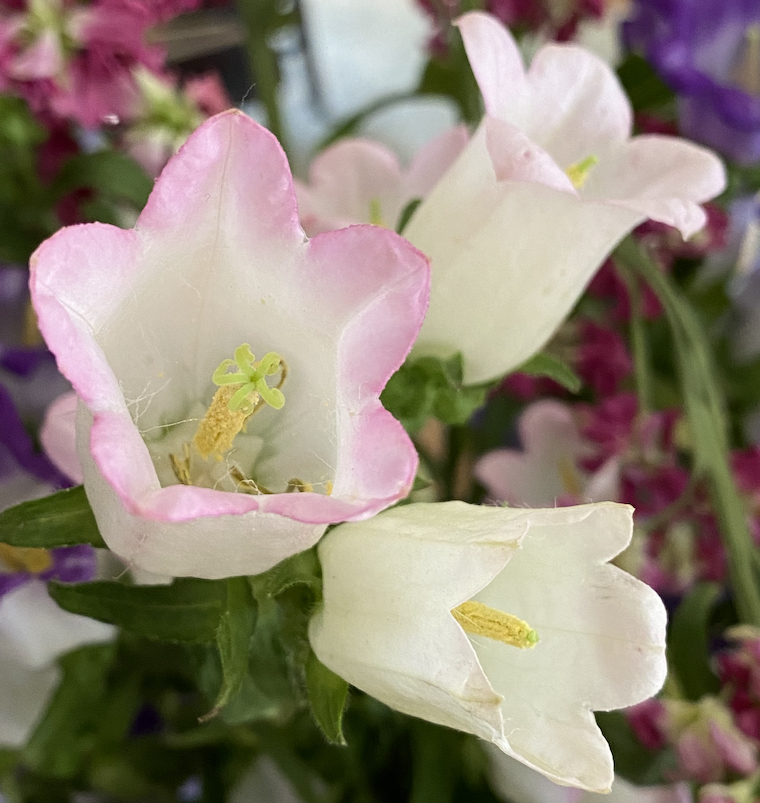
When I began my mindfulness journey, I started with Thich Nhat Hanh’s ‘The Miracle of Mindfulness’ and one of the first descriptions of the practice was found in the simple act of washing dishes. Granted, this was not a task in which I had any extensive practice or history, but over the past couple of years I’ve started washing the dishes I use when cooking. It’s all part of the process. ‘The Miracle of Mindfulness’ instructs on how to be present at each step, how to experience the sensation of  warm water and soap, the way the dishes feel, the way the sponge runs across their surface, the way the skin gradually wrinkles and softens. 

One of the main lessons of life is in how to fill the space of a day. Whether we realize it or not (and for many, many years I had no idea how powerful the pull to occupy one’s time could be – so intent was I in merely finding and then wasting free moments) much of a person’s daily goal is to simply fill our day with something of service. For many, myself most definitely included, that is service to self – but I’m not here to judge or condemn one sort of service in comparison to another. Comparison is still the thief of joy

Instead, I have begun to understand the human need to fill the mind, and often the body, with tasks and duties and things that merely take up space. Before I realized that such space might be better served in meditating or being mindful, I filled it with the usual stuff of fantasy and dreams, and all the daily bothers that comprise adulthood – worry and doubt and fear. As the decades went by, those stresses and worries became the normal part of a day, always there in the mind, always creeping into moments of joy and release. That meant I had to learn how to push the worry and concerns and stresses to the side, and the best way to make this happen is through mindfulness. Inhabiting the moment and the present space as fully and encompassing as possible. 

Which brings us back to the kitchen sink, where last we left off feeling the wrinkled skin of our fingers against the wet dishes, now piled on a towel and waiting to be dried. In that act, a fresh towel, slightly tattered but all the more soft from it, warms and dries the hands, then the round smooth curve of each plate, then the tricky interior of a coffee mug handle. Each piece is laid gently back in its place, as the breath steadies and slows, and the worries and thoughts that would otherwise occupy the mind drift away, replaced by the appreciation and realization of everything at hand. That clutter of the mind – the hoard of ill-thoughts and worrisome ideas – suddenly feels diminished.

It’s not a permanent fix, and soon those concerns come creeping back. Some of them will be genuine ones in need of addressing – a scheduled meeting, a load of laundry, a phone cal to one’s parents – and some will seem suddenly unnecessary. Mindfulness helps to sort them out. 

Continue reading ...

The Simple Things

When the world has gone mad – and by all indications it has – it’s a good time to go quiet and focus on what is immediately at hand. It’s a form of mindfulness that, for me, puts the present moment (and whatever small task or action you are doing) into your brain, thus eliminating the empty space that worry and stress and doubt might otherwise occupy. In this manner, mindfulness can become a constant form of meditation throughout the day.

A couple of days ago, I set my evening focus on the pictured dish of linguini with red clam sauce, which Andy had lovingly made for a Friday in Lent. I thought of the care and preparation that went into it, the way he increased the recipe so as to send a batch to my parents, the repeated tasting he did to make sure it was progressing as it should (I always forget to taste what I’m making, which is basic Cooking 101 and why I’ve never truly excelled at it), and the delicate way he draped the pasta onto the plate so I could get a photo of it for this very post. 

From there, I focused on the visual feast before me – all delectable scarlet against cream with accents of fresh green, all backed by a plate of Robin’s egg blue. Watching the gentle ribbons of steam unfurl upward, and noticing the chip that seems to now be part of every plate we own, I took it all in, without judgment or annoyance (even the chip) before moving onto the scent. One eats using all the senses, and scent is one of my favorites. The earthen wheat-based coziness of the linguini melded with the spicy tomato into a familiar cocktail called dinner, and I paused, as much to appreciate the fragrance as to let it cool. A side of garlic bread completed the culinary cologne – all these gourmand fragrances coming out lately are no accident. 

Finally, there was the indulgence of eating – the way the fork felt in my hand, the way the plate was warm to the touch, the way the pasta wound around the fork – and finally the way it tickled my tongue, gave way between my teeth, and traveled into my stomach. All the magnificent taste sensations, all in the most mundane actions for human survival. The simple act of eating dinner, when performed mindfully, can be a soul-enriching experience, offering moments of gratitude and appreciation, and occupying the mind with the goodness of what’s presently happening. Does it make the reality of the world go away? Not at all. Soon enough, the news cycle re-entered consciousness, the social media nonsense continued its endless scroll, and the concerns of elderly parents re-emerged, but the mind was slightly more at ease, and a little more equipped to handle them.

That said, I won’t pretend I’m always this mindful, as much as it’s a goal. Take this chocolate chip cookie from Stacks Coffeehouse in downtown Albany. The other day I popped in for a quick lunch break and just scarfed it down, without being the least bit mindful. I was hungry, and it was sweet. End of story. 

Continue reading ...

The Week Ends?

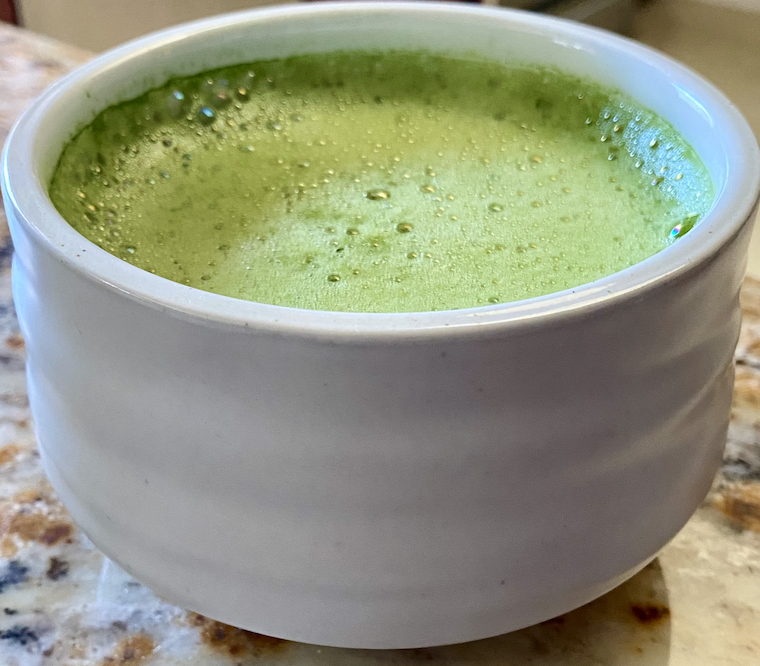
Does the week end tonight or tomorrow night? Or, in the words of Dame Maggie Smith’s Downton Dowager, “What is a weekend?” Regardless of when, precisely, it happens, let it happen easily and uneventfully, because in these last weeks of winter my mind and countenance are frazzled and fretful. Enter this hot cup of matcha, which has been my morning go-to these past few days, in an effort to jolt some inspiration, or at the very least the energy required to make it through the damn duration. When work and daily responsibilities heap worry upon wear, the best thing to do is retreat to your quiet place. 

The saving grace throughout this winter has been my meditation practice, which is back up to about 20 minutes per day, and I’ve insisted on doing it on a daily basis since the start of the year. After a couple of months, the differences are more and more profound, which is the whole point of meditating, and why it only gets better the longer one works at it. 

Does this mean the highlight of my Saturday night is a 20 minute meditation session

Absolutely. And I am in no way sorry that it should be so. 

Happy Saturday Night, everybody! Go crazy.

Continue reading ...

While the Wind Rages

“My first big insight came when I realized that my reactions to these experiences were causing me more pain than the experience itself.” – Matthew Sockolov

Let’s begin this work week with a scene from the start of the recent weekend. Thinking back to a hopeful and exciting Friday morning on a Monday has usually been a source of annoyance and agitation. Withdrawal from relaxation and fun during a mundane start of the week has never been a favorite mindset. But lending such negative feelings to what is past and done takes away from the memory of good weekends, while also serving to depress and upset what could otherwise be a perfectly sunny Monday. 

And so it was this past Friday, when I woke to head out to Boston for the weekend, on which I decided to set a new intention. The day was sunny – and windy – and the living room was illuminated by the sun as well as its reflection off the snow, unmitigated by leafy canopies as the branches were bare. It made for the brightest this room gets – a lovely anomaly during what is typically a darker part of the year. As the wind raged outside, I sat down and lit a stick of Palo Santo, watching its flames almost disappear into the light, then studying the curling tendrils of smoke once the flame went out. 

The wind was almost thunderous in its power and might, churning and moaning like a restless ocean. We don’t get such wind, even in the winter, and it was a reminder of nature’s magnificence. Listening to the ebb and flow of its drone, knowing that what I was hearing was already muted and blunted, and the actual force much stronger were I to open the door, there was a strange sense of calm and peace. The sun’s strength undulates as well, with passing clouds moving swiftly across the sky, changing the light in the room in gentle waves. 

When a series of strong wind gusts rolls over the house, I hear the cracks and clicks of the trees, and the cracks and clicks of our home, all standing in brave defiance of the wind, in defiance of the winter, as if we could hold it off forever, as if we won’t one day be leveled by it all. But that doesn’t scare me, because there is no point in being scared of what may come. The best and surest way to get through life is to do it one moment at a time. On this morning, there is sun shining through the wind, there is the promise of a weekend away, and there is a meditation playing out with slow breaths in and out. 

“Mindfulness is simply being aware of what is happening right now without wishing it were different; enjoying the pleasant without holding on when it changes (which it will); being with the unpleasant without fearing it will always be this way (which it won’t).” – Matthew Sockolov

Continue reading ...

Bare of Branch, Rich of Sky

“I prefer winter and fall, when you feel the bone structure of the landscape—the loneliness of it, the dead feeling of winter. Something waits beneath it, the whole story doesn’t show.” ~ Andrew Wyeth

A standard winter scene – bare branches against a subdued blue sky – makes for an ideal pausing point for a Sunday meditation, or a few moments of mindfulness. Rather than clutter this space with words and my own take on mindfulness, I’m leaving it mostly empty and sparse, allowing for your own interpretation of the above quote, for your own story and thoughts to flow and be released. We are too afraid of quiet and an expanse of space

Continue reading ...

Mindfulness Amid the Mundane

The post-shower towel shot serves several purposes. First and foremost is the clickbait aspect that typically gains more viewers when anyone takes their clothes off. Second, there is the bait and switch aspect for which this site should be better known. A post fronted by gratuitous nudity that ends up being about meditation and mindfulness is one of those twists that keep me interested in this nineteen-year-old website. Third, taking a shower is a mundane everyday moment that is ripe for mindfulness, so these photos go along with that idea, and give me a chance to expound upon a beginning practice in meditation and mindfulness, which some friends and family have asked about. 

I’ve been making my way through Matthew Sockolov’s ‘Practicing Mindfulness’ book, a collection of ’75 Essential Meditations to Reduce Stress, Improve Mental Health, and Find Peace in the Everyday.’ The most recent meditation I tried is ideal for anyone looking to begin a meditation practice, and I wish I’d happened upon it sooner in my journey. It’s about resting the mind, which seems to be the most difficult part of meditation for almost everyone I’ve talked to about this.

Sockolov recommends this easy ten-minute practice as a way to calm the thoughts that invariably creep into our heads as soon as we stop moving and sit still. In today’s world where information and distractions are thrown at us non-stop from the moment we wake to the moment we fall asleep with our phones in our hands, still mindlessly scrolling like automatons, this is especially challenging to do. We are conditioned to be in a state of constant stimulation, and that is wreaking havoc on multiple levels. The best and easiest way to break this cycle, and the addiction of the phone, is to step away from it, and insist on carving out time and space for simply sitting still in silence. Not the most comfortable place for anyone to be anymore, but if you give it a chance you may find the rest of your life begins to calm down too. It worked for me. 

Begin by finding the time and place to do this. If you are one who worries about time (like my Virgo self), set a phone alarm for five or ten minutes so you’re not constantly looking at the minutes passing by. Find a quiet place of solitude, even if it’s just a bathroom to escape. Ideally you have somewhere better to go where you can be comfortable. The practice is to sit or lie down and begin deep breathing. One slow breath in and one slow breath out. Then again. And again. 

Once you are doing this, you will find a number of thoughts start creeping into your head. What you are making for dinner, what time you need to pick the kids up from practice, what you need to get from the store, what outfit to wear for next weekend’s get-together, who you need to call back, who you don’t want to text back – a myriad of life’s nonsense will suddenly impede on this moment, and that’s ok. Allow the thoughts to come, acknowledge them, and let them pass by. Eventually they will stop. If they don’t, it’s good to find something else to focus on to maintain the quiet posture. Sockolov advises on holding a couple of phrases in your head: 

May my mind be at ease.

May I be at ease with my mind.

On each slow inhale, you can focus on the mantra ‘May my mind be at ease’ and on each slow exhale repeat it again ‘May my mind be at ease.’ On the next inhale think of the next one ‘May I be at ease with my mind’ and doing the same on the exhale. It provides a basic framework and focus that may help in pushing other thoughts from the mind, and achieving that divine blank space in your head is the purpose here. When worrisome thoughts are eradicated, it’s difficult to worry. This magic is something I wish I had discovered earlier, because it bleeds into the rest of life. 

If you can manage five to ten minutes of this each day, you will find it easy to increase by a minute or two until you’re getting in a good fifteen to twenty minutes of meditation, and that’s when things get even better. It allows you to be more fully present, and leads into the practice of mindfulness, inhabiting the most mundane moments of the day, such as a simple shower, or the act of getting dressed. These things are typically rushed and blown through without thought, other than worrying about what comes next. By being present to the task at hand, you may find a joy in the process itself, and focusing on each step of a task is another way of pushing worrisome thoughts from your headspace. 

{Naked selfies not required in a shower situation; I’m only here to illustrate and illuminate.}

Continue reading ...

An Expanse of Snow for the Mind

One of the things that prevents many people from meditating is their perceived inability to sit still and quiet their mind. It’s completely understandable, given the nature of this fast-paced world and how we have been trained to expect stimulation at all times. It’s not easy to turn off the mind, especially in the middle of the day. If it’s helpful to meditate first thing in the morning or last thing at night, that’s certainly a good plan. The other technique I’ve found when thoughts impede on my meditation is to focus on a series of images or ideas. In this case, a fall of snow. 

An apt idea, as some of us have had more than a brush with winter storms. So take the image of a snowstorm as it nears its end, and the last few snowflakes are falling to the ground. Or better yet, think of a day when there’s a brief snow squall, and then it stops, as if it hadn’t been snowing at all. In those last moments, picture the snow gradually clearing from the sky, the distracting pings of frozen water landing softly on the ground and leaving an airy stillness in their wake, a wide expanse of clarity and clearness. 

If you can, think of your thoughts the same way – they may flurry, they may fluster, they may rage – but eventually they should slow and subside, like the snowflakes. And if it doesn’t happen today, try again tomorrow. Every snowstorm comes to an end, and eventually even winter will limp away. Spring and summer will come again, and the snow will stop; the same can hold true for your worries and concerns. That’s when the beauty of meditation begins. 

Continue reading ...

Winter Meditation Pause

We wait here and take in a deep breath – all the way in, expanding the stomach and the lungs and the chest, letting the breath push into every last available space before slowly letting it out again – and in the span of this breath we acknowledge the wonder of winter. Almost halfway through the last full month of the sleepy season, mid-February doesn’t always feel like spring is around the corner, but it’s actually not that far off. 

On this day, I find solace in my daily meditation, to which I’ve incorporated one of the activities in Mathew Sockolov’s somewhat-cumbersomely-titled ‘Practicing Mindfulness: 75 Essential Meditations to Reduce Stress, Improve Mental Health, and Find Peace in the Everyday‘. Currently I’m on #14: ‘Energizing the Mind’ – no comment from the peanut gallery, or any gallery for that matter. I’ve been doing one per day, so by the time I reach #75 we will be well into April, which should be a very happy place to be. 

Even in these socially-isolated times, it’s difficult for some of us to find the quiet in a day. Family obligations and care, work and living-space maintenance, and the mere machinations of an average day make true peace and calm feel like an unattainable state, but it’s not. It simply requires the effort to carve out the space of time for it. Designating ten to fifteen minutes somewhere in a day is not as tough as most of us pretend it is, and it is in this little quarter of an hour in which life can transform.

It didn’t happen on the first day that I meditated – and it didn’t happen on the tenth. I can’t even say it happened on the hundredth day, but on all the days in-between and since, that little sliver of calm grew into a more stable and contented frame of mind that I carried with me throughout the intervening times. That’s the real secret and power of meditation – the way it subtly raises the level and peace and calm that is in all the in-between moments – and those moments form the bulk of our lives. 

Continue reading ...