Category Archives: Gardening

Amid Rain, Spring Begins Again

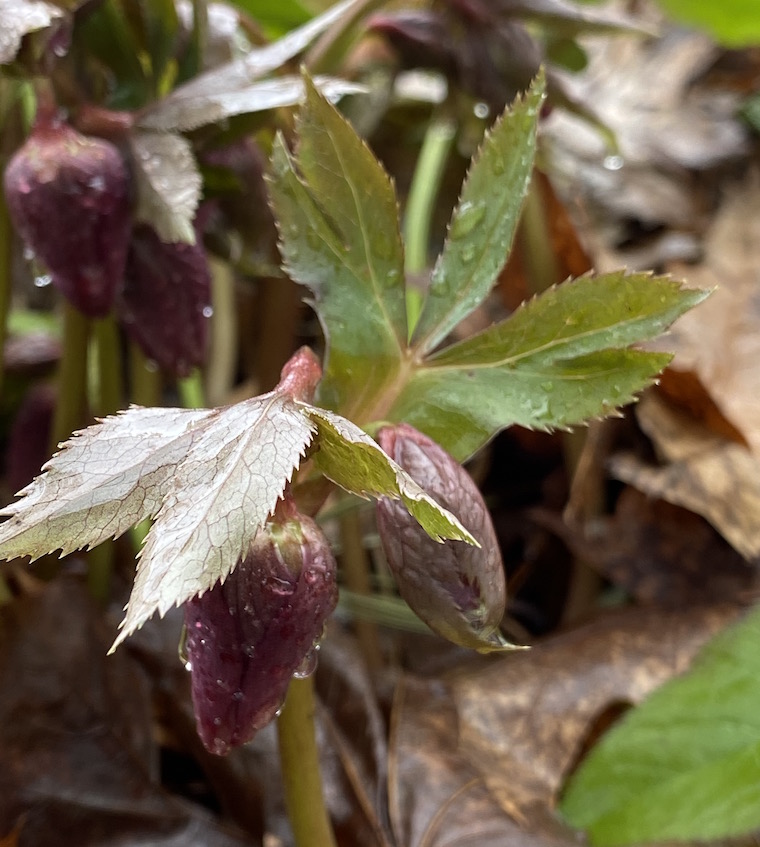
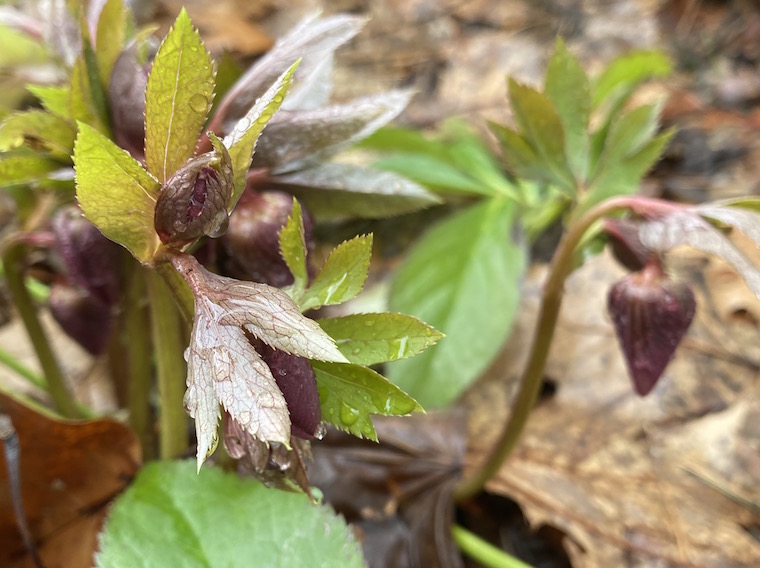
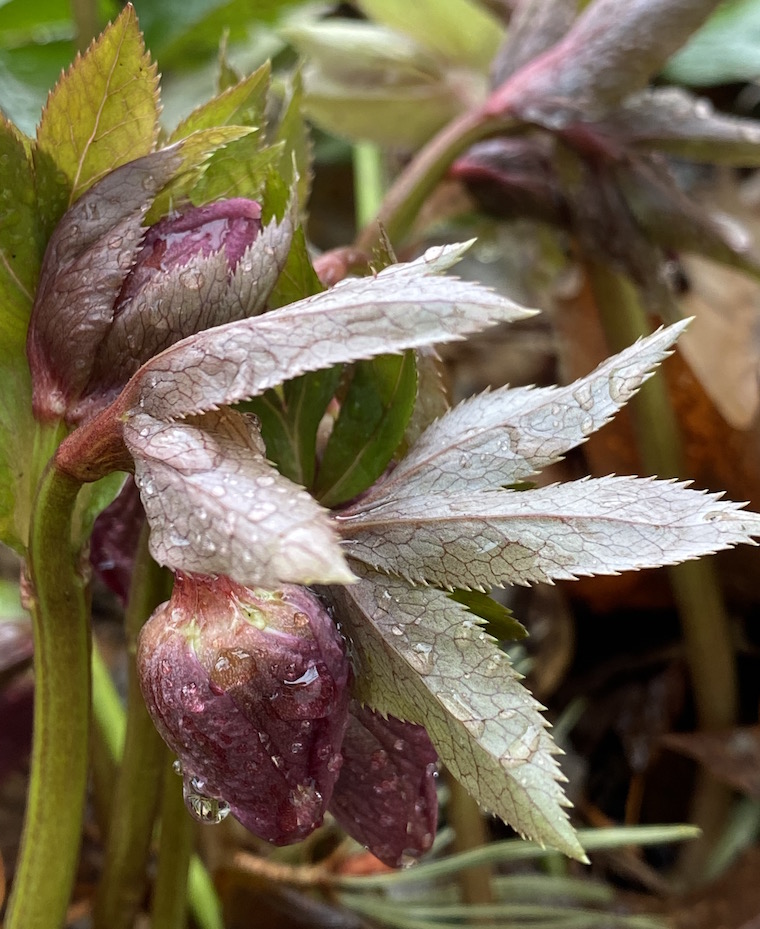
My eyes had been watching the Lenten rose outside our bedroom window for a few weeks now – ever since the snow melted actually. It’s trampled mound of evergreen foliage had remained a vibrant green throughout the winter, and was the only spot of color for quite some time. New growth would emerge in a reddish-tinged maroon color that matched the flower color, before slowly turning green. I was watching the oak leaves that covered the plant for signed of movement, hinting at life beneath, but it took a day of rain to push them completely to the side. 

This is how our garden wakes each spring – fed from the rain and ignited by the warmer days – yet every year it thrills as if happening for the very first time. The doldrums of winter can harden the warmest hearts. 

As much as many hate the rain, and it’s admittedly not my favorite weather event, it’s still a vital part of the life-cycle of the garden – a regular requirement for things to grow. At this time of the year, it jump-starts the appearance of these flower buds, promising nourishment and sustenance – promising the end of a barren winter. 

Continue reading ...

The Witch’s Spring Finery

This red variety of Witch Hazel has always proved more elusive than its yellow sibling, and both are extremely welcome at this desperate time of the year. Maybe it’s just as common, and I simply don’t notice it as much for its darker color, the way more subtle things blend into the background, while something as loud as yellow simply screams for attention, especially beneath a sun and against a blue sky. 

One of the very first harbingers of spring, Witch Hazel usually blooms before winter is properly done, and I love it for such daring audacity. Not even the crocus or snowdrops are out yet, but a little snow won’t stop a Witch from showing off. 

Continue reading ...

Deflated Winter

Don’t get me wrong – despite the tease of spring-like temperature we had this week, winter is far from over. Her worst bite usually comes at the very end – and sometimes beyond – as she lashes out with snowstorms and ice and wind and freezing temps that are better-suited to January. Winter is harsh that way, and some years she simply won’t go away without some interring talk-back. 

In the end, though, she will lose. Spring will return – however brief or boisterous or beautiful – and then summer will be on her heels. It will be as if winter never was. For now, as the snow melts around the plants that were felled in the fall, we see some of winter’s destruction, and some of summer’s invincibility. These carcasses of tomatoes that lingered into the fall have somehow survived more or less intact, and likely hold viable seeds beneath their withered skin. These particular varieties proved temperamental, so we will probably fill their former pots with the cherry tomatoes that performed such powerhouse feats of fruition. Successful gardening depends on adapting and listening to the stories that the plants share. Every year there are new lessons to learn, and new tales to hear told. 

Continue reading ...

Roses of Winter and Lent

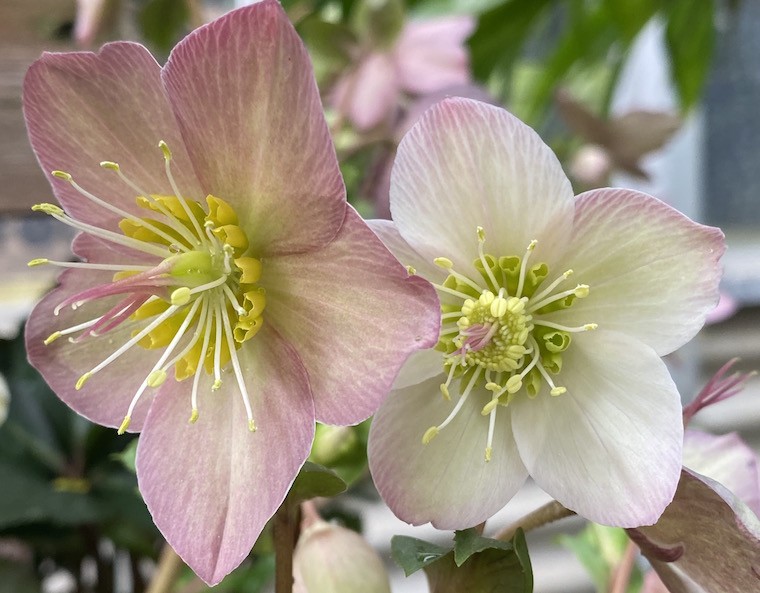
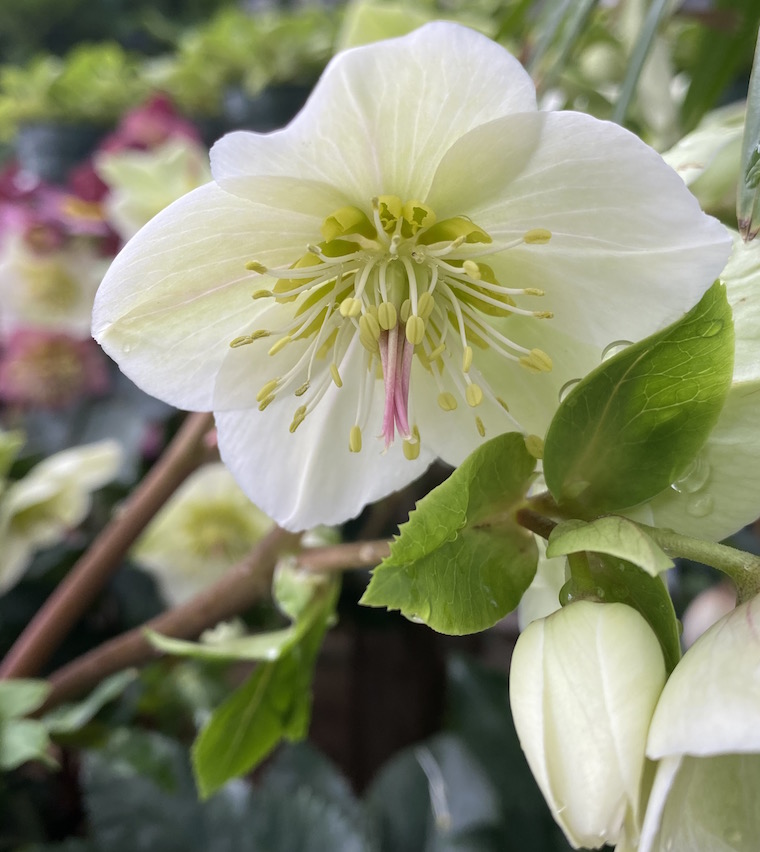
These beauties showed up at my weekly visit to Faddegon’s, and I was reminded that I need to plant more of them outside. This is the Lenten rose; one of the first bloomers in the perennial border, they also have handsome and stalwart foliage that lasts and maintains its beauty throughout the entire season. In milder winters, some of it remains evergreen. We don’t have many mild winters in these parts, so by spring much of their evergreen tendencies have been worn to tattered and torn bits. I find it better to clip those off entirely so the plant can focus all its energy into new growth. Such is the brutal way of the garden. 

Back when I first planted the lone specimen we have in the backyard, my preferences were for shades of bright pink, speckled or striped petals, and the usual circus-like atmosphere of color and spectacle I favored a couple of decades ago. Now I find myself more drawn to the cream and soft green blooms that the genus offers, and will look to put on in this coming season. I wish I’d gotten to it sooner – they take several years to settle in and bloom, especially if they’re young, or gone through some trauma (such as transplanting tends to inflict). Even in this unsteady world, it feels good to plan for the future, just a bit. 

Continue reading ...

Stargazing Toward Summer

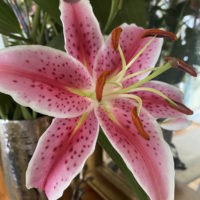
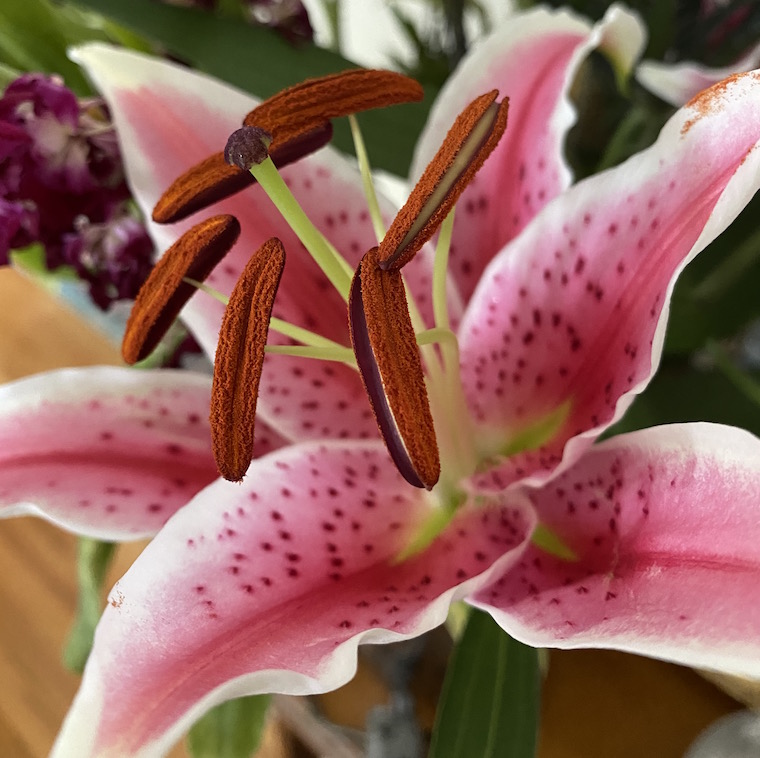
Without skipping over spring, that glorious season of renewed hope and rebirth, my heart has lately been pining for summer, so I picked up these Stargazer lilies to fill the living room with the scent of sunny days. They recall our first summer at our home, when I planted a few of these in the backyard, when I was just starting to fill in the space with plants and trees of our own. Back then, much of the yard was overrun with a tangled mass of pachysandra that just have been years in the making. They would take years of unmaking as well, and there are still patches of it that remain uneradicated. I’ve left it alone where nothing else will grow, but they are constantly on notice, encroaching as they do into the more refined and cultivated sections of the yard. Gardening requires such strictness. 

As for the Stargazer lily, they would last a few years, always a few more than expected, and I’d thrill at their buds and sweetly-perfumed flowers when they’d appear mid-summer, but eventually they would peter out, sending up only a stalk or two of foliage as other plants overtook their place. It may be time to put a few more in, and start the cycle of summer surprise again. 

Continue reading ...

Beneath the Buddha’s Tree

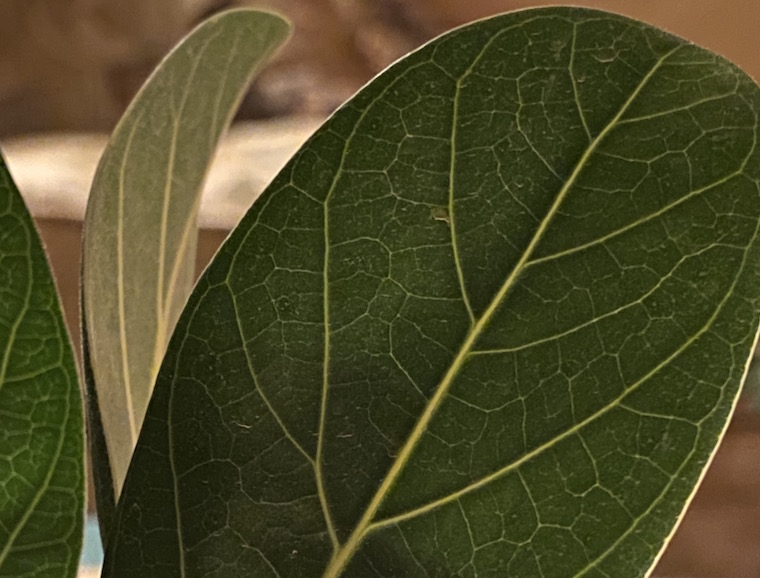
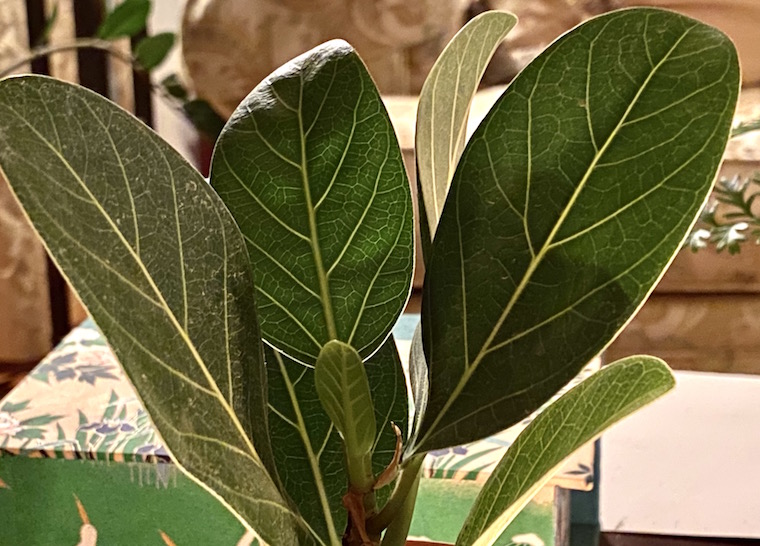
It is said that the Buddha meditated for 49 days beneath one of these trees, the Ficus benghalensis ‘Audrey’ after which He first attained enlightenment. Native to India, these trees grow to immense sizes in their natural habitat, sending down aerial roots and expanding their canopy into a veritable forest, providing much-needed shade, and apparently a perfect place for the Buddha to dwell and meditate. To this day, temples are built beneath many of these banyan trees – space which is viewed as sacred. I love that idea, and when I saw one of these little plants at the local nursery, I picked it up on a whim to be closer to such enlightenment.

“If you truly loved yourself, you could never hurt another.” ~ The Buddha

Reportedly, this plant is a good alternative to the more finicky Fiddle leaf fig, a plant whose moodiness is too frightening for me to attempt. I don’t have the expanse of bright indirect light and space for the ginormous Fiddle leaf trees, but this tiny little Audrey fig looks manageable. Smaller specimens generally are more amenable to change and adaptation for less than perfect indoor situations. I have a humidifier and some decent enough light by a bay window to at least give this little guy a chance.

He rests on the table beside which I do my daily meditation. Sitting in the lotus position, I can gaze with a soft focus on his handsome leaves, and feel some wondrous connection to nature, to the earth, to the Buddha, and the path on which I find myself makes a little more sense.

I don’t know if the common name (Ficus Audrey) came before or after ‘Little Shop of Horrors’ but I’m taking it as an auspicious sign that it may grow for me. If it ends up eating me alive, well, it was nice knowing you.

“It is better to conquer yourself than to win a thousand battles. Then the victory is yours. It cannot be taken from you.” ~ The Buddha

Continue reading ...

Sharing Country Flowers with Mom

When I was just twelve or thirteen years old, I became obsessed with the book ‘Country Flowers’ by Lee Bailey. For a boy at such an age to be consumed by a gardening book is a statement in and of itself, but I didn’t know or care about social constructs at that time, so my love of flowers and gardening and books about such topics was a pure and unmarred source of joy. Luckily for me, that never changed, and though I went through years where I didn’t exactly flaunt or announce how much I loved those things, my love never waned.

At that young age, I was also just learning how to write letters, and on a whim I decided to write Mr. Bailey a letter extending my appreciation for his book and how much it helped me. He was the one who taught me how Digitalis could make for an even more enchanting substitute for the more finicky Delphinium in a garden scheme. He taught me the vast differences in care required by the bearded iris versus the Japanese and Siberian iris. Above all else, he taught me about the grace to be found when one was wholly present in the garden. It was more than practical advice, and I have carried it with me ever since. So as I wrote out my letter by hand, staying within the lined sheet of a standard sheet of school paper, I allowed my feelings to carry forth on my words, unconsciously tying my love of gardening and flowers into a love for writing and correspondence. It all came out, and though I don’t recall exactly what I wrote, I felt confident that sharing it would be some sort of gift for a man who so inspired me.

In those days, circa the mid 1980’s, there was no internet or e-mail or cel phone. I knew he had a summer home in Bridgehampton, as referenced in ‘Country Flowers’ so I dialed up information using our rotary phone on the landline. Back then you could call information and they would give out people’s phone numbers. While on the phone, I asked if the operator could also give me the listed address. Another thing they did back in the day. It was just a street, but I jotted it quickly down on one of my Dad’s medical pads. I would find the zip code and mail it off, praying it found its way into his hands.

It must have done so, for in a few weeks I received a return letter from Mr. Bailey himself, writing how wonderful and rare it was for a boy of my age to already be so entranced by gardening. It was a jolt of inspiration and encouragement, and was probably an integral part of why I have kept gardening and writing close to my heart ever since. It came from a place of purity and shared-passion.  A place of kinship and understanding. A place of love.

And so it is in that spirit that I found a copy of ‘Country Flowers’ and will bestow it upon my Mom for her birthday tomorrow. (It’s just one part of her gift, so there are still surprises intact.) She’s been getting more into gardening over the past year or so, and this book was what would see me through the dark winter nights. I could pore over Bailey’s passages on jonquils alone for hours on end, and the dreamscapes of flowers and fields his words conveyed were as good as forcing a few narcissus bulbs. I’m hoping she finds the same joy and inspiration I found in it as a boy.

“One last thing: like most people, I wish I could more often be the person I sometimes am – and I am most often that person in the garden. So in many ways this book represents the best of me.” ~ Lee Bailey

Continue reading ...

Rugged, Relentless Beauty

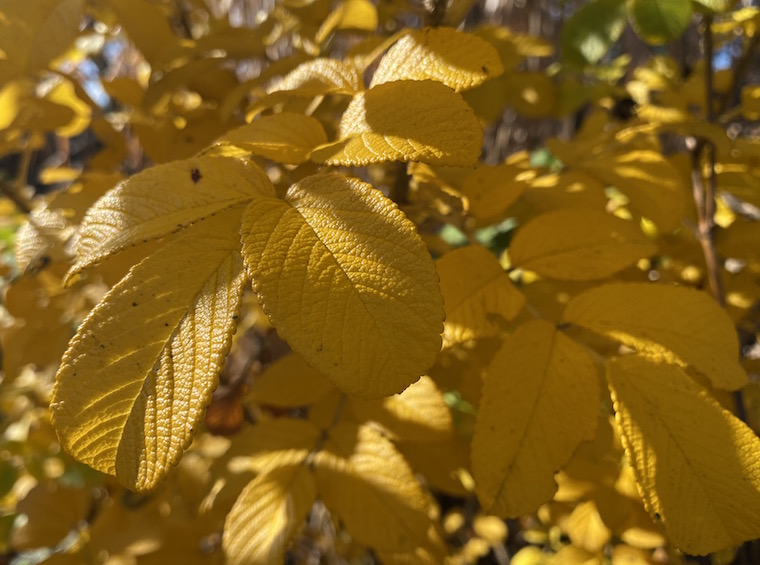
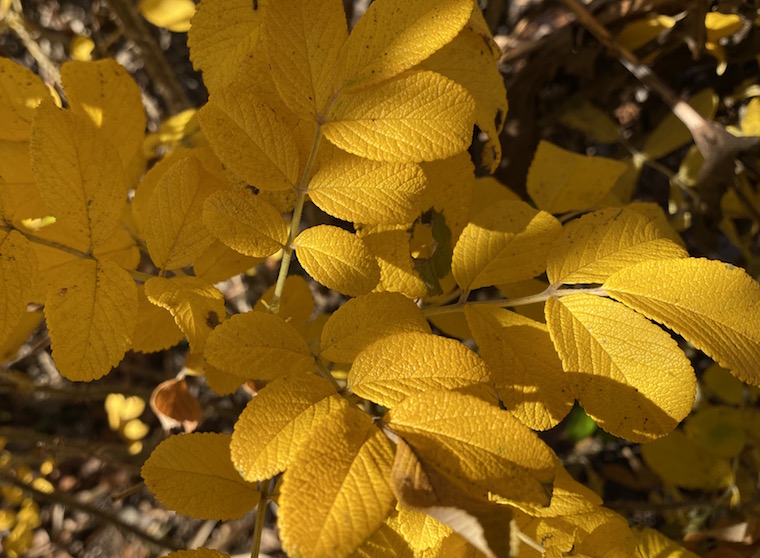
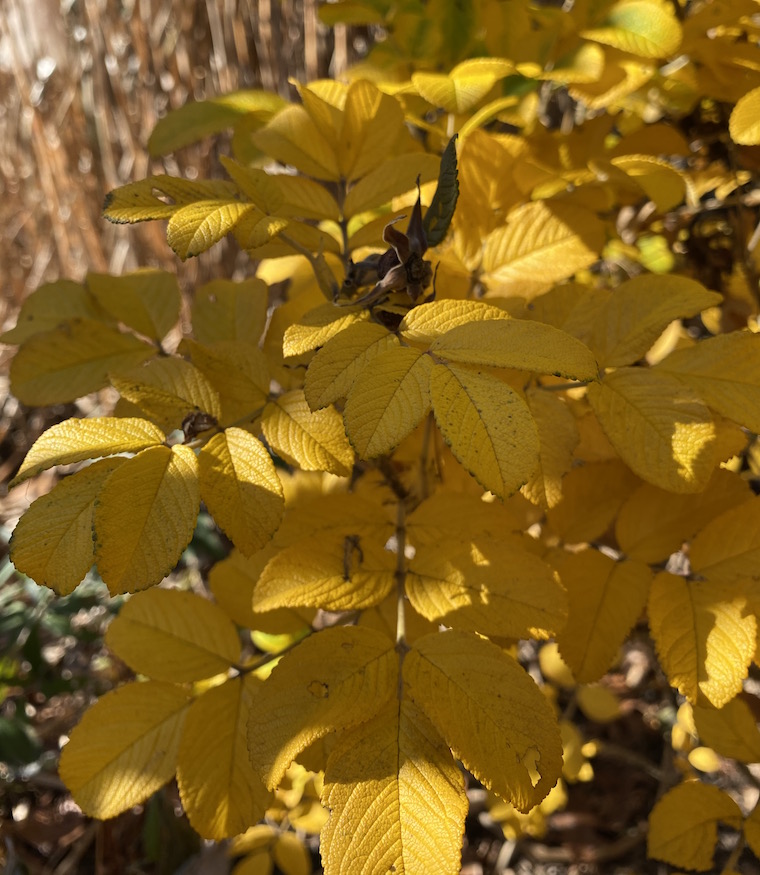
Rosa rugosa is one hardy garden performer. Any plant that can hold its own against salt spray and the ravages of coastal weather is inherently rugged, but that doesn’t always translate into a garden situation. It also means that if not pruned or properly cared for, it can grow a little rough around the edges. Thankfully, I have one specimen by our poola substitute of solace for not being able to make it to Ogunquit in the past few years – and it has reliably bloomed and produced a healthy fountain of foliage each season. 

This plant has at least four seasons of splendor in it – the first flush of fresh and bright green foliage, the main summer show of pink, sweetly-perfumed rose blooms, the small persimmon-like fruits of late summer, and the spectacular golden fireworks exploding right now. 

That’s a powerhouse performer, and more than makes up for its thornier aspects (it would seem that no other rose has as many barbs on a single stem). I like a plant that’s a little prickly; I can totally relate. 

Continue reading ...

Missing the Glory of Morning

Having put the gardens to bed a while ago, and the pool to sleep just a few days ago, a surprise morning glory bloom (before the snowstorm and hard freeze we had) deigned to remind us of the not-so-distant past, yet it already feels so far away. Both Andy and I are entertaining a countdown until spring, and maybe it’s a little soon for that, but time is flying these days, and a chart of weeks for the next four to five months – something to bring us into March – may be the tonic to bring us a happy and surmountable schedule of anticipation. 

In one of the more dreary months of the calendar year, remembering summer mornings filled with these glorious blooms is one lovely way to past a gray day. Spring will come again. And summer will be right behind it. In the meantime, a trove of memories exists, here and in our minds, to bring a little bit of summer to every day. 

Continue reading ...

Lace Alighted

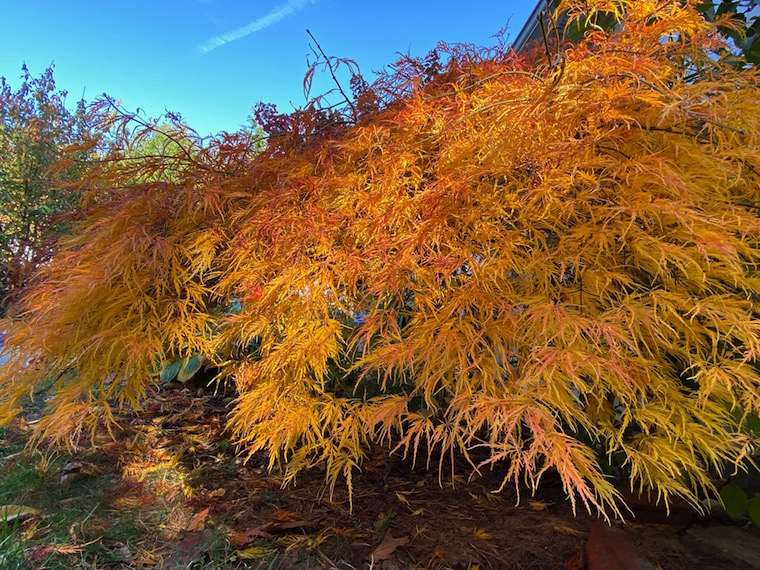
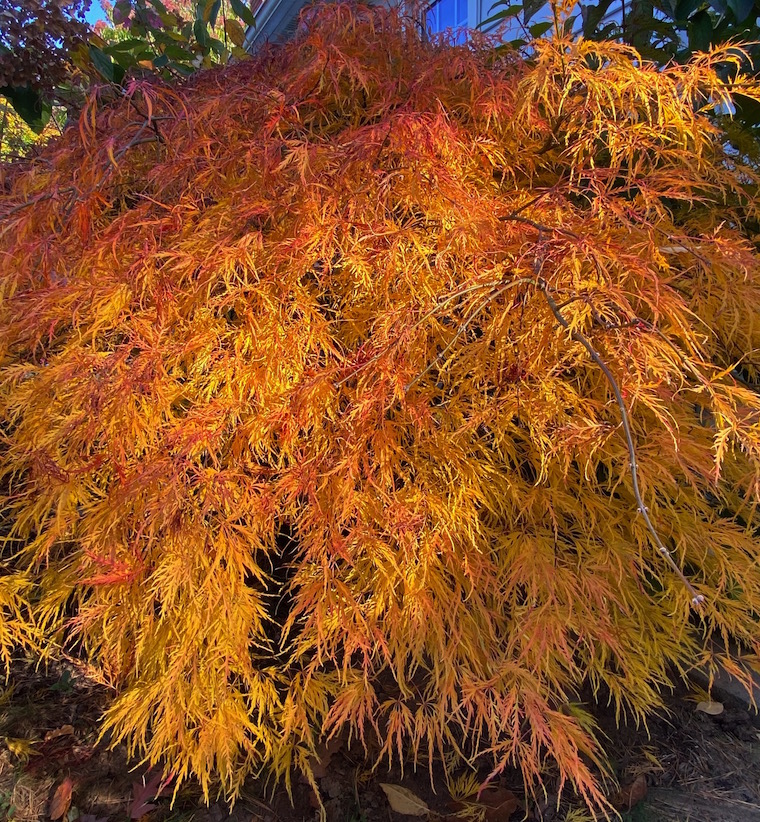
Not content to let the fall go out without a blaze of glory, this lovely lace-leafed Japanese maple set itself on gorgeous fire these past few days, illuminating its backyard space for a finale fit for a queen. This little tree is approaching two decades of reliable performance, a long time span over which it has slowly but steadily increased its spread and weeping beauty. It started off about two feet in circumference, and now extends its elegantly drooping branches a good ten feet beyond that.

It was a bargain buy at the end of a summer season sale at Hewitt’s, and it came in a tight burlap root sack that was cutting into its bark. I wasn’t sure it would survive, and for the first few years it didn’t do much in the way of top growth, but underneath the amended ground something was working. It began to gradually increase its width and the girth of its trunk, imperceptibly at first, and only in the past couple of years did I take true notice of its extensive expansion, and quite happily at that. There’s nothing quite like the loveliness of a plant finally finding comfort in its home.

Continue reading ...

Fall Ascendant

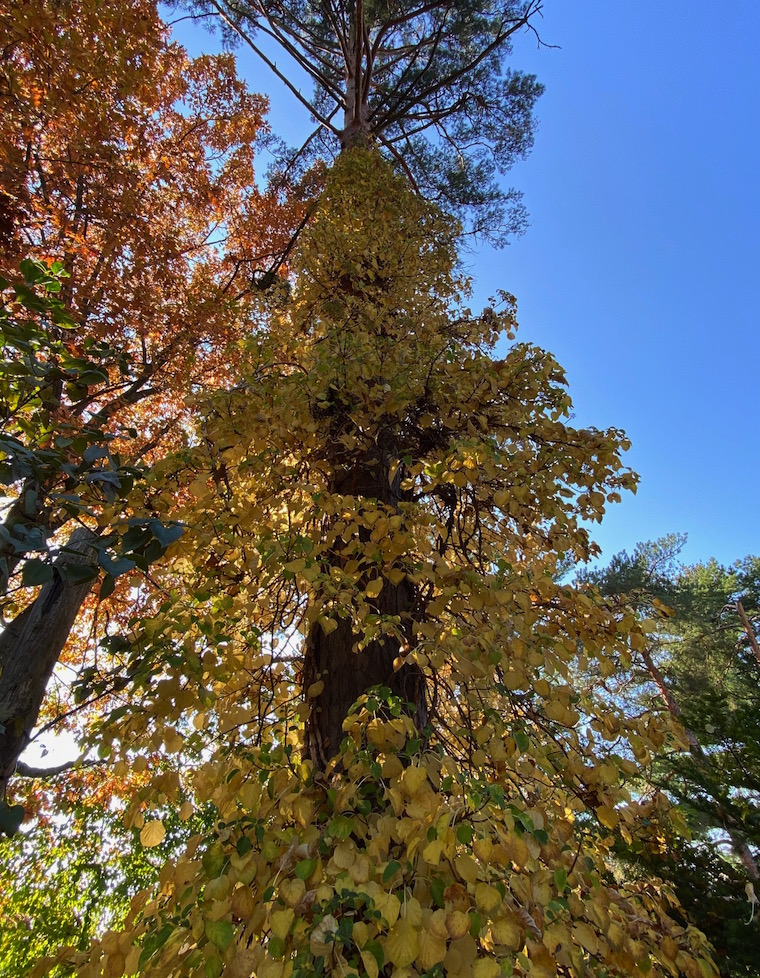
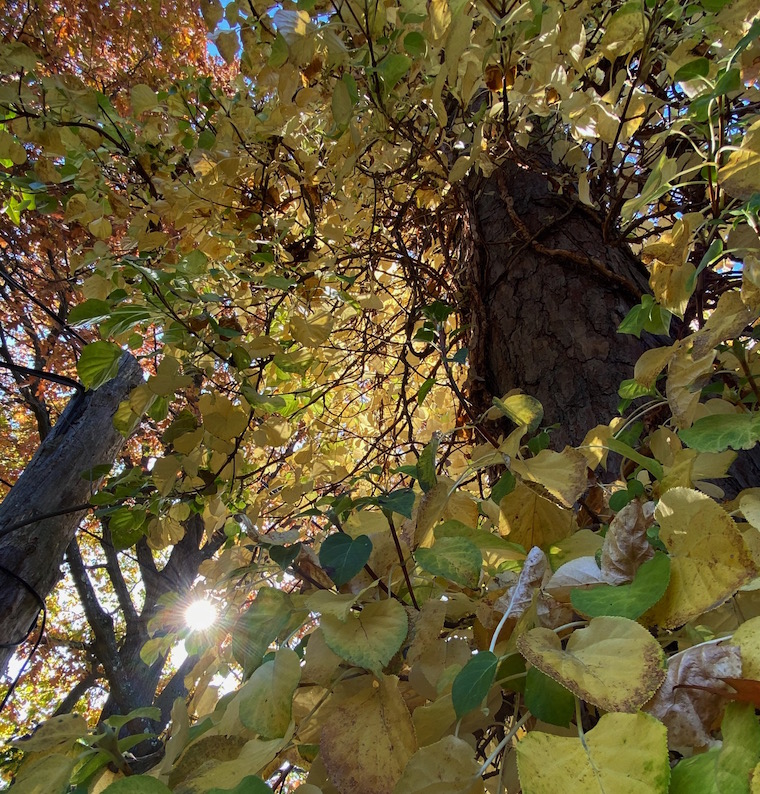
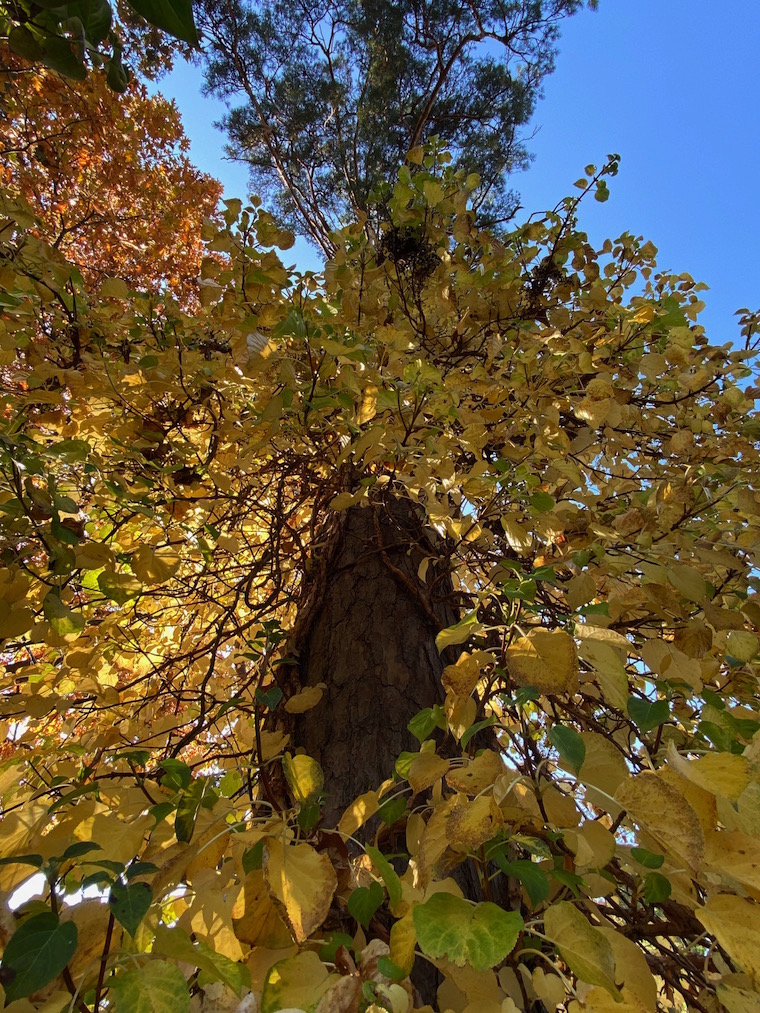
This climbing hydrangea usually claims its glory in late spring when it’s covered in lace-like umbrellas of sweetly-scented blooms. They sprinkle their lovely perfume about the backyard just as we are usually opening the pool – the most magical and hopeful time of the year. Their show lasts a good while, it not usually being too terribly hot at that point to quickly wilt and diminish the delicate blossoms – and then the handsome foliage remains lush and green for the duration of the summer. They will appreciate regular watering if conditions get hot and dry (there is such a long way for the water to travel, and the vines wind their way up a good forty feet). 

Happily, their show doesn’t end then – this one likes to go out in a column of fiery sunlight, golden yellow flames licking all the way up the length of its commingling with an ancient pine tree. When the afternoon sunlight pours through the bright foliage, it could be argued that this is a greater show than its late spring bloom. Fall has its powers too, and they are not to be underestimated. 

Some might say there is more magic and enchantment to be found in the unexpected beauty at hand this late in the season. I don’t have a strong argument against that, and it is always the present moment that seems to have the most pull. 

Continue reading ...

Painting With Light & Ferns

These beautiful Japanese painted ferns overcame their own 2020 horror story, as early on in the summer season some animal ate them down to the ground. As evidenced here, they recovered in a valiant, and gorgeous, show of defiance and resilience. The afternoon sun of October shows them off to great splendor, and is a reminder that somehow nature endures, no matter how much awfulness humans, and non-humans, may attempt to inflict.

The Japanese painted fern’s delicate beauty belies its hardiness. From a single small specimen planted several years ago, this clumps has expanded, notably by spores – popping up in damp unexpected places (such as around the pool pump) and I’ve managed to transplant them successfully. A couple now populate the side yard garden, lending an additional Japanese element to a space now planted with bamboo, Japanese aralia, and a Japanese maple. It is the peaceful portion of our yard, shaded from the hot afternoon sun, filled with subtle performers who express themselves in soft shades of green and architectural interest rather than boffo-blooms of hot pink or fiery orange. That sort of quiet and respite is necessary in the summer months.

Continue reading ...

Purple Glory

The flowers always come more vibrantly at this time of the year, as if sensing their limited time before a hard frost kills them off permanently. Such is the case with these volunteer morning glories. They’ve been self-seeding so prolifically and for so long that they’ve become a bit of a nuisance, so this year I pulled most of them out in part of the clearing and editing process that marked much of our garden efforts. I left a few vines to climb through the Korean lilac and Joe Pye Weed, and here are some of the results. 

For better or worse, morning glories remind me of the earliest bit of fall – that tense time when school is about to begin and we plunge into the routine of routine again, returning to schedules and time constraints that seemed so much more bearable under the sun of summer. This year fall looks a little different, and we are all still adjusting.

In the meantime, the morning glories are giving out one final show, reminding us that there is beauty in the world, even as we approach winter…

Continue reading ...

Saving a Bit of Summer Inside

This magnificent lace-leaf philodendron was a quick, unplanned purchase in late spring. After several less-than-stellar investments in this large pot (failed junipers, evergreens, and red-twigged dogwoods) I didn’t bother with anything other than a common home-improvement store specimen, which was only about a foot and a half tall.

Now it’s about three feet high and five to six feet wide after a successful summer on the sunny front porch, lots of water and plant food, and just a touch of love. I texted around and finally found someone willing to take it in before the first hard frost withers it to the ground. My pal Heath picked it up and will try to transition it into indoor life. I’m just thankful it has a chance. We don’t have the room or the light for it, and it’s too beautiful and doing too well to simply give up on it. 

It’s also rather valuable – I saw two philodendrons at Faddegon’s of roughly the same size and stature – one was $187 and the other was $247! That means this will double as Heath’s birthday present, whether he knows it or not. 

Continue reading ...

Blaring Perfume in the Night

While the daylight visage of these angel trumpet blooms is impressive, it’s their nighttime maneuvers that hold greater enchantment, as that is when their perfume comes out in full force, permeating the thick air of evening and intoxicating the entire backyard with their sweet fragrance. A single flower is powerful; taken en masse like they were this year, it’s a magnificently sensual experience. 

Traditionally, I’d be stressing out and sendup up all sorts of prayers and voodoo chants to make sure these flowered in tandem with whatever celebratory gatherings we were having in the summer. This year around that’s not even a concern, so I was free to enjoy the natural unfurling of their flowering glory. There’s a necessary lesson in that, and the peace of mind it produced will be remembered far beyond the insanity that is 2020. 

Continue reading ...