Category Archives: Gardening

Autumn in August

Though we have a few more days of August, the Sedum ‘Autumn Joy’ plants won’t hold their bloom, and as the cup plants have begun their decline, it’s a welcome arrival of new blossoms. They are just about on schedule, unlike the Seven Sons Flower tree, which has been in bud for weeks but hasn’t quite begun to spread its sweet perfume and bee-attracting pollen. But we aren’t going to hijack this joyful post with the waywardness of this season/year. 

Like the hosta and the hydrangea, the ubiquitousness of Sedum  ‘Autumn Joy’ – overused by far too many landscaping plans – had caused it to fall out of favor for a number of years. The three plants we had in our garden were ignored and almost abused. I didn’t tend to them with any manure or mulch, I didn’t divide or pamper, and to be honest I didn’t even bother to water them all that much. 

A couple of years ago, however, I noticed a Sedum that has seeded itself outside of our fenced-in pool area, growing in the wild section of the yard. Amused, I watched it intermittently over few years. It kept coming back, and getting larger, all without care, and as it evolved into a handsome plant all by its lonesome, I decided to reward it with a prominent place in the garden bed, with a deep amendment of manure, a thick layer of mulch, and a strong dose of full sunlight. 

This marks its second year in its new space, and it has settled in beautifully. More than that, it’s reminded me of the practically perfect form and behavior of the Sedum family, illuminating the three original plants in a new light. 

Continue reading ...

Blasting and Blaring into the Sky

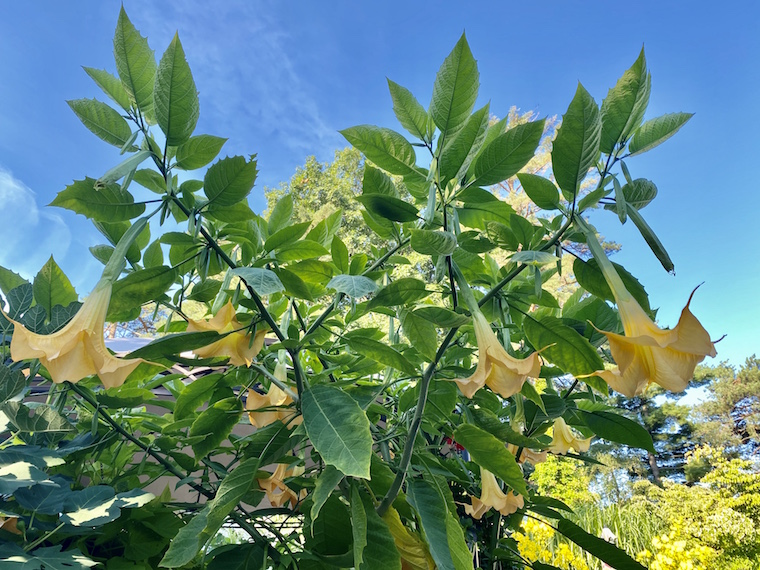
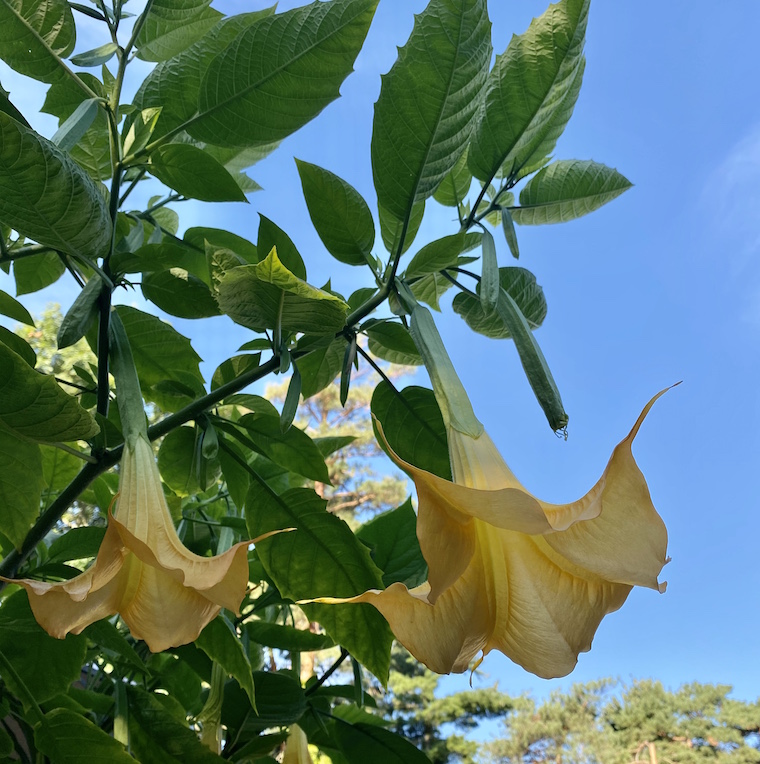
Notoriously difficult to photograph well, at least with my amateurish abilities, the beauty of the angel’s trumpet has never quite translated completely here. Coupled with its magnificent and potent fragrance, the majesty of these potted plants must be seen and experienced in person to do it true justice. 

Towering over all of our container plants – and the fig trees have definitely given it a run for its money – this Brugmansia specimen is only in its second year, but they grow so quickly in the heat and humidity we’ve had this summer that it exudes the stature of an elder plantsman. 

Its magic is most wondrous as night falls, and its flowers glow in the gloaming as they begin to emit a perfume that scents the entire yard, floating over the pool in enchanting fashion. It will linger into the first light of day, and if you get up early enough and tip-toe into the backyard, you can find the intoxicated bees still languidly buzzing about, drawn to its sweet aroma. 

Alluring and captivating, it casts a summer spell unrivaled by any of the other container plants we have growing. 

Continue reading ...

After-Storm Contemplation

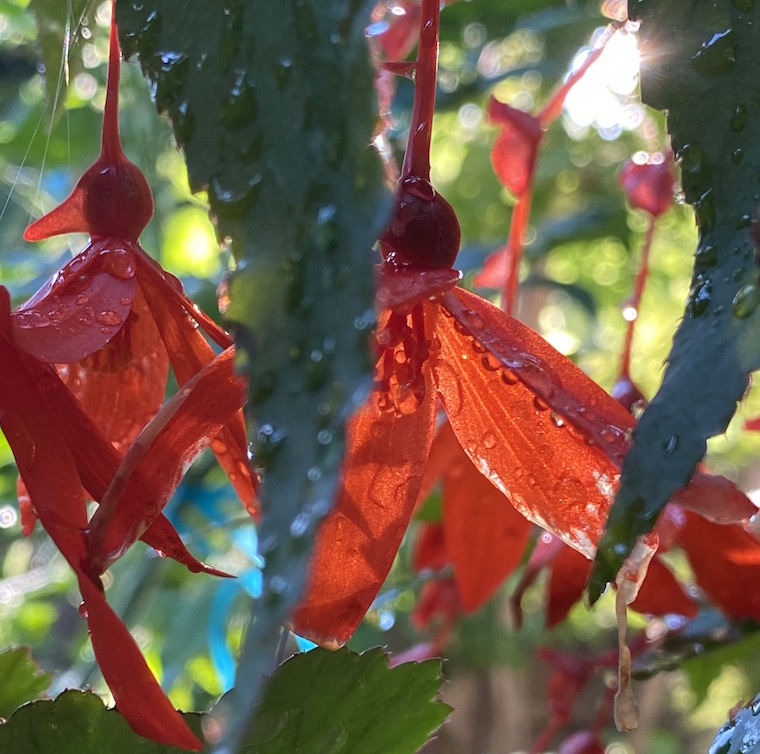
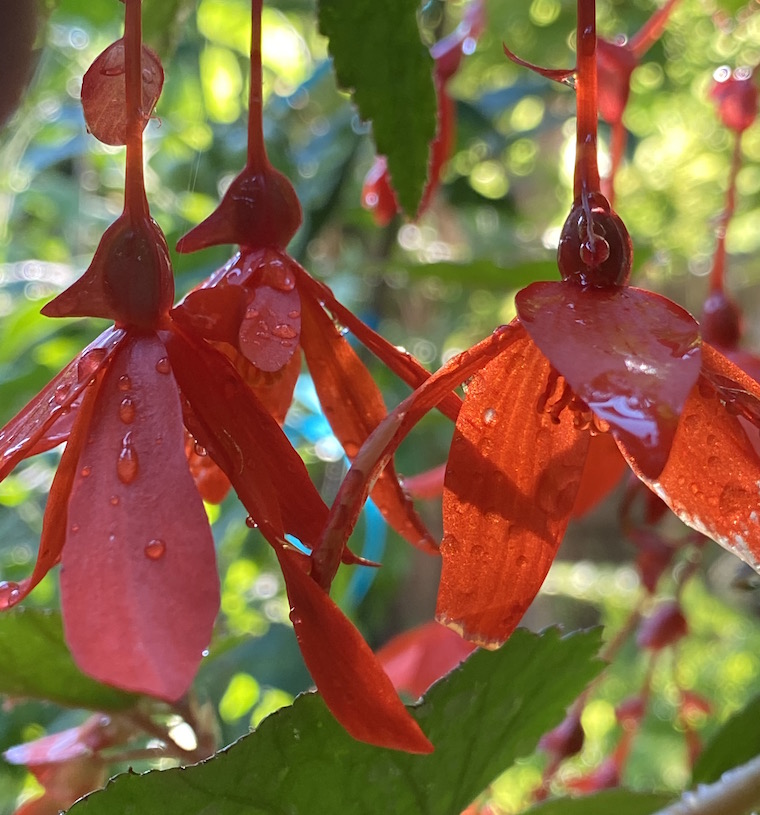
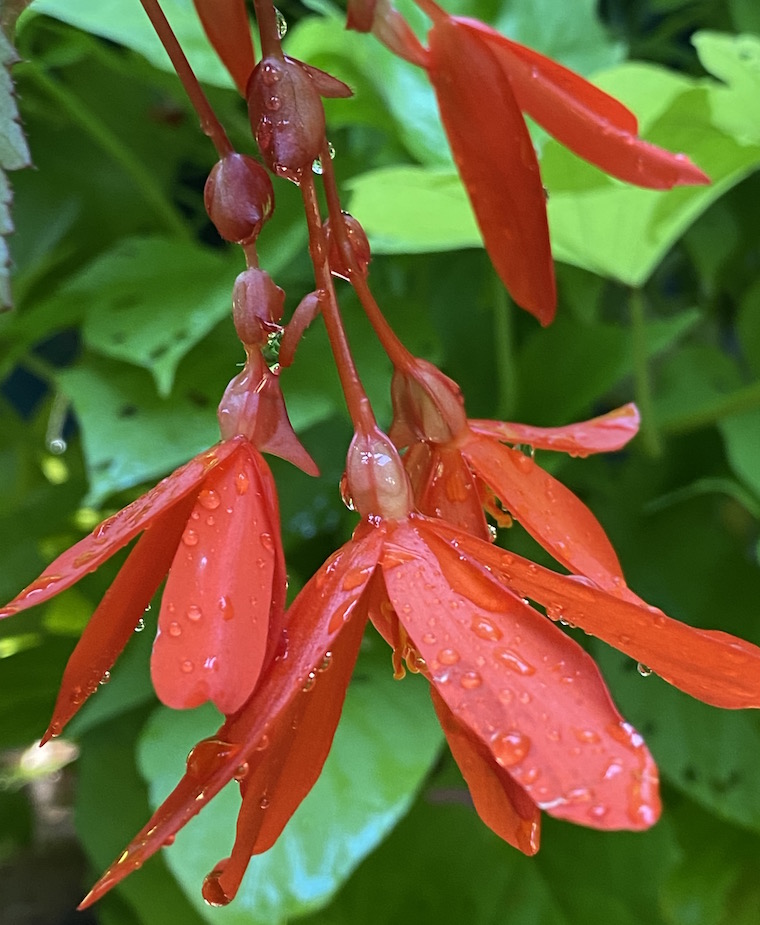
Many plants don’t like their leaves wet, especially if they’re the slightest bit furry or hairy. Cases in point include tomatoes, clematis, and the begonia seen in these pictures. When possible, I water only the soil around these beauties, to keep them happy. It’s generally a good rule for all plants, as wet leaves in the humid months can lead to mildew and mold, something that is currently afflicting all the peonies. Their otherwise-handsome foliage has been ravaged with powdery mildew, lending a gray, ashen appearance to them, and marring the entire garden. Such things are largely out of control, however, and one of the lessons of the garden is in letting go of that over which we have no say. Such as day-long tropical storm events.

There is just so much shielding one can do for plants in the path of a deluge of wind and rain. And in the natural world, they wouldn’t have a patio for protection anyway, so I try not to stress to much about that. A little rain, while certain plants may not like it on a regular basis, is always good for cleaning things up, getting dust and dirt off the leaves, and refreshing the landscape. 

It’s also pretty, especially when the sun first comes up after a day of gray and loneliness. The rain still clings to these dropping begonia blooms, as if they had to shed a few tears to get over everything. Some storm days are like a release. And then it comes time to dry the tears and get on with the summer. 

Continue reading ...

A Very Happy Hydrangea

I forget if I planted this tree hydrangea at my parents’ home or if I simply advised my Mom to plant one many years ago, but it has since come a long way and grown into the grand specimen seen here. If you have the space (they grow bigger than most people realize) and want a proven performer, check out some of the tree hydrangeas available now – there are a ton. There are also some smaller varieties, though eventually without pruning these all get larger than their more herbaceous cousins. 

They are also great for their blooming period – it comes later in the season and lasts even beyond fall, as the flower heads dry intact and form architectural interest for the winter garden. Don’t discount that in the giddy heat of summer – you will be starved for such echoes come next February and March. 

For now, enjoy the splendid display, and all the bees and butterflies fluttering about their blooms. Summer is high and summer is here. 

Continue reading ...

A Rebloom and a Reboot

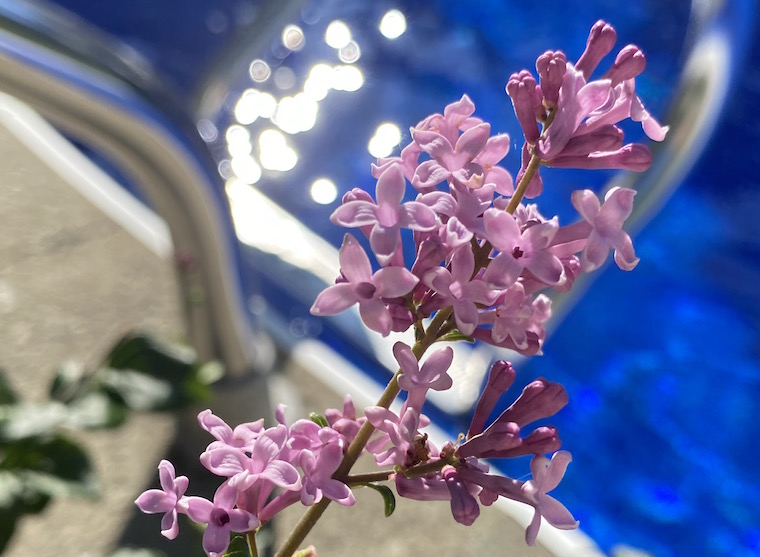
As if sensing that the world needed a summer reboot, our Korean lilac decided to throw off this bloom – something it originally did back in May and June. The pool wasn’t open then as it would have usually been, so we missed out on floating by their sweetly-perfumed mass. On the day this was taken, the first day our pool was open this year, I swam over to the bloom, hoisted myself up onto the deck, and brought this flower to my nose. May came flooding back, the hope of the summer season on the cusp and verge, not halfway finished like it is now, but rather than lament what has been, I sink back into the warm water and embrace what is. 

Rebooting a summer with a single lilac bloom seems like whimsical, ephemeral enchantment, the stuff of fairies and fables, and maybe that’s precisely the twist and turn of a key that will start the righting of our wayward world. A little pixie dust never hurt anything. A little magic and make-believe, if it works to wrest a wrong from taking hold, can start things anew. 

This summer needed that

This year needs that. 

Continue reading ...

Tomatoes Coming Into Fruition

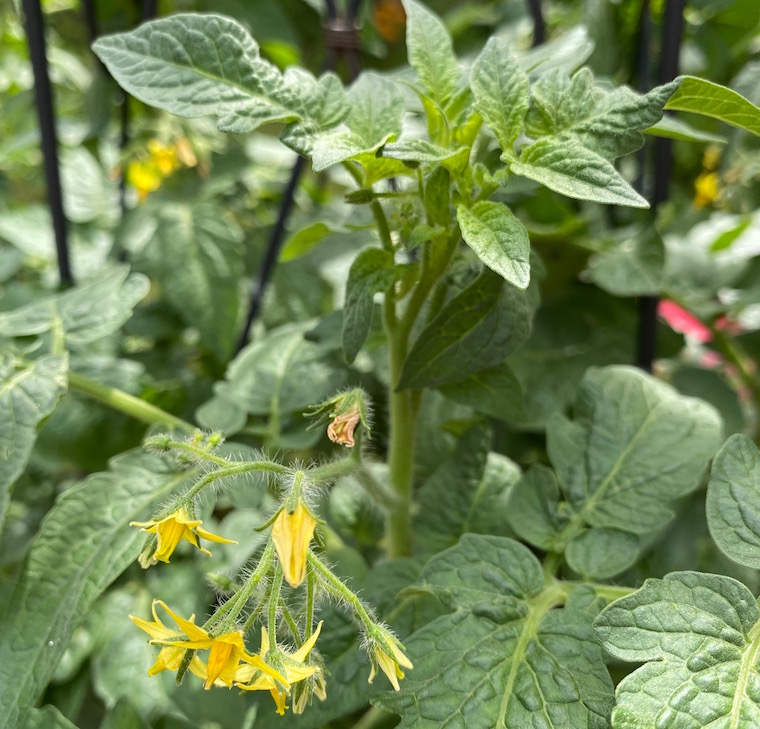
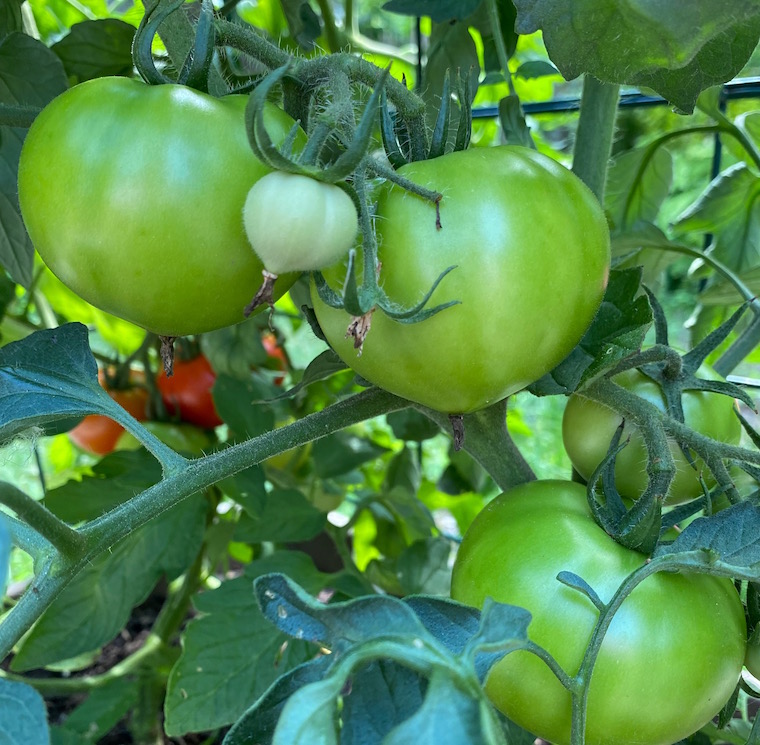
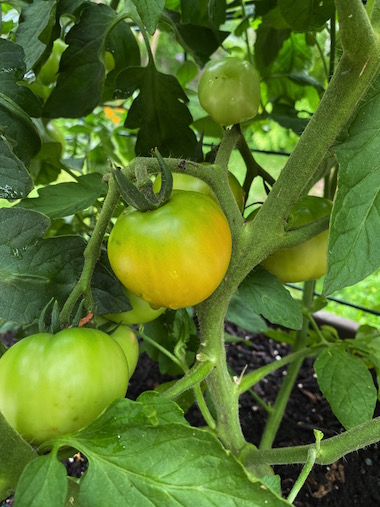
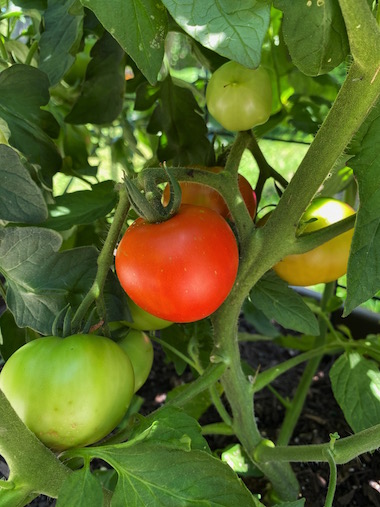
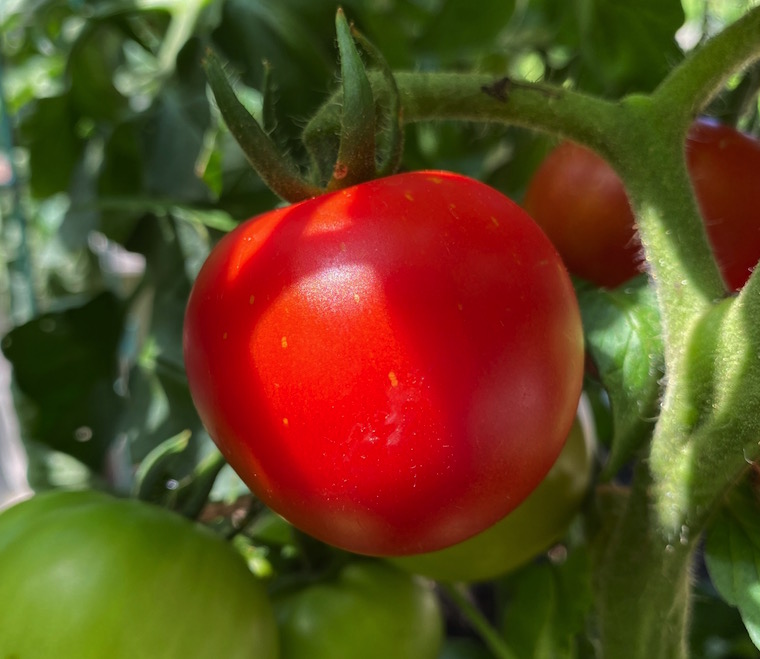
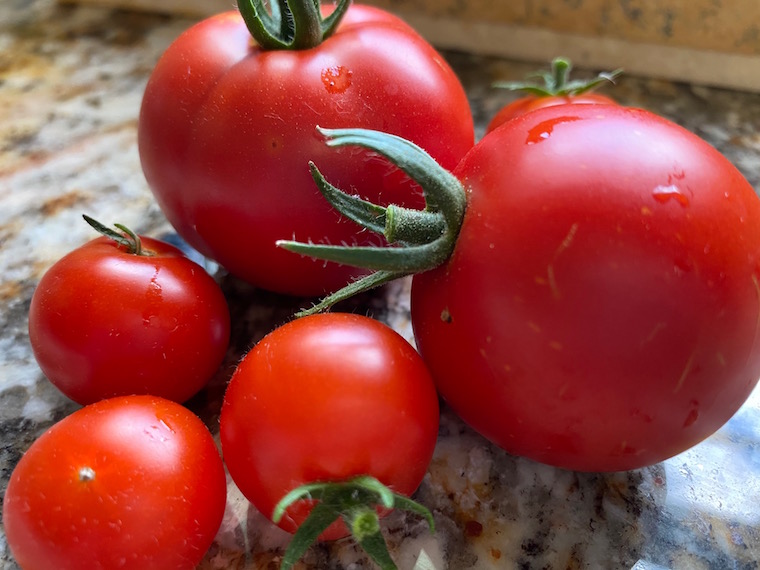
It’s been several years since Andy and I tried our hands at growing vegetables, but this summer seemed a good one to explore a trio of new tomato varieties, and the hot sun has proven amenable to helping them ripen sooner than usual. The ‘Early Girl’ has already provided the larger specimens you see here, while a cherry tomato bush has already started its prolific fruit parade.

In these early days, I’ve been guilty of popping off the first few ripe cherry tomatoes and putting them immediately into my mouth, their tart sweetness exploding the moment I break their scarlet skin. There’s something incredibly gratifying about growing your own food and simply plucking it from the backyard. It speaks to some primordial instinct to self-sustain. That’s one of the great underlying lessons of the garden.

Andy used to grow tomatoes in his old garden in Guilderland, and for the first few years we did the same at our home here. Like roses, though, they can be tricky, especially in years when the weather is not quite agreeable or a blight seizes upon the plants wilting them seemingly overnight. So far we’ve done all right this summer.

Aside from simply ingesting them unadorned and unprepared, I like to indulge in the most basic dishes that feature tomatoes – a tomato and mayo sandwich on plain white bread, for instance, or with a drizzle of balsamic vinegar and olive oil. Fancier fare will come later with BLTs and mozzarella slices with fresh basil, but for now it’s enough to enjoy the tangy magnificence on its own.

Continue reading ...

Phloxy

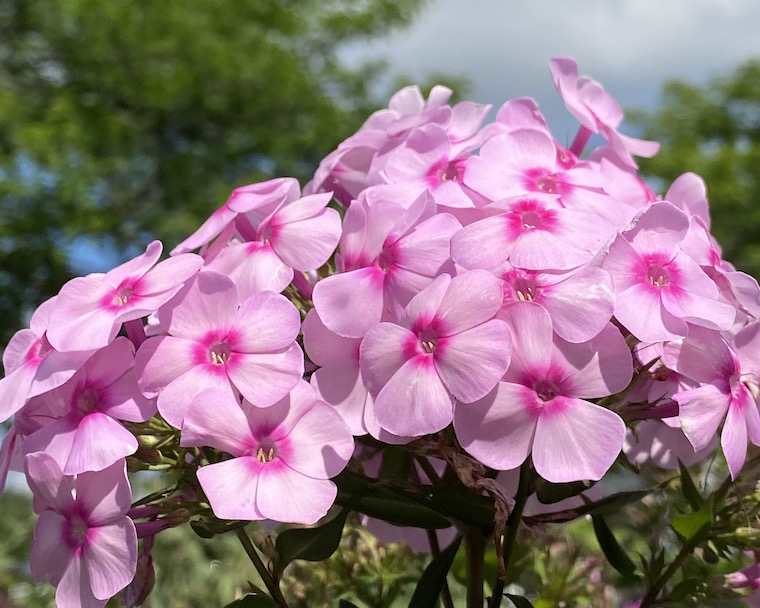
One of the backbones of many a classic perennial bed or border is phlox. Coming into a relatively long season of bloom at the height of summer, these statuesque plants can rise anywhere from one to three feet tall, making a significant statement in the garden. Their blooms are voluminous and imbued with a subtle sweet perfume. (Some of the literature says these are highly fragrant but I’ve not encountered that in my admittedly limited experience with these glorious plants.) 

My main complaint, and the reason I haven’t grown any in many years, is their propensity to develop mildew in our hot and humid summers. The same fate befalls our peonies, but I love them too much to be dissuaded. Phlox, however, are a different story. And maybe that’s unfair. There are varieties that have proven resistant to the dreaded mildew, and it may be time to try some new ones out. Aside from the cup plant, not much in the way of exciting blooms is happening right now. The butterfly bush is a bit behind, the hydrangeas are just cresting their surprisingly good show, and the rose-of-sharon has just started putting forth its buds. Perhaps it’s phloxy time. 

Continue reading ...

Shasta Not Shy

The moniker of ‘Shasta daisy’ seems to have gone away in popular usage, but maybe it’s still in vogue in certain circles. I don’t recall the full Latin name of the chrysanthemum variety that comprises this clump of Shasta daisies, but that’s unimportant. Labels mean less and less these days. That’s a good evolution. For such a simple flower, this post already feels unnecessarily complicated. Let’s turn it back to simplicity, and the easy brush with happiness these sunny faces bring just by blooming, by existing, by simply being what they were meant to be. 

What a powerful and easy concept when we let the universe take its course without force or exertion. Mindfulness is a practice that takes, well, practice. It’s tough to find at first, but the lesson is right there in these flowers. In the moment it takes to look at each bloom – at each petal and each sunny center – the rest of the world falls slightly away, the worries receding in the immediate brush with beauty. That’s the first spark of mindfulness. You might not even realize it when it happens: I had stopped to smell the roses my entire life, but never went much further. It’s the next step that leads you to the sublime. 

Continue reading ...

Balloon Baby

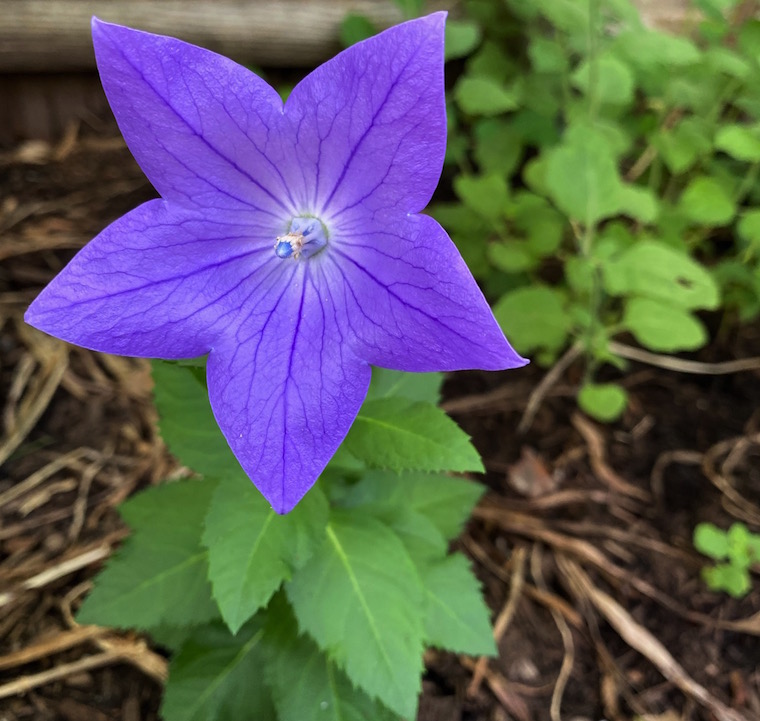
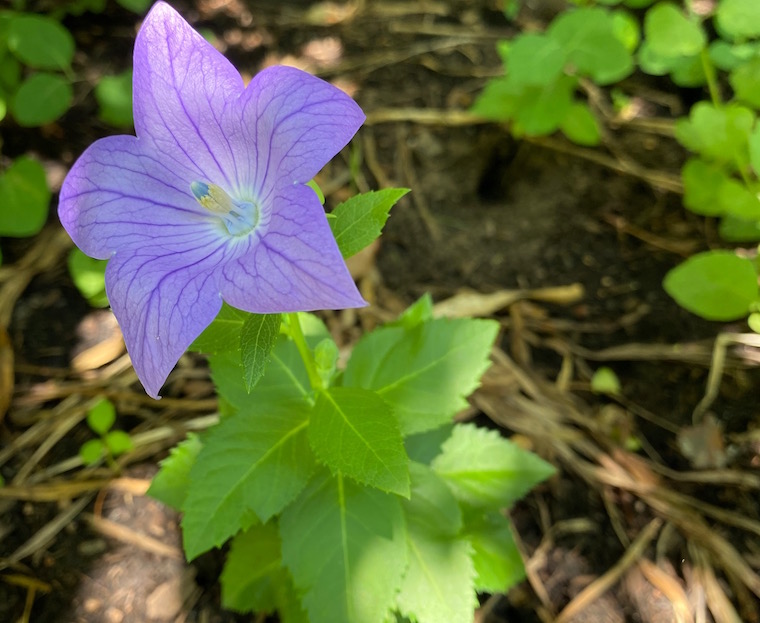
This balloon flower always surprises me, hidden away in a side garden that is lush and filled with foliage, and its own unobtrusive foliage rises without calling attention to itself. By the time it comes into bud, the surrounding plants have already pulled focus and attention from its show. A Rose-of-Sharon reaches far over the balloon flower’s head, while a honeysuckle vine winds its way up the wooden fence. A patch of Solomon’s seal, brought in by a bird many years ago, has finished flowering so I don’t notice the ascension of the balloon buds. 

It’s steadily and steadfastly performed this way for several years without any help or coddling from me, and as such it deserves a little award. That meant doing a little research before I amend the surrounding soil and see if it’s in a spot conducive to its happy habitat. I don’t remember planting this, so I have a feeling it’s another gift from the garden that was here, or the result of a seed dropped by some bird in a stroke of luck. I’ve read that these plants don’t like to be disturbed, which is good to know before digging in and moving it somewhere else. Truth be told, it’s perfectly fine where it is, so I’ll just do a little top-dressing of manure and keep it well-watered for the rest of the summer. Loyalty is always appreciated in these parts; it’s time to pay this little pretty guy back. 

Continue reading ...

All Hail the Adenophera

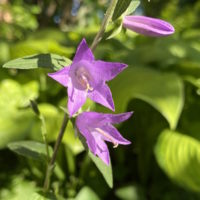
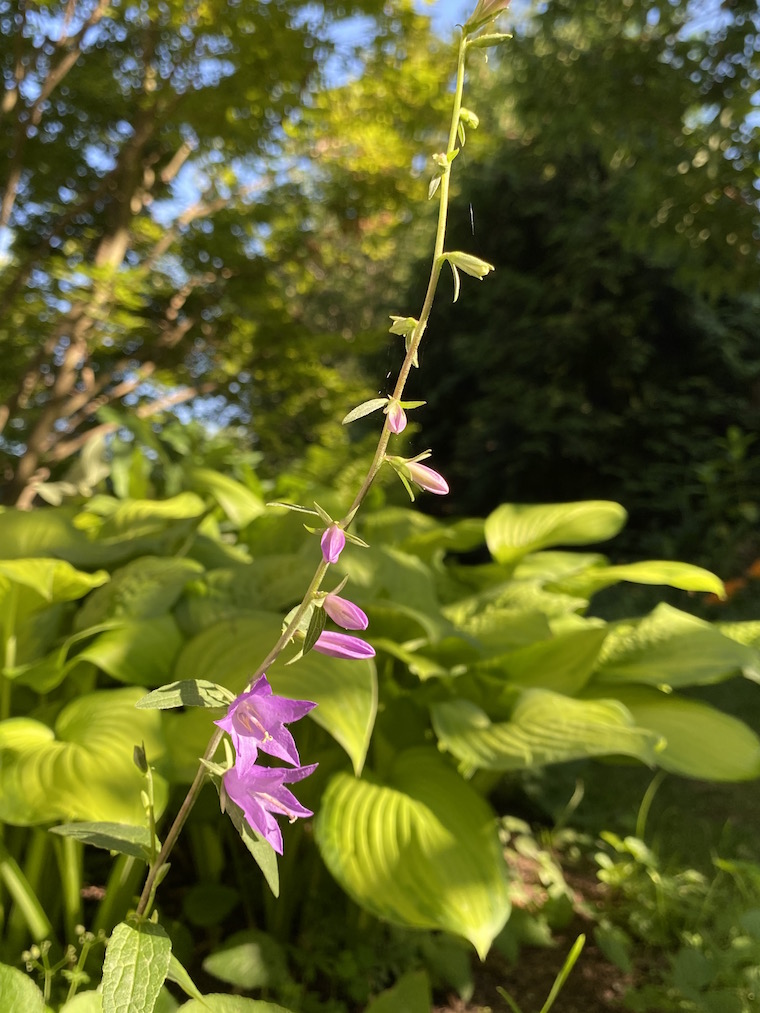
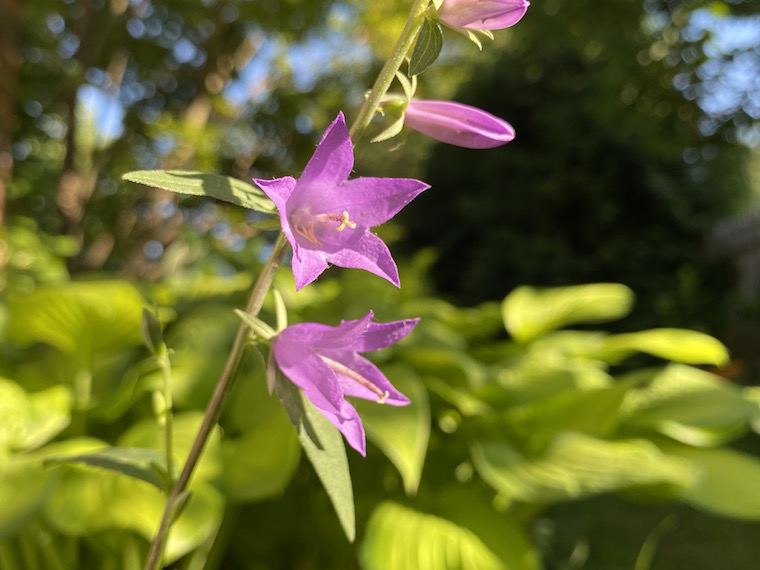
More commonly called Ladybells (ring them!) this is a species of Adenophera, which some people consider a weed. They’re such happy little plants, however, I’ve only ever encouraged them, even if I did have some trouble with their form. Life being the fickle creature that it is, I’m down to this one single flower spike this year, perfectly emblematic of the bullshit that is so 2020. Still, one flower spike is better than no flower spikes, and I’ll see if I have the patience to let this one go to seed and perhaps spread itself about a bit more. I’m all for self-promotion in these parts. I can’t even begin to tell you how many places I’ve seeded myself… Hey, if we can’t get subliminally dirty in a gardening post, we don’t deserve to call ourselves gardeners. 

I’m am totally enamored with its shade of purple, especially against the lime-green backdrop of a ‘Guacamole’ hosta in the morning light. It’s a stunning, unplanned combination that brings out the best in both. 

Continue reading ...

Visage of Peace

I wish I could say that this garden combination was the carefully-constructed plan I had in mind all along when planting this space, but this is one of the many happy accidents that occurs during the life of any garden. The hydrangea – which is blooming for only the second or third time in its decade and a half of life – forms the backbone and was there first. The Japanese painted fern in the lower right was planted several years later. Finally, the hosta in bloom in the lower left seeded itself there a couple of years ago and is blooming for the first time. Together, they are forming a lovely little nook of coolness on such a hot day.
Cool hues, cool tones, and cool flower shades conspire to create a softer and, duh, cooler effect, something especially gratifying in the garden right now. Many of us, and I include myself first and foremost here, seek out those flowers with the brightest and most garish hues, looking for things to pop and explode in the high heat of summer, forgetting the power and elegance in something more somber and subtle. 

At a time in the garden when the cup plant is about to start screaming its canary yellow heads off and the butterfly weed burns bright flaming orange, scenes like this douse the figurative heat, giving our senses a respite of relief, even if it’s only in our eyes and minds. 

Continue reading ...

The Bracts of the Butterfly Weed

One of my favorite garden plants – the butterfly weed (Asclepias) – has been in bloom for the past week. This orange version is the typical garden variety, though we also have a mauve one that seeded itself a while back and has returned again this year. As part of the milkweed family, they earn their common nickname from the love that butterflies bestow upon them, both in caterpillar form and final flighted version. The doting of these winged beauties is the crowning jewel of this plant’s performance. 

Peaking when summer is typically at its height and glory, the butterfly weed is a strong dose of color when everyone is giddy with the sights and sounds of the season. The orange ‘petals’ of the flower are actually bracts (think of the red ‘petals’ of the poinsettia or the creamy white ‘petals’ of the dogwood tree). I personally don’t care what they call them when they’re this pretty. Anything that brightens this summer season is a gift. 

Continue reading ...

Hot Pink Wilderness

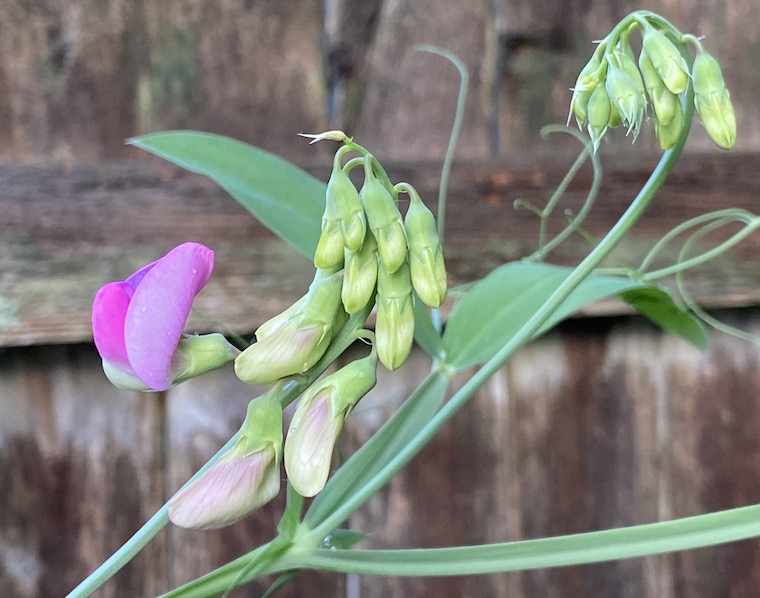
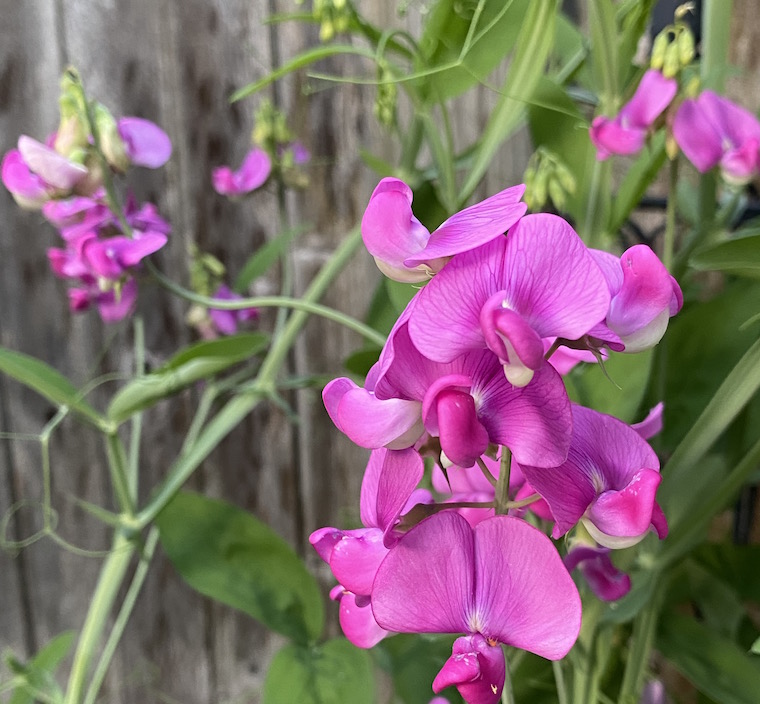
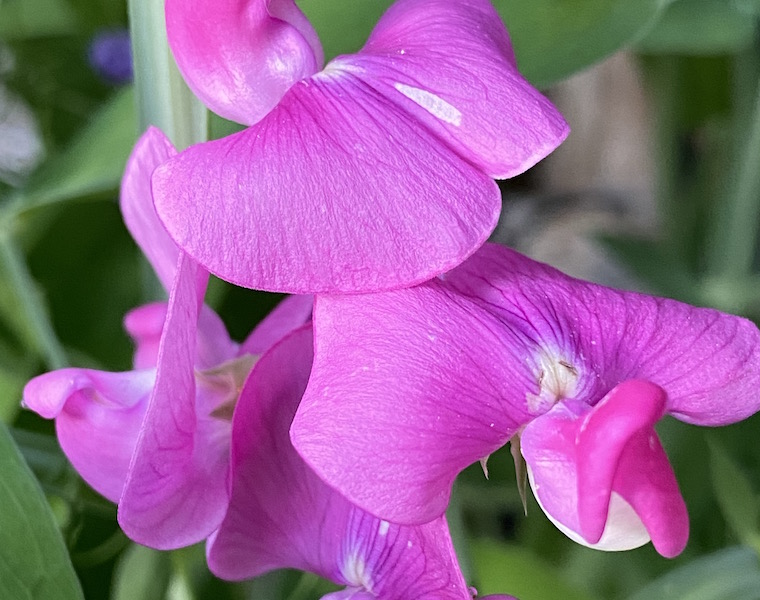
This wild sweet pea seeded itself in our garden many years ago and has persisted ever since. It’s a perennial variety – the same weedy thing you see taking over roadsides that haven’t been taken over by crown vetch. I like it in controlled, finite form. It blooms and then quickly loses steam, at which point I cut it harshly back , almost to the ground, and it will usually send up a new crop of foliage and flowers for a second, smaller flowering. This is our routine. This is our covenant. An agreement we have honored ever since I allowed it to take up some space in the prime area of our sunny garden section.

It’s tried to push its boundaries, seeding itself further out, only to be met with strong resistance, if I’m observant enough to catch it in time. Occasionally one gets by and it’s a battle when it comes back stronger the next spring. In the end, the human wins. For now. We can handily beat nature in certain battles; She will always win the war. 

As for this wild sweet pea, her wilderness impresses me. She won’t ever be anything less than wild, nor anything more. She persists and pushes herself. If I allowed it, she’d bloom and set immediate seed, sapping her strength for the season but probably ensuring an ever-expanding perpetuity. I force her to put on a second show, saving the garden from an invasive monster, and allowing a second round of prettiness. 

These things must be done delicately. 

Continue reading ...

A Lavender Patriot

It’s the 4th of July, but ever since Gram passed away on this day eleven years ago, some of its luster has been rubbed dull. Coupled with the sorry state of our country these days, it doesn’t feel like there’s much to celebrate. Don’t cast doubt on my patriotism; it’s still here, still part of my heart and make-up, instilled by an immigrant father who inherently loved the opportunities this country gave him to raise a family. But America has its problems, and maybe we are just awakening to admitting it and not being seen as heretics for the realization, at long last. It’s time.

And so we won’t be doing some empty patriotic posturing (though I may slip into a red, white and blue speedo a little later). Everyone does the 4th in their own way. Instead of going full-on red or full-on blue as America seems to be forcing in full-on binary fashion, we are finding a pleasant melding of things in this lavender-tinged post. Take out the human rules and restrictions, refocus on the natural world, and all falls neatly into place. Let’s shift from the political to the personal, from the world stage to the microcosmic gardens of our little backyard. That’s where the lavender blooms this week.

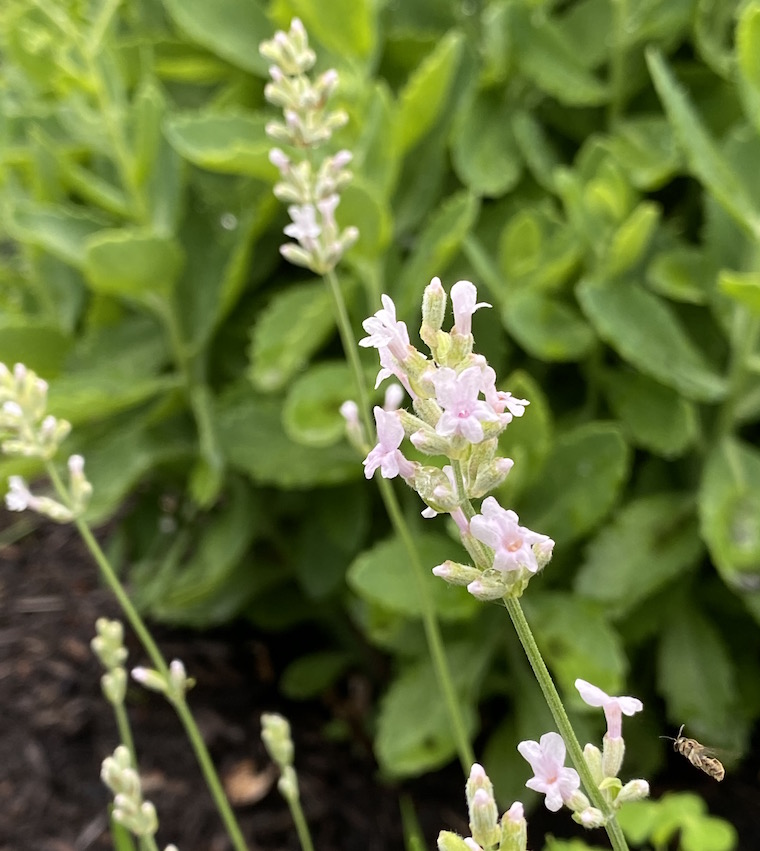
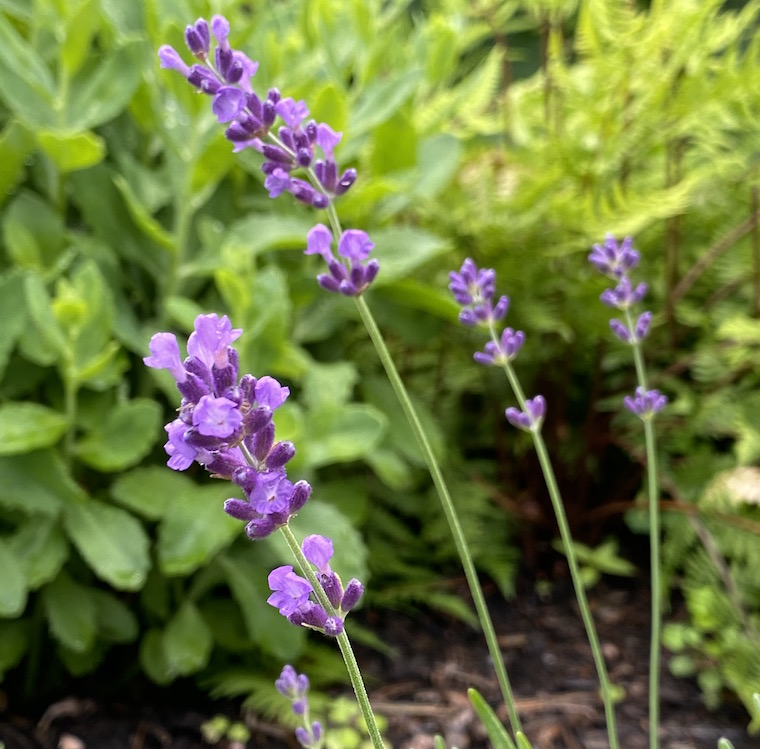
My summer dreams of lining our pool border with lavender and herbs went out the window while waiting for the new liner to be installed. (Update: the wait continues. But the steps are roughly done!) We may be putting a light in, so the garden will be dug up and destroyed, which is why I didn’t bother with putting any lavender in yet. We have a couple of plants that have survived over the years, and they are in bloom now. All one needs for a proper garnish is a single flower stalk. Thank goodness, because that’s about all that we have.

Near the lavender is a small patch of mint. It’s small for now but if unchecked will march defiantly beyond its allotted space. For now, I can crush a bit of the lavender, and a bit of the mint, and the fragrance is refreshing, exquisite, and enchanting. It is a lovely melding of two aromas, each distinct, and each contributing to the perfumed wonder of something beautiful. 

Continue reading ...

Woodland Wonder

Shade-loving plants can often take more sun than we give them credit for taking, especially if given ample water. We have a large stand of ostrich ferns and lady ferns that stand in full-sun for most of the day, and as long as I keep them well-watered they will stay fresh and green until the end of July. That’s usually when I give up on the daily watering they require, and they instantly turn brown. Once that happens there is no turning back, and no amount of water will correct them, so it’s most important not to let them get to that point. 

As for other plants like the hydrangea and hosta seen here, which also find their preferred placement on the shady side, they too can survive the sun with enough water. I don’t push them like I push the ferns, since they are partly shaded during the hot points of the day, but I do keep them well-watered because that’s when they reward you with fresh and healthy foliage like this. 

They also put on a less-showy floral show, as is the more subtle way of shade-lovers. It’s as if they want to glow more delicately with pastel shades rather than sizzling with blazing and saturated hues. They add a quieter woodland element to the garden. 

The flowers of the hosta are secondary to its foliage, but if you get close enough you’ll find a delicate lily-like scent to some of them. 

With so many things running late as the season opened, the garden seems to have rebounded, as nature always does, and now it feels like the hosta is blooming earlier than usual. (It’s quite possible I’ve simply lost track of time given the year that is 2020.) The lace-cap hydrangea also feels a bit early, which makes me lean toward doubting my sense of time this summer. It’s flying by quicker than usual, and maybe that’s because part of me is still waiting for all the traditions that kick off the summer to happen. 

Continue reading ...