Category Archives: Gardening

The Flower of the Maple

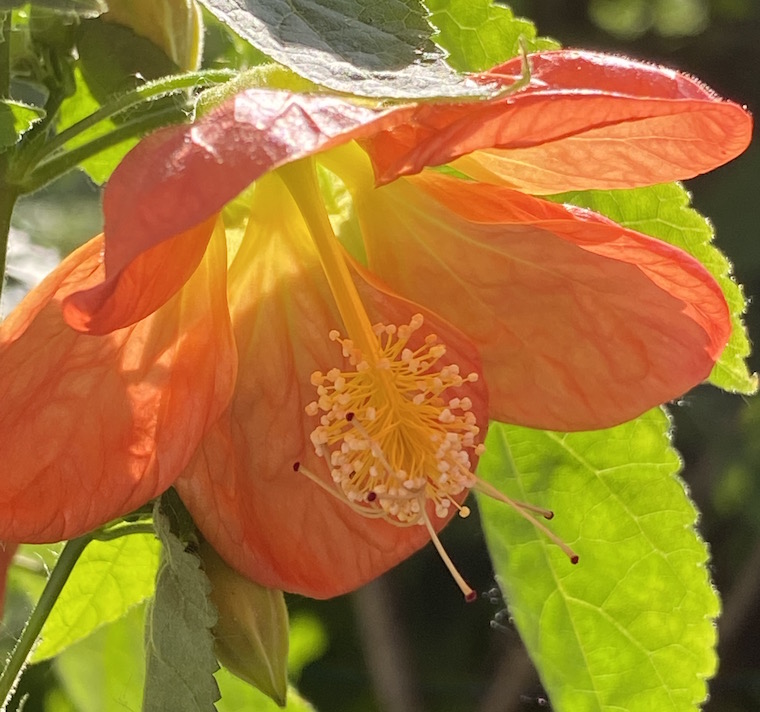
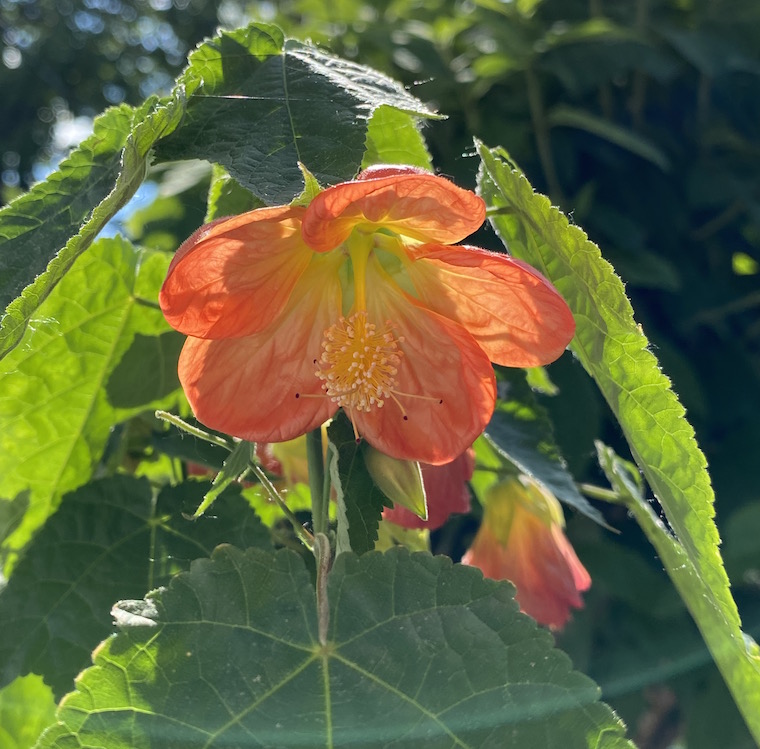
The flowering maple is not very much like the typical maple tree, starting with its vine-like form and climaxing with this vibrant floral exhibition. The last time I tried one of these, I potted it up and put it on our back patio, but it didn’t do much at first. Not one bloom could be coaxed out of it, but soon it started a long journey upwards, growing about seven feet by the end of the season, without ties or guides: it simply leaned against a pole and did its thing. 

Before the first frost arrived, I handed it off to my brother, and his fiancee took a photo of it a few later when it finally deigned to bloom in their sunny living room. 

This year I found a specimen already in bloom, and with a number of buds in the works. It’s less red and more orange than the original one I had, and this tinge of salmon is a lovely addition to our backyard. I can’t wait to see how high this one will go and whether it continues such a lovely parade. 

Continue reading ...

Return of the Peonies

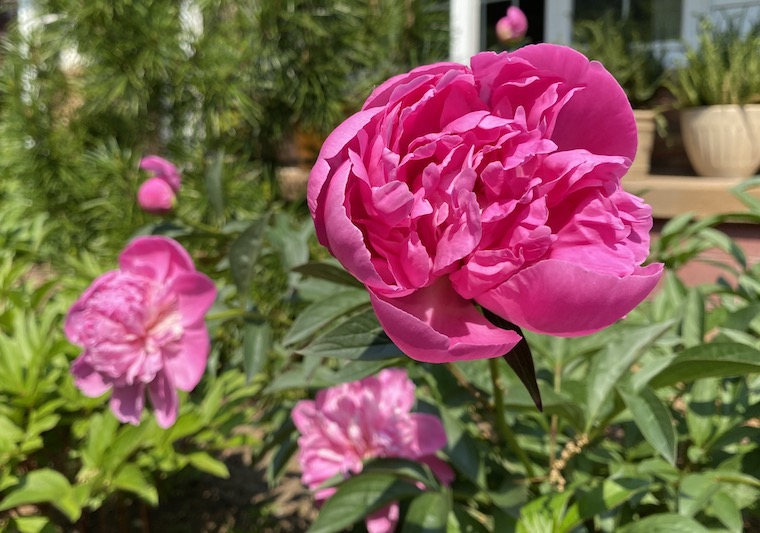
One of my favorite flowers – the peony – has been in bloom for the past week, right on Memorial Day weekend schedule. Last year, after almost two decades of leaving them undisturbed, it was finally time to divide the plants in our front garden, which was more of an arduous undertaking that I anticipated. Part of me is still slow to realize just how long we’ve been at our home, and all those plants I put in those first few years are now almost twenty years old. For some, it’s a glorious sight to behold – such as the 30-foot tall climbing hydrangea. For others, they are but a memory – such as the failed lady’s slipper orchid that I purchased at a criminally-high price-point, and which died after two seasons, despite my care and coddling in watering it with de-chlorinated water. 

The peonies in the front yard proved stalwart and reliable performers, blooming just as we were usually in Ogunquit for Memorial Day weekend. The past few years, we’ve been home to watch them burst open, peppering the space with their gloriously spicy perfume. Lately, however, I’ve noticed a decline in their blooms, a tell-tale sign that they were ready to be divided and reinvigorated. 
The best time to do this is late summer – around August, when it’s still warm and there is time for them to settle in and fortify their tubers. I chose a hot sunny day for this, to allow the tubers to air out and dry a bit, helping to prevent rot. It was more difficult than I expected – after 20 years their tubers had grown into substantial mounds, more akin to sweet potatoes than thin roots – and they were wound inextricably into each other, making for a tough process of separating and thinning them. 

Eventually, I managed to carefully whack my way through (if one can be careful in one’s whacking), turning three unruly bushes into six smaller specimens. I generously amended the soil with loads of well-aged manure, mulched the surrounding area, and watered them in well. As summer lingered, I made sure they were well-watered through September – I tend to forget about the importance of watering into fall, but to give them the best possible chance for surviving the winter, greater care was exerted, and the results are paying off. 

While a few are taking this year off as far as blooms go (which often happens when you divide or move a peony) most are sending up buds, starting with these old-fashioned beauties. Peony season has returned, and with it a sense of hope and happiness pervades from their sweet perfume. 

Continue reading ...

Dreaming of the Itoh Peony

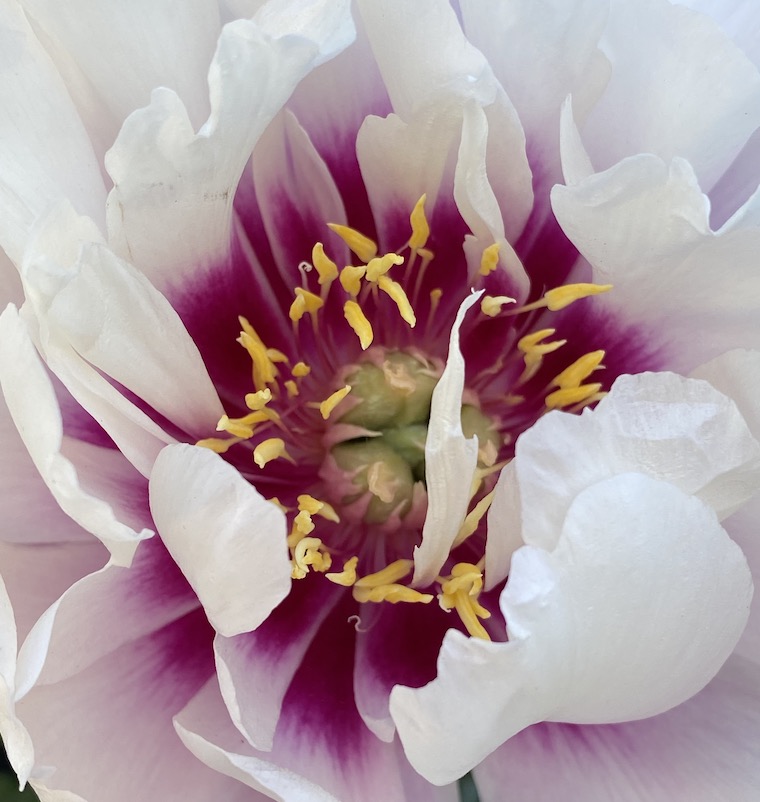
Behold! The glory and the mesmerizing beauty of the Itoh peony. I’ve been looking for a specimen to put on display here, as the tree peony we currently have is one of those heavy-headed varieties which gets so top heavy each bloom requires staking, and I’m not into that kind of maintenance. 

The exquisite form of the tree peony has long charmed me, and I’m not sure why it’s taken so long to come around to trying my hand at them again. Their reputation of being finicky an difficult to transplant has already been upended here – the one we have was moved twice and still flowers. The foliage also tends to stay perfectly intact and unmarred by mildew, unlike their herbaceous cousins, which don’t fare that well in the humid summers we usually have. 

The Itoh peony is actually a hybrid of an herbaceous peony and a tree peony, and reportedly combines the best qualities of both. I’m working on finding the perfect placement for such a beauty… 

Continue reading ...

Shooting Dogwood Stars

It’s just the very beginning of the Chinese dogwood’s blooming journey, and while I usually wait until these have turned a whiter shade of pale, we need the glimpse of cheer now. This is one of my favorite trees, providing all the beauty of the American dogwood, but only once all the leaves have emerged. It also extends the season for another few weeks, making it ideal for the entry of summer. 

The actual flowers are still in tight bud – what we are seeing as the ‘petals’ are technically bracts. The real flowers are small and insignificant, but they’re the ones who will produce the raspberry-like fruit later in the season. (Sadly, they’re raspberry-like only in appearance, not taste or texture.) For now, the show has just begun… 

Continue reading ...

Rendezvous with a Rhody

When we first move into our home, there was an enormous rhododendron that took up most of the front garden. It was over-sized and had grown unchecked for what must have a been a decade or two. It dwarfed the little plot in which it was then crammed, and blocked much of the light to the largest window of the house. It’s flowering was alternately magnificent and unimpressive, depending on the year, and as it was ruining the scale and proportions of our little home, eventually it had to go. 

Replacing it with a wedding cake viburnum, I failed to realize the importance of the evergreen aspect of the rhododendron, and so the winters felt bare and sparse, even if the light was welcome. After a few years, that too outgrew its space, and I transplanted a small Japanese umbrella pine to the location – a good choice for its slow-growing nature and evergreen beauty. 

Every once in a while, I’ll miss that original rhody, such as when I saw these beauties at my parents’ home. In full bloom, they are spectacular, and have filled in their front yard garden plot, brilliantly painting their hot pink glory against the white brick. We always seem to come back to the classics, and it may be time to put one of these into our side-yard, where they seem to enjoy the shade and the soil, and can stretch out beyond the confines of a formal garden. (I’ve softened the stance of this original post, much like the way I’ve softened other rigidities that were once seemingly cast in stone.)
Continue reading ...

Floral Link to the Past

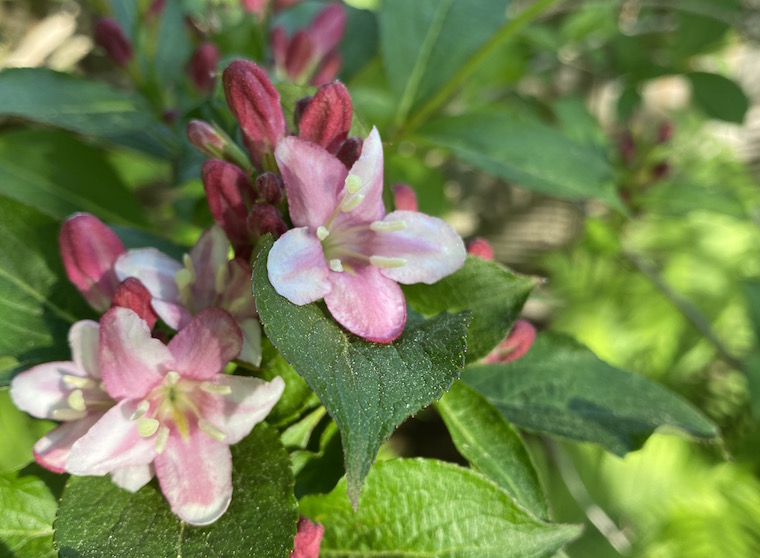
While Andy may better know his way around automobiles and kitchen stuff, I’m the master in the garden. Sometimes, the master has much to learn, and that was the case when I happened upon Andy’s weigela at his old house. It bloomed prolifically at this time of the year, beginning a cavalcade of pink that lasted a solid week or two, especially if nights stayed cool and there was enough moisture in the air. I asked him what it was and he said he thought it was a Weigela. It was the first and only time he knew the name of a plant before I did. 

When we moved into our current home, and the first spring began to reveal which plants were in the backyard, I watched as a rather plain-leaved bush sprouted. It’s form was somewhat fountain-like, similar to a forsythia. Nearby, a Japanese maple unfurled its fine maroon leaves. Carpets of pachysandra extended well beyond where we would eat them. The shrub I couldn’t identity slowly revealed more of itself as the warm weather arrived. Buds appeared, and I recalled the Weigela. A few days later they bloomed pink as seen here – a standard variety that made its way around the upstate New York landscaping. It felt like a link to the past, blooming in our future backyard. 

Continue reading ...

The Speckled Glove of a Fox

A fox would not be entirely unwelcome in our yard at any time, especially considering the abundance of rodents the last few years have brought into our neighborhood. Foxgloves have long been a magical plant, one that I’ve mostly ignored growing for their unreliable growing pattern. Mostly biennial, they depend on spreading their second-year seed, leading to unpredictable clumps of future foxgloves, assuming they safely germinate. Too much chance in a world where chance is never a safe friend. 

That said, I’ve been embracing such unpredictability, so maybe this is a good time to sow a few of these and give them their first year of leaves for a floriferous show next year. Slowly, we begin to plan ahead. Slowly, we feel the way to a future. In the speckled loveliness of a fox’s glove… 

Continue reading ...

Pesky But Pretty

These violets are a menace to the perfectly manicured lawn, but they form a magical part of my childhood memories, as they grew freely in the little forest behind our home. Back then they were simply woodland joys that rarely encroached upon the lawn, content to inhabit the secret recesses of that shaded area behind the pool’s pump house. 

Today, they are taking over our lawn, and as such must be eradicated, which is easier said than done. I’ll let Andy do that difficult job, and snap these photos to show off their pretty side before we bid them adieu. 

Continue reading ...

Unleashing the Maiden

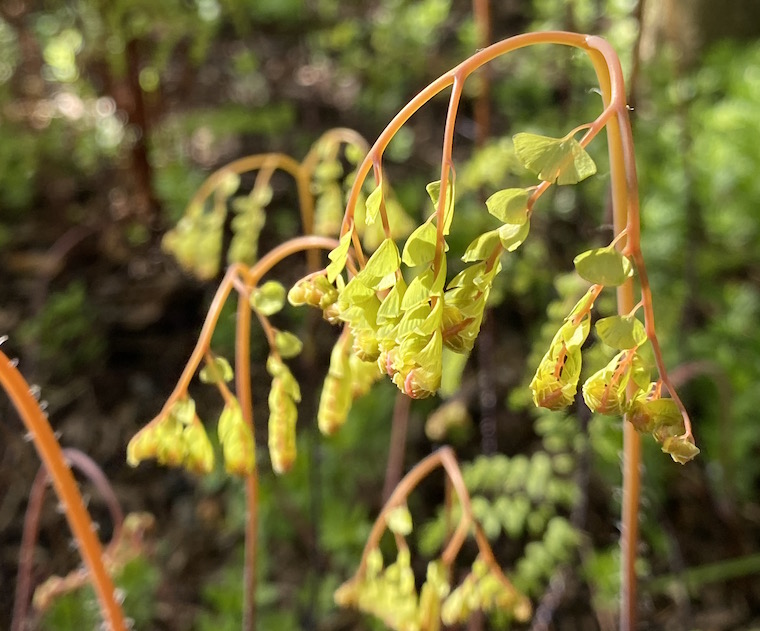
Some plants begin looking very much as they will look for the duration of an entire season. Others, change immensely. This is one of the latter – and this is the beginning of the Maidenhair fern. Also known as the five-finger fern, it’s digits haven’t quite begun to uncurl and extend themselves, holding still like little knuckles. if they seem tense, it may be due to the cool weather we’ve had. Cold nights don’t make for pleasant conditions for maidens or men or all sorts of the beautiful in-between and outside. 

Despite its delicate appearance, this is one of the hardier ferns. Its elegant leaves are so light and airy, they allow the coldest winds to pass right through them. It’s an ingenious hat trick for a plant, and the lesson is a very good one. 

Continue reading ...

Freshness Unfurled

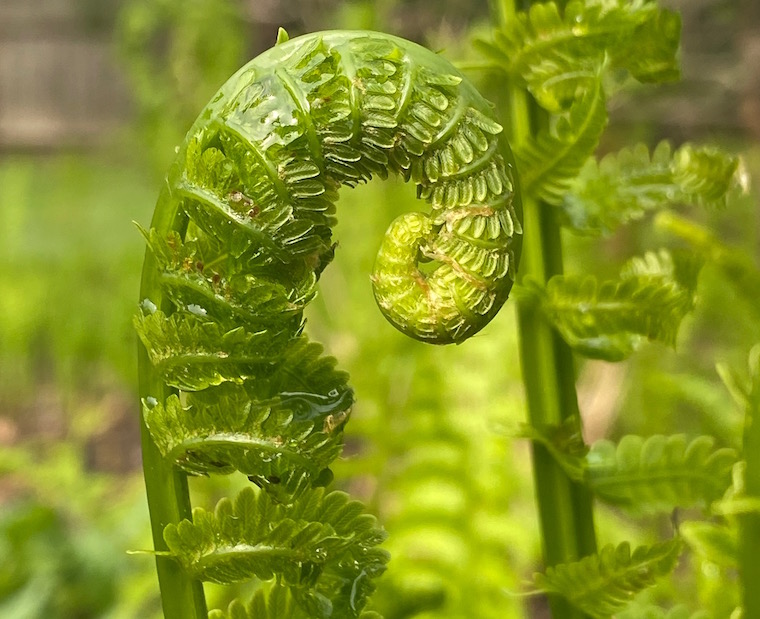
The unfurling of the Ostrich ferns is one of the magical moments of May. This ever-expanding patch of them has intruded into the new lawn I seeded last year, so they will be whittled down, but it’s fun to watch them unfurl first. I’ll transplant them into the side yard where they can run rampant through the pachysandra beneath a giant oak tree. It’s a shaded and secret space, perfect for the delicate appearance and underlying hardiness of these ferns. 

They will also do quite well in relatively strong sun, which is where this grouping stands, provided you deliver a regular source of water. The more the better, and they will rise in the bright sunlight to over four feet if given enough consistent moisture. Be wary though – if you can’t supply water on the regular they will rust and turn brown and brittle by the end of July. That still happens in the warmest of summers. 

For now, their freshness is indicative of this early stretch of May – all chartreuse and architectural glory in the form of these wondrous fronds. 

Continue reading ...

Grape Globules

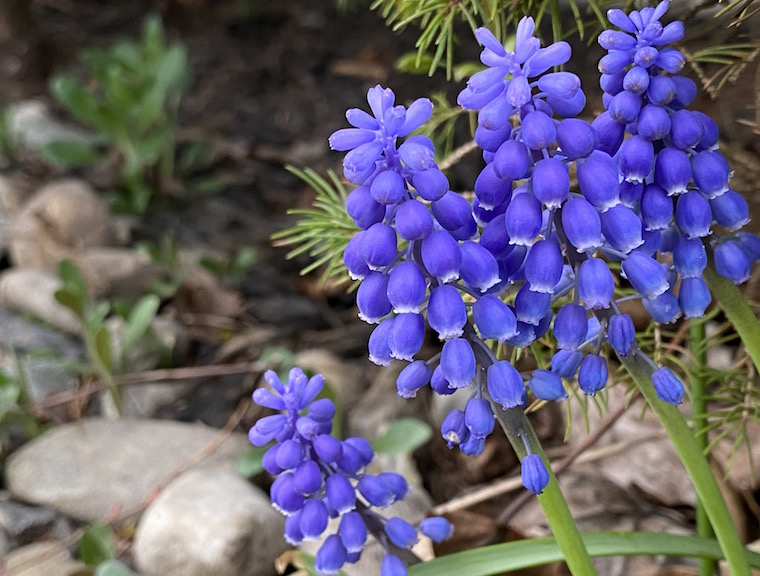
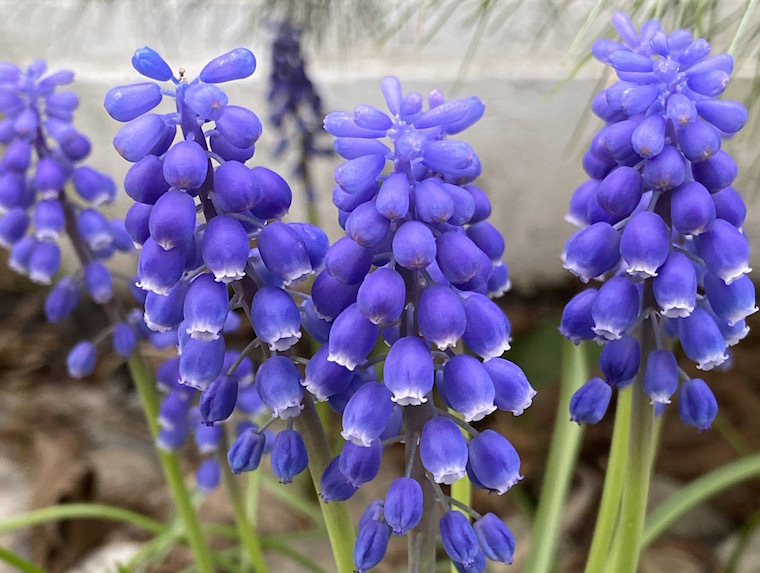
‘Tis the season of the grape hyacinth, that enchanting spring bulb that bridges the blooms of daffodils and tulips, accompanying both in charming fashion. Its bluish-violet coloration complements the fiery reds and pinks of the tulips as well as it does the yellows and creams of the daffodils. It also works well as a patch of sky at ground level when the real thing refuses to turn blue, lost in a slate of grays and cloudy whites.

These are easy-to-keep bulbs, provided you allow the foliage to die back naturally and nourish the bulb for next year’s flowering show. They will happily multiply and expand their clumps, and they make whimsical little bouquets if you can find a smaller vase to show off their architectural features.

Continue reading ...

Pink-Cupped Narcissus

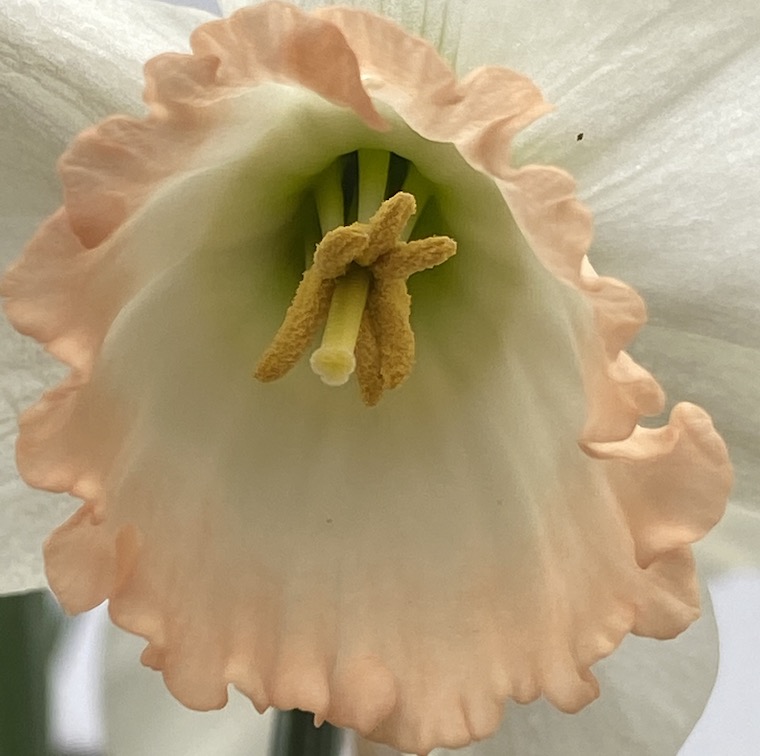
My one-time gardening guru Lee Bailey, in his exquisite book ‘Country Flowers‘ went on in rapture about the loveliness of a few new pink-cupped Narcissus. At the time I was entirely under his spell (this was in the pre-teen years of the mid to late 80’s) and so I begged my Mom to order a few for fall planting. After putting them in at the entrance to a little forest path lined with slate stone, I eagerly anticipated their show all through the winter. The following spring they poked through the ground, and bloomed in just the enchanting way Bailey had described – not quite a true pink, but a pink brushed with shades of peach and apricot. This color changed and evolved – some went into the more traditional pink, but always lined at the edge with a bit of something warmer – and some stayed a lovely shade of peach. Either way, it was a welcome variation from the yellow to which we’ve al grown quite accustomed. 

These days whenever I see pink-cupped Narcissus in a garden store I’ll pick up a bag and plant them in memory of Lee, hence this pretty creature who defied the recent snow and cold to boldly throw a bit of beauty into our neglected side yard. I love the barely-discernible accent of green in the throat – pink always goes so nicely with green. 

Continue reading ...

Proud & Unbowed

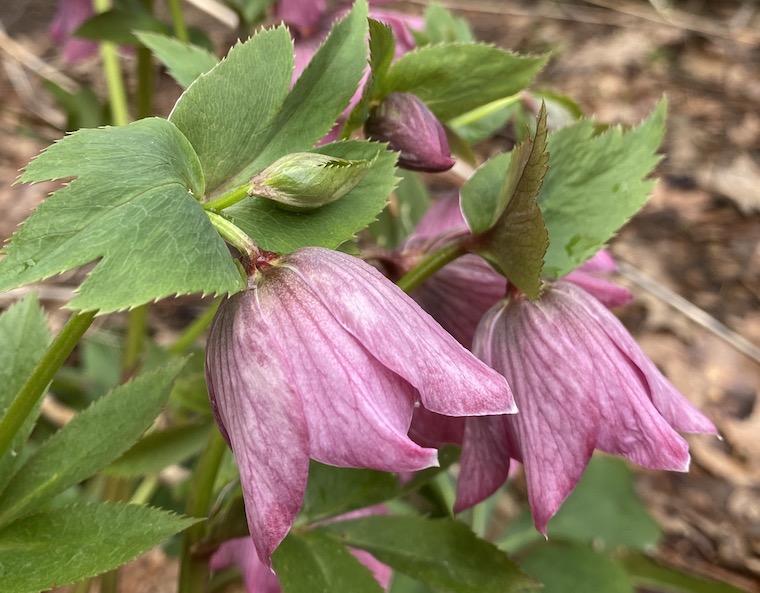
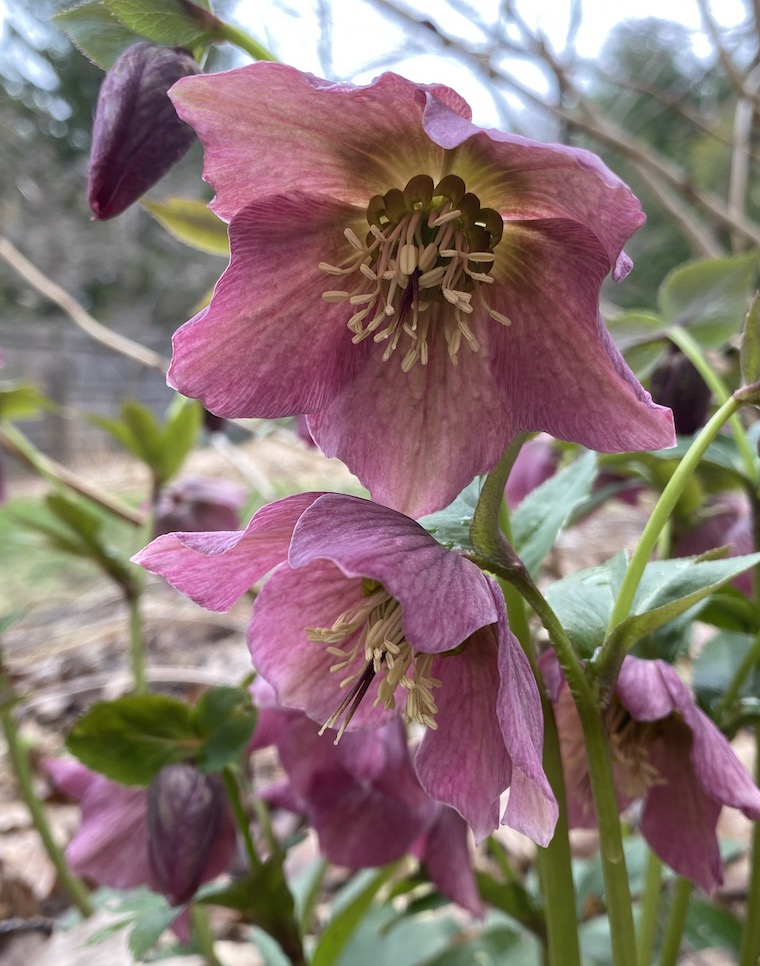
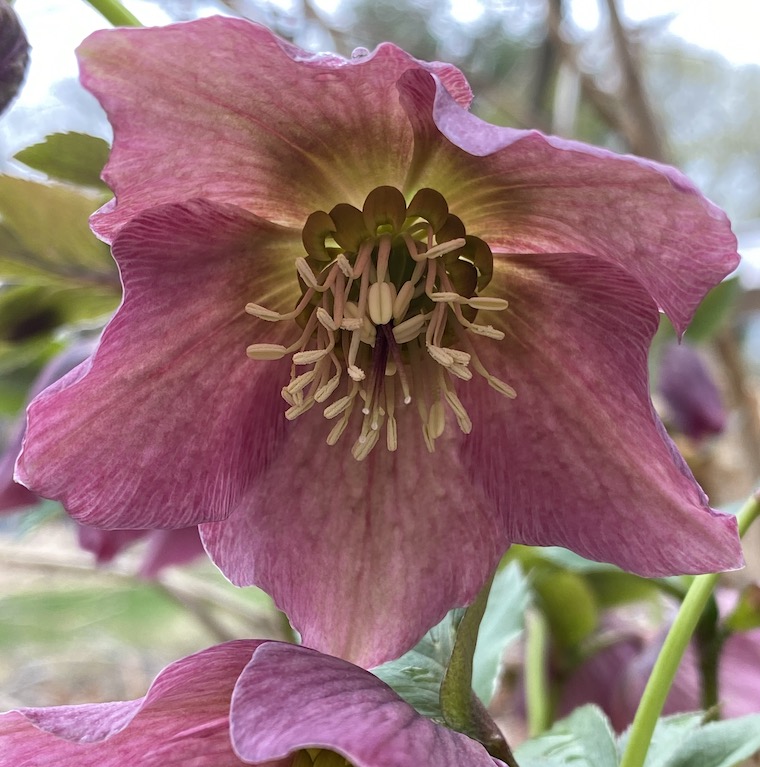
Most of the time, the Lenten rose that has grown in our backyard for the past two decades keeps its flowered heads bowed down, drooping low to the ground and dangling like little mauve bells. This year, a couple of them deigned to raise their heads and defiantly look half-way up into the sky, and when that happens I try to get their photo, without throwing out my back. The crux of age and desire… these are dangerous waters. 

I’ve mentioned the Lenten rose a number of times here, and this may be the year I add another one to our garden. When it’s the only thing in bloom this early, it gains importance, and its beautiful foliage remains gorgeous all season long. (If ever it gets ratty, I simply snip it off and often a new set of leaves will emerge to take its place, especially if it’s early in the season.) 

At my parents’ home, there I a light cream version that lifts its blossoms a little more, carrying their heads a bit higher. I may look into that variety. These are enchanting plants on many levels. 

For now I’m going to take advantage of their bold streak this spring, and enjoy their mottled beauty. 

Continue reading ...

Scilla So Blue & Beautiful

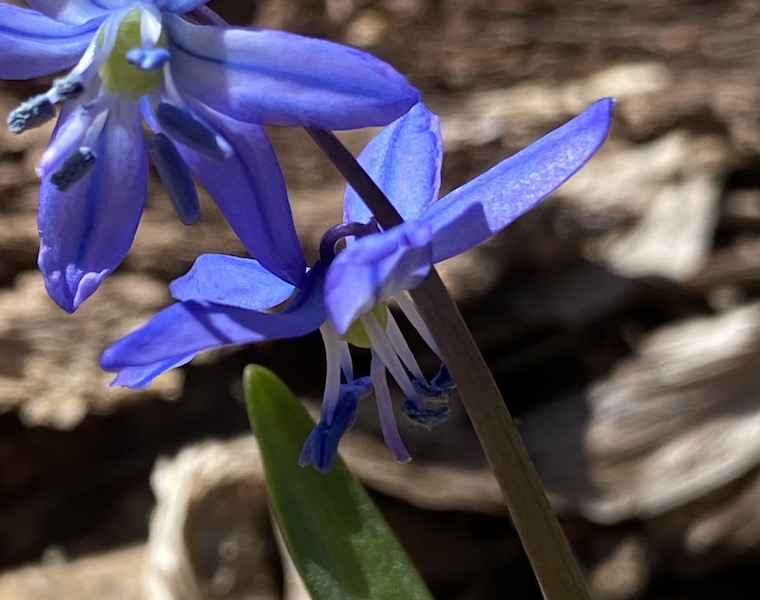
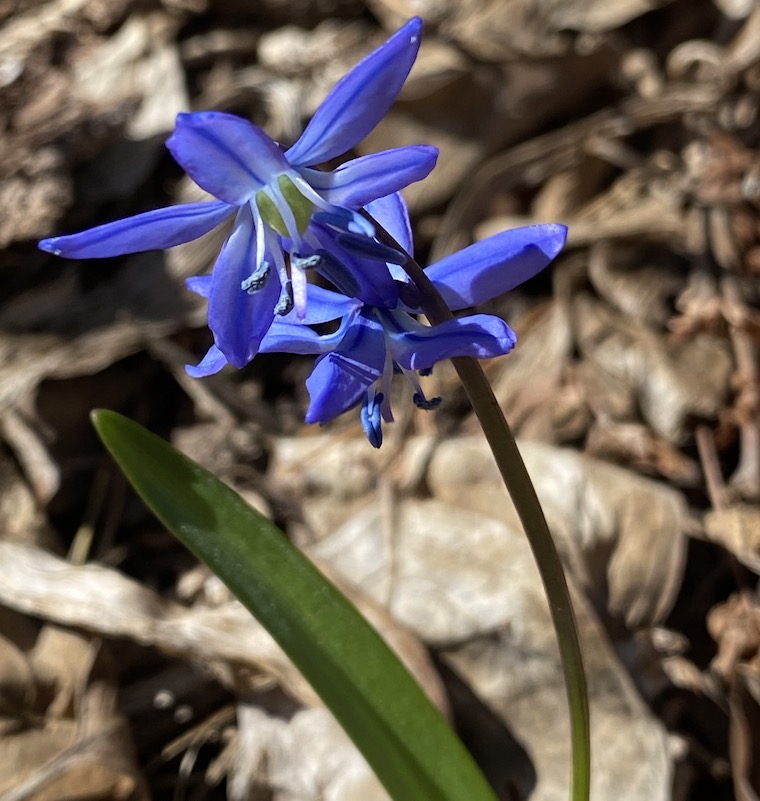
As one of the smallest and most seemingly insignificant blooms in the garden, this tiny Scilla siberica packs enough of a punch for me to instantly catch its early bloom in the brown expanse of the backyard. Second only to the Lenten rose, these hardy beauties defy the early dangers of the spring season to dangle their lovely blossoms and coquettishly twirl in the slightest breeze. 

As hardy as they are small, they tend to multiply and increase into little colonies, no matter how much ill-treatment (or in my case neglect) they receive. I remember one Easter I stopped by Suzie’s house, and near the edge of the forest an entire carpet of these was in full glorious bloom – it looked like a little blue wave rolling onto the lawn. 

In other words, to make the strongest impression they should be used en masse. 

Continue reading ...

Knocked Down And Picked Back Up

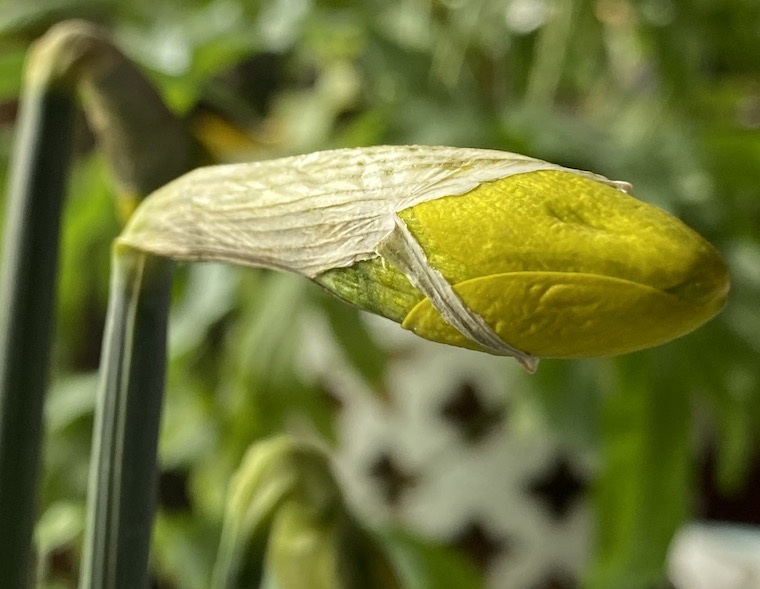
Having been eagerly awaiting and watching for the first daffodils to bloom, my heart fell when I surveyed the aftermath of our April Fool’s snow-squall and found all the blooms lying flat on the ground, victims of a killing night of frigid wind and snow. I hurriedly gathered the fallen stems and brought them indoors, hoping it wasn’t too late for them to eke out a bloom. That’s when I captured these pictures, and they look a little worse for wear, still huddled tightly in bloom except for the one lone flower that was on the brink of opening up but held back in this hooded form, as if afraid to let down its guard. 

Spring flowers that start this early run the risk of having their blooms felled by such storms. This was less devastating than the May snowstorm that takes out tree peony buds or stuns tulips in full bloom. That doesn’t make it any less sad, especially after a winter of such barren hope. There are a few more patches of narcissus that I planted last fall just poking through the ground. The first spring after planting is always their latest, and I’ve always appreciated that. No sense in rushing the goodness and risking the danger of a lingering snow squall. Cautious optimism is the gardener’s safest stance. 

Continue reading ...