This small patch of Scilla siberica marks the first bit of greenery and color the garden has produced this year. It goes head-to-head with the blooming of the Helleborus a few feet away. It’s been a slow spring to break, and I’m hopeful it continues to take its time before the deadening heat of high summer. Most years the beauty of spring goes by too fast – one of the reasons I love it so much. The temporal, the fleeting, the evanescent – these will always have the greatest draw. In people, and in plants.
Category Archives: Flowers
21
April
2013
No comments
April
2013
17
April
2013
No comments
April
2013
Almost Fake Flowers

The bouquet is pretty enough. Deep pink blooms, a delicate fragrance, and dark green leaves comprise the vase of roses I picked up for Andy. The photograph came out decent enough as well. So why don’t I like it? It’s a pet peeve of mine: store-bought flowers, as pretty as they photograph, carry less weight and beauty for me than something that came out of my own backyard. It’s easy to stop by Fresh Market or Trader Joe’s and pick up the materials for a proper bouquet. It’s simple to artfully arrange them in a vase and coax them into full bloom. And it’s a breeze to wait for the morning light to dapple in through the curtains and give the flowers the necessary illumination to present well, but somehow it all rings hollow.
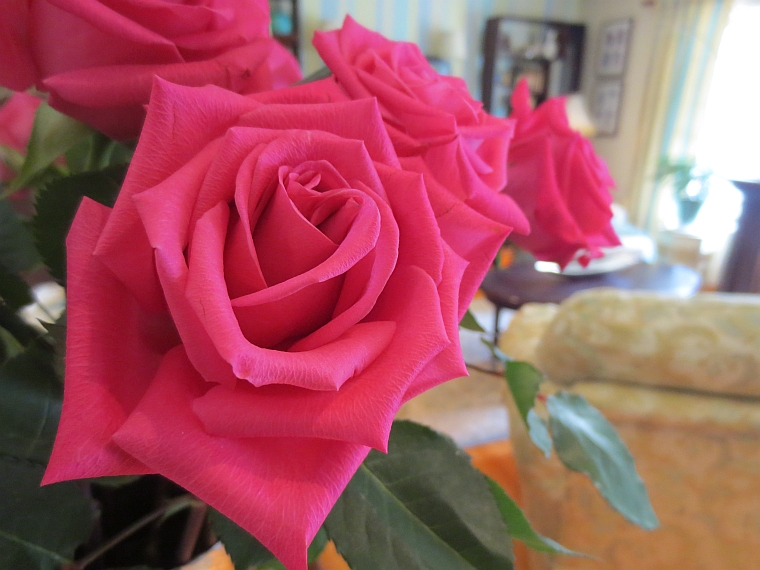
Give me a looser, wilder, rougher collection of blooms any time. Give me shorter stems and home-made filler (Miscanthus works surprisingly well). There’s something about those flowers – more prized for their less-than-abundant number, more meaningful for knowing all the hard work that went into them – that speaks directly to my heart. They’re not as bright, or big, as the store-bought ones, but I value them because of it. They will always be more beautiful that way.
17
April
2013
No comments
April
2013
We Had a Once-In-A-Lifetime
Last year we lost one of our two Fargesia nitida bamboo stands. It was a devastating blow, particularly when you consider the circumstances: the fountain bamboo flowers only once in its lifetime – after about a hundred years – and then promptly sets seed before dying a quick death. The odds of purchasing a Fargesia around the time of its blooming period were pretty slim – but it appears this was one of those times. I’d been nurturing both plants for about seven years, and they were finally a decent size, reaching up to the roof of the house, and starting that gorgeous cascading effect that gave the grass its common name. When I noticed that the bamboo on the East end of the house was starting to bloom last year, my heart sank. I knew what was to come. The small yellow blooms passed, the seed set, and then it turned brown and dried up. It was sad and quick, but I let the seed ripen and collected as much of it as I could, hoping to sow some this year.
I walked the length of the house to examine the other Fargesia stand to see if it too was going to give up the ghost. Luckily, there were no signs of flowers, so I breathed a slight sigh of relief, and pocketed the worry that since they were purchased from the same place at the same time, it was likely this was going to bloom in a year or two. The other day, I looked out of the bedroom window and saw the scene below:
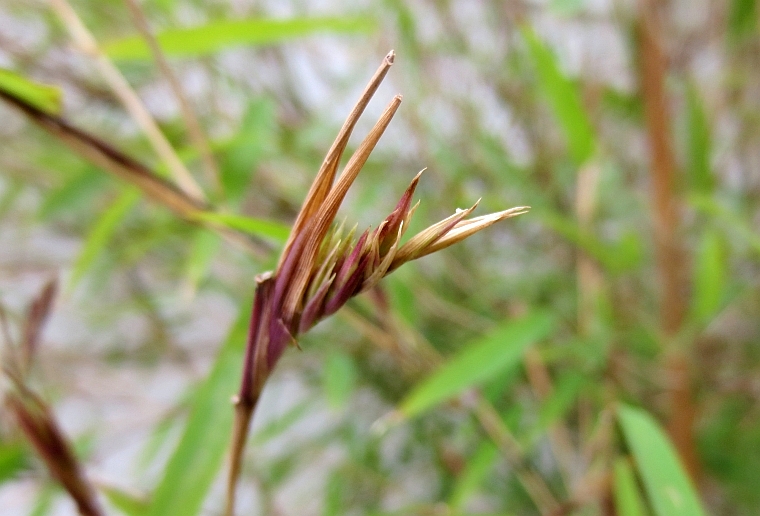
This is the bud of the bamboo flower. It will bloom in the new few weeks. Then it will set its seed, and the beautiful plant will die. Both corners of our home will be bereft of their bamboo buffer. The gorgeous softening those plants have provided will suddenly cease, the peaceful countenance they somehow inspired will subside, and the corners will jut out once again. The only hope that will remain are the seeds I will try to collect again. These precious vessels will be our way of continuing the beauty. I’ll give some of them to my Dad (he is the original gardener of the family, and he does much better at sowing seeds than I do) and I’ll try to get some growing back in their original spots. By the time the next owners of our house arrive, they may be back for another hundred years of beauty.
13
April
2013
No comments
April
2013
April Showers
This wretched weather of late is decidedly depressing, and coming at a most emotionally-Â inopportune moment. Most of us are done with the ice and the sleet, and yet there it was the other morning when I woke up, dripping from the hopefully-spared buds on the dogwood tree. This looked to be the best showing thus far of the dogwoods I planted several years ago, and if they end up wasted because of this hateful weather I will be unreasonably pissed. (Intellectually I know there is nothing to be done about such things, but it always puts me in a better mood to bitch.)
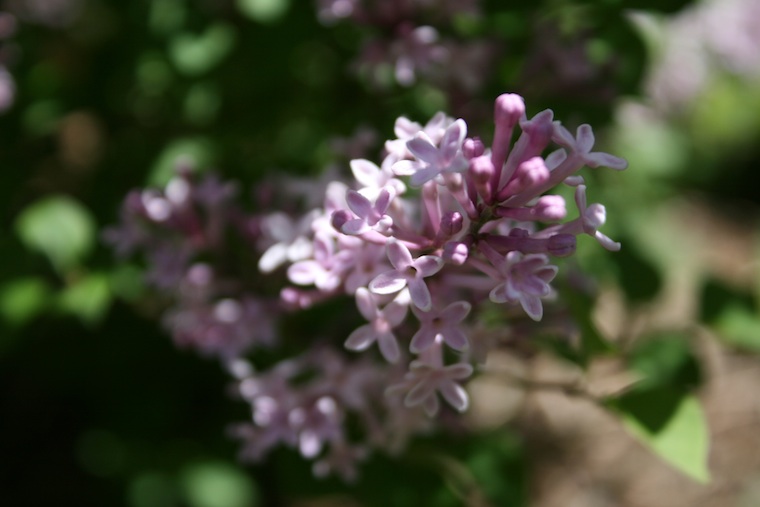
In an effort to bring in the spring, I’m posting these photos of the fragrant Korean lilac. The sight alone is almost enough to conjure their intoxicating perfume, and the affiliation of sunnier days. Lord let there be truth to the showers/flowers adage.

12
April
2013
No comments
April
2013
Gardener’s Soliloquy
To Garden is to be Alone ~ to be alone and be all right with such solitude. It is a quiet business for the most part. A few scant screeches of the crows and the off-hand chattering of squirrels are the only sounds that break the still air.
There is peace in the garden. In an age of rapid, noisy movement, the garden is the great escape ~ a return to a simpler and somehow more meaningful time, when summers stretched onward forever and winter was the stuff of a few fleeting snowfalls.
A garden provides the sanctity and peace for contemplation. Through the quiet comes clarity, and one can finally hear the inner-voice that is too often subdued. In a seasonal cycle the gardener cannot help but reflect on his or her own life, and in the resounding quietude find answers and understanding.
The garden will not be rushed. It gently but unwaveringly demands patience. Seeds will sprout when and only when they are ready, cuttings will take root in their own time, and flowers will not be coaxed into blooming until their conditions are perfectly met.
On the same token, the garden will not be kept waiting. A laissez-faire attitude and lackadaisical lethargy can be deadly. A missed week of water because of a vacation in high summer will be rewarded with a few dry, dead spots upon one’s return, and neglected patches of dandelions too soon send their parachutes across the entire expanse of the lawn.
These are the lessons of the garden ~ learned and understood in silence and quiet. The art of gardening can reveal the art of living ~ one has only to listen and heed its gentle call.
11
April
2013
No comments
April
2013
Midnight in the Garden
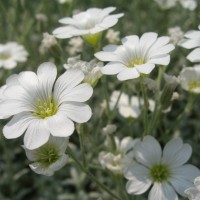
The soft hoot of an owl carries on an invisible breeze. A cricket’s chirp is stilled as I step off the terrace and begin the lengthy walk to the woodland garden. Through the wet recesses of the lawn, my steps proceed gingerly, to hesitate and hear, to ensure and safeguard. It is midnight, and though the moonlight garden beckons with small beacons of ghostly white blossoms, the silence is unsettling. Far behind me I hear the cricket resume his nightly revelry. It is night in the garden ~ and night in the world. Deep, dark unforgiving night unfurls its silky tendrils, twining and holding me close to its dimly beating heart.
There is a dark underside to the garden, a hidden world crawling with slugs and snails, alive with rot and decay, and night is the favored time for furtive fungus and the sudden appearance of a swath of mushrooms. All of this is happening as I treat tentatively into the forested garden. Swallowed immediately by the leafy entrance, I enter the midnight menagerie. A lofty wind is rustling through the tops of trees, creating a lift in the atmosphere and drawing my eyes upward to pitch dark night and the canopy of silver-bottomed foliage. What hovers high above my head? Sleeping birds, busy bats, creatures of the summer night ~ the cricket in the distance continues his summer nocturne as the overhead whooshing suddenly ceases.
An aspect of mystery imbues the garden, as well as plants and trees and nature in general ~ floating seed fluffies, upon which little children make wishes ~ suspended dandelion seeds and flying feathers of milkweed pods floating on the breeze ~ these are the things of fanciful enchantment and childhood dreams. And yet it is not time to drift away… not yet. The moonlight garden of white flowers draws me further into the deep recesses of the forest, damp and dark, but beckoning and calling with its fragrant spicy sweetness. Somewhere in the vicinity Oriental lilies are emitting their seductive perfume, a siren song for their pollinators, while a tangled mass of honeysuckle tires a sleepy wayward bee. Tall spires of white foxglove climb into the night air, their bells drooping delicately and weeping for such beauty as a cloud of baby’s breath spills over its bounds, wafting hazily onto the path and brushing quietly against my foot, the mist of tiny blossoms undulating as I pass.
I have reached the end of the woodland path. The overhead breeze returns, clearing the sky of clouds and revealing the bright July moon once more. The white flowers glow again, illuminating my way back towards the house. The garden has taken me in, subdued and seduced me for a moment of midnight, and as I leave it to its secret nocturnal activities, I am ready to sleep. The leaves close in behind me, the flowers nodding in whispered acquiescence, and the moon smiles sleepily upon all.
11
April
2013
No comments
April
2013
The Battle of a Gardener
There is no such thing as a “timid gardener.†A greater oxymoron has never been uttered, for timidity has no place in the gardening world. Ours is a world of ruthless lack of compassion, a place of daily holocaust and ritual destruction.
We sever unruly root balls, callously part parent plant from offspring, and mercilessly behead baby seedlings where we have planted too many. A lone hollyhock that has popped up in the front of the border gets an immediate dismissal and a mottled tulip sport is unceremoniously yanked from its moist spring bed. But it is all in the name of love and evolution.
A good gardener cannot afford timidity. Leave the delicate meandering along garden paths to the visiting tourists. Ignorant of such bloody battles, as well they should be, these folk see simple superficial prettiness ~ not the deep, rich beauty that only the toiling, sweating, bug-beating, back-breaking earth work can produce. The hard-won victory over slugs is something they can never appreciate whilst passing carelessly through the floating blossoms of a Japanese iris. They do not see the endless eradication of weeds that we must carry out daily ~ they are not supposed to see such things.
Gardening is often full of similar strategic subterfuge. The unenlightened masses can nibble on their cucumber sandwiches and daintily sip tea with unsullied hands; I’ll keep my shredded fingernails, with dirt so deeply embedded that no file will ever gouge it all out, and the satisfying ache of fingers spent grasping a cultivating claw for hours on end. Give me soiled knees over perfectly-pressed pants any day.
Ours is a greater satisfaction than that which they will ever come to know. It is the appreciation of the garden as an ever-evolving sculpture of our never-ending toil, the behind-the-scenes brutality of keeping rampant runners in check and declaring genocide on the Japanese beetles. It’s not always a pretty process, but the ends more than justify the means, and more often than not the means are pretty enjoyable too.
The rewards of a true gardener are not easily won. Hours of watering and weeding, pruning and planning, mulching and tending may only result in a tiny delphinium stalk or an unproductive crop of vegetables, where excessive foliage yields hardly any fruit. Grand visions of scaling horticultural heights soon fall flat at the feet of compacted clay soil or a waterless, windy summer drought.
Yet we continue undeterred. The plight of a gardener is sometimes a pretty one, and even our mistakes carry with them the promise of unexpected beauty. A happy accidental pairing of peas and a self-sown foxglove offer one another symbiotic protection and complementary good looks ~ the rabbits avoid the deadly Digitalis and in the proves overlook the delicious veggie platter in their midst. A forgotten, late-to-break specimen is overplanted by a new addition, and the merry mistake turns into a delicately intertwined melody rather than an inharmonious duet.
Such are the tender returns of the gardener’s battle. A sun-dusted head of hair and a weather-beaten brow are our daily combat. It is a valiant but beautiful struggle ~ the battle of a gardener.
10
April
2013
No comments
April
2013
Plants of Glory
Every gardener has a heroic plant story ~ a tale of some green trooper that survived humble beginnings or ill treatment to become a prized specimen in the garden. They are our unlikely survivors ~ plants that should have been killed by winter weather, unexpected storms, simple neglect or downright abuse, but instead rally and rebound in the face of adversity. In their weathering of obstacles they somehow become more than mere landscape ornaments. Their endurance and perseverance lends them a well-deserved veteran-like status, a decorated soldier that has been to war and won.
I have a certain fondness for these fighters, the bold and brazen plants who have grappled with the odds and overcome them. A certain respect must be given to the lone bulb that blooms out of hundreds that have long-since died out, a choice peony which returns year after year without any fertilization, or the patch of thyme that withstands foot traffic, drought, and an out-of-control lawn mower.
Each year I grant one plant in my garden an imaginary award for ‘Best Comeback’ ~ given out to the individual who has shown a remarkable turnaround in growth and appearance, or has simply put on a grand show without any sort of special treatment. These become the unexpected joys of the garden, and such pleasant surprises are one of the main draws of gardening, one that keeps me coming back for more. This vague hope in the back of my mind is what propels my hands into the soil, my feet down upon a shovel, and my heart hardening at the loss of a delicate delphinium stalk. No matter how traumatic a plant’s passing is, I am reminded by the sight of past leafy generals to keep pressing onward.
One of these is a clump of golden bearded iris that once again bloomed its head off this past year. I purchased the original plant (and a daylily) at a supermarket during my early gardening days. The following year the daylily flowered and multiplied, but the bearded iris did nothing but send up a few small silver-tinged swords. Undaunted, I moved it to a sunnier, drier location, exposing its small rhizomes and sprinkling some bone meal around it, sure of my reward the next year.
Alas, during the next year the plant seemed no happier, the same measly fan of leaves erect but without flower buds. When it came time to re-arrange the bed, I found myself at a loss for space, and so discarded the poorly-performing iris over the bank behind the house, its root-ball rolling to a stop near the bottom of a pile of grass clippings. Sure of its eventual demise, I forgot about the plant until the next summer.
At that time I was puttering around the backyard when something dramatic caught my eye: the architectural spears of a bearded iris, bravely poking through the rubbish behind the house. Without mulch or winter protection or even proper planting, the iris had fought back hard and won, determined to survive, no matter what the location. Such strength won me over, and I returned it to the bed. The next year it became the prize perennial, three spires of beautiful golden blooms burgeoning skyward without staking.
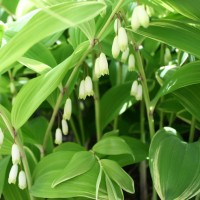
A similar tale of survival is told by the less traumatic journey of a Variegated Solomon’s seal. Planted lovingly in the woodland garden in a rich mixture of loamy, humus-rich soil, certainly the plant would reward me with grand arching sprays of fragrant bell-like flowers and sumptuous foliage. In its partially-shaded location, it was to be the focal point of the woodland garden, but that first year it steadfastly refused to rise to the occasion, content to remain hidden behind the evergreen foliage of a Christmas fern. I watered it generously, hoping to anchor it with deep strong roots from which more than one variegated frond would rise next year. And the next year all I got was the same little frond, with a total of two miniscule flowers.
Newly-impervious to rushing things, I kept it where it was, having gained a modicum of patience since the bearded iris resurrection. Another year passed, and then another, and still the Solomon’s seal refused to yield more than one spindly stalk. Having learned to deal with such disappointments, I simply changed the focus of the woodland garden, relegating the Solomon’s seal to the background, where I promptly forgot about it for a while. At one point I almost pulled it up, wondering how it came to be there in the first place.
Somehow it sensed its brush with death, for the next year (its fifth in the garden) it sent up five majestic stalks ~ each tall and proud and bearing rows of sweetly-smelling flowers, undulating in the wind, and the variegated foliage brightening its dim corner in all its glory. Of course it stole the show that year, much to the chagrin of the foxgloves I had planted during its slow-growing seasons. It is now a gorgeously grand stand, fighting off encroaching lily-of-the-valley with seemingly no effort.
Such comebacks are not limited to the wilderness of the outdoors. Many a gardener houses a number of chlorophyllous troops indoors ~ a scarred cactus that has lasted through three moves, a ponytail palm that almost succumbed to the family cat, or a dusty orchid that suddenly decides to send up an obscenely beautiful magenta bloom in the midst of an extra-punishing winter.
I know two such houseplants ~ a pair of simple spider plants whose brilliance does not in the least betray the punishment they received during an upstate New York winter. Their owner had gone to Florida for a week, leaving the house under the care of a neglectful friend, who had visited only once, and then briefly enough not to notice the twenty-eight degree temperature of the interior. The furnace had shut down, and for at least two days the house was as cold as the outside air of February. All the plants inside turned brown and wilted, before giving up completely.
Convinced that they were beyond repair, the disheartened owner hastily shoved the two spider plants into the basement, forgetting about them for a few months. When spring arrived, the two pots miraculously sported new growth, despite a complete absence of water and light. He brought them out and began to water and feed them, gently nursing them back from beyond the grave. Once restored to light and warmth and water again, the two plants sprang up, stronger than before, finally extending and lowering their little plantlets and tiny white flowers. To this day they thrive, at last at ease with the presence of an emergency thermostat that prevents the house from going below a certain temperature.
Such is the story of many well-worn friends. There is a reverence that these plants delicately demand, a respect which must begrudgingly be given in light of their resolve and determination to survive. They are the champions of the gardening world ~ our tried and true fighters. That which was once the barely-alive underdog seems to shine that much brighter in its unexpected latent glory. Gardening is quite often a bloody battle, and this is a salute to our valiant heroes.
09
April
2013
No comments
April
2013
The Growth of a Garden ~ From 2001
Growing up on the twisting Zone 5 border of upstate New York, my most magical moments of childhood occurred in the garden, during our warm, sunny summers. The backyard, considered large for a small town, was bordered by tall, ancient pines, great oaks, and middle-aged maples that grappled with one another for sky space. This forested area extended down a steep embankment, where I played as a little boy.
Dad had two vegetable gardens then ~ one in the partially-shaded edge of the woods, where he somehow managed to keep us fully stocked with zucchini summer-round, and a raised bed in full sun, which filled the garage window-sill with ripening tomatoes, and also produced beans, peppers, and the occasional eggplant.
I remember sitting on the lawn as he worked the ground – hoeing and tilling and throwing out random rocks. My brother and I were welcomed to break down any big chunks of compacted soil, and I can still feel the way those balls of earth crumbled to a satisfying, feathery powder between my small grinding hands. It was fun to pulverize the dirt like that, unless it was windy – then a surprise gust might throw the falling particles back in my eyes. These were the great inconveniences of the moment; bugs, heat, and boredom would not bother me until years later.
As Dad finished his vegetable planting ~ the last tomato plant buried sideways up to its neck ~ he closed the self-made fencing. This was a five-foot-high wall of metal netting, held up by steel stakes at various intervals and meant to deter rabbits and other herbivores from feasting on our family’s summer crop. Despite its seemingly frail construction (my brother and I bounced against it like it was a vertical trampoline) it worked: we never lost one tomato or bean.
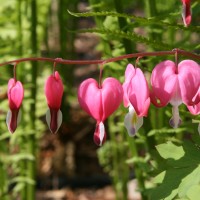
The vegetable plot neatly planted and watered, my attention turned elsewhere when the pool was opened. Splashing the mid-day away as Mom sat by reading a book, I made brief excursions to the cool shady edge of the woodland, where a semi-wild patch of rhubarb and bleeding hearts made an unlikely, yet happy, marriage.
The delicate hearts on drooping stems were little gifts I presented to my Mom with a dramatic bow. Bleeding hearts and rhubarb may sound like an off-match, but it was improbably pleasant ~ the graceful, arching sprays of the quietly-colored bleeding heart and its dainty deeply-cut fern-like foliage was a striking complement to the grand darkly-ruffled umbrella-shaped leaves and thick, deep-maroon stems of the rustic rhubarb.
Mom made rhubarb pie with the harvested stems, and to this day I do not understand how the stems can be edible when the leaves are so poisonous. I didn’t take the chance; rhubarb was never a favorite of mine. I waited until the zucchinis grew long and plump, and Mom made zucchini bread – the shredded squash taking on entirely new meaning as it melted sweetly in my mouth, warm from the oven and completely transformed in its tantalizing mixture of sugars and spices.
After dinners of homegrown vegetables, BLTs, and barbecued burgers, I strolled the path in front of our house. Two rigid, brick-lined borders framed the front entrance, backed by twin euonymous hedges. Rather than conforming to the strict structure suggested by the layout, these beds instead ran riotously free from any proposed order ~ wave upon colorful wave of simply silly annual chaos broke freely onto the brick path.
My favorites were the snapdragons ~ so impossibly sweet of fragrance and so inviting with their velvety tufted lips, that I had to force myself not to eat one. A crazy range of petunias offered another creative outlet ~ I loved dead-heading them, how neatly and easily did they offer spent blooms for clean-up. Marigolds grew freely there as well ~ small bushy clumps of burgundy and orange colliding with tall pom-poms of golden yellow exploding garishly and mimicking the brilliance of the summer sun. As the late-afternoon rays slanted through the colorful bombardment, I walked leisurely along the borders, an ice cream cone melting in one hand and a small haphazard bouquet in the other. These were happy days ~ fleeting days ~ of carefree youth and garden mysticism.
As evening fell, and my childhood dissolved, the gardens seemed to lose their magic. Year after year, the plants seemed less vibrant, less enchanting. I didn’t know then that it wasn’t the garden, it was me. I saw only the dissipating mists of happy illusion, and the dim reality of the world closing in on a little boy’s garden. Insects became an unbearable nuisance, the hot days and beating sun lost their brilliant charm, and the harsh winters killed the vivid annuals and my innocent impressions.
The watering and weeding grew tiresome, the arriving boxes of bulbs became an ugly added chore, put off until the last possible moment when the earth was brutally cold and the first flicker of flurries floated down. I couldn’t see then the imminent arrival of spring, and the new beginning afforded every year.
08
April
2013
No comments
April
2013
Words from 2001
Back over a dozen years ago, I put out a Project entitled ‘Words of a Gardener’. It was conceived and hatched that winter, as I was finding my way back into gardening. As a written work, it didn’t get the reaction that some of my photo-centric works did, but it remains a favorite of mine. In the revamping of this site, some things had to be excised and left out, and this was, sadly, one of them. I may put it up again in some form, but for now I’m just going to post an excerpt a day from it on the blog. Partly because I’m busy (or lazy, it’s a fine line) and partly because I am simply fiending for a taste of spring and this is the closest thing I can find. Here’s the first story:
A Gardener Returns To His Roots
Somewhere along the rocky path to adulthood I lost my garden. As a young boy, I had an odd passion for gardening. I say odd because at the age of ten I could find no other comrade who shared my intimate interest and knowledge of plants and flowers. Devouring books and seed catalogs during the winter months, I trained and nurtured myself into a horticultural expert. During the springs and summers of our Zone 5 climate, I’d put my mental practices into effect, subtly drawing forth a perennial bed from Dad’s old vegetable plot and laying claim to a wooded portion of our backyard with a woodland shade garden.
The backyard border, long a place for Mom’s rhubarb, Dad’s zucchini, and a riotous selection of garish marigolds and vulgar-red salvia, was overtaken by my enthusiasm as well. It too transformed gently into a perennial bed ~ tall spires of foxglove provided a perfect transition from the woodland garden to the bed, as bursts of Helianthus shot skyward, Echinops captured the sky in its pincushions, and Monarda crept stealthily onward.
In the last few years of childhood, my gardening experience had surpassed that of my parents and the local nursery-owner. Such knowledge set me apart from most people my age, but I didn’t care ~ the garden was a place of peace for me, a safe escape when worldly concerns, like pesky purple bugleweed in the lawn, threatened to encroach on an ever-receding childhood.
Back then, the plants were my friends and playmates, and I took their health and happiness to heart. Each successful planting was a triumph, each failure a personal affront. When plants thrived and multiplied, my heart soared; when they refused to grow, or, worse, died, I took it as an attack on my very hope for the future. I was a young boy then, and the garden was teaching me about life in a way that my schoolmates would not understand until years later, if they would ever understand at all.
The shifting of seasons and the gentle onward march of time were incontrovertible aspects of gardening. Neither can be fooled or changed much, and the gardener, despite one’s best efforts, is never completely in control. Most little boys don’t care about such matters. Rain or shine they will find a way outside, impatient and implacable in their demands. I learned that the best way to get something to grow was with care and coaxing, a gentle tug in the direction you’d like things to go, and if that didn’t work, then try something else.
When bearded irises found my soil too rich and moist, I offered the spot to their distant Siberian and Japanese relatives, who happily bloomed and multiplied in their new home. As a tree peony leaned a full forty-five degrees out of the shade of an evergreen, I moved it to its own spot in full-sun, only to have it punish me for my mistake by dying. A rabbit’s quick work of a lovingly-tended patch of Lilium had to be replaced by the less scrumptious daylily. These were the ways of the garden, the ways of the world, and I was lucky to learn them then.
I saw firsthand how back-aching work was always rewarded, somehow. The last-minute scrambling to get spring bulbs planted on Columbus Day (my one day off from school in the fall) was a bothersome moment of chagrin until I saw my handiwork poke through the last vestiges of dirty snow. A strict regime of watering during dry spells brought the ostrich ferns back stronger every year, their black elongated creepers naturalizing beyond the woodland garden and into the unworked area of our backyard forest. The lessons of life were being instilled as I weeded and mulched and dead-headed. A garden, like a person, can be both unforgiving and merciful. It will refuse to yield in some circumstances, bend and sway under others. In the garden I learned about nature, human and otherwise.
With the onslaught of adolescence, I lost my interest in the garden, and for a few years lost a bit of myself. The gardens were under the care of my parents, who did the best they could, but never quite understood when to divide or when to cut back. When I returned home for summers and holidays, I saw the overgrown garden and felt a gentle, dull ache ~ a surprise feeling of guilt. I had abandoned my old friend, and in my absence the most sensitive parts ~ the Delphiniums, the lilies, the clematis ~ had been overtaken by their rougher, rowdier neighbors ~ the Malva, the Rudbeckia, the Monarda. These were colorful, pretty, proven performers, but they overwhelmed the place with their imposing power and lack of grace.
At the time, I didn’t have the effort to fight. The seemingly fanciful garden days of my youth gave way to more pressing concerns. But I didn’t forget entirely. Like a pocket of collected seeds, something had been locked away inside of me, waiting for the ideal conditions to germinate and spring back to life. It took a few years, but eventually the subtle call of the garden became a full-fledged beckoning cry, and I heeded the voice from which I had learned so much.
During the last year I returned to the magic and wonder of the garden ~ the garden in my mind, and the garden in my backyard. I have rediscovered its simple joys, its ever-unfolding enchantment, and its magical way of imparting worldly knowledge. The vigorous, rampant growth of undesirables has been checked, and the more delicate and sensitive plants have been carefully cultivated. It is as an ongoing process, always evolving, always challenging, but for the moment I have returned, a grown man who somehow found his way back to the garden.
03
April
2013
No comments
April
2013
Boston Back in Bloom
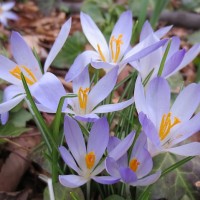
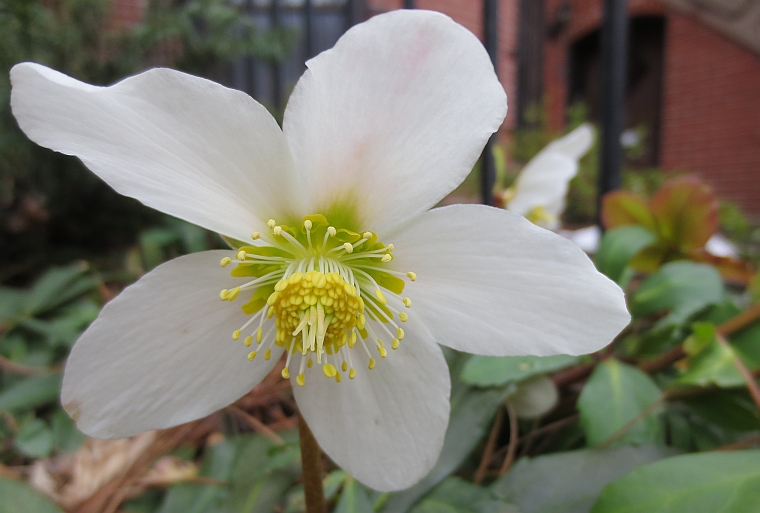
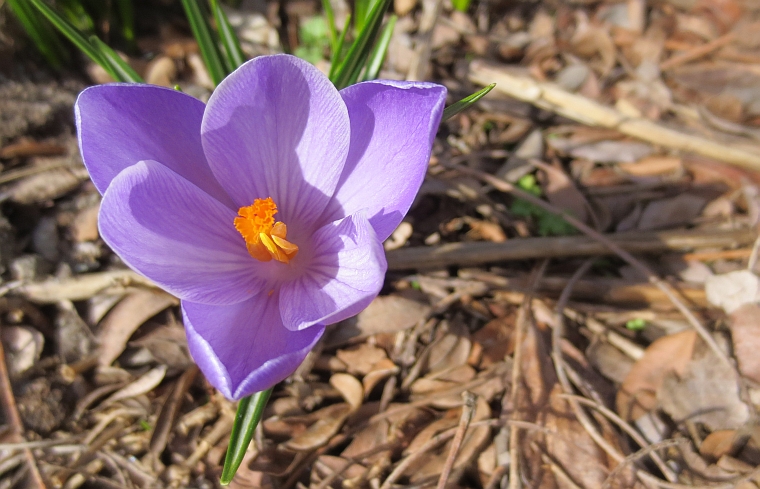
The crocus gets all the glory at this early stage of the gardening year, but there are other little jewels that sparkle in their own way, including the Lenten Rose and the snowdrops seen below. Every spring I make a vow to plant more of these early harbingers of the season – so desperately appreciated are they at this time of the year – and every fall I see the bulbs from which they originate in the garden stores, and I pass them by with a lazy shrug. After a winter that doesn’t want to go away, they are even more appreciated, so this September/October I’ll see if I can make the effort. For now, I’ll enjoy the work of others, as seen from the streets of Boston.
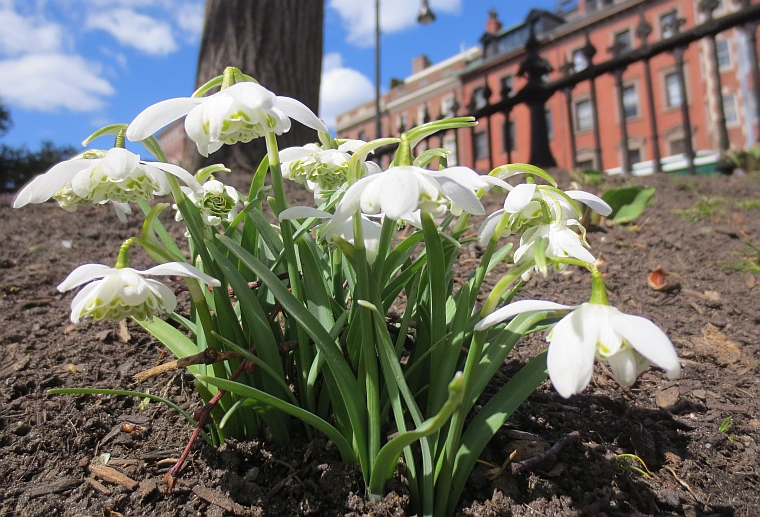
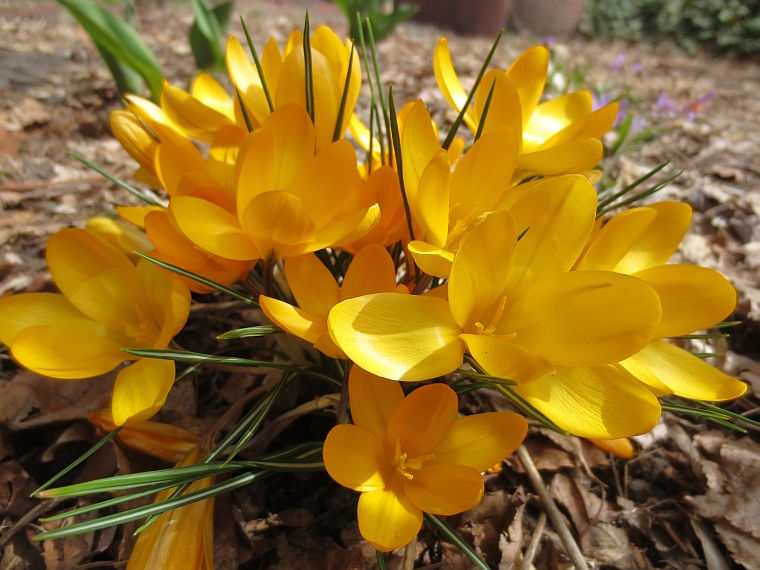
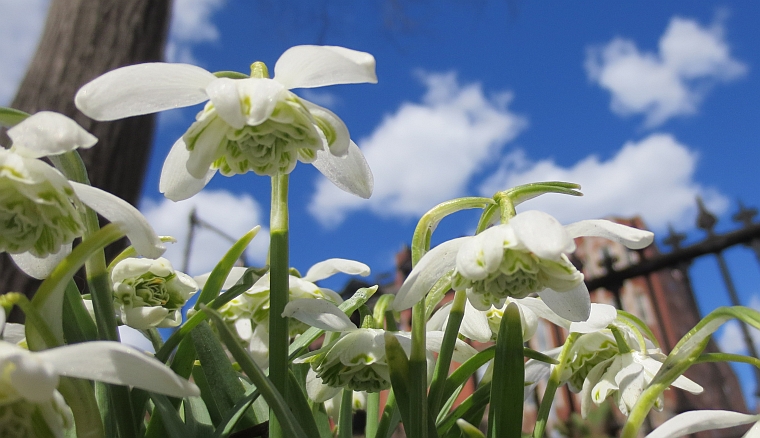
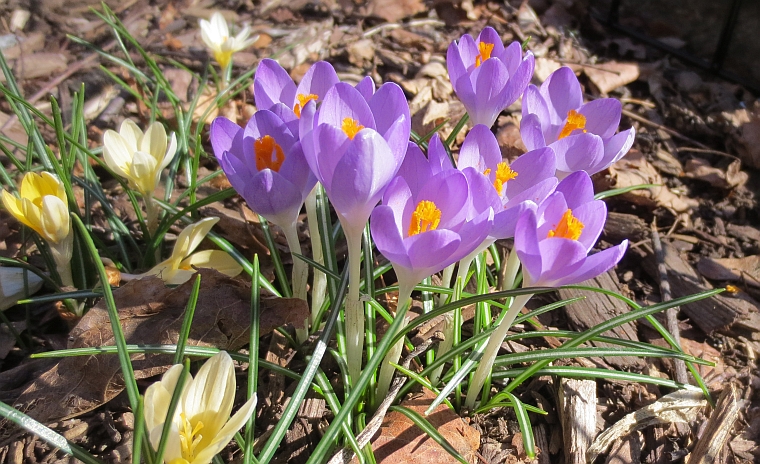
30
March
2013
No comments
March
2013
Not an Easter Lily

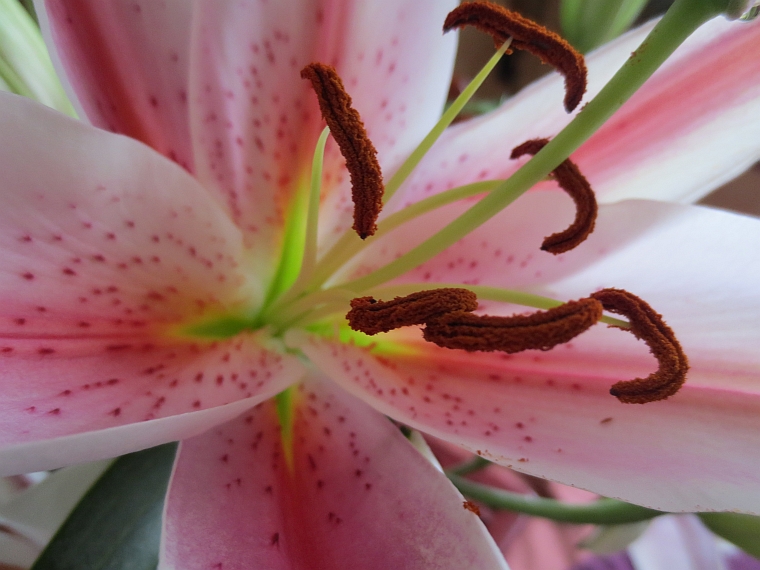
Lee Bailey, in his glorious book ‘Country Flowers’ (which taught me more about gardening, and life, than just about anything else), mentioned that he actually got Easter lilies to grow in his garden after being given a pot of them for their namesake holiday. When I planted one out in the garden, it never came back. Yet another example of how Mr. Bailey was a far better man than me. The lilies seen here are the classic Stargazer, as given to us by my friend JoAnn. Their fragrance is far more potent than the Easter lily, and the color clearly more vibrant than the Easter lily’s plain white. In our garden, we have one or two Stargazers that do come back, year after year, but since they’re so ubiquitous I don’t pay them much attention, nor amend their soil as I should. As such, they don’t multiply or put on the greatest show. That’s my failing though, and this year I may rectify that with some well-deserved pampering. Anything that survives the bulb-eating denizens of our back-yard for this long has earned some better treatment.
27
March
2013
No comments
March
2013
Forcing Cherries

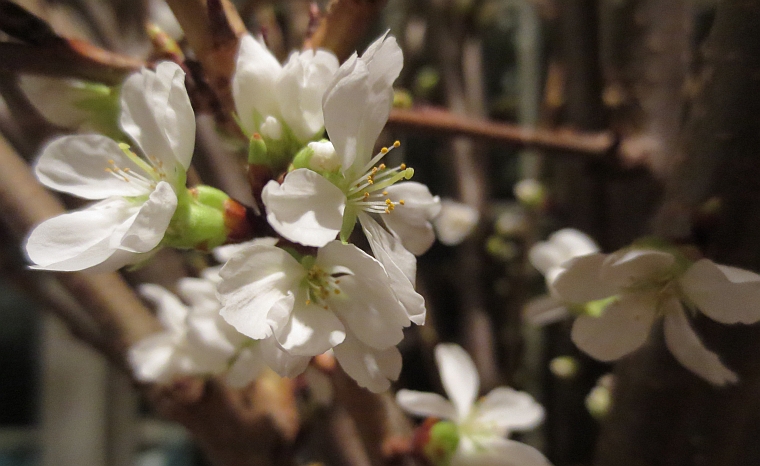
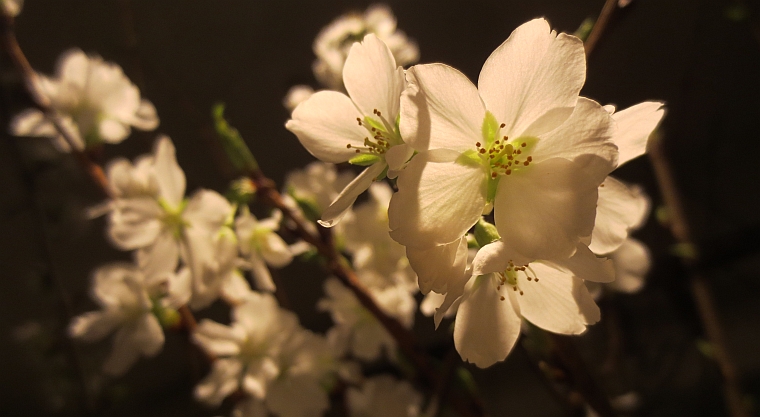
Since we don’t have any forsythia on our property, I usually force a few branches of the flowering cherry from our backyard. As it needed some major pruning this year, it proved doubly fortuitous. There’s no difficult science involved in forcing spring blooms. Once the buds swell in late winter, I trim a few, put them in a large bucket filled with water, store them in a garage overnight to slowly acclimate them to warmer temps, then bring them in and let nature take its quick-forced course. Some people advise submerging the branches entirely in water for a few hours to re-hydrate them as much as possible, but since we don’t have a bathtub that’s not an option, nor has not doing it ever impeded the blooms from opening.
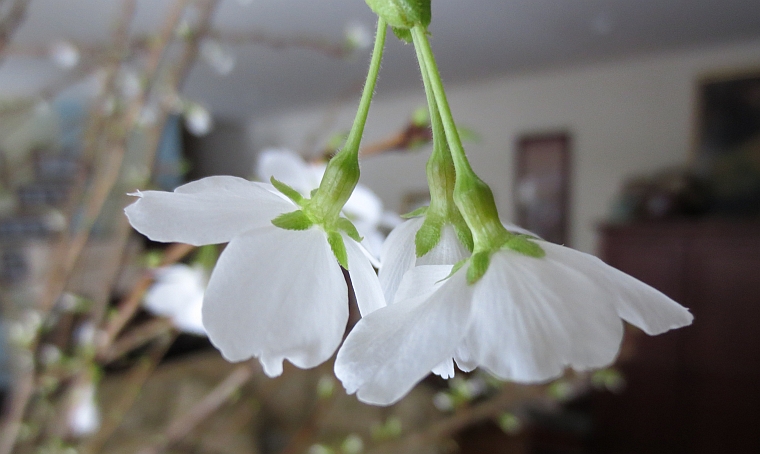
It is just the thing for a late-showing spring, and since the weather remains so cold and gray, it’s a boon to the spirit. This particular cherry is a single flowered species – a much-simpler version of the flashier hot pink Kwanzan cherries that are everywhere. It is also one of the first to open, bursting into bloom as if in a race with its own fine foliage, and usually beating it. Towards the end of the blooming period, the petals take on the slightest tinge of pink, edged delicately with a darker border ~ an elegant send-off before fluttering to the ground.
26
March
2013
No comments
March
2013
Rhymes with ‘Bitch’

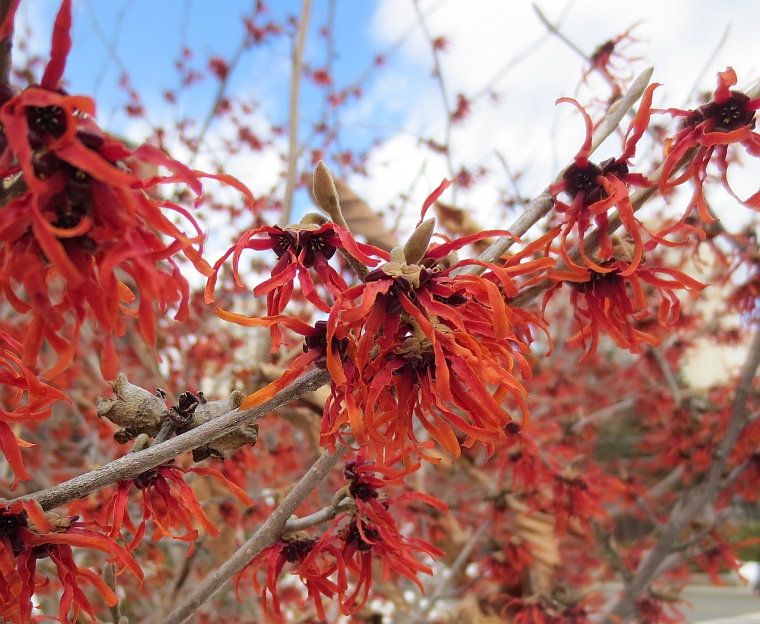
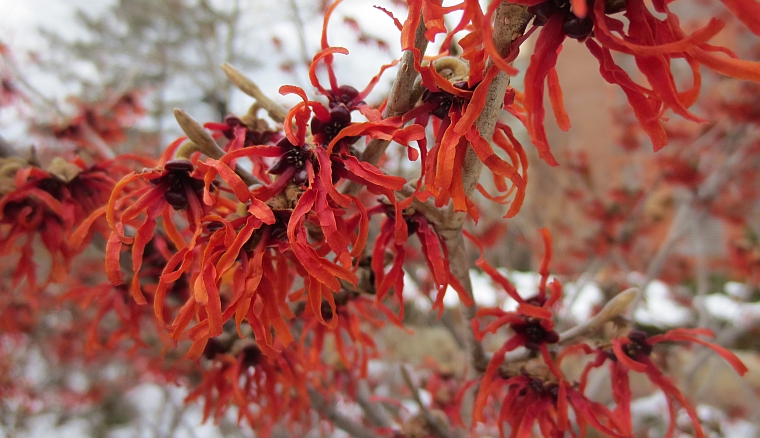
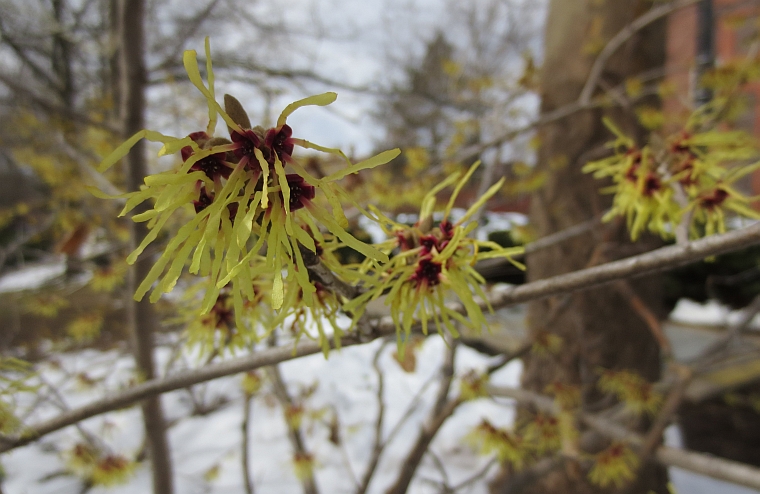
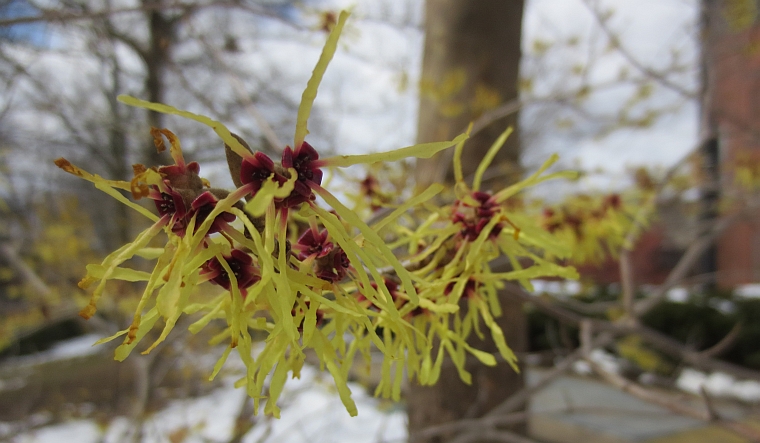
This is witch hazel, one of the earliest-blooming spring shrubs. It has a delightfully sweet fragrance, and blooms on bare wood, the effect of which has always struck me as somewhat unfortunate – the blooms having to share space with brown, dead leaves, and the blossoms (already naturally shriveled on their own)Â always leaving one to wonder whether they’re still alive. Over the years, such an unforgiving stance has softened, and I’ve come to appreciate and admire the stalwart shrub, bravely putting out its perfume when there is still snow on the ground. Seen against a backdrop of blue sky, such a luxury in these earliest of spring days, the blooms are more vivid that I’ve given them credit for, and the entire impression is more effective in the sea of brown that presages the green revolution.
06
March
2013
No comments
March
2013
Smell These
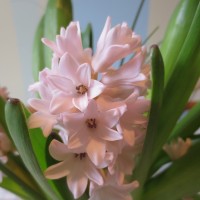
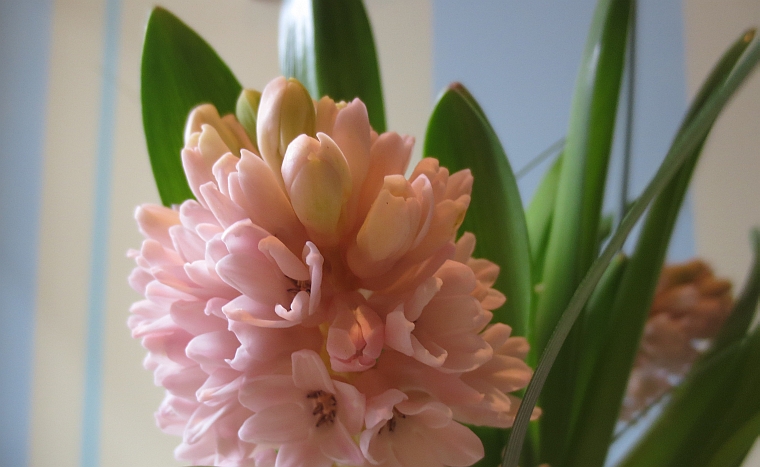
As a gift for Andy in honor of a recent rescue mission, I picked out a bouquet of light pink hyacinths, on the verge of blooming. They’ve lasted for over a week, stretching and filling the family room with their pungent fragrance, always verging just short of cloying, and in close proximity perhaps surpassing such a point. They’re more than welcome at this dire time of the year, especially with some more snow on the horizon, and sometimes just the slightest whiff of a spring bloom makes all the difference. Incidentally, out of all the new Tom Ford Jardin Noir collection of Private Blends, the selection I was most enamored of was the Hyacinth-based one – Ombre de Hyacinth. As a rule, I’m not a fan of floral frags, but this one spoke to me because of my fondness for Spring, and the happy correlation to one of its most delicious scents.