Category Archives: Gardening

The Staunch Ostrich Fern

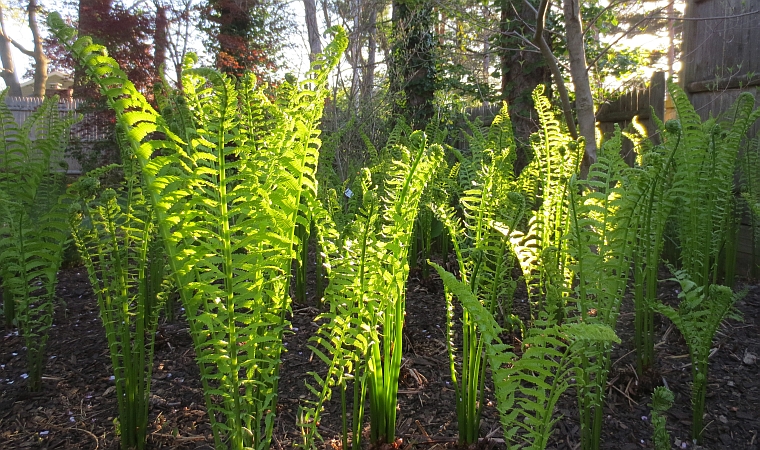
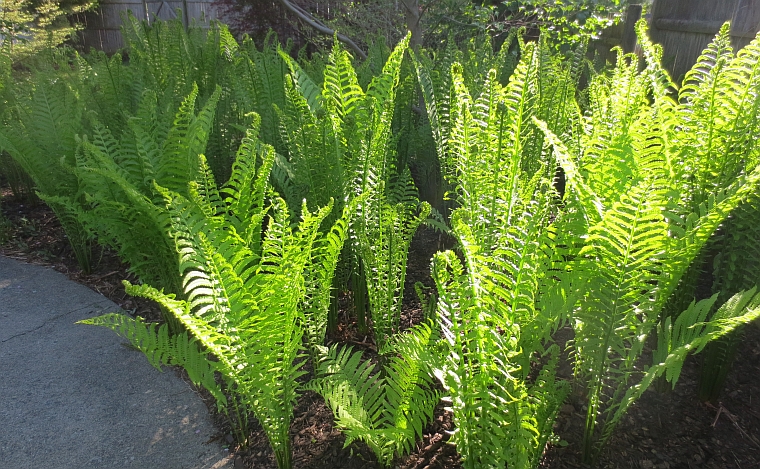
Meet the Ostrich fern (Matteuccia struthiopteris). With my propensity for ostrich feathers, it should come as no surprise that I love an Ostrich fern. At the house where I grew up, there was a stand of these in the woods behind the neighbor’s home. When their house was being sold, I moved a few to the wooded area behind our house in a questionably immoral decision. (Technically, they were semi-wild, and didn’t look to have been planted by anyone, and I didn’t take enough to make a dent in their stand of them.) Ours were in somewhat more amended soil, and took off, even treading numerous feet into one of the proper beds (where they retain a sizable, and threatening, hold).

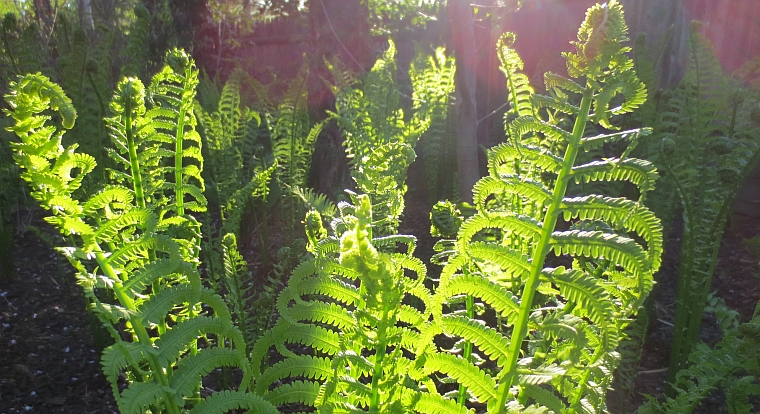
Andy’s home was surrounded by these ferns as well, where they even escaped into the lawn. When we first moved into our home ten years ago we brought a few over in the spring. Today, there is the sizable grouping of them you see here, and a smaller patch in another corner. Contrary to popular belief, not all ferns require heavy shade and pampering. These monsters (they can get up to five feet tall in the right conditions) can do quite well in full sun provided they have plenty of water and a moisture retentive soil. The ones in these photos get strong sunlight for the majority of the day, with just a slight break in the late afternoon. They do require water to remain fresh in the summer, but it’s a small price to pay for such dramatic beauty.

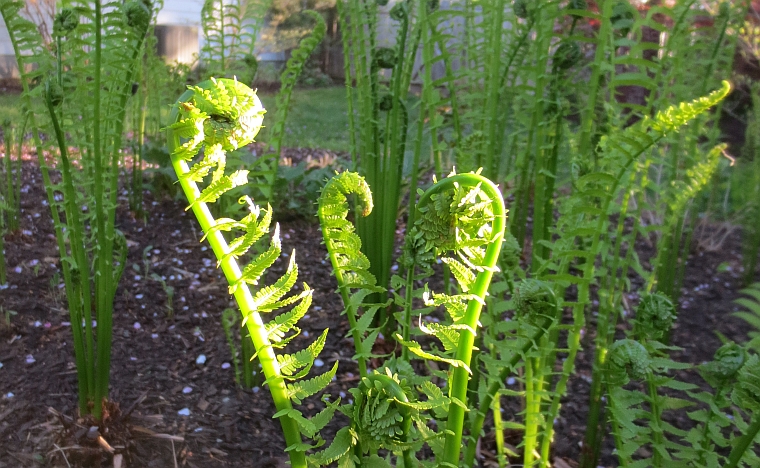
This is one of the crown-forming ferns (as opposed to mat-forming) ~ they will form a central crown from which the fiddleheads emerge (these are the ones that you eat in the fancier restaurants) and send out black-hued sharp-ended runners that travel a few feet from the parent plant, eventually establishing a new crown of their own. I like the way they spread, in that they can managed by judiciously pruning these shoots, or allowing them to come up if you have the room.

These have been captured at the tail-end of my favorite stage – just as they first unfurl. You can still get a sense of their fiddlehead origins at the curled tips of the fronds. It’s a deceptively delicate pose from such a tenacious trooper, the feathery frills belying its stalwart nature. Little Edie of ‘Grey Gardens’ might be able to relate.

S-T-A-U-N-C-H. But how were they to know?…

Continue reading ...

Judas, Judah-ah-ah, Judas

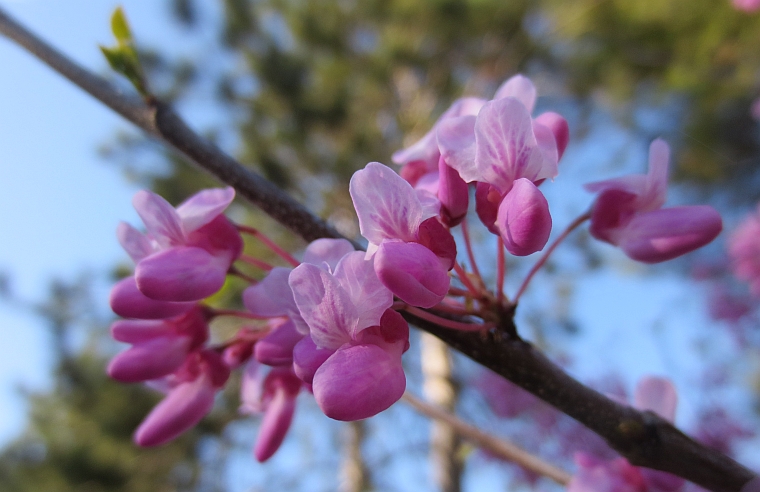
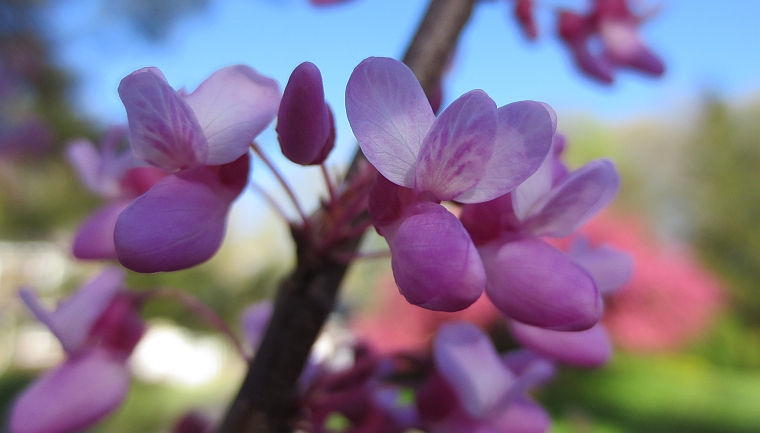
These pea-like blooms belong to the Redbud tree (Cercis) currently blooming in our front yard. This year marks its best flowering yet; the first two springs it produced only a few blooms, and I was beginning to worry. Those fears were laid to rest when I saw the buds forming earlier in the season. Like the American dogwood, this tree flowers before the foliage appears. Going one step further in uniqueness, it flowers directly from the bark, as opposed to the ends of the stem, like most trees.

The origin of its common name is under dispute. Some say it was the tree that Judas hung himself from after betraying Jesus. Others contend the flowers and seedpods resemble the hung Judas after said act. Whatever the reason, great tragedy often belies great beauty.

The slightly heart-shaped leaves remain fresh and vibrant throughout the summer season, a boon to its sun-baked location beside the driveway. This was one of those unassuming below-the-radar trees that I never gave much thought to until late in my gardening game. I was impelled to try it out when reading about its beauty in a tree guide book. The author was so enamored that he claimed if he had but one tree to grow in the world, the redbud would be at the top of his list. What can I say, I’m an easy target for (and source of) dramatic exaggeration.

Continue reading ...

Softly, In Pastels

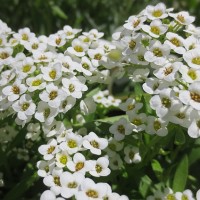
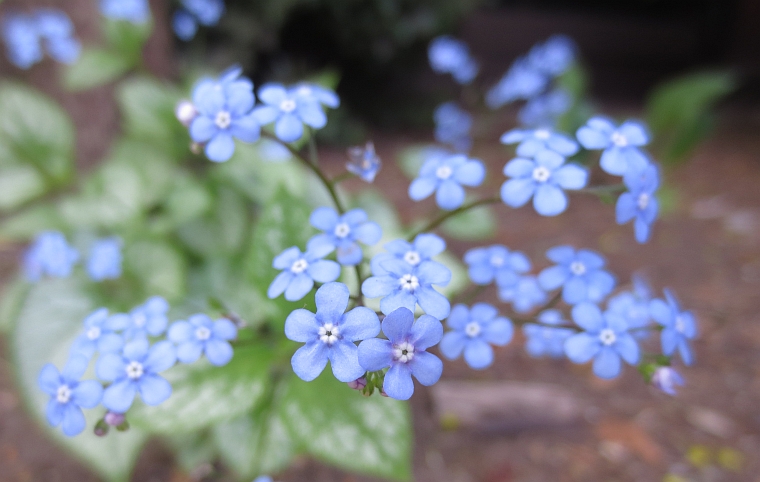
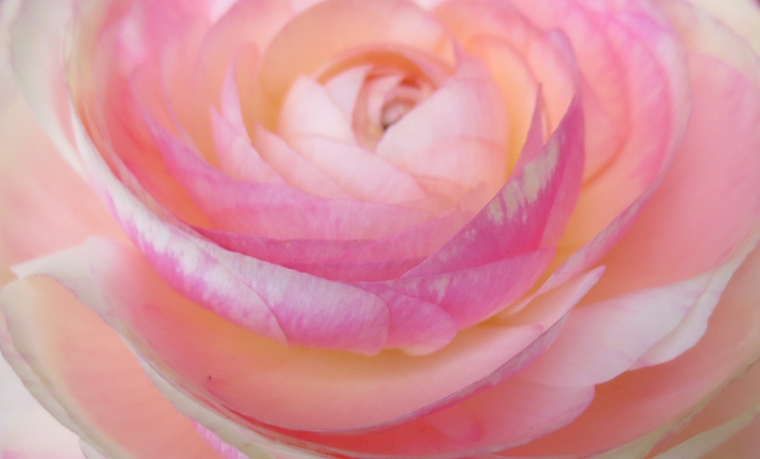
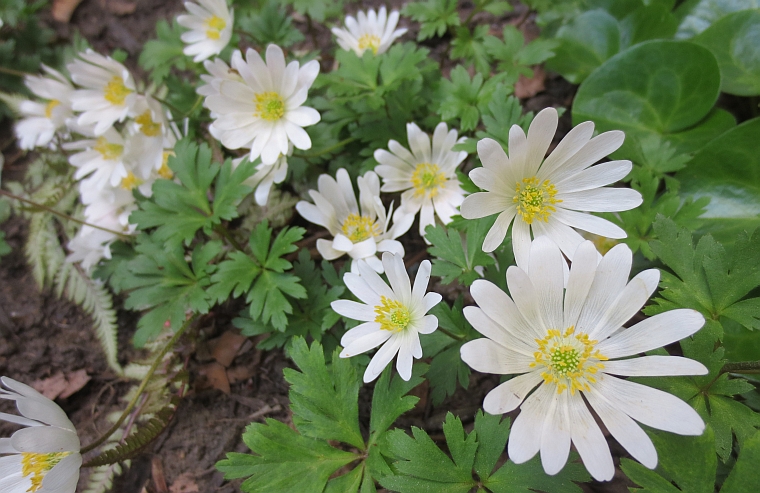
Though it has the blazing fire-truck red of tulips and the blaring yellow trumpets of daffodils, spring is better-known for its softer palette of pastels, as evidenced by these photos. Whites and pinks and baby blues – the season of infancy knows how to tread lightly, and to wondrous effect. A cloud of forget-me-nots floats just above the ground, its mottled variegated foliage touched by silver and sage.

I grew some of these at my childhood home, in the woodland garden, where they could go freely to seed. Technically, they are biennials I believe, but their seeding is so prolific you can usually count on them for more than a few years, if you are flexible with where they land, or make some careful transplanting upon germination. The pretty foliage does tend to die back in the summer, which is why I never put them into the more formal beds.

The pink ranunculus above has always been one of my favorite flowers, though I’ve never grown them in the garden. The rose-like blooms come in shades both bold and soft, the latter seen here. They may work better as cut flowers.

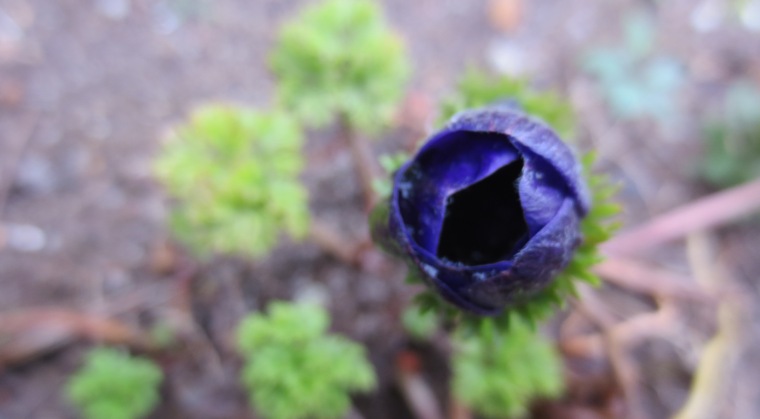
Finally, the windflowers (Anemone) above are a deceptively fragile-appearing tough bunch, their corms surviving an often-hostile Northeastern winter. I grew these one year in a too-unforgiving spot, where they came up but once, and then I forgot about them and they never returned. Apathy is a terrible thing, often more viciously cruel than an outright infliction of pain or hurt. Better to learn these things in the garden than somewhere else…

Continue reading ...

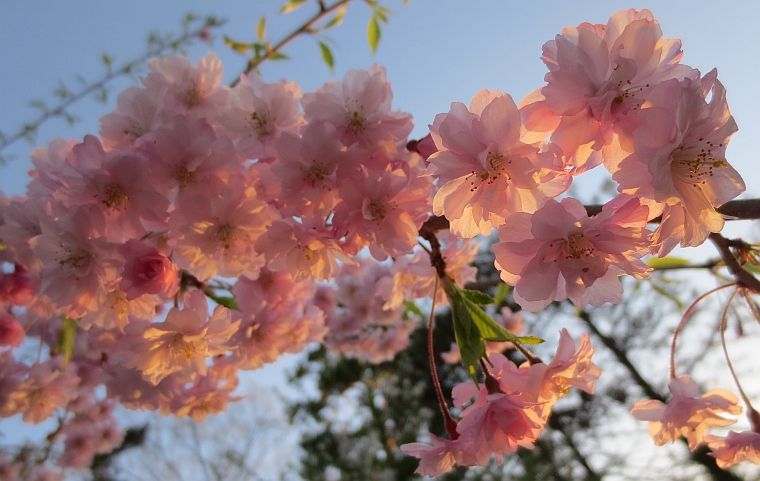
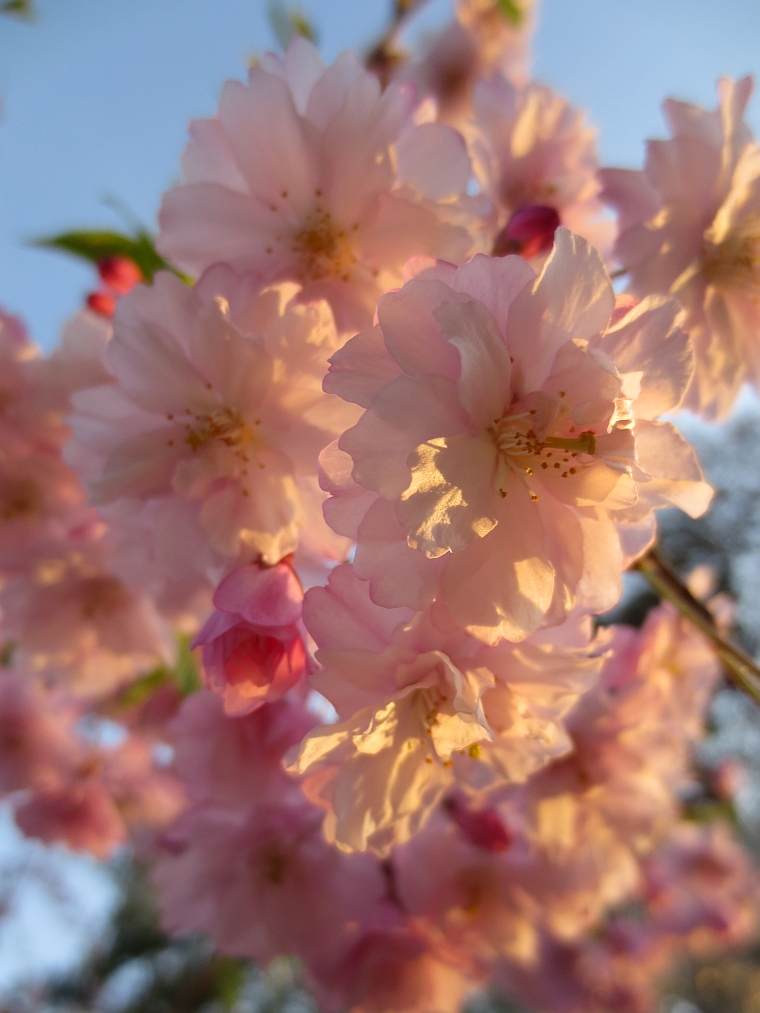
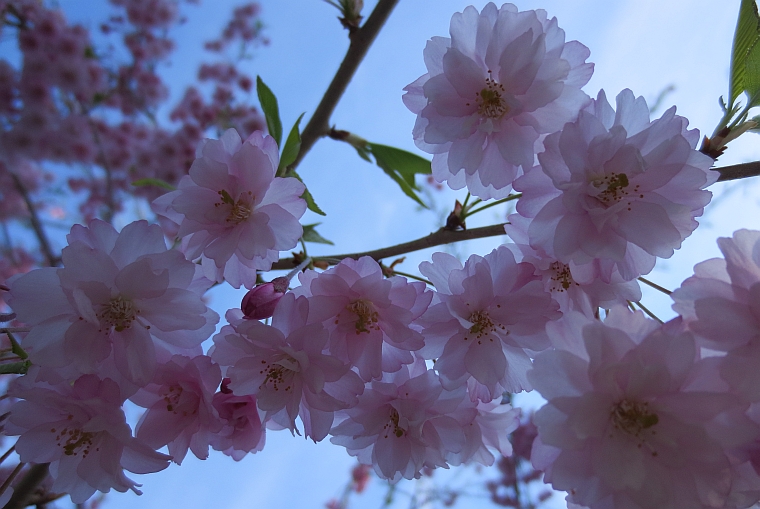
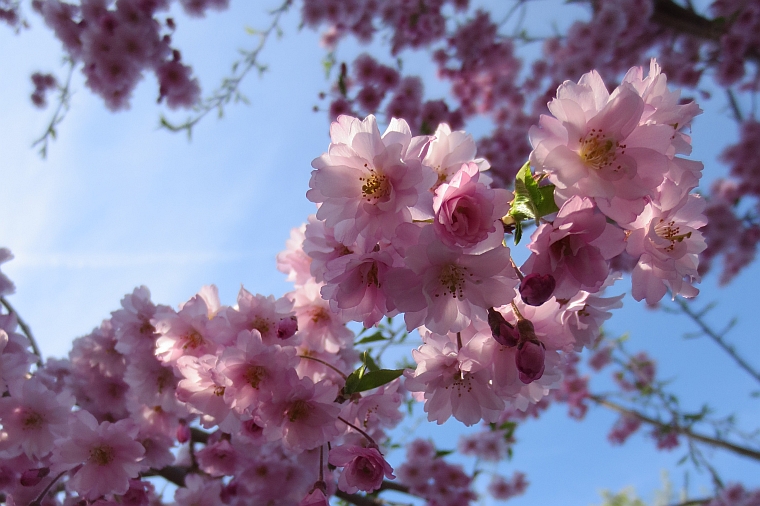
Parade of Pink Cherry Blossoms ~ 3

The last set of cherry blossom photos, for now, taken in the last sunlight of the day. That golden hour makes many things more beautiful, shading them in a deeper way. The dying light of a day is often its finest.

Continue reading ...

Parade of Pink Cherry Blossoms ~ 1

This is the weeping cherry that sits diagonally across from the white cherry previously depicted. Its blossoms are a little fancier, but not quite as fancy or large as the Kwanzan (the last of our cherries to bloom). It strikes a nice balance between the perhaps-too-simple white cherry and the perhaps-too-overwrought Kwanzan.


Continue reading ...

No Weeping In Gardening

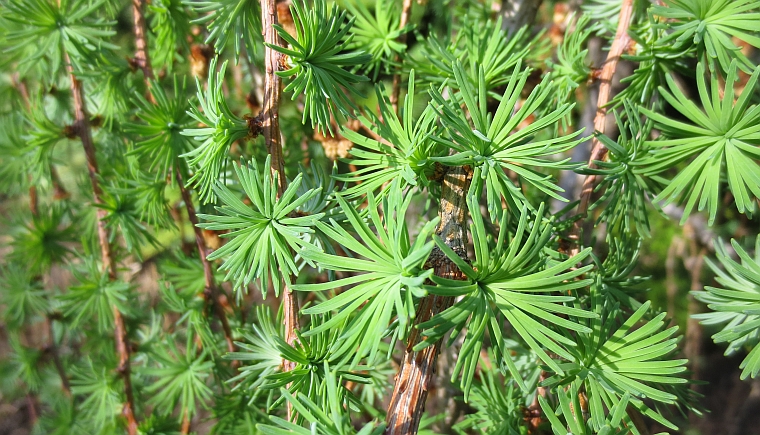
As in baseball, there is no crying in gardening, unless you’re a weeping larch, in which case your tears are more than welcome. This is detail of the specimen I have growing in the side yard. While it looks like an evergreen, those leaves will actually turn bright coppery orange in the autumn, then fall to the ground in deciduous rapture. Right now, they are just beginning their star-like explosion of this soft shade of green. To touch, they are soft and feathery – the complete anti-thesis of a stiff traditional evergreen. I like the trickery in that.


Continue reading ...

Popping the Backyard Cherries

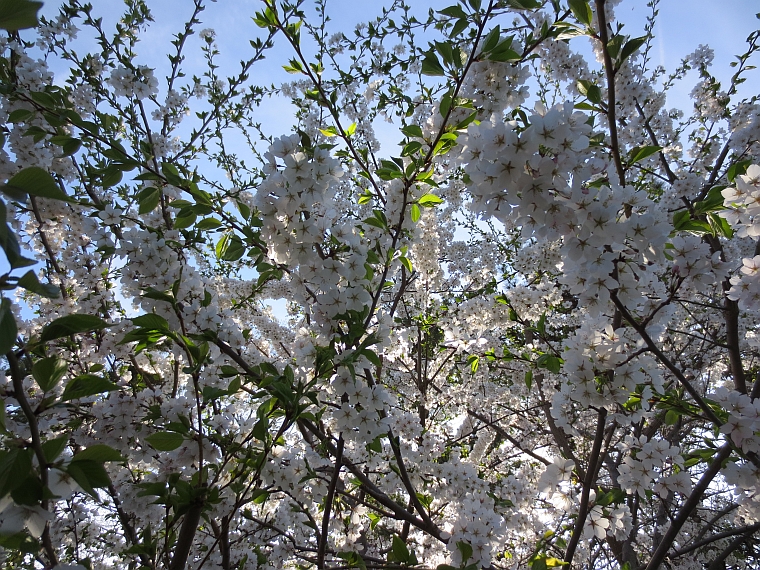
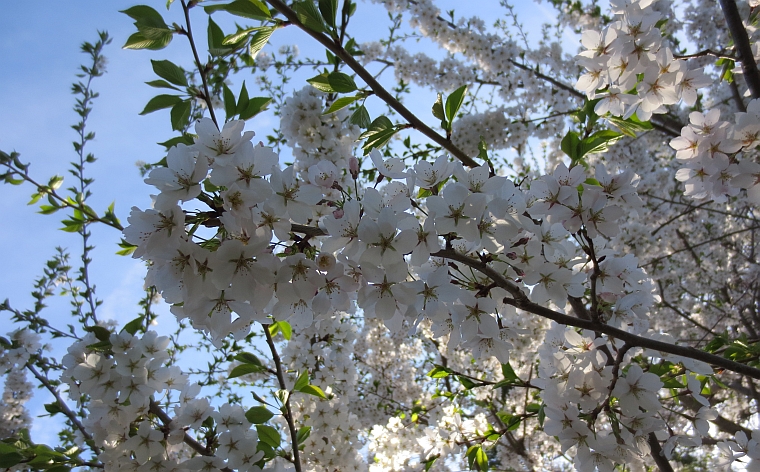
The cherry trees in the backyard are in their prime and glory, with blooms tumbling off tiers of branches, and petals falling delicately in the wind. In the warmth and sun, they don’t last as long, but the trade-off for the fine weather is more than worth it. I planted this tree when we first moved into our home. Barely five feet tall then, it soon shot up and out. Ten years later it’s about twenty-five feet taller (and in dire need of further pruning, but not until these beautiful blossoms fade).

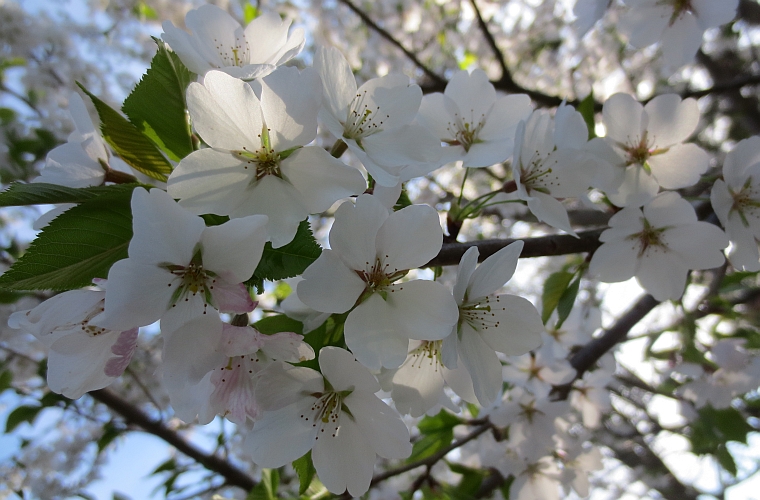
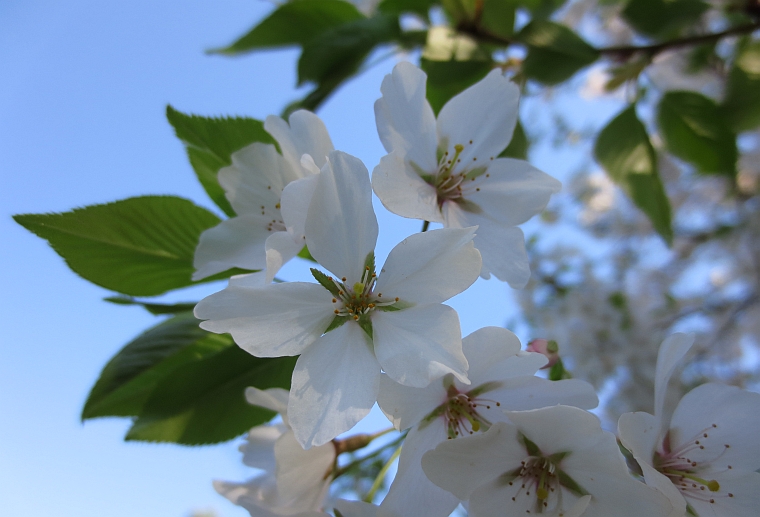
This is a single-flowered cherry tree, and one of the earliest. It flowers before most of the foliage leafs out fully, lending it an aspect of elegance as the blooms are held starkly against branch and sky. It begins white, changing gradually to the slightest shade of the lightest pink toward the end of its blooming cycle. Fruit – inedible for most folks – will appear later in the season, but it usually gets eaten by the birds before the fall. (In fact, I’ve never seen fruit on the tree once the leaves have fallen, and most is picked off before it’s even ripe.)

Continue reading ...

Bark of Coral

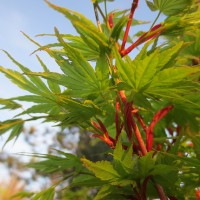
The golden hour of the day works its most enchanting magic on something like this coral bark maple, with its chartreuse leaves and new red bark. This was one of the more expensive additions to the garden, but its unique coloration made it worth it every penny. Starting off like this, the leaves will slowly graduate to a deeper green, while the new stem growth is bright red (and reason to keep it judiciously pruned, so more appears each year). In the fall, the leaves turn an intense shade of yellow, before lightening to a pale, ghostly tone, fading almost to white as the frosts begin. In its protected corner, it gets the first and last sunlight of the day – the best illumination for showing off its colorful carriage through the seasons.

Continue reading ...

May Flowers

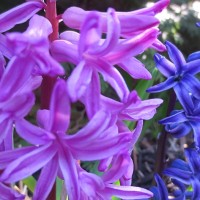
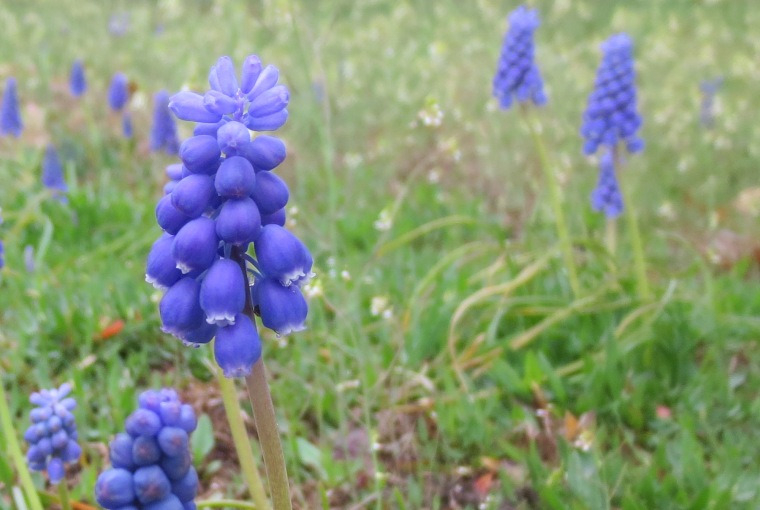
A promise kept by Mother Nature, these flowers linger into the lusty month of May. It is one of my favorite times of the year – when all is hope and promise – and the garden begins its first major flush of bloom. The featured photo is a small group of hyacinths. I planted these a few years ago. The first year of bloom is the spectacular one – with the full head of blooms, looking almost fake to be so perfect. The years that follow settle down into a more natural state, as seen here. I personally find that first year a little overbearing, at least in the plant world. This is the way it should be.

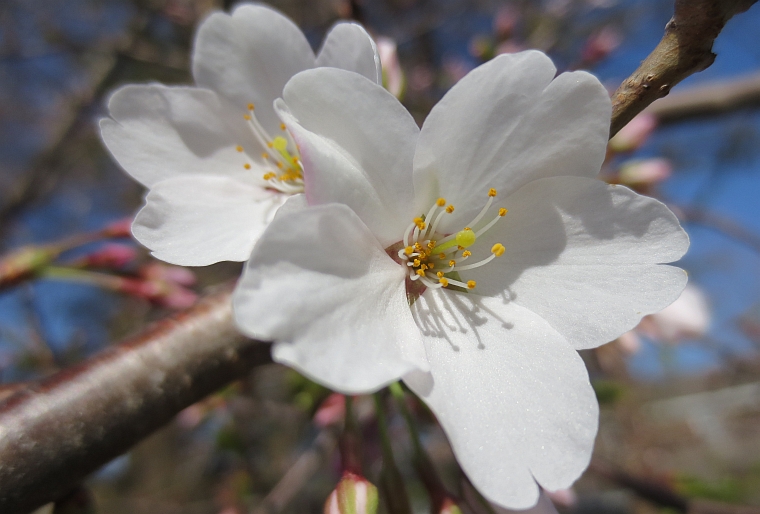
Next up is our cherry tree, a single-flowered variety (the Kwanzan explosion begins a bit later). While the blossoms are simple and small on their own, taken together they light up the sky with bright criss-crossing branches of blooms, presented before the onslaught of foliage, and all the more impressive for it. Examined closely, they reveal details that might otherwise go overlooked: as these age, they will turn the slightest bit pink at the center and edges. It’s a subtle change, usually missed for the quick duration of its stay, coming as it does near the tail end of the bloom’s life.

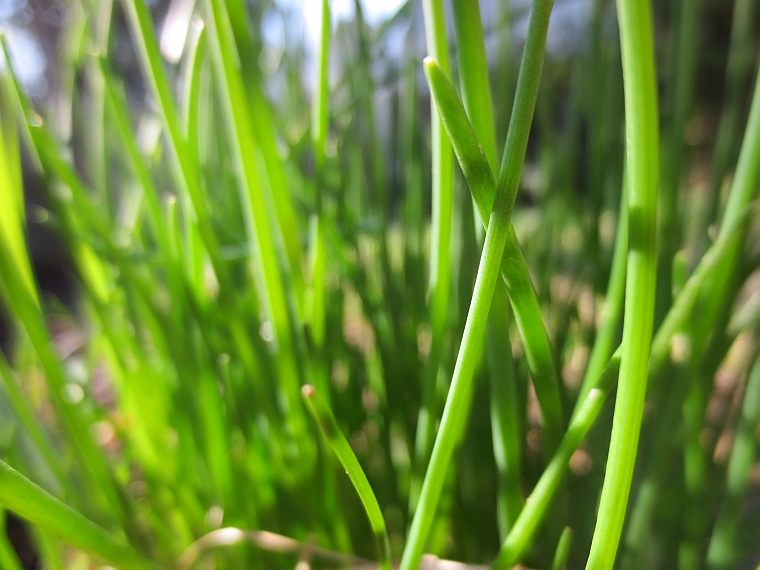
After the drawn-out winter we had, it’s not just the flowers that offer sweet relief, as evidenced by this stand of chives in the sun. One of the things I like best about this time in the gardening year is how bright the greens are, how fresh they look. For many people, gardening is all about the flowers – how to get the biggest, brightest, and most abundant. For me, it’s also about the foliage ~ the texture, the hues, the shape, the style. The endless variety of life, teeming with possibility, at one of the most beautiful months of the year…

Continue reading ...

The Cherry at the Church

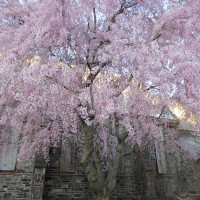
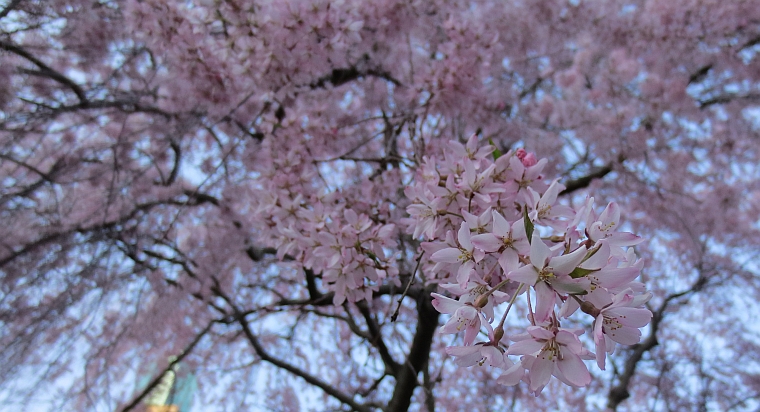
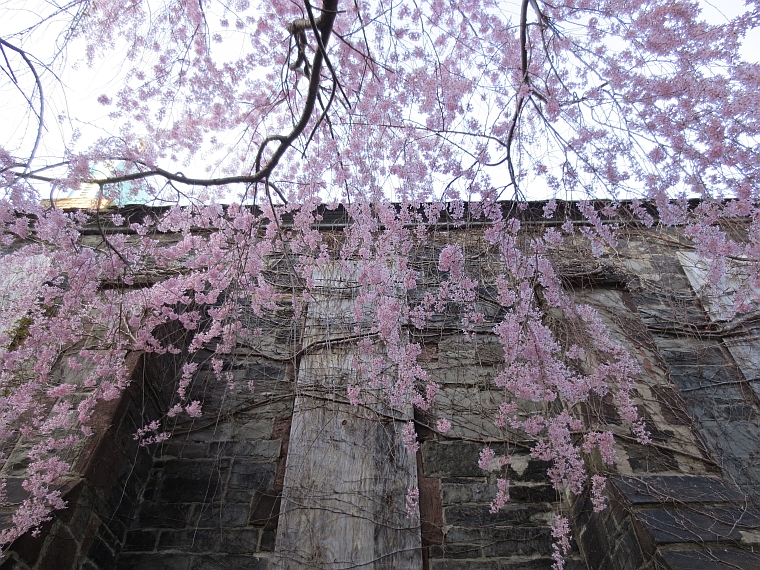
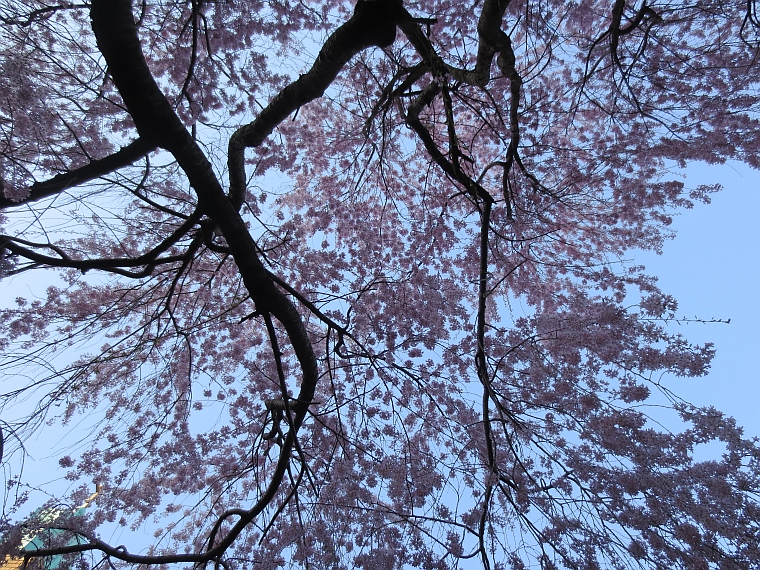
This old cherry tree lives beside an old, out-of-commission, slightly dilapidated church in downtown Albany. I don’t pass it as a rule, but it seems every year at this time we find our way on a different path that brings us near it. And then I make Andy pull over so I can get some photos.

It’s in a semi-sheltered area, so it comes into a bloom a few weeks before our cherries start their show. It’s much more immense than any of ours, full of well-earned character, multiple-trunks, and tier-upon-tier of weeping pink blooms. In the midst of a bleak downtown, an abandoned church, and a dreary lot, this tree blooms and transforms the world around it for a few days.


Continue reading ...

What I Learned in the Garden Today

After two full-days in the garden – heaving and moving four cubic yards of mulch (that’s a freaking lot), transplanting and repositioning certain plants, amending and pruning others, my body and brain are both fried. I’m a little apprehensive of what tomorrow morning will bring after everything I did to my physical being this weekend, but it’s a good kind of pain. For now. And it was not without its rewards in wisdom. Here are a few choice notions that crossed my mind over the past two days in the garden:

  • If I ever write that gay garden porn memoir/guide to life I’ve long threatened, it shall be titled ‘I Should Have Worn Knee-pads.’
  • In a pinch, it is possible to steer a wheelbarrow with one hand and one hip, for emergency wiping of sweat off the brow (and it doubles as good by-stander entertainment too).
  • When push comes to shove, and there’s dirt on the glove, you can push your glasses up with your elbow.
  • Mucus is NASTY after you’ve been breathing in tiny dirt particles all day.


Continue reading ...

No Further Than Your Own Backyard

Its cover called to me quietly – a gentle nudge of whimsy, like a frog whispering into a Buddha’s ear – only not just like, it actually was a frog whispering into the ear of a Buddha statue. The title whispered too, in a wish and a prayer – ‘The Backyard Parables’ – as if all the world’s wisdom was right in my very own backyard all along, Wizard of Oz-style. Anything that combined gardening and literature, two of my greatest passions, could only be food for the soul. One of the very first books that I learned to love was ‘Country Flowers’ by Lee Bailey. A birthday gift given to me when I turned ten at the end of August, it crept into my consciousness a few months later, as I struggled to locate a spring within that winter, and found one in the pages of a book. In many respects, that book changed my life.

At the closing of his introduction, Mr. Bailey wrote, “One last thing: like most people, I wish I could more often be the person I sometimes am – and I am most often that person in the garden. So in many ways this books represents the best of me.”

Though only ten at the time, I knew exactly what he meant. I told him so in a hand-written fan letter too, on amateurish, lined notebook paper, in what no doubt looked like childish scrawl, and all the more believable because of it. He wrote back to me, indicating his sweet surprise at how young I was starting out in the garden. It fostered a passion both for gardening and writing that subsists to this day.

I’m brought back to that moment because the latest book I read, the aforementioned ‘The Backyard Parables’ by Margaret Roach, has cast a similar spell, and awakened a love for the garden that was, in recent years, weakened by more mundane concerns and worldly living, but which I am working to carve a space for, in honor of what matters, or at least what should matter. I also want to recommend ‘The Backyard Parables’ not solely to those who love plants and good writing, but to anyone looking for a decent journey. In the span of a seasonal year, Ms. Roach proves that gardening offers lessons of life far more resonant than any centuries-old tales, and does so in ways often more moving. With some clever asides both sly and practical, she imparts knowledge while winking at anyone who’s faced similar struggles.

There is a bit of an underlying melancholy to the work at hand, surely one of the reasons I loved it so. Gardens do not live forever, and a single garden can die a million deaths. In just one season, there can be life, death, and re-birth, and where else but the garden can one see that in action so clearly? Confronting such big issues can leave one feeling ambivalent at best. The garden knows that. The gardener has only to listen.

Continue reading ...

The Zen of Gardening

With sound-barrier-breaking stereo systems, surround-sound entertainment empires, and ubiquitous ear buds, we are bombarded with noise of some sort at just about every waking moment of the day. I’m not one of those people who wears ear buds – only if I’m on a train or a plane ride or at the gym (which I haven’t visited in two months anyway). The rest of the time – on the subway, in the car, walking around – I leave them at home. Wearing them seems to lessen our interaction with the world. And as much as I like my solitude, I also enjoy some engagement. There was a time during my college years when I had a walkman and headphones with me at all times, buffering the universe with as much Madonna as I could muster. While it gave me a certain confidence (you should have seen my ‘Express Yourself’ strut down Newbury Street), it also removed me from the environment, lending distance and isolation.

I first realized the power of silence about ten years ago, when I went outside to prepare the garden for spring. In the past, I had worn headphones when raking and bagging leaves. It seemed to move the time faster, offering a bit of entertainment while working so hard. For whatever reason, that year I went to work without music, without noise, without a stereo by the back door. In the beginning it was disconcerting. After years of hearing something while working, the silence was, well, silent. But it wasn’t really. My ears just needed to realign themselves with nature. Soon, it wasn’t so quiet. The wind was the first movement, rushing by my ears, rustling leaves and pine boughs, and trilling through brittle grass reeds. The rake was the second movement, slow and uncertain at first as I sought a comfortable rhythm, then regular and efficient as the winter’s detritus made its way into manageable piles. The third movement was comprised of the wildlife – the chirping and fluttering of birds, the chattering of squirrels, the squeaking of chipmunks, and the calling of insects. Forget the quiet, this was an aural landscape rife with variation and noise – the music of nature at full blast.

But beyond that transformation was the more subtle peace that came with the absence of all the man-made music and sensory overload, the filler stuff that occupied so much of the world. It took an hour or two to decompress from that static – and if you fought it, if it felt alien and uncomfortable, it might take even more – but eventually a new calm came upon me. As it does in yoga or other meditation, it takes time to realize a change. That patience is the hard part for most of us. We want instant relief, and we want it now. Anything that requires waiting is rarely embraced. Yet that is the key to the whole concept of finding a zen-like peace in the garden. It cannot be rushed. It will happen in good time, when it’s ready to happen. There is no rushing, no ten-minute workout, no fast-fix that will result in immediate contentment. That sort of thing takes time. The garden is where I learned that.

The thoughts that first crossed my mind were the usual worries – but they passed. Then it was the concern with the tasks at hand, which end to begin on, what project to tackle next, would it be better to do a little of everything, or finish one entire task – and then those too passed as I found a method. Finally, maybe a few hours later, I looked around and felt it: the supreme sense of peace and calm. The euphoric runner’s high, the last relaxing posture, the destination reached before you even know you were journeying. Maybe it’s simply the satisfaction of finishing a full day of physical work. Maybe it’s something more.

Continue reading ...

The Gardening Battle Plan

This is the busy time in the garden, the time for the hardest work to prepare the way for the growing season. Like painting, much of gardening is about the preparation – of the soil, of the beds, of the pots – and if you stumble at the start it can be dangerously difficult to right things. On the other hand, a lot of gardening can be forgiving, in the resilience of plants, and their ability to spring back from even our most heinous acts of destruction and apathy. These are lessons everyone should learn.

After gardening at this house for over ten years, I have developed a rough system that works, somehow. This is the first time I have made a list of chores, divided roughly into the following tasks to do:

* Amend
* Prune
* Plant
* Revise
* Divide & Conquer
The Amending involves improving the soil around specific plants. This year, the new redbud (Cercis), the weeping larch, the Kwanzan cherry, the Ostrich ferns, and a Lady’s Slipper orchid all require a little extra pampering. In this case, it’s a bunch of shit. Cow shit. Bags and bags of manure are hauled in from Lowes and worked into the top of the soil surrounding said plants. I prefer this more organic product instead of the man-made fertilizers not only for its environmentally-friendly aspect, but also because it’s more difficult to overdose. Being that it’s mostly a top-dressing, there is little-to-no direct contact with the roots, resulting in no burn.

The Pruning is an ongoing task, but one that must be done delicately as pruning at the wrong time of the year can be disastrous. I am not in any way an expert on pruning, and wouldn’t dare advise on trees, but generally if the tree or shrub flowers, the best time to do so is immediately following the flowering. Which means not all of it can be done at this time of the year. In some cases, like the Japanese maples that are large enough to survive such haphazard hacking, I’ll go ahead and prune away at them any time of the year, but for things like the mockorange and lilacs, I’ll need to wait a bit. The most onerous pruning usually involves the hydrangeas – so many thick stems that need to be cut back individually, and then trying to extract all the fallen leaves from between those dense stalks. Good for the forearm though.

The Planting is the most fun part of the process, purchasing and implementing new friends in the hopes of finding the perfect plant for the perfect place. At this point in the garden, there’s not much room for more, and this year is more a time of cutting back and thinning out, as things have gotten a little too lush and grown in. However, there’s always room for something, and in this case I may try some Lilium among the Ostrich ferns, and pray the rodents don’t destroy them all. If that proves too difficult, there’s always container gardening – something I’ve never given proper attention to in the past. I never realized the impact that containers could have, especially on the patio. They may start out underwhelming, but if cared for correctly, the growth of annuals can be just as full as a five-year patch of any stalwart perennial, and often enough far more colorful.

The Revising is the problem-solving of the garden, done after a year or two of realizing something is not quite right, whether in the excessive growth of a dogwood, or the poor placement of a self-seeded spruce tree. Mostly the revising is about moving things, digging them up and putting them somewhere more fitting. Occasionally it’s about getting rid of something altogether – usually something overgrown or past its prime or usefulness. Sometimes that’s the hardest thing to face, and if at all possible I’ll try to pass a plant along to friends or family before getting rid of it, or plopping it into the more wild area of the backyard to let it fend for itself.

The Dividing and Conquering sounds the most challenging, and it often is. Particularly when certain plants have grown into unruly and extensive groups. Like the Miscanthus. The not-so-aptly nicknamed maiden grass can drive its roots down deep, and grow so tightly packed that only an ax, wielded with great force from high above, can hope to pass through its inextricably-woven system. I’m afraid the same will hold true for the several clumps of cup plants that have seeded themselves and taken over. A charming plant, it can also be overbearing and imposing if left to its own devices, towering up to ten feet, and supported by thick tuber-like roots. If I don’t put it in check now, it will be too late.

Finally, there is The Mulching. I only do a proper mulching every few years, mostly from laziness and partly from a judicial decision that yearly mulching is over-excessive and unnecessary. If it’s not broken down, there’s not always a need to mulch again. (Truth be told, only one year should be skipped in this manner, but I’ve stretched it into three. Sometimes four. Again, laziness.) This, unfortunately, is one of those years that can’t be skipped. Wish me, and my back, luck.

Continue reading ...
Scilla So Blue

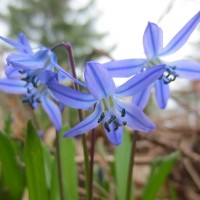
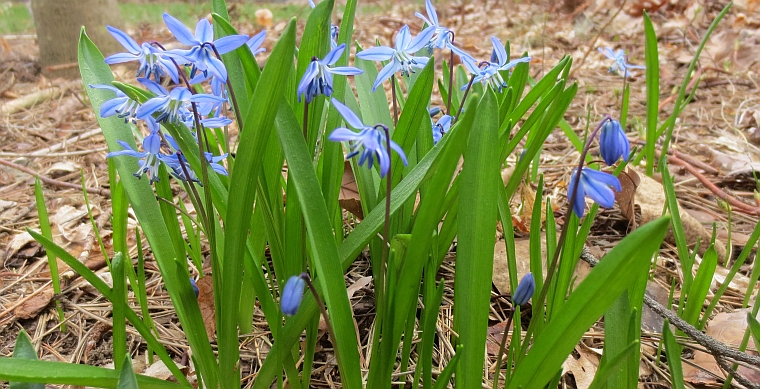
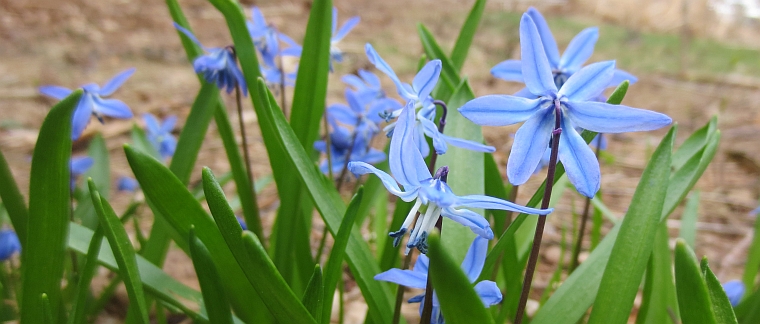
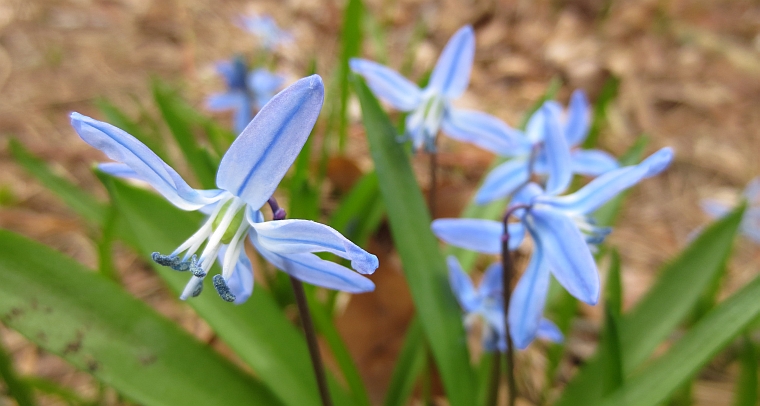
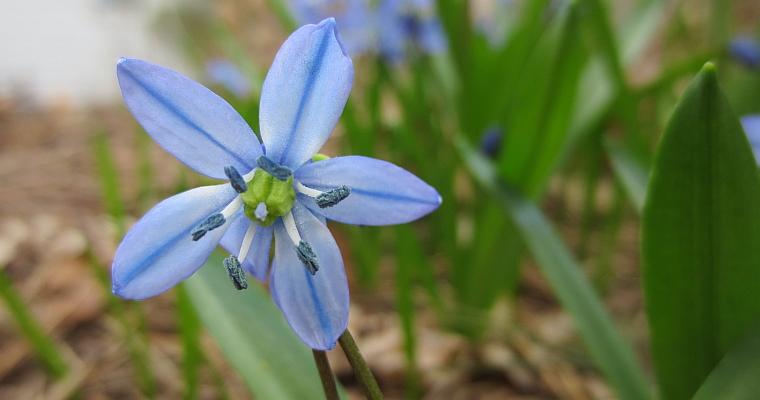
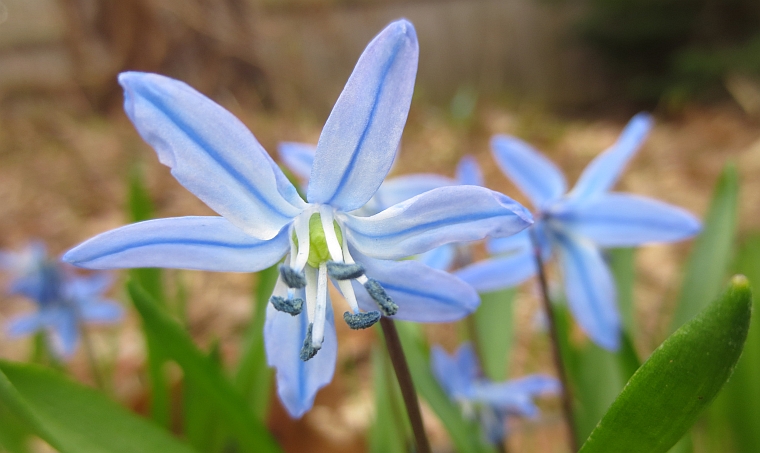
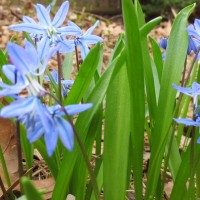
Fulfilling a promise made a week or so ago, the blue blooms of a tiny Scilla patch have opened and brought a bit of the sky down low to the ground. For many years I dismissed the tiny early-bloomers like these, not wanting to waste my time and effort on something that would require a zillion bulbs to make the most minor impact. Much more bang for your back-breaking buck in planting a tree or shrub. Yet I did manage to sprinkle a few around in the backyard, and they’ve been coming back and actually seeding themselves in the surrounding area for a couple of years. As time goes by, and winters like this last one bleed endlessly into spring, I find great joy and relief in seeing the first signs of garden life peeking through the brown layer of oak leaves and dead grass stalks.

It has me rethinking my aversion to the little beauties, and I may end up popping a few more in the ground this fall closer to the house. They’re so small and inconspicuous except for when they bloom that they shouldn’t be a bother.

Thanks to the camera, little blossoms like this can take on gargantuan proportions, becoming something quite different as you see in this progression of shots. It makes you realize how something so tiny, blooming in a sea of brown, still has its own power.

Locating a flower in bloom has always been a talent of mine. I can spot the lone lupine along the highway while speeding along at 74 miles per hour. I can pick out the tiny clusters of white blooms riding the crests of the sweet woodruff a whole backyard away. I can hone in on the scarlet banner of a fluttering cardinal flower in a meadow otherwise over-run by Queen Ann’s lace. In the case of the cardinal flower, it’s simply a matter of noticing what’s different. Certain blooms stands out like that. But in others, it takes a trained eye to pick up on the subtle call of the flowers – such as the dangling fragrant bells of the Solomon’s Seal, hidden beneath the variegated foliage, or the inconspicuous chocolate-hued bloom of the European ginger.

So much of life is about looking deeper, peering beneath the surface – and the garden is no different.

Continue reading ...