Category Archives: Gardening

Weep For Me, Lenten Rose

This is the Lenten Rose, Latin name Helleborus. When we first moved into our home, I plopped this into the backyard bed, almost out of a mandatory obligation that one must have at least one Lenten Rose to welcome the spring, but the fact was I had never even seen this plant in person before the blind purchase. For several years, I was unimpressed. The evergreen foliage didn’t fare well in our Northeastern winters, looking ratty and half-dead at the turn of March. It took a year or two before I had the balls to whack off the most decimated leaves and allow the plant to rejuvenate, but once I learned its resilience it made a much better show of things, finally deigning to bloom about five years after planting.
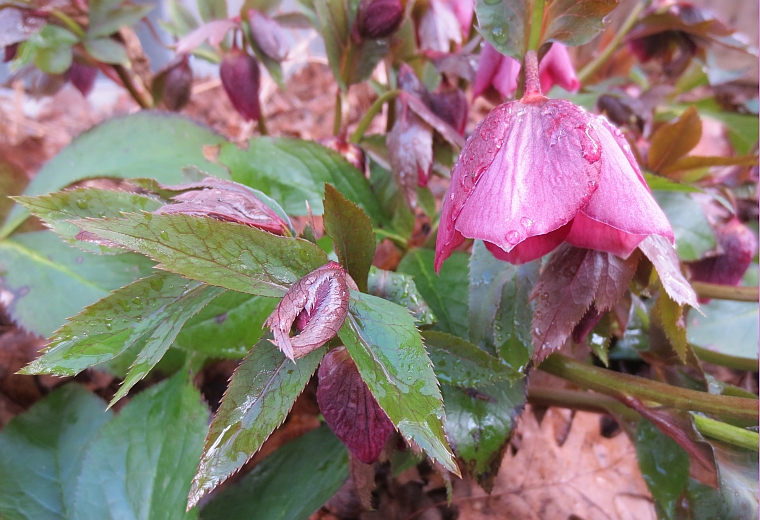
While the blooms are welcome, they are sometimes damaged by the late-winter snows we usually get. Another issue is the way they are held on the stem: drooping downward. It’s more pronounced after the frequent April rains, so unless you’re willing to perform ground-level acrobatics, it’s difficult to get a good view, and a good photo. Since I don’t like manipulating the flowers I find in the garden for photographic purposes, it makes it tough to get a decent shot, but you get the idea. There’s a different type of charm that comes from a rose when it weeps.
Continue reading ...

Ground Breaking

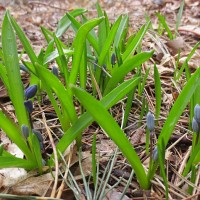
This small patch of Scilla siberica marks the first bit of greenery and color the garden has produced this year. It goes head-to-head with the blooming of the Helleborus a few feet away. It’s been a slow spring to break, and I’m hopeful it continues to take its time before the deadening heat of high summer. Most years the beauty of spring goes by too fast – one of the reasons I love it so much. The temporal, the fleeting, the evanescent – these will always have the greatest draw. In people, and in plants.

Continue reading ...

We Had a Once-In-A-Lifetime

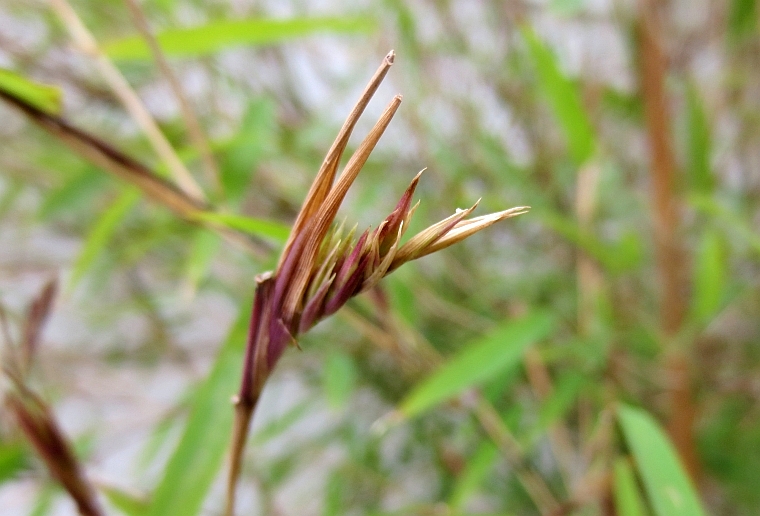
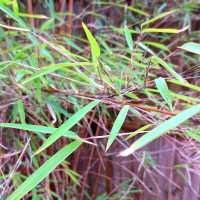
Last year we lost one of our two Fargesia nitida bamboo stands. It was a devastating blow, particularly when you consider the circumstances: the fountain bamboo flowers only once in its lifetime – after about a hundred years – and then promptly sets seed before dying a quick death. The odds of purchasing a Fargesia around the time of its blooming period were pretty slim – but it appears this was one of those times. I’d been nurturing both plants for about seven years, and they were finally a decent size, reaching up to the roof of the house, and starting that gorgeous cascading effect that gave the grass its common name. When I noticed that the bamboo on the East end of the house was starting to bloom last year, my heart sank. I knew what was to come. The small yellow blooms passed, the seed set, and then it turned brown and dried up. It was sad and quick, but I let the seed ripen and collected as much of it as I could, hoping to sow some this year.

I walked the length of the house to examine the other Fargesia stand to see if it too was going to give up the ghost. Luckily, there were no signs of flowers, so I breathed a slight sigh of relief, and pocketed the worry that since they were purchased from the same place at the same time, it was likely this was going to bloom in a year or two. The other day, I looked out of the bedroom window and saw the scene below:

This is the bud of the bamboo flower. It will bloom in the new few weeks. Then it will set its seed, and the beautiful plant will die. Both corners of our home will be bereft of their bamboo buffer. The gorgeous softening those plants have provided will suddenly cease, the peaceful countenance they somehow inspired will subside, and the corners will jut out once again. The only hope that will remain are the seeds I will try to collect again. These precious vessels will be our way of continuing the beauty. I’ll give some of them to my Dad (he is the original gardener of the family, and he does much better at sowing seeds than I do) and I’ll try to get some growing back in their original spots. By the time the next owners of our house arrive, they may be back for another hundred years of beauty.

Continue reading ...

A Love of Lilacs

Lilacs were one of my favorite flowers growing up, and remain so to this day. The aroma alone is enough to conjure memories of fresh Spring days, the promise of summer, and romantic entanglements worthy of Gatsby himself. Almost everyone has a lilac memory, a time when a row or hedge of the pastel flowers crossed our Spring paths, seducing all in their fragrant embrace. Like peonies, they are pungent and long-lived, instilling themselves in our past, emblazoning the moment with their perfume.

There is an essence both of innocence and romance in a lilac, and in their short-lived season of bloom, a wistful sense of fleeting wonder. I’ve read of new varieties that promise a decent re-bloom, but I’m partial to the old-fashioned stand-bys, where the true fragrance consistently remains. We’ve got a double version given to us by Andy’s Mom, which I’ve grown to love. The doubles also seem to hide the browning edges better than the single version. It is also powerfully fragrant, which will always be the most important part of a lilac.

I’ve also planted a couple specimens of the Korean lilac – a smaller, bushier version with a slightly later, and longer, bloom time. Though the blossoms are decidedly smaller, and erring on shades of pink rather than lavender, there are quite a few more of them, and their scent carries closer to the ground.

A hint on using lilacs as a cut flower: pick them in the middle of the night, or the very earliest of morning, then smash their stems to allow them to pull up as much water as possible. They may droop a little, but should come back if given a few hours to recover. The fragrance can fill a room with memories.

Continue reading ...

A Failure of Narcissism

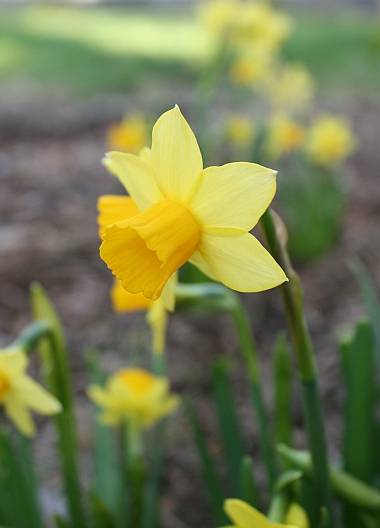
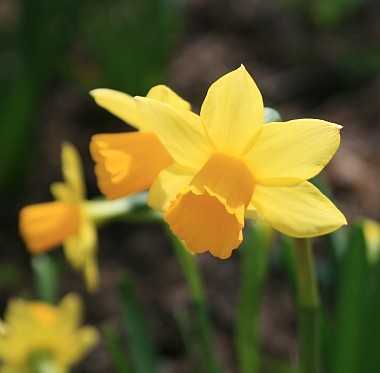
For someone who prides himself on having a green thumb, I have proven surprisingly pathetic at growing daffodils. I am blaming it on the soil, and possibly the critters in the backyard, because it can’t be anything I’ve done or neglected to do.

When we moved into our home, that first Fall I planted a group of Poet’s narcissus among the pachysandra that filled every available spot in our backyard. I amended the soil with a generous heaping of bone meal (since pines were in the area, I wanted to temper any acidity in the ground, as well as fortify any blooming power in the bulb). Set about six inches deep, they slept through the winter, as I dreamt of drifts of Wordsworthian daffodil blooms come the Spring. I had set out a decent number of Narcissus poeticus ‘Actaea’ – the Pheasant’s Eye Narcissus, as they had a nice late bloom season, but when they finally came up, it was a bit of a disappointment. Maybe my memory was exaggerating the thickness of the leaves, and the height of the blooms, but these were much less than anticipated, and the next year only a few measly leaves surfaced, minus any blooms.

Thinking it may have been the tangle of pachysandra roots that proved too much for the bulbs, I tried again the following Fall, giving them their own little space near the house. The soil was a little sandy, but I figured that would be better for drainage. I prepared the spot in the same way – amending with bone meal, six inch depth – and had grand hopes of swaths of yellow flowers colonizing and taking over the small space. I also put in some grape hyacinths beside them, to test whether this otherwise-unkillable bulb would suffer a similar fate. The next Spring the daffodils and grape hyacinths came up, but weakly. The following year there were just slender, and short, leaves. There was nothing after that.


Last Fall, I again succumbed to the promise of Spring, and bought a few packages of pink cupped daffodils, and a few large red-cupped ‘Fortuna’ bulbs – big, hearty, substantial things that looked and felt like they could charge through any number of winters. I also tried a small grouping of golden-hued miniatures. So far, they are performing adequately enough, but there’s still a bit of the same delicate first year hesitation – a bit late, and not as robust as more established clumps I jealously see in the neighbors’ yards. I do not have much faith in them, but such is the lot of any gardener. Failure is a part of the game. We’ll see if these come back strong next year, or if my yard just wasn’t made to have daffodils.

Continue reading ...

A Beautiful Pair

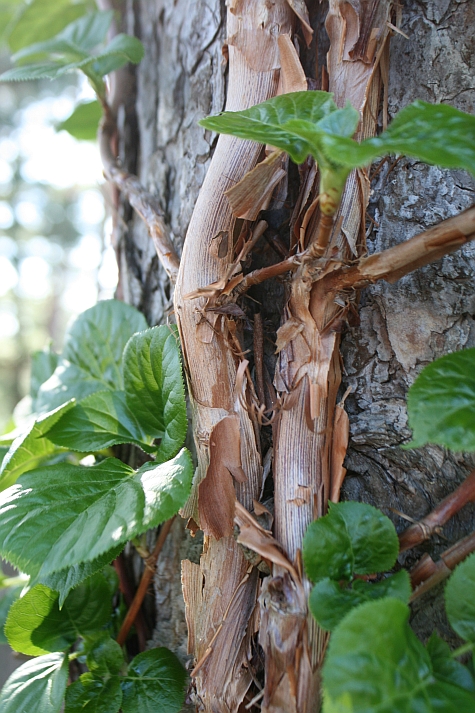
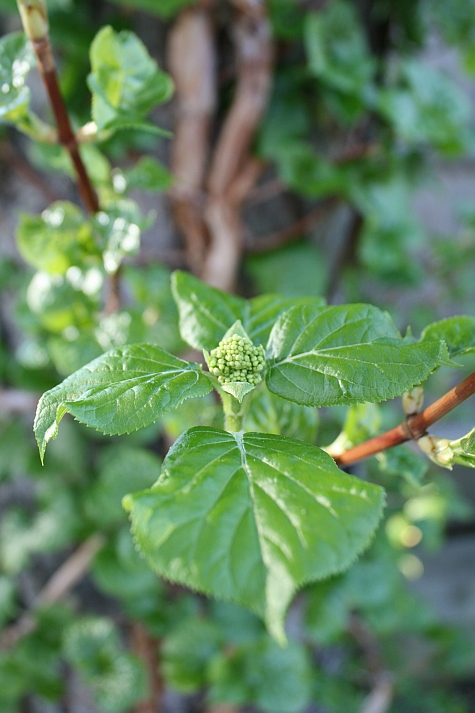
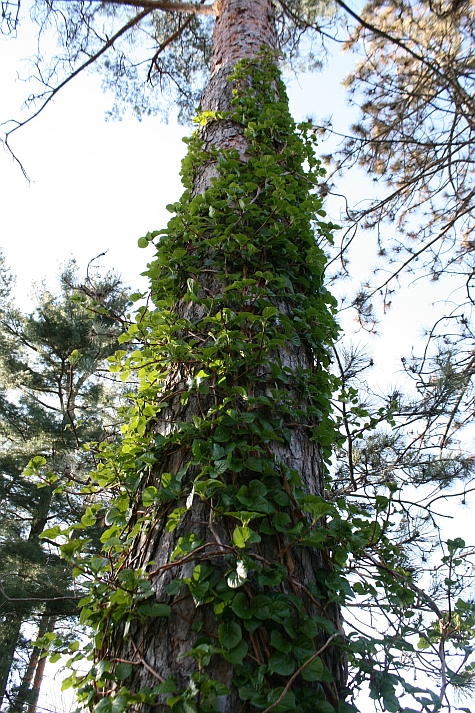
When Andy and I first bought our home eight years ago, one of the first things I planted was a climbing hydrangea. White Flower Farm once featured the vine on the back of its Spring catalog and I was completely enchanted by its form. They had it growing along an old stone wall, and showed it in full, glorious bloom. I didn’t dare attempt to plant one against my parents’ white brick house, but once I had my own backyard I nestled one in against a towering pine tree with a thick trunk. It was a tiny thing, maybe a foot tall at the most, and it looked so small against the mighty pine. Part of me thought it wouldn’t make it through one winter, but I gave it some manure and hoped for the best.

Then the wait began. Like many vines, the climbing hydrangea more or less adheres to an old vine-rhyme: The first year it sleeps, the second year it creeps, the third year it leaps. Luckily, patience is one of my virtues, and though visitors looked at me oddly when I excitedly pointed out the little creeper beside a monstrous pine, I knew one day it would reward me for waiting.

Each year I added another layer of manure and mulch to the growing mound surrounding the vine, and slowly that vine inched upward. Religiously, I watered through the dry summer spells, and gently redirected wayward shoots back against the bark of the pine. By its fifth year, it was taller than me, and had wound its way around the entire circumference of the tree.

About that time it also started to flower – delicate cream-colored lace-caps that were sweetly scented with the essence of summer. The fragrance was a complete surprise. There had been nothing in the literature about it, and I assumed that, like most hydrangeas, there was no fragrance to speak of, but suddenly there it was, intoxicating the bees and everyone else who happened by.

Today, the vine towers above all, reaching upwards of thirty feet (about half-way up the sky-high pine tree that has happily provided an anchor for it all these years) and it’s still growing higher. It cloaks the ancient bark of the pine with an elegant skirt of bright green leaves that retain their luster and color throughout the season, before brightening the Fall with a final blaze of yellow. They have helped each other – the pine providing an expansive length of sturdy support and the hydrangea lending the worn, dull bark a bit of colorful glamour (and the jolt of manure-fueled nourishment that would otherwise be missing). I can’t imagine one without the other, and together they make a beautiful pair.

Continue reading ...