Category Archives: Food

Rolling Balls (It Ain’t the Meat, It’s the Motion)

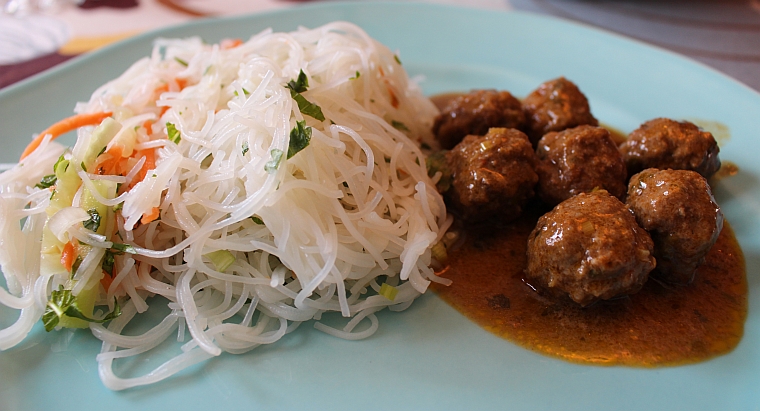
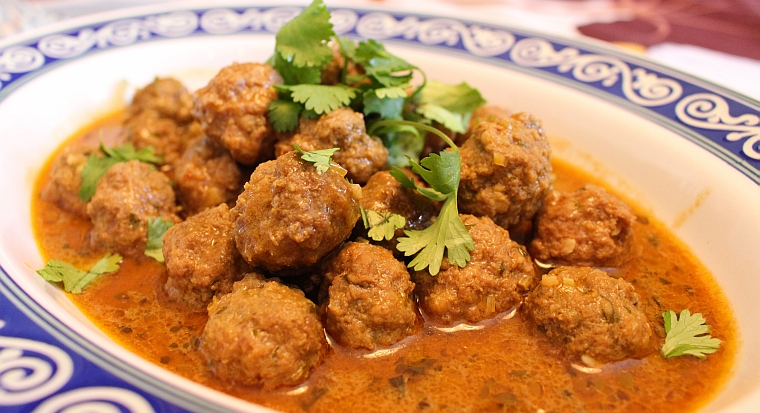
When planning a light lunch for a visit with the twins, I decided to go for a twist on spaghetti and meatballs. Since noodles actually originated in China, an Asian aspect made perfect sense, so I tried my hand at a Panaeng Curry Meatball dish, served with a side of rice noodles and fresh herbs (coming up later). Andy has always made the meatballs in our family, but I’m learning how to do things on my own, so he had no hand in prepping these (other than setting up the mixer and explaining how I needed to remove the strings of fat that were left on the paddle).

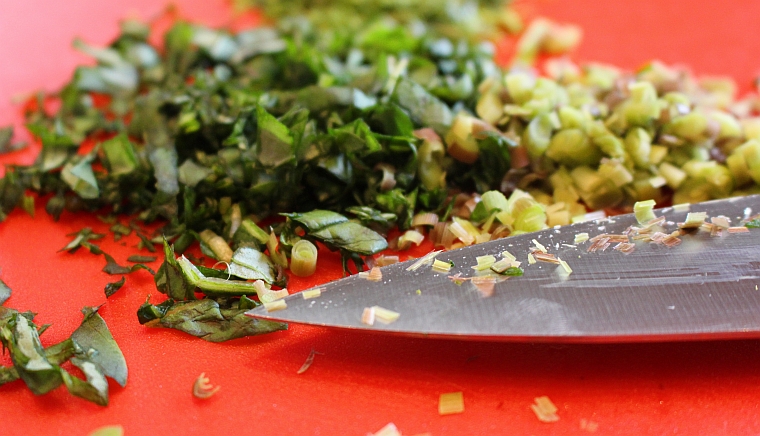
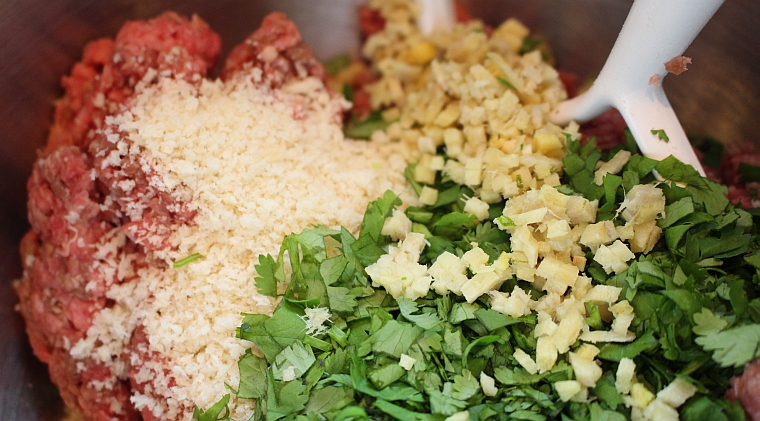
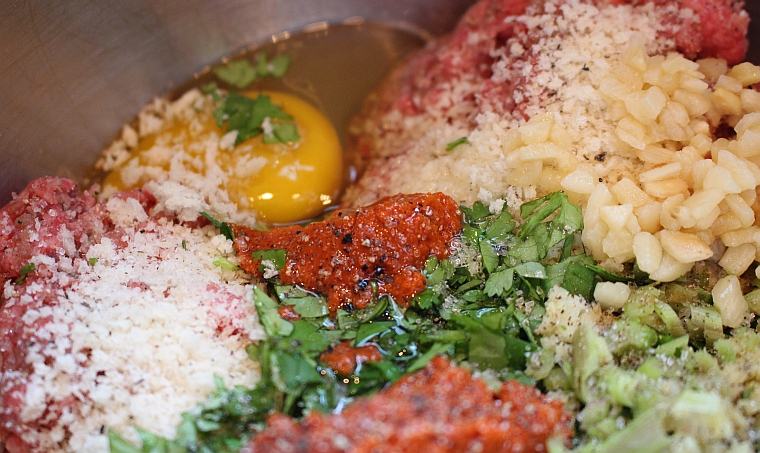
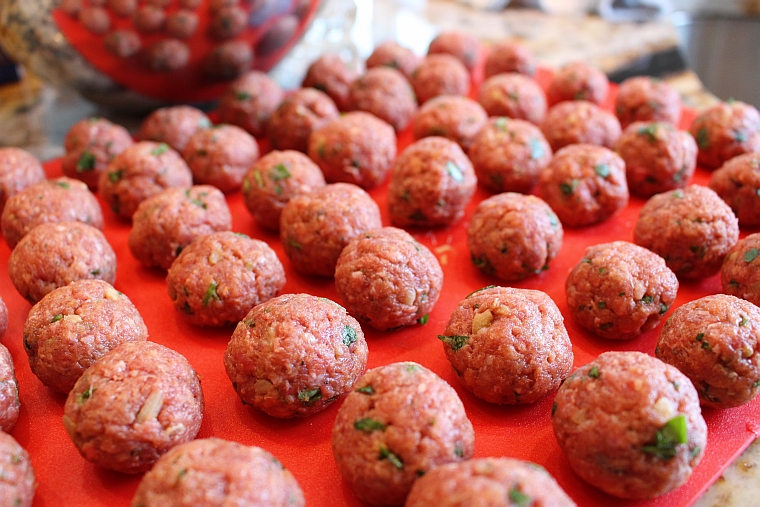
These pungent little balls (I opted for appetizer size, much to my later chagrin) were bursting with flavor, thanks to the influx of fresh cilantro and lemon grass. Some garlic, fresh ginger, and red curry paste rounded out the taste burst, and a handful of panko bread crumbs added texture to the ground beef.

An egg bound it all together and then it was time to begin rolling the balls. This was definitely the most tedious part. It was simple enough to do – all those years of Play Doh paid off, but the amount of balls that came from 2 pounds of meat was, well, substantial. It seemed the assembly line would never end, but I kept at it, whittling away at the block of beef until it was a neatly-formed army of mini-meatballs, ready for simmering.

At this point in the recipe, you could bake the meatballs for use at a later time, or plop them directly into the sauce if they are to be served immediately. I opted for the latter. (Any chance to eliminate a step, particularly an oven step, and I am on board.) The sauce was a heavenly mix of coconut milk, fish sauce, brown sugar, more red curry paste, Kaffir lime leaves (chopped finely), and fresh basil. It simmered while I rolled the meatballs, and was ready to receive them when at last they were done.

The finished product was better than I could have hoped. Every once in a while I can be a whiz in the kitchen, and this was one of those times. The meatballs were busting with the riot of flavor that their ingredients promised. Just spicy enough to keep the tongue excited, but grounded with the earthiness of the beef and breadcrumbs to keep things on an even keel. I topped it off with a sprinkling of fresh cilantro, and we were ready to eat.

Continue reading ...

Creamy Smooth

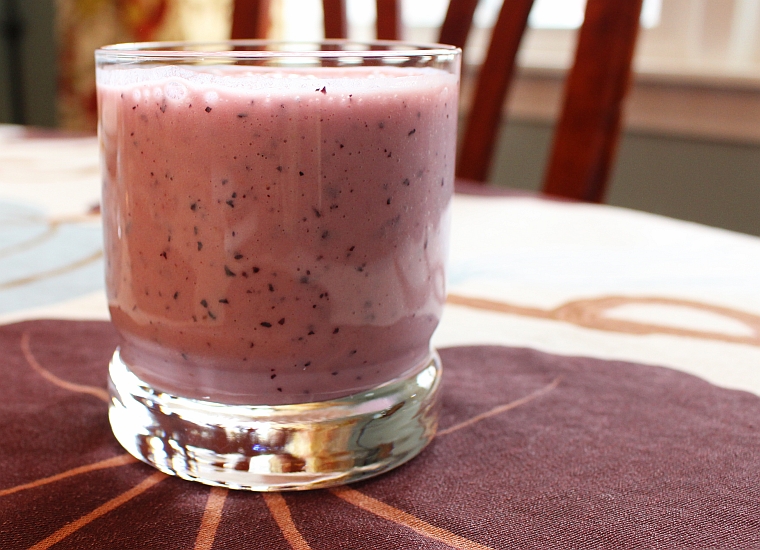
Every once in a while I get on a smoothie kick, at least until the drudgery of cleaning out the blender takes the fun away. For this simple version, I followed a recipe in a new cookbook I found, which focuses on fresh and simple ingredients. It’s a blueberry-pomegranate smoothie, and is quick and simple enough to do for breakfast or a healthy dessert.

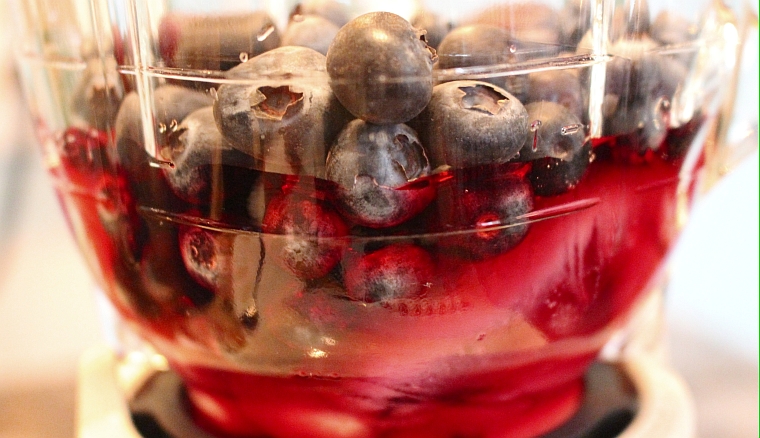
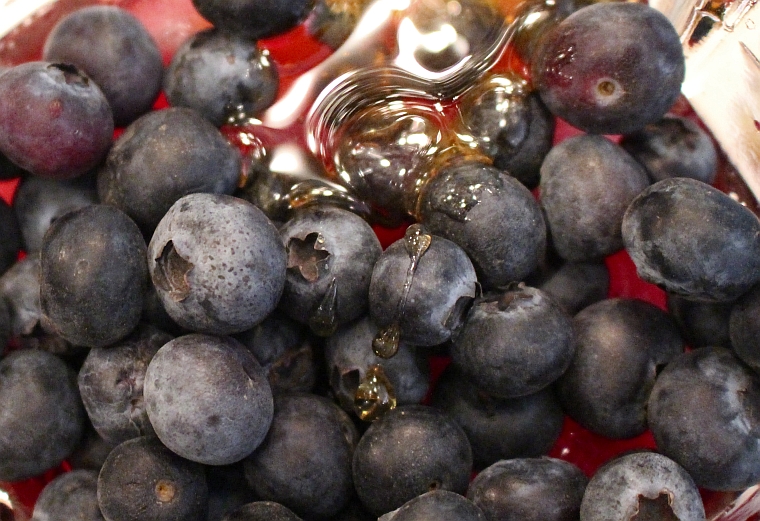
It starts with one ripe banana (I like mine exceedingly ripe, with a few bits just beginning to brown.) A handful of fresh blueberries (the recipe calls for frozen, but if at all possible I like the fresh). To retain the coolness and consistency of the frozen aspect, I added a few ice cubes. To this I poured about half a cup of pomegranate juice and drizzled in a good tablespoon or two of honey.

Blend until smooth, then add about a cup of plain yogurt and blend again. Pour and serve immediately. It turns into this pretty purple color, and is chock-full of antioxidants. It’s not too sweet, which is good.

(I can only stomach one Shirley Temple a year.)

Continue reading ...

Cooking for Comfort

Whenever I find myself in trouble – emotionally speaking – I tend to do something that gives me a sense of control. When my heart breaks or my world falls apart, I cling to the simple tasks that I can master and see through. Whether it’s washing the dishes or cleaning the house or cooking a meal, it’s a questionable embracing of mundane tasks that I wholeheartedly perform in a sort of act of penance. It’s a way of beginning the healing process, and getting over things. It’s also a reminder that if it came down to it I could take care of myself, as I’ve done in the past.

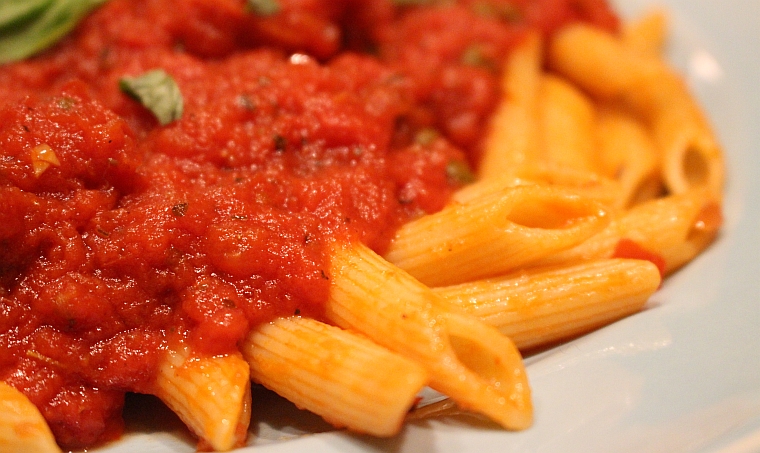
In the frozen January of 1998, I found myself in such dire straits, nursing a wounded heart, and facing a terrifying loneliness.  Staying with the sister of a friend, in a strange city where trouble found me no matter how good I tried to be, I stood in the kitchen and watched as she prepared her family’s pepperoni sauce. On the verge of tears, I held onto the counter and willed the salty water away. Gina assembled the ingredients, dropping a bit of olive oil into a pan and chopping the pepperoni. I asked her to teach me. I wanted to be busy, to occupy my head with something – anything – else.

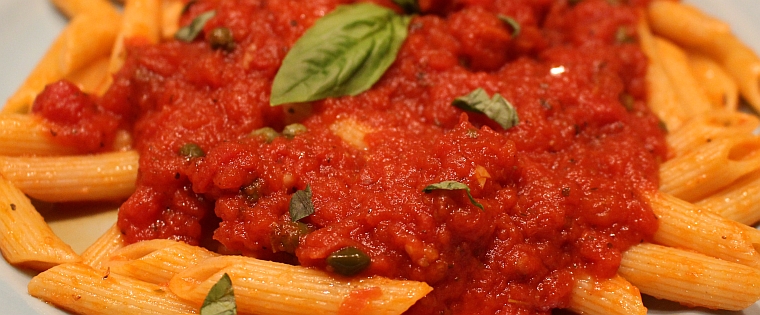
She added the pepperoni to the pan, along with some garlic. Soon it sizzled and spat and filled the kitchen with a delicious scent. We opened two large cans of crushed tomatoes, and a small can of tomato paste, stirring them into the pan. A mixture of Italian seasoning, some salt and pepper, a bit of sugar, and a cup of water completed the recipe. Then it was time to let it cook down, when the real magic happened, as the sauce thickened over a couple of hours. That was the big realization for me. It could not be rushed if it was going to be good.

As quickly as I wanted the pain to subside, as fast as I wanted the hurt to limp away, there was no way out but by going through. One couldn’t make it boil quicker or thicken instantly – these things took time, and they would not be hurried. The heart was the same way. To this day, I find comfort in the cooking of dishes like this – the ones that need hours of simmering – hours in which to contemplate, or to clear the mind.

Continue reading ...

A Vietnamese Dinner, Half Home-Made

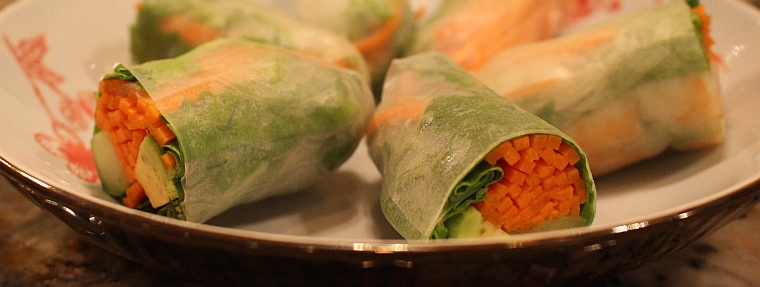
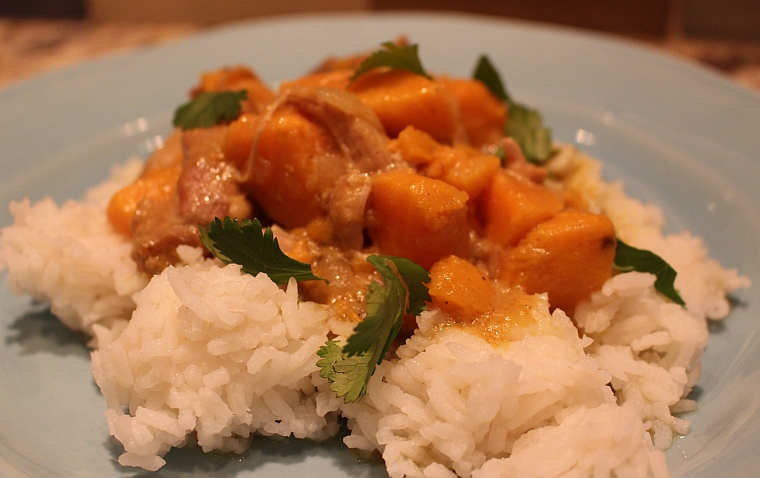
The half-home-made part right up front: these spring rolls, purchased at Fresh Market because I was in no mood to finely chop vegetables for ten hours. I’d have made a mess of the rolling too. One day I’ll tackle that assembly line. For now, it was enough to make the chicken dish that follows.
Both Andy and I are fans of curry. One of our favorite moments is when the kitchen is filled with the pungent aroma of a curry dish bubbling away on the stove, wafting through the hallway and teasing the nose. It lifts the darkest mood, warms the coldest evening, and makes the house feel like a home. It was one of the first dishes I introduced to him a few months after we met, and he took my Chicken Curry in a Hurry recipe (a misnomer if ever there was one) and transformed it into something wondrous.
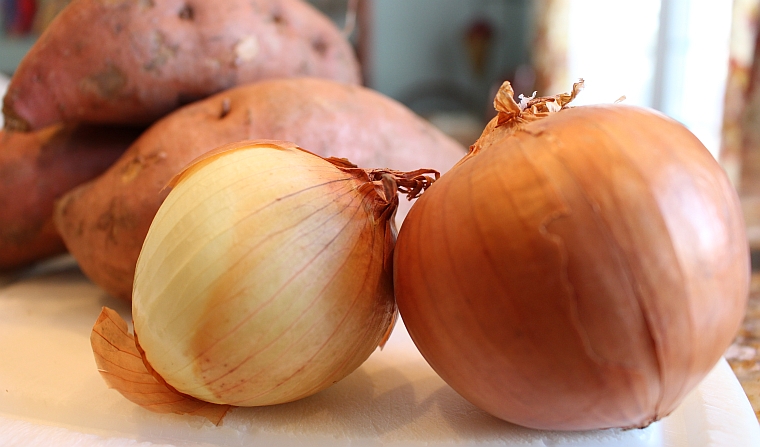
This is a Vietnamese version of chicken curry (Ca Ri Ga), which is slightly lighter than its Thai counterpart, and sets itself apart with the use of sweet potatoes and Kaffir lime leaves. Lacking Vietnamese curry, I had to settle for a Madras curry.
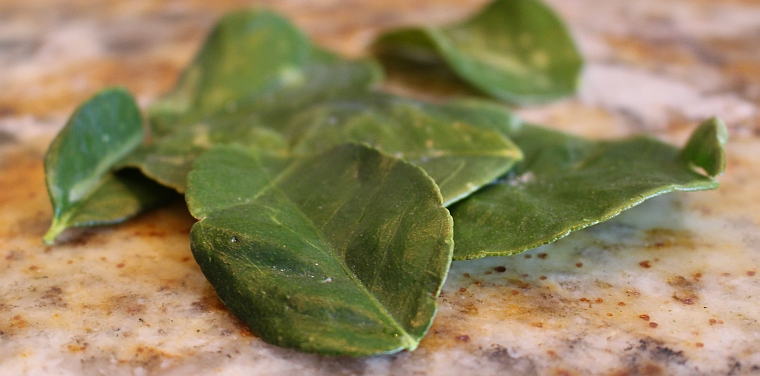
Vietnamese Chicken Curry (Ca Ri Ga)

Makes 6 servings 

1 tablespoon vegetable oil

1 large yellow onion, chopped (1 1/2 cups)

6 kaffir lime leaves, crumpled in hand, but intact

2 tablespoons Vietnamese or Madras curry powder

Salt

3 or 4 pounds chicken, cut into 8 serving pieces, or 3 pounds of bone-in chicken parts

2 1/3 cups unsweetened coconut milk (about 1 1/2 cans)

1 cup water, plus more as needed

2 1/2 pounds sweet potatoes and/or russet potatoes, peeled and cut into 2-inch chunks

Heat the oil in a large pot over medium heat until the oil starts to shimmer. Add the onion and kaffir lime leaves; cook for about 2 minutes, stirring, until the onion has slightly softened. Add the curry powder and 1/4 teaspoon of salt and cook for about 15 seconds, stirring, until fragrant.

Add the chicken, skin side down; cook for 3 to 4 minutes on each side, until lightly browned (the chicken will not be cooked through).

Add the coconut milk and 1 cup of water, then the potatoes. Make sure the chicken pieces and potatoes are submerged in the liquid; add water as needed. Increase the heat to high and bring to a boil, then reduce the heat to medium-low, cover and cook for at least 1 hour and preferably 2 hours. When the dish is done, the chicken will be fall-apart tender, and the gravy will be thick from the starch of the potatoes. Add 2 teaspoons of salt, or to taste.

Remove the kaffir lime leaves before serving.

Serve with freshly steamed rice or French bread.

It’s best to allow the curry to sit overnight so the chicken really absorbs the flavors from the spice-rich gravy.
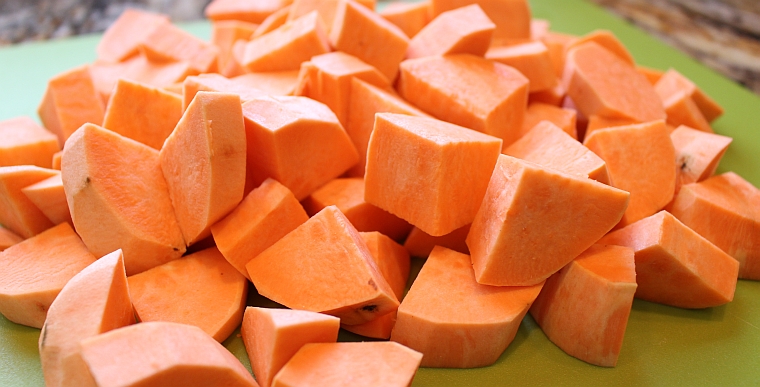
I made some minor modifications: for the chicken, I used about eight chicken thighs. I’m a fan of the the darker meat when it comes to poultry – it’s juicier and more flavorful, and I find it more tender than something like a breast. I used two cans of coconut milk (slightly more than the recipe called for) and went lighter on the water. It simmered for about two hours, but the next time I’d wait an hour before adding the sweet potatoes, which turned out less-firm than desired – almost too soft to stay intact in fact.
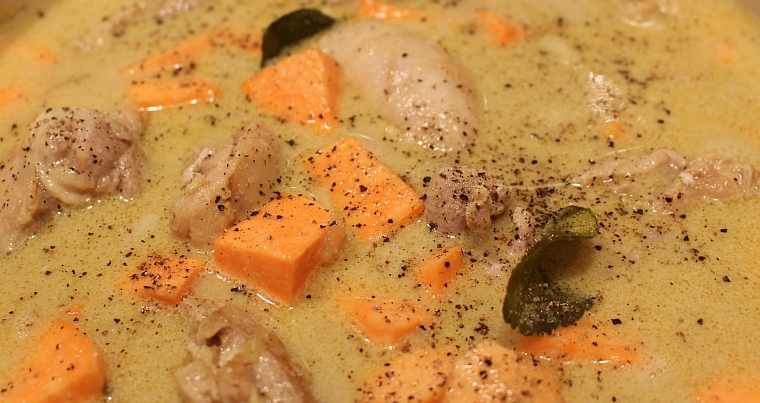
Overall, though, it was a resounding success. Andy said it smelled just like the dish he had at Van’s a few weeks ago. I attribute it to the magic of the Kaffir lime leaves. They made all the difference.

Continue reading ...

When Dinner is Served

For our first dinner from the new kitchen, we kept it simple. An introductory bowl of Marcona almonds, a plate of Italian meats and flatbread, and a collection of olives was on hand to greet the guests. That was followed by an arugula and shaved fennel salad with a Dijon vinaigrette, and then a dish of baked ziti and a dish of spaghetti with olive oil, garlic, and… sardines. (The latter was supposed to have been anchovies, but I made a mistake at the market. Not of cilantro/parsley proportion, but a mis-step nonetheless. Fortunately, everyone was kind enough to say it was just as good.) No matter, it’s the company that makes the evening.

Continue reading ...

Not Too Sweet

A decadent indulgence.

A bittersweet meeting.

A savory melding.

The marking of a moment, the end of a day, the memory of a loved one ~ and each made slightly sweeter with a treat. Sometimes even the strongest among us need a little chocolate to get through the darker seasons.

This box of Poco Dolce’s Bittersweet Chocolate Tiles is the perfect way to self-splurge, and to honor the little joys in life. They’re there for the taking if we just learn to open our hands.

Tonight I feast on a few before dinner (yes, before) ~ the subtle blossoms of grey sea salt, the only-slightly-savory sesame toffee, and the balance of bittersweet chocolate combine to create an altogether different entity. When two become one, wondrous things can happen.

The whole world opens up.

Everything is new again.

Love is on the tip of my tongue.

Continue reading ...

Thai’d Up in Comfort

When traveling on my own, I will, on occasion, feel the slightest tinge of loneliness. It doesn’t happen often, and it doesn’t last for long, but at this time of the year, when dusk comes so early, and a cold wind bites at the neck, I’ll seek out a late lunch or early dinner of comfort food. There are moments when a small dish of macaroni and cheese will do, or a hearty burger, or a bread bowl overflowing with New England clam chowder, but those are not typical choices.

For me, there is no greater dish of comfort than Pad Thai. The most well-known of all Thai dishes, it is substantial and warm and rich with bits of peanut and hefty noodles. Accents of chicken and shrimp dot the flavorful mound of goodness, while scallions lend it some textural crunch.

When ordered as a main dish, I like to amend it with an overture of dumplings or spring rolls. In this case, the lunch special included a roll and a bowl of miso soup. On such a brisk day, it was the perfect combination of culinary coziness and comfort, and as I watched the sidewalk darken, the candles of the restaurant glowed warmly in the window.

Leaves blew by, thrown wildly in the rising wind, and strangers quickened their pace with the falling temperature. From the mostly-empty restaurant, I sat alone at a table for four, sprawled out comfortably, biding time until meeting a friend later. The loneliness subsided by the time the last spoonful of miso soup slid down my throat, and when the Pad Thai arrived, I ate in happy solitude, sustained by a friendly waiter and warmed by a steaming dish.

Continue reading ...

Thai One On

The recipe I used for this chicken coconut dish is actually intended to be a soup, but I spooned it instead over a bed of steamed rice and it worked out just as well. It’s a joy to have fresh lemongrass from the backyard for Thai food, but the season is quickly coming to its close. I harvested most of the stems from the three large clumps I planted this year, freezing them in small batches and Ziploc freezer bags in the hopes of having them through the winter.

The lemongrass and ginger were to be cut roughly, then mashed with the back of a cleaver. Being that I’m not allowed to have a cleaver in the house, I used a meat tenderizer instead. Same end result. The coconut milk, fish sauce and a pair of red chili peppers form the basis of many Thai recipes. The chicken stock (which we didn’t have on hand) makes it soupy and rich (I substituted a vegetable stock because no one was going out to the market in the rain) and the strips of chicken turn more tender the longer you can simmer them. I didn’t have the patience for that, so when the rice was ready I spooned the soup over it and went to Thai-town.

Continue reading ...

Super Bass

There’s something about a reduction that is pure magic. When citrus is a part of it, it’s even better. In this instance, a citrus and soy sauce combination gets reduced to a thick and delicious topping for a sea bass that turned out simply super. Served with a broccoli and spinach stir fry (in a hoisin sauce) and some lime herbed rice (made with whatever was left in the garden – parsley, grapefruit mint, a bit of basil, some cilantro, and the juice of one lime) – this was so good that I must share the recipe with you. It was online, so I don’t know its origin, but whoever came up with it has my hearty praise.

By the way, I wasn’t sure how well I’d like steamed fish, having grown accustomed to the dense flavor and texture of having it grilled so often this summer, but it turned out better than anticipated, thanks in large part to the reduction. I also liked how (obviously) moist it remained. This one is definitely worth a try.


Sea Bass with Citrus Soy Sauce Reduction


INGREDIENTS

½ cup pineapple juice

1/2 cup orange juice

1/3 cup soy sauce

3 tablespoons finely-chopped peeled fresh ginger

2 tablespoons sesame oil

1/8 teaspoon cayenne pepper

4 6-ounce sea bass fillets

Chopped green onions


PREPARATION


Mix first 6 ingredients in 8x8x2-inch glass baking dish. Add fish; turn to coat. Chill 2 hours, turning fish occasionally.


Place steamer rack in large skillet. Arrange fish on rack. Pour marinade into skillet under rack and bring to boil. Cover skillet and steam fish until just opaque in center, about 8 minutes. Transfer fish to plates. Remove steamer rack from skillet. Boil marinade until reduced enough to coat spoon, about 6 minutes; spoon over fish. Top with green onions.


Continue reading ...

Fall Foodstuff

One of the redeeming qualities of fall is the return to cozy kitchen cooking. In the summer, I ask Andy to do most of our dinners on the grill (and with our impending kitchen renovation I’m hoping the grill will take us into the winter…) but now that the weather is turning, I welcome the heat of the oven as the darkness comes down earlier. This is also the season of the harvest, of the squash and root vegetables, and their earthy, nutty goodness. One of my favorites is butternut squash, and one of the more delectable pairings is that with sage – which has been a mainstay in the herb garden, but goes relatively under-utilized until the fall.

Aside from the grill, it’s the fresh herbs from the garden that I will miss most once the crippling frosts begin to hit. Parsley (flat and curly), tarragon, chives, sage, dill, and basil – it’s been a banner year for the herb garden, and they made such a difference that I’m dreading the long season without them.

Prior to this recipe, I’ve only roasted butternut squash, or cooked it down to oblivion in the service of a pureed soup. Here, it remains largely intact, yet cooked through, in a vegetable or chicken stock, flavored with an onion and some nutmeg, and a liberal sprinkling of salt and pepper.

The recommended pasta was a tagliatelle, but a fettuccine made an adequate substitute – the key to the whole endeavor was the fresh sage. A little bit, chopped up as seen here, goes a long way, so use sparingly. You can also, as recommended in the original recipe, fry up a few whole sage leaves in some olive oil. They go quickly, so watch closely because it only takes a few seconds once the oil gets hot. Dry them on a paper towel then use them to garnish the top of the pasta, along with some freshly grated Parmesan cheese.

It’s a perfect meal for the fall, using the best of the season – butternut squash and sage – and blending them in a straightforward but rich classic combination.

Continue reading ...

Sometimes a Zucchini is Just a Zucchini

The best way to prepare fresh vegetables in season is to keep things simple, letting their original flavor and texture take pride and prominence, as in this side dish of zucchini. The preparation was easy and quick: saute a small, sliced yellow onion in some good olive oil until soft, then add sliced zucchini until it reaches the level of doneness you like. Season with salt and freshly ground pepper, then top with some freshly grated Parmesan cheese. (Or leave out if you’re lactose intolerant.)

In an effort to eat slightly healthier, I’ve been trying to incorporate at least one green item -usually salad or side dish – into dinner meals. It makes it easier to forego a second helping of pasta or rice.

Continue reading ...

Foodgasm

The term “foodporn” is tossed around far too often, hashtagged to death (yes, I’m guilty) and more ubiquitous than the cock shots on my Twitter feed. (Go easy on the Retweeting, peeps.) But in certain circumstances, and for certain meals, the whole foodgasm/foodporn moniker works. Case in point was this sinfully-good sea bass wrapped in prosciutto. I tend to avoid baking fish in any way, because it too easily dries out, but when wrapped in something like prosciutto, you’re safe to bake away. In this recipe from Ina Garten, the sea bass is brushed with olive oil, salt, and pepper (you can go easy on the salt though, given the encasement) then wrapped in ribbons of prosciutto. Baked at 400 degrees for about ten to fifteen minutes, the prosciutto is nicely firm, while the fish remains moist and perfectly done.

The real kicker though, is what goes on top. Boil a stick of butter on medium heat with six sprigs of fresh rosemary for about ten minutes (perfect timing for the baking). Remove the rosemary sprigs, turn off the heat, then add about 3 tablespoons of fresh lemon juice and stir well. Spoon this over the fish and prosciutto just before serving, then top with a sprig of rosemary for garnish. It sounds like a step that can be omitted, but you’d be missing out on the best part of the whole affair. That’s what turns it from simple culinary procreation into a gastro-orgasmic delight.

The Contessa serves this with a collection of roasted autumn vegetables, but since it hasn’t been that cold of late I made a simple batch of spaghetti squash with garlic, salt, and pepper.

Continue reading ...

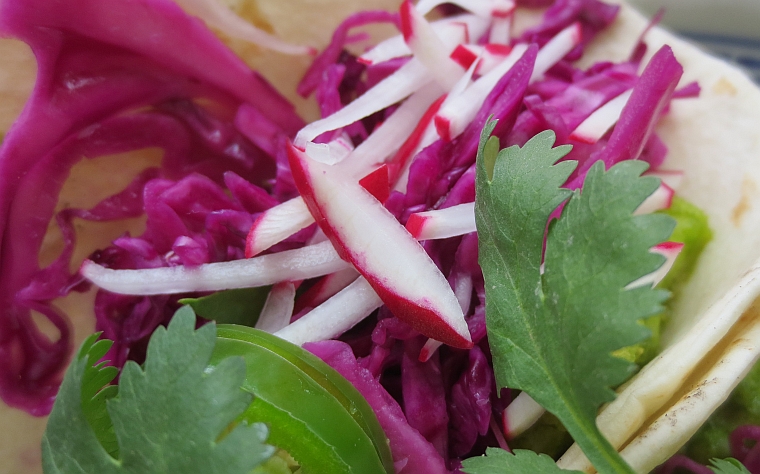
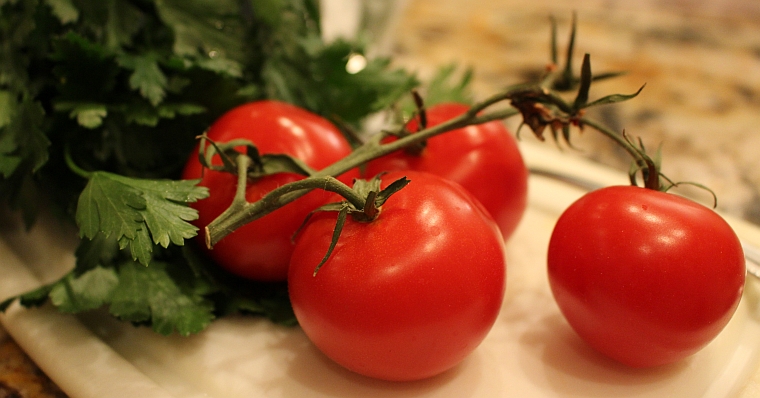
A Simple Snack: Radishes & Salt & a Buttered Baguette

The Barefoot Contessa turned me onto this snack, which she claims is big as an after-school treat in France. I’m less a fan of the radishes, and use them more as a salty accent to the baguette and butter, which to me is the whole point of this exercise. I tried the no-carb thing for a while and it’s just not for me – low-carb perhaps, but any time something is so stringent as to eradicate bread and pasta, well, it’s not going to stick.


If you’re going to give this a whirl, I’d recommend trying out a few salts to see which one you prefer. I’ve enjoyed pink Himalayan salt in this manner, but for this round a simple unadorned sea salt worked just fine. The only thing I’d avoid is the plain iodized salt that you buy in those big cylinders – it’s just a little too harsh.

The idea of an afternoon snack is something that most adults have come to eschew in this country. We have our workday lunch, then come home and wait for dinner. The art of winding-down has been woefully supplanted by rushing and trying to get everything else done. I don’t play that way (and I realize how much it helps that I don’t have children). I like the idea of a leisurely snack, the notion of a cocktail hour, taking the intentional time to relax. If there’s one less blog post a day, or if we hold off on dinner for another hour or two, it’s not going to make much of a difference – except for a few more moments of happiness, which actually is a big difference.
Continue reading ...

Couscous & Cock

This was my virgin couscous attempt, and I’m not quite sold. I think they cooked a tad too long, with a tad too much liquid. In fact, they were moist enough before adding the ¼ cup of lemon juice the recipe called for, but after a bit they soaked it all up. The Israeli couscous used here is a bit larger than the usual couscous. I used a recipe found online that called for fresh parsley, fresh rosemary, and fresh tarragon – only the rosemary was lacking from the garden, but the tarragon I had planted was so feeble I asked Andy to pick up a bunch of that too. Both the rosemary and tarragon are powerful additions, so use sparingly (I like a lot of flavor, but I might cut back on each in the future.) Along with chicken broth, some scallions, and salt and pepper, it made for a flavorful dish, perfectly complementary with the lemon rosemary chicken rotisserie that they had already cooked at The Fresh Market.

As for the couscous itself, I’m not head-over-heels in love just yet. Between this and the quinoa, I think I’d give the quinoa the edge. Of course, it may have been my over-cooking that ruined its chances, so I’ll try again in the future. The fact is, when it comes to supportive side dishes, I’ll always be a Filipino steamed rice queen at heart.


Continue reading ...

Back to the Beginning of Summer

The two plates pictured here are the two dishes I made when my friend JoAnn visited early on in the summer. The season had just gotten underway, and everything was fresh and new. In honor of that, and to put this summer officially to bed, I made those dishes again. One is a simple plate of heirloom tomatoes, sprinkled with olive oil and white balsamic vinegar, then dusted with almond slivers and chives, and a liberal sprinkling of salt and freshly-ground pepper.

The other is a salad made of arugula and thinly-sliced fennel, dressed with a Dijon vinaigrette (that also utilized the magic ingredient – white balsamic vinegar). The original version had been topped with a grilled chicken breast for a more substantial meal, but on this day I wanted something lighter.

As much as I love the start of fall, I’m also hesitant to let this summer go. It was a good one, filled with friends and fun times, lovely stretches of heat and sun, and trips to New York and Boston. But this is the stuff of a more-detailed summer recap that will be coming up later. For now, enjoy the salad – one last time.

Continue reading ...