Category Archives: Literature

Mounting the Mount: A Birthday Visit

We have to make things beautiful; they do not grow so of themselves. ~ Edith Wharton
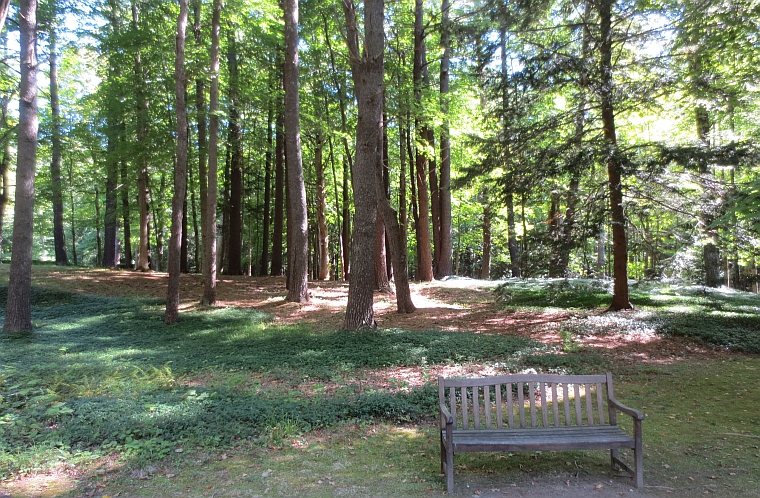
I believe I know the only cure, which is to make one’s center of life inside of one’s self, not selfishly or excludingly, but with a kind of unassailable serenity – to decorate one’s inner house so richly that one is content there, glad to welcome anyone who wants to come and stay, but happy all the same when one is inevitably alone. ~ Edith Wharton
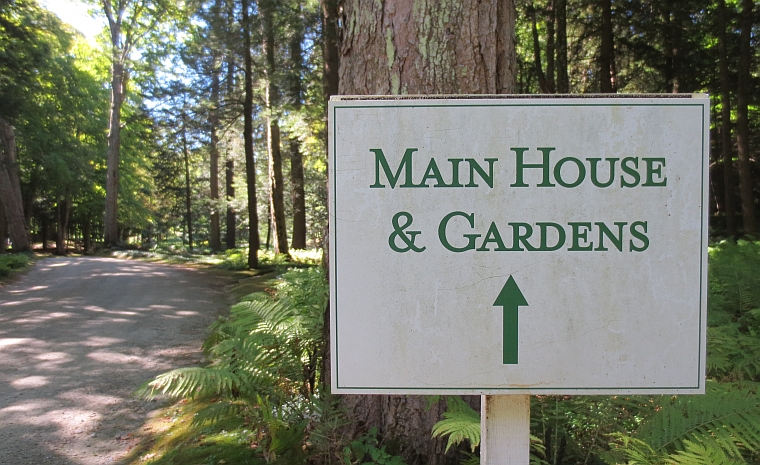
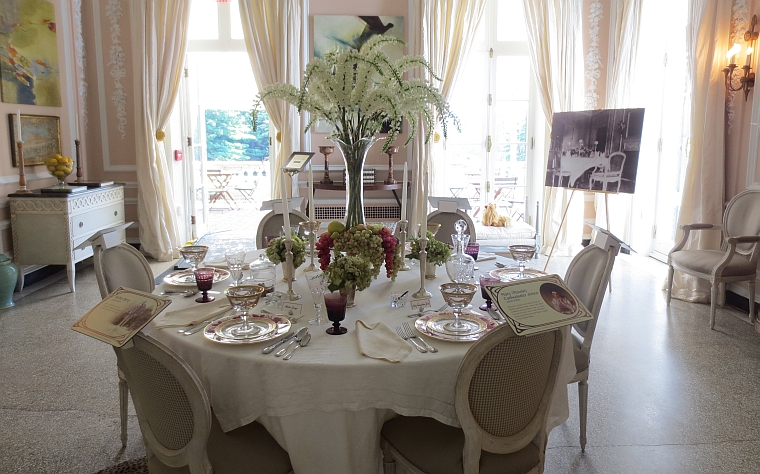
‘The Mount’ was Edith Wharton’s home and garden for about ten years of her life. She lived there with her husband (in adjoining rooms) in the time before their marriage finally fell apart. It remains a gorgeous estate, and for my birthday this year we made the quick drive into Lenox, MA on a gloriously sunny day.
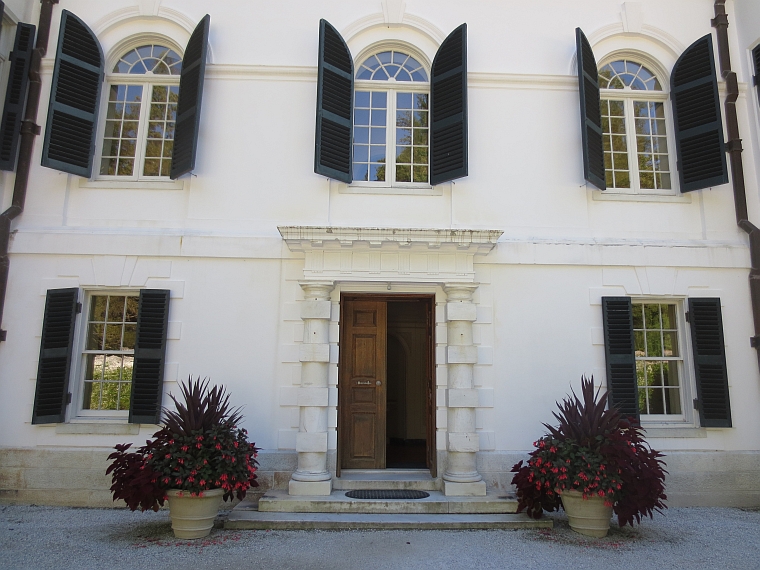
Ms. Wharton is best known for her written work, particularly ‘The House of Mirth’, ‘The Age of Innocence’, and ‘Ethan Frome’. (Forgive the apostrophes around titles on this blog, but there’s no way to do italics in this format. Well, there may be, but I can’t be bothered to figure out formatting right now.) She was one of my favorite authors in those formative years when what we read somehow seeps into who we become. Her stories were of people trapped, but still trying valiantly to do the right thing, torn between what society demanded of them, and what their hearts desired. And while being trapped is not something to which I could particularly relate at the time (tricksters never get trapped – they always find a way out), the notion of societal expectations was something that struck me.
In many of Wharton’s works, those who dare to defy such constrictions are doomed to live unhappy, lonely lives – but the alternatives are even more harrowing. Lives lived in loveless marriages (Newland Archer) or lives cut short when marriage is put off (Lily Bart) – there are no easy choices, and no decisions are made without some sort of loss or compromise. That cuts through to everyone, whether it’s high-society old New York, or modern-day hum-drum middle-class Albany.
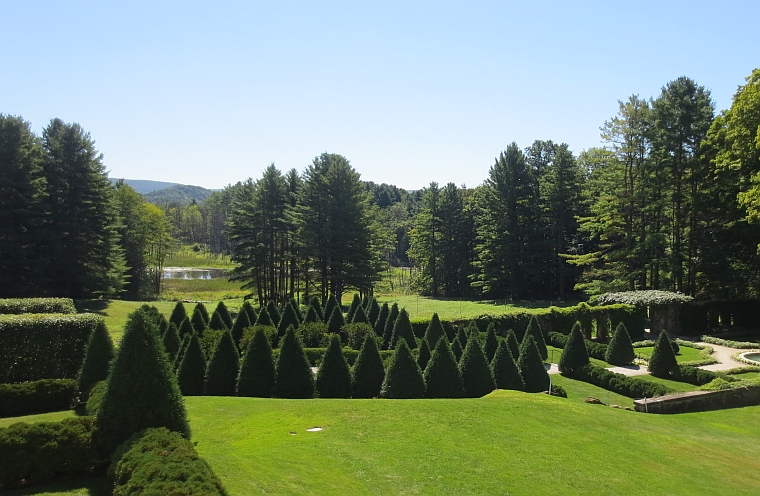
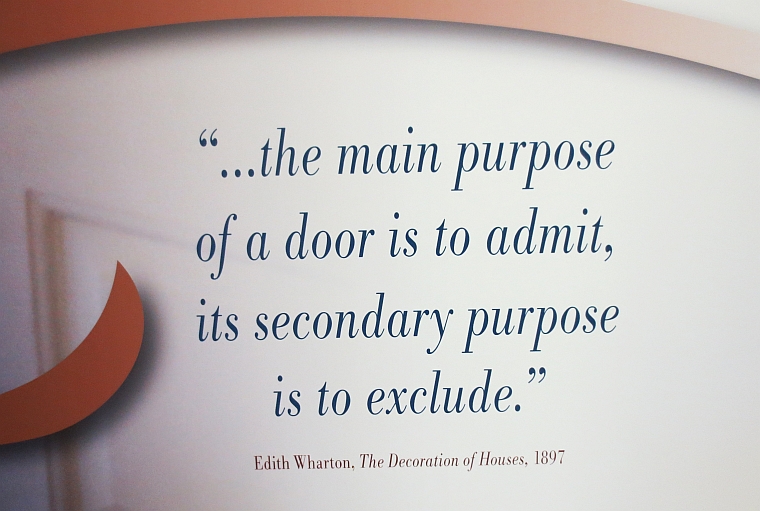
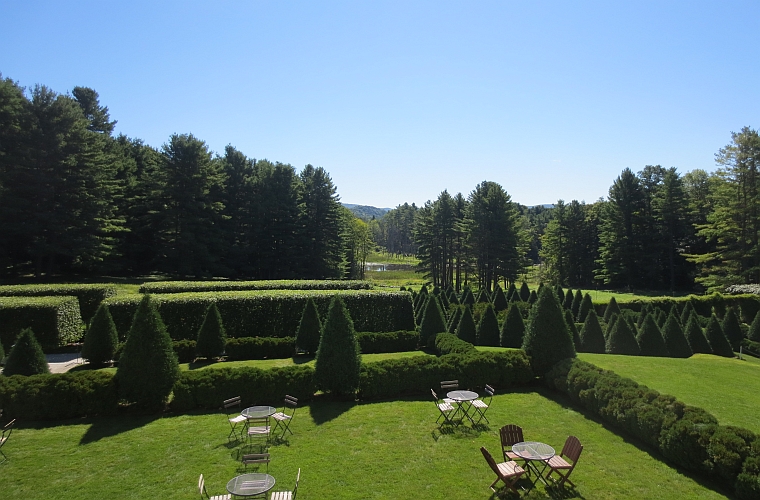
Her first major work, however, was not a scathing work of fiction, but rather a book on interior design – one of the first of its kind in this country. ‘The Decoration of Houses’ was a guide she wrote with Ogden Codman, and many credit the pair with beginning the decorating craze of America. She was, in a way, the forerunner of all things HGTV and Martha Stewart, guiding with a sure hand, sound advice, and practical ideas. She took European notions, but simplified them, reducing the baroque baggage for a more elegant presentation and less cluttered feel. Her gardens maintained a rigid formal structure, but they took in the wild Berkshires as their beautiful backdrop, a vista of untouched lake was the view of her backyard, and the winding casual slopes of woodland walks surrounded the estate.
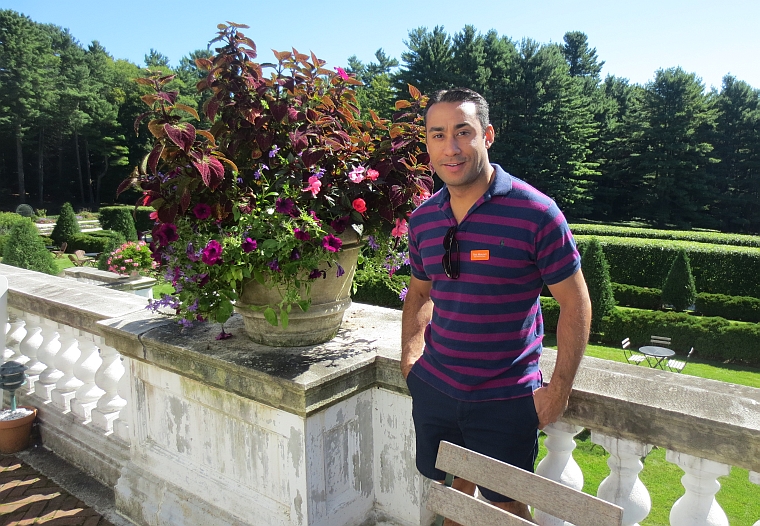
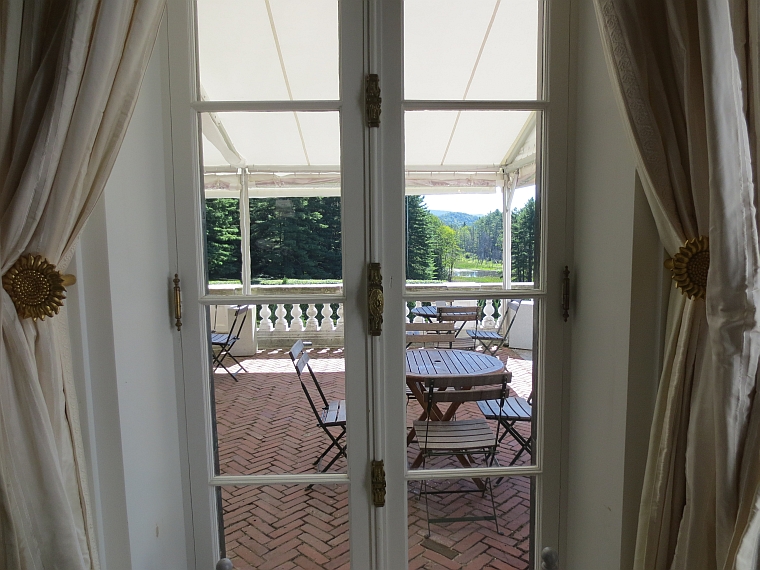
Looking out over her backyard from the terrace, it was not difficult to understand her love for the place, but beauty can only heal so much.


Continue reading ...

The Writing Hut: Preamble to The Mount

What is reading, in the last analysis, but an interchange of thought between writer and reader? If the book enters the reader’s mind just as it left the writer’s — without any of the additions and modifications inevitably produced by contact with a new body of thought — it has been read to no purpose. ~ Edith Wharton

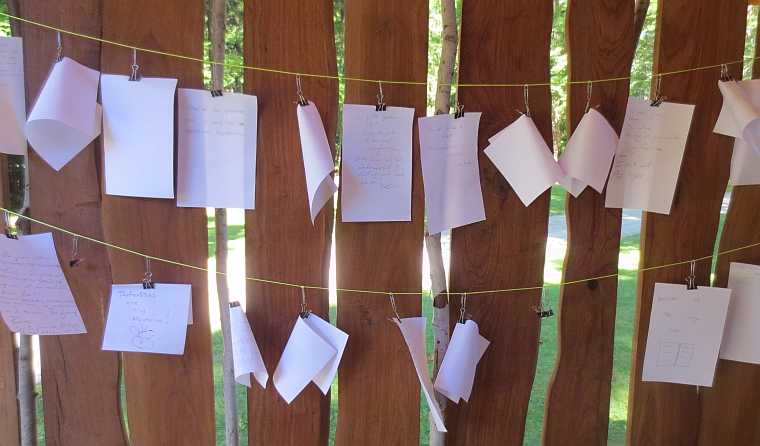
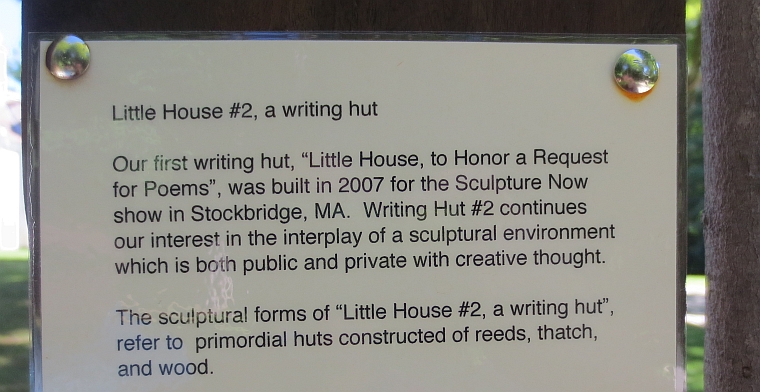
Before reaching The Mount, Edith Wharton’s Estate and Garden (where we spent my birthday this year – details coming in the next post), visitors must pass through a length of forested trails, paths leading down a gently sloping incline to the formal grounds. Midway along this journey was this small writing hut. Pieces of white paper were hanging on the open-slatted walls, fluttering in the breeze. A pile of more paper and a few pencils were scattered on a table in the middle of the tiny room, waiting for more messages to be written.

Poems, letters, phrases, and signatures slowly oscillated on their clips and strings. I read a few, and while I know it’s why they – and we – are here, it still feels intensely personal, as if I’m somehow invading someone’s private thoughts. For that reason, I do not write anything down.

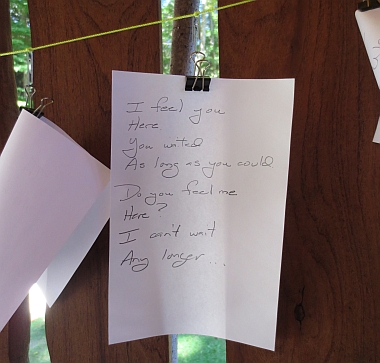
I find one that especially touches me. It is anonymous, just a few scribbled words, and maybe it means something and maybe it’s just an artful poem. The pain, though, is palpable. The sense of loss – of missing something, of waiting fruitlessly in vain- is swaying in the wind. There is danger in such desire, and danger in that desperation, but here, in the dappled sunlight, filtered by trees and wood, the danger is removed. It is, more than anything, a sense of peaceful resignation that pervades the space. That is what the rawest writing can do.

I feel you

Here

You waited

As long as you could

Do you feel me

Here?

I can’t wait

Any longer…

Our time in the writing hut is done.

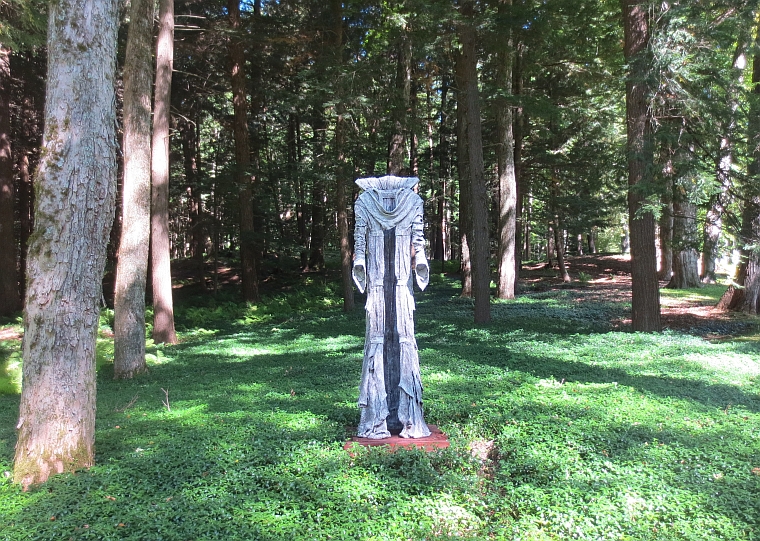
A ghostly robe beckons us on to The Mount.

The forest feels haunted.

There is one friend in the life of each of us who seems not a separate person, however dear and beloved, but an expansion, an interpretation, of one’s self, the very meaning of one’s soul. ~ Edith Wharton

Continue reading ...

Sunday Poem

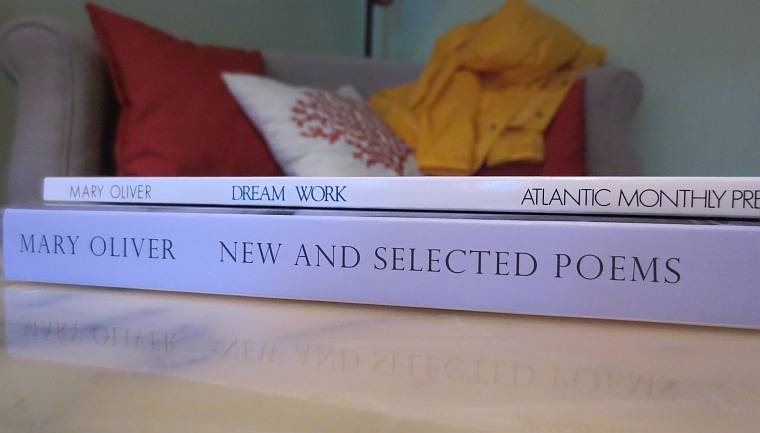
The best part of a book of poems is the fact that you can pick up and leave off at any time. Unlike prose, which I tend to like to devour at long, deliberate stretches, a poetry collection can be opened and read in bits and pieces, from a few lines to a few poems. It’s especially nice at night, when you may only need a few pages to lull you into sleep, or on a Sunday morning, when you want a bit of beauty to open the day. This is another of Mary Oliver’s gems, from her 1986 collection ‘Dream Work’. It spoke to me for some reason.

The Journey

One day you finally knew

what you had to do, and began,

thouh the voices around you

kept shouting

their bad advice –

though the whole house

began to tremble

and you felt the old tug

at your ankles.

“Mend my life!”

each voice cried.

But you didn’t stop.

You knew what you had to do,

though the wind pried

with its stiff fingers

at the very foundations –

though their melancholy

was terrible.

It was already late

enough, and a wild night,

and the road full of fallen

branches and stones.

But little by little,

as you left their voices behind,

the stars began to burn

through the sheets of clouds,

and there was a new voice,

which you slowly

recognized as your own,

that kept you company

as you strode deeper and deeper

into the world,

determined to do

the only thing you could do –

determined to save

the only life you could save.

Continue reading ...

Sing Me To Sleep, Your Sweet Poetry

A friend turned me onto Mary Oliver’s poetry a while back, and since that time I’ve been obsessed – devouring her every word, salivating over every turn of phrase, and eating up her works in the frenzy of obsession that accompanies the discovery of a great artist. Ms. Oliver has a wonderful way of placing the human experience within the natural world, heightening it but keeping it a small part of the universe. Her take on the world is calming, her words are healing, and her passion for life – for living and loving and embracing each moment we have – is an inspiration. I need to be reminded of that. A lot of us do.

I’ve been taking her to bed with me to ease a recent bout with insomnia, and she never fails to elicit a sigh or a thrill or the simple recognition of a soul who has also tasted sometimes too much, but with absolutely no regrets. She makes me want to be present, to be kinder, to be better. More importantly, she makes me want to love more, no matter what. Some of us tend to hold that back because it can hurt. Yes, love can hurt. But I’d rather be ripped apart by love than safely unaware of it. I would do all of this again, over and over, to have known what I know.

When Death Comes

By Mary Oliver

When death comes

like the hungry bear in autumn;

when death comes and takes all the bright coins from his purse


to buy me, and snaps the purse shut;

when death comes

like the measle-pox;


when death comes

like an iceberg between the shoulder blades,


I want to step through the door full of curiosity, wondering:

what is it going to be like, that cottage of darkness?


And therefore I look upon everything

as a brotherhood and a sisterhood,

and I look upon time as no more than an idea,

and I consider eternity as another possibility,


and I think of each life as a flower, as common

as a field daisy, and as singular,


and each name a comfortable music in the mouth,

tending, as all music does, toward silence,


and each body a lion of courage, and something

precious to the earth.


When it’s over, I want to say: all my life

I was a bride married to amazement.

I was the bridegroom, taking the world into my arms.


When it’s over, I don’t want to wonder

if I have made of my life something particular, and real.

I don’t want to find myself sighing and frightened,

or full of argument.


I don’t want to end up simply having visited this world.


From ‘New and Selected Poems: Volume One’

Continue reading ...

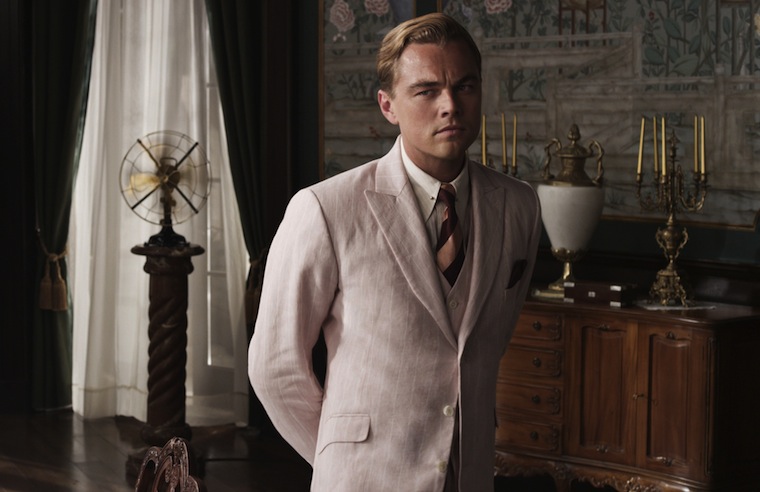
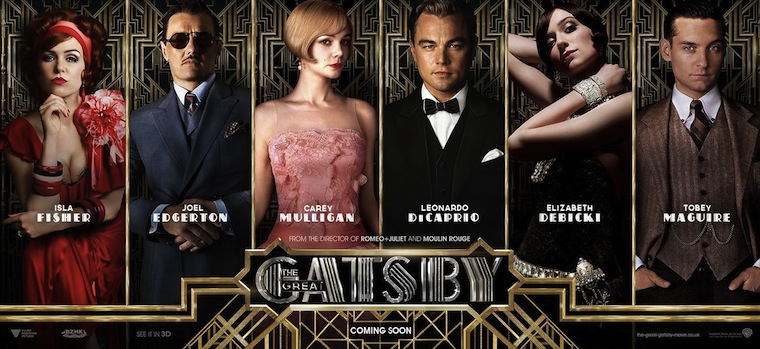
How Did I Like ‘The Great Gatsby’ Movie?

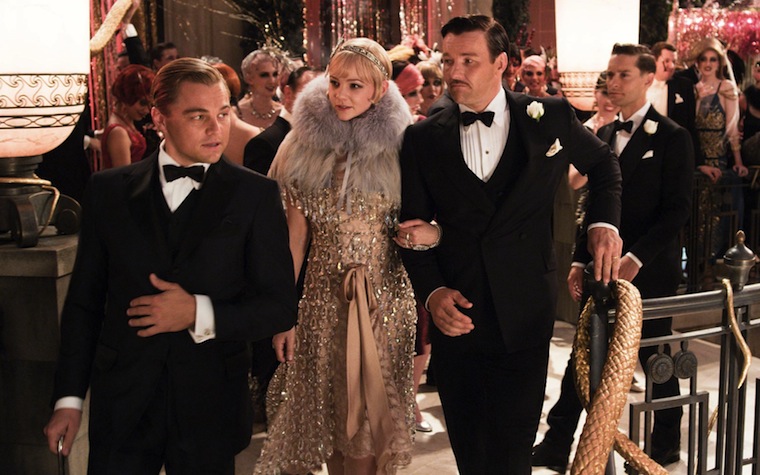
I didn’t hate it. In fact, if there was one word that resonated in the hours immediately following the viewing (the tell-tale time that determines how a movie will fare in my mind), it was ‘haunting.’ Not in a glowing-review type of way, but in a sadder, dimmer, colder version of the novel. It dawned on me upon seeing the physical embodiment of all that sumptuous excess: if Gatsby can’t make a successful go of it, what hope do the rest of us have?

Was the movie as good as the book? Not nearly. This was no surprise. The book is untouchable. The prose propels the narrative, and to try to attain an approximation of the magic of Fitzgerald’s human commentary is a doomed venture. Director Baz Luhrman instead, and wisely, opts for his own brand of flash and spectacle, bringing the decadence of that time period to thrilling, colorful, larger-than-sound-stage life. Is it a case of style over substance? A little. Well, a lot, but viewers who know the book will not need excessive exposition.

A few people will no doubt hate the movie – it’s not for everyone, and unless you’re willing to jump into this long-gone world, suspend your jaded beliefs, and indulge in the journey at hand, don’t bother – you’ll only be infuriated. But if you let it wash over you like the sheerest of drapes in a summer breeze, you’ll find something wondrous about it. Mr. Luhrman has done what Gatsby himself did – create an over-the-top experience – a party that ran deep into the night. But what Gatsby couldn’t fathom – and steadfastly refused to accept – was that all parties come to an end. It was that belief in the possible – and Luhrman’s fervid hope – that captured my imagination.

Continue reading ...

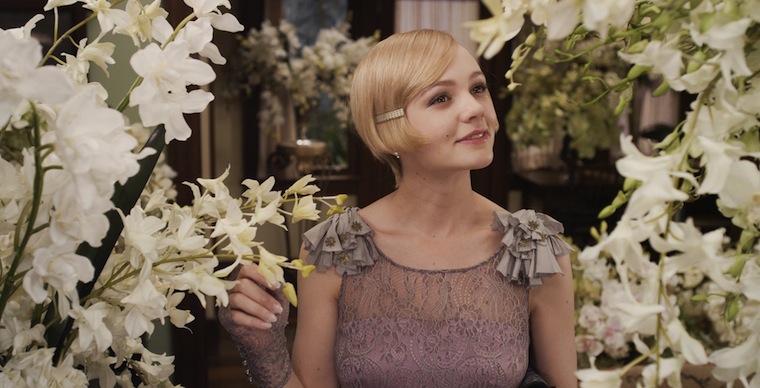
The Great… Daisy?

“If personality is an unbroken series of successful gestures, then there was something gorgeous about him, some heightened sensitivity to the promises of life, as if he were related to one of those intricate machines that register earthquakes ten thousand miles away. This responsiveness had nothing to do with that flabby impressionability which is dignified under the name of the “creative temperament” – it was an extraordinary gift for hope, a romantic readiness such as I have never found in any other person and which it is not likely I shall ever find again.” ~ F. Scott Fitzgerald, The Great Gatsby

I had a frightening realization the other day, as my husband was driving us back from Boston. Frightening in that it was one of those moments when the whole life you’ve built for yourself comes under keen and brutal question, and shifts irrevocably. Since reading ‘The Great Gatsby’ in 1994, I’d always felt a rather obvious affinity to the titular character himself. He had style, he threw grand parties, and he was a die-hard romantic to his disillusioned end. But what if, after all these years, I wasn’t Jay Gatsby, but Daisy Buchanan? The thought pierced my head – immediately dire and dreadful in the way that it could only be true – and then comforting and resigned, for there could be no other way… and the story had, then, already been written.

It was in something that Carey Mulligan (who plays Ms. Buchanan in the new Baz Luhrman film adaptation) said in an interview for her ‘Vogue’ cover story, describing Daisy: “The Gatsby thing is a wonderful escapade, but it is an escapade. It’s not real life. She’s smart enough to know when to come home.”

Smart, yes. But a little – and sometimes a lot – sad, too.

“He had thrown himself into it with a creative passion, adding to it all the time, decking it out with every bright feather that drifted his way. No amount of fire or freshness can challenge what a man will store up in his ghostly heart.” ~ F. Scott Fitzgerald, The Great Gatsby

Continue reading ...

Why I Love The Great Gatsby

It was testimony to the romantic speculation he inspired that there were whispers about him from those who had found little that it was necessary to whisper about in this world. ~ F. Scott Fitzgerald

By now, it’s rather trite to love ‘The Great Gatsby’ as I do, but I consider it a guilty pleasure, and the mark of a non-hipster, to unabashedly revel in those things I really like. As I get older, I find it less and less necessary to conform to what is deemed cool, and if I fall in your indubitably-and-unmistakably-mistaken estimation of me, so be it. When asked to put my finger on it, I usually falter, stumbling over explanations, trying vainly to put across the emotional resonance it held for me at the time in my life when I first read it, but basically it boils down to this: I love the way Fitzgerald writes. Some loudly scoff and condemn such a comment. Save your complaints for someone who agrees with you.

“”Whenever you feel like criticizing anyone,” he told me, “just remember that all the people in this world haven’t had the advantages you’ve had.”” ~ F. Scott Fitzgerald

In some ways, the novel represents the person I most wanted to one day become, and the unattainability of that person. To such an end, it works almost too perfectly – and in the ultimately hopeless plight of Mr. Gatsby, I recognize and realize the falterings and shortcomings of a life left with dreams that didn’t come true, and do my best to reconcile them.

But his heart was in a constant, turbulent riot. The most grotesque and fantastic conceits haunted him in his bed at night. A universe of ineffable gaudiness spun itself out in his brain while the clock ticked on the wash-stand and the moon soaked with wet light his tangled clothes upon the floor. Each night he added to the pattern of his fancies until drowsiness closed down upon some vivid scene with an oblivious embrace. For a while these reveries provided an outlet for his imagination; they were a satisfactory hint of the unreality of reality, a promise that the rock of the world was founded securely on a fairy’s wing. ~ F. Scott Fitzgerald

As lush and romantic as much of it is, it’s also rife with loneliness. Fitzgerald seemed to understand that romance didn’t necessarily mean a life that wasn’t lonely, and sometimes romantic entanglements were the surest route to finding yourself alone. The marriages here are violent and murderous. They are a warning, perhaps. But they are also a haven. Most marriages don’t just happen. There is usually history there. Love as well. And to dare think that a marriage is easily understood, the puzzles of a life together easily solved or figured out, is to invite certain destruction. Even in the most innocent relationship in the book, one person is not to be trusted – whether that’s in the simple, desperate move to stay on top in a game of golf, or the life-long deceit of a love long faded. Everyone is alone.

At the enchanted metropolitan twilight I felt a haunting loneliness sometimes, and felt it in others – poor young clerks who loitered in front of windows waiting until it was time for a solitary restaurant dinner – young clerks in the dusk, wasting the most poignant moments of night and life. ~ F. Scott Fitzgerald

Yet in that loneliness was a stunning beauty, and a gorgeousness that only a loner and lover of solitude could appreciate and understand. For Gatsby, so much of his life was lived in anticipation, in the hope and possibility of what was to come, or never to come, and it was lived alone. In empty ball rooms while workers prepped the kitchen, in hidden enclaves while guests bounded across the expanse of his lawn, in the quiet lapping of water in a laughter-less pool, in the barren recesses of a dusty heart that wanted so badly to love it could never work – and even if he’d gotten the girl, in the end, it wouldn’t be right.

He smiled understandingly – much more than understandingly. It was one of those rare smiles with a quality of eternal reassurance in it, that you may come across four or five times in life. It faced – or seemed to face – the whole external world for an instant, and then concentrated on you with an irresistible prejudice in your favor. It understood you just so far as you wanted to be understood, believed in you as you would like to believe in yourself and assured you that it had precisely the impression of you that, at your best, you hoped to convey. ~ F. Scott Fitzgerald

It’s the Great American novel because it so singularly and specifically captures a moment in our history, while universally painting the ideal of the individual, and all the inherent flaws with which we are endowed. It never gives up, it never stops trying, even as it never quite realizes the American Dream – not the real secret dream of our hearts, the one that doesn’t involve money and success, fashion and fame, sparkle and charm. There is no happy ending, only then, only now…

Its vanished trees, the trees that had made way for Gatsby’s house, had once pandered in whispers to the last and greatest of all human dreams; for a transitory enchanted moment man must have held his breath in the presence of this continent, compelled into an aesthetic contemplation he neither understood nor desired, face to face for the last time in history with something commensurate to his capacity for wonder. ~ F. Scott Fitzgerald

Gatsby believed in the green light, the orgiastic future that year by year recedes before us. It eluded us then, but that’s no matter – tomorrow we will run faster, stretch out our arms farther…. And one fine morning—

So we beat on, boats against the current, borne back ceaselessly into the past.

~ F. Scott Fitzgerald, The Great Gatsby


Continue reading ...

Gershwin & Gatsby

A recent trip to see the National Symphony Orchestra has rekindled an interest in classical music, so when the Albany Symphony Orchestra announced tomorrow’s program featuring a Gatsby-inspired bit of Gershwin, I jumped at the chance to attend (even if Gershwin is not exactly ‘classical’ in the traditional sense). Many moons ago, I actually played with the Albany Symphony Orchestra for one of their concerts, sitting beside my teacher and mentor, Gene Marie Green. She taught me everything I knew about the oboe – and it was enough to get me into the Empire State Youth Orchestra, and a few substitute appearances in Albany and Schenectady.

There’s something very powerful about listening to a piece of music played live and uninterrupted from start to finish, something lost in today’s haste-prevents-waste world. A piece of music is a journey, not to be disturbed or heard in snippets or increments. The only way to see the journey through is to start at the beginning, continue through the middle, and last until the very final note reverberates into silence. It’s too bad so many start fidgeting after only five minutes in. Anything beyond the duration of a commercial break is deemed long-winded. But that won’t stop my enjoyment tomorrow, it will only hinder theirs. I won’t mind the candy-unwrapping or seat-shifting. I will listen to the music, I will hear the words of Fitzgerald, and I will be in heavenly abandon.

Continue reading ...

The Dinner is Served

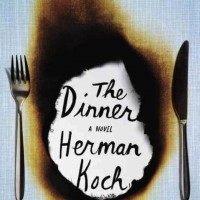
I don’t know what it says about me that I devoured ‘The Dinner’ by Herman Koch in one day, so enjoyably enthralling did I find it and its deeply-flawed protagonist, but I do know it was a sensation of a novel. It’s been a while since a book captured my attention so completely – not since Jacob Tomsky’s ‘Heads in Beds’ probably – and there’s something about that rush of exhilaration that no other art form – not photography, painting, or even music – can approach, at least for me. Perhaps because in reading, and imagining, we invest a little more into the appreciation of the work.

I’ll pass this one around to a few people, because I’m interested in getting their take on it. Books like this – with their rather dark subject matter and questionably-immoral narrators – are rarely beloved. For that reason alone, I have a spot spot in my heart for them. The fact that honesty, and unflinching bluntness, play a part in the narrative, is a confrontation from which I’ve never shied away. I’ll take a challenge over a sentimental pussy walk any day.

Continue reading ...

The Magic Mann

Morality? It interests you does it? All right – it seems to us that one ought not to search for morality in virtue, which is to say in reason, in discipline, in good behavior, in respectability – but in just the opposite, I would say: in sin, in abandoning oneself to danger, to whatever can harm us, destroy us. It seems to us that it is more moral to lose oneself and let oneself be ruined than to save oneself. The great moralists have never been especially virtuous, but rather adventurers in evil, in vice, great sinners who teach us as Christians how to stoop to misery. You must find that all very repugnant. ~ Thomas Mann, ‘The Magic Mountain’

The wicked dance in which you are caught up will last many a little sinful year yet, and we would not wager much that you will come out whole. To be honest, we are not really bothered about leaving the question open. Adventures in the flesh and spirit, which enhanced and heightened your ordinariness, allowed you to survive in the spirit what you probably will not survive in the flesh. There were moments when, as you “played king,” you saw the intimation of a dream of love rising out of death and this carnal body. And out of this worldwide festival of death, this ugly rutting fever that inflames the rainy evening sky all around – will love someday rise up out of this, too? ~ Thomas Mann, ‘The Magic Mountain’

Continue reading ...

From Narcissus to Narcissist

“Every writer is a narcissist. This does not mean that he is vain; it only means that he is hopelessly self-absorbed.” ~ Leo Rosten

“A narcissist is someone better looking than you are.” ~ Gore Vidal

Continue reading ...

A Love of Tragedy

How foolish and simpleminded I had been to have so loudly proclaimed to the world that art was the object of my desire! Art! No! Watching you being forced to leave me, you, for whom I felt such a strong attraction, such a great affection, such a great… dare I speak it… love… I knew I would spend the rest of my life in the pursuit of something grander than art, grander than happiness. Yes, I would spend my life in the pursuit of tragedy. And I knew, too, that for me somehow tragedy and love would forever be wed. It may be true for us all that there is no tragedy without love, and no love without tragedy. ~ Louis Edwards, ‘Oscar Wilde Discovers America’


Continue reading ...

Wilde Inspiration

The act of creating art is an act of violence – it is the willful destruction of nothingness. All true art is violence. Are all acts of violence art? No. of course not. Some acts of violence are. But for the inartistic, the creation of violence is usually a crude substitute for the creation of art. Violence is usually not art because it merely destroys one form of nothingness and replaces it with another. True art always fills the void. ~ Louis Edwards, ‘Oscar Wilde Discovers America’

Man wants to create art. For some, as I’ve stated, violence serves as an alternative. So any place where one finds a dearth of art, one will surely find a wealth of actual physical violence. ~ Louis Edwards, ‘Oscar Wilde Discovers America’

I shall seek to regain your attentiveness. I shall give you something new. Maybe not today – but soon. Don’t you give up on me just yet. Keep listening. And I shall find a way to win you back. ~ Louis Edwards, ‘Oscar Wilde Discovers America’

Continue reading ...

Count On It

“I’ll bury my grief deep inside me and I’ll make it so secret and obscure that you won’t even have to take the trouble to sympathize with me.” ~ Alexandre Dumas

“I ought to have left without seeing you again, like the benefactor in a novel, but such virtue was beyond my strength because I’m a weak and vain man, because it does me good to see gratitude, joy and affection in the eyes of my fellow men. I’m leaving now, and I carry my egotism to the point of saying: Don’t forget me, my friends, for you will probably never see me again.” ~ Alexandre Dumas

“I will always be what I am. That is why I tell you things you have never heard before, even from the lips of a king, for kings have need of you and other men are afraid of you.” ~ Alexandre Dumas

Continue reading ...

A Dangerous Thing

He was bored by his own necessary lies. How he longed to tell them exactly what he was! He wondered suddenly what would happen if every man like himself were to be natural and honest. Life would certainly be better for everyone in a world where sex was thought of as something natural and not fearsome, and men could love men naturally, in the way they were meant to, as well as to love women naturally, in the way they were meant to. But even as he sat at the table, pondering freedom, he knew that it was a dangerous thing to be an honest man; finally he lacked the courage. ~ Gore Vidal, The City and the Pillar
Continue reading ...