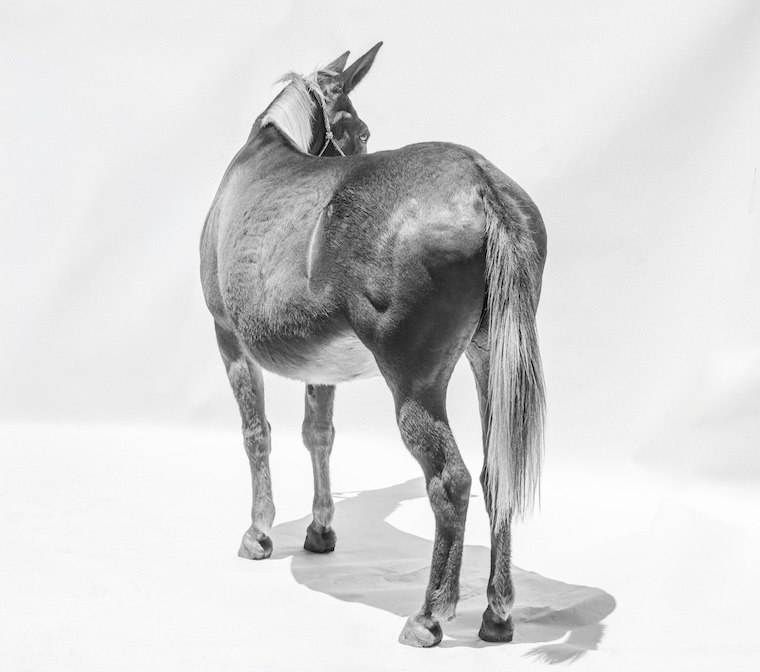
Nobody knows what rehab is really like until they have to go through it themselves. It’s not the stuff of cuckoo’s nest movie depictions or dreamy theatrical representations – those might capture the surface trauma and the atmosphere, but they never quite get the ugly despair and haunted hopelessness that are too often found in such spaces. There are glimmers of hope and paradise as well – even if it’s just the paradise of relative relief – even if paradise is no longer perfection but merely the acceptance and acknowledgement of torment, and the terrifying notion that nothing might ever make it go away.
I imagine fame is a similar beast, so when you put together the white hot celebrity status that Orville Peck achieved just as he began a slide into addiction and alcoholism, you have the conditions that ultimately found him checking into rehab – and fueling the main emotional heft of his latest album ‘Mule’ – an exercise in musical therapy and catharsis that is as beautiful to the ears as it is to the analytical and introspective parts of us.
With a fine voice honed from years of classical vocal training, Peck has always seemed slightly larger and beyond the scope of what most of us would consider country music – hence his successful Broadway debut as the Emcee in ‘Cabaret’. Pushing the limits of country music – both in his openly-gay and unabashedly genre-pushing manner – Peck turns ‘Mule’ into a musical journey embodying the emotional rollercoaster of the past year or so of his life. A number of singers and songwriters have found fertile ground in addiction, though most aren’t able to translate it into something richer and more resonant, and certainly not as musically gorgeous.
It takes both a well-earned confidence and humility to give the opening song slot to the trio that sets things in motion on “Prologue (Eulogy of a Man Turned Mule)” – though I suppose when that trio is comprised of Emmylou Harris, Noah Cyrus and Allison Russell, the star-power and talent is well-matched, and an ideal beginning to the idea of what turns a man into a mule.
Peck’s rehab stint is given a stunning cinematic treatment for the video of ‘Already Gone’. One of the catchiest songs in the bunch, its ebullient surface and melodies are directly at gruesome odds with the ambivalent lyrics:
He’s everybody’s favorite but it takes a toll
Leave him alone, he’s gonna end it all
Lonesome heart by design
Broken head in decline
Tellin’ anyone who’ll listen, it’ll all be fine
Just one more man at the end of his line
The circular hell of his circumstances finds disturbing and blunt exposition in ‘Rehab Blues’: “I hate it here, I don’t care and I wanna die.” It would be awful to dwell very long in such headspace, but when the music sounds this good you stick around to listen – and by the end of the exercise you realize one has to go through it to get out of it. For Peck, living in such a dark and low place seems to have marked the place to begin, and he begins his way back – or at least through – with the driving ‘Ring the Bell’.

On the contemplative ballad ‘The Fall‘ he works toward something deeper, some purpose in the whole awful experience – and it sounds like that might mean not doing it alone – which involves letting someone be there for you as much as being there for someone: “Take a rest right here/ And I will share your pain, I’ve seen it all.” Then it swings back into ambivalence before ending on a note of hope. It leads beautifully into the strongest stretch of the album – the gorgeousness of ‘Cowboy Heart’ and ‘The Breeze, The Grass, The Mourning Dove and Me’ before climaxing in the thrilling ‘Run Out of Road’.
Don’t come running back to me when you run out of road
Expecting I’m still behind the door that you slammed closed
The price of being wild and free can leave you more alone
So don’t come running back to me when you, you, you run out of road
My boots on the ground, blue skies
You like how I’m moving on with my life?
And I’ll admit you cross my mind, but not enough to cross that line
You can have a change of heart, but you won’t break mine a second time
Lead single ‘Too Little, Too Late’ is almost an after-thought after this run – albeit an after-thought of absolute brilliance. A hand-clapping good time, this celebratory, carefree fuck-off to an unappreciative paramour (or perhaps a different sort of monkey on the back) works as a rollicking way to leave someone, or something, behind. It also sets up the gritty determination and strength required to really reveal all that comes in the final song, and title track, ‘Mule’:
Somebody save me from the night time
Morning always feels okay
And perhaps this need to run is my attempt to chase the sun
I think about that every other day
His voice occasionally catching, the quiet and somber guitar work gliding exquisitely underneath it all, ‘Mule’ is the bit of grace that makes the ugly brutality of life worth living. It’s the moment you find yourself walking with a loved one – maybe not holding hands, but simply walking beside them – as friend, lover, or partner – in any of the meaningful ways we connect to another person. In that space and in that place there is, if we’re lucky – and if we allow it – the grace to make it through to the next morning. Sometimes such a friend comes in the form of a song, maybe a collection of songs, that let you know you’re not alone. Sometimes it comes in a melody that eases the mind, sometimes it comes in a turn of words that perfectly expresses what your heart has once felt. And sometimes it comes in an album called ‘Mule’ by an artist named Orville Peck.
And, oh, I still got a ways to go
And, oh, it may seem like I changed, I know
And, oh, it’s not change I think it’s more like coming home
And if it seems I’m losing track of what I’m saying
Just don’t mistake me for a fool
It may look like I’m fine, but you’ll realize in time
You’ve been talking to a man turned mule.
{Find more of Orville Peck, including upcoming tour dates, at his website here.}