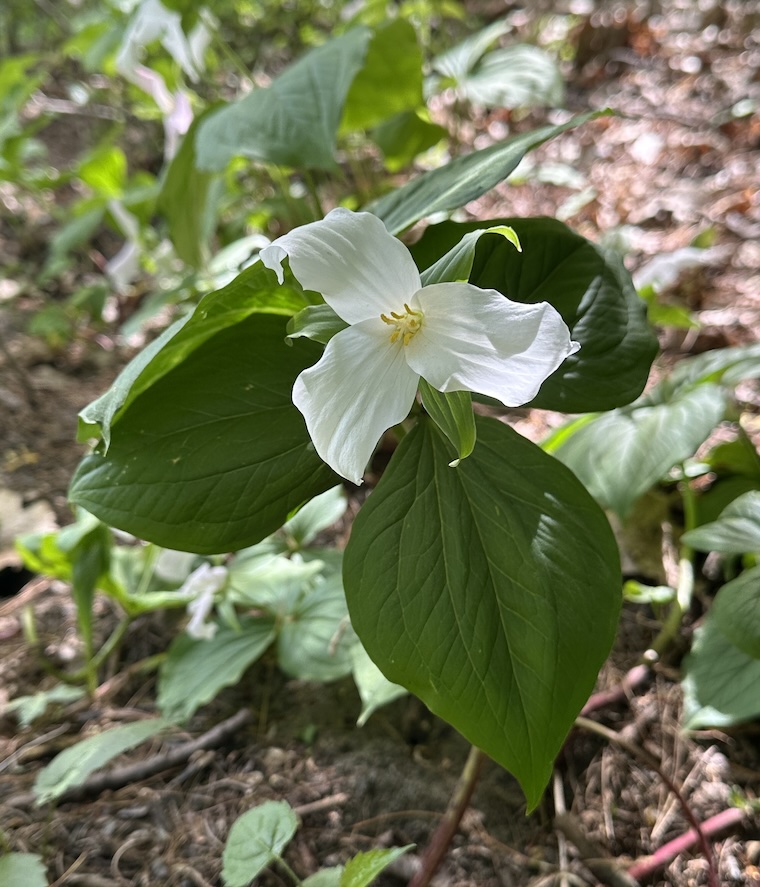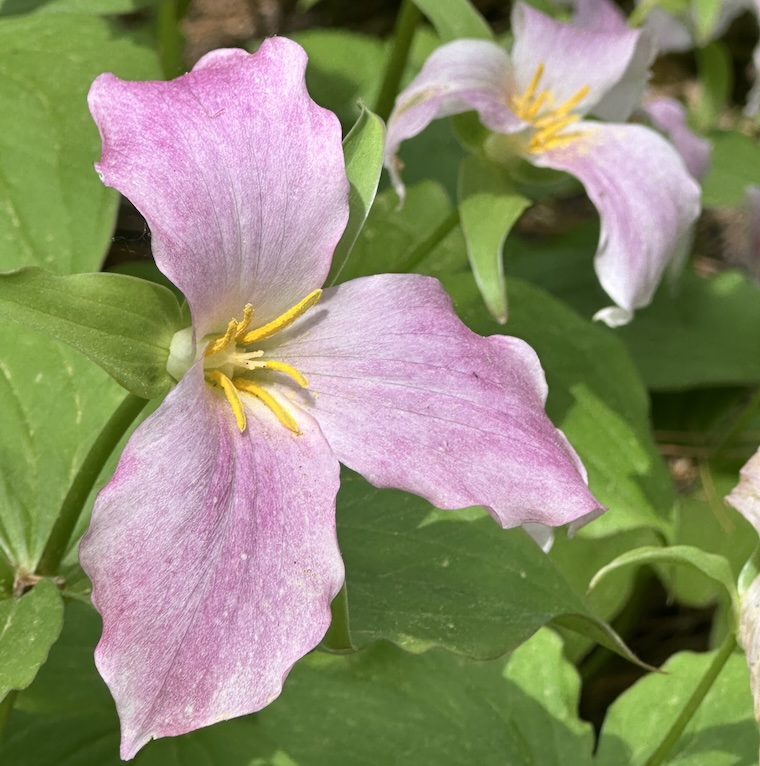
The trillium plays many roles in floral folklore. It follows the rule of threes – three leaves, three petals, three sepals. There’s an unconquerable primal aspect to the number three, and trilliums wield this property masterfully. While some have attributed a connection to the Catholic Holy Trinity, the trillium has also been celebrated as a symbol of bisexuality and sexual fluidity. With both male and female reproductive organs (stamen and pistil) technically the trillium flower could fairly be considered bisexual itself – but more recently it’s come to be viewed as a symbol of interconnectedness and connections beyond the strict historical boundaries societally imposed within a male/female binary prison.
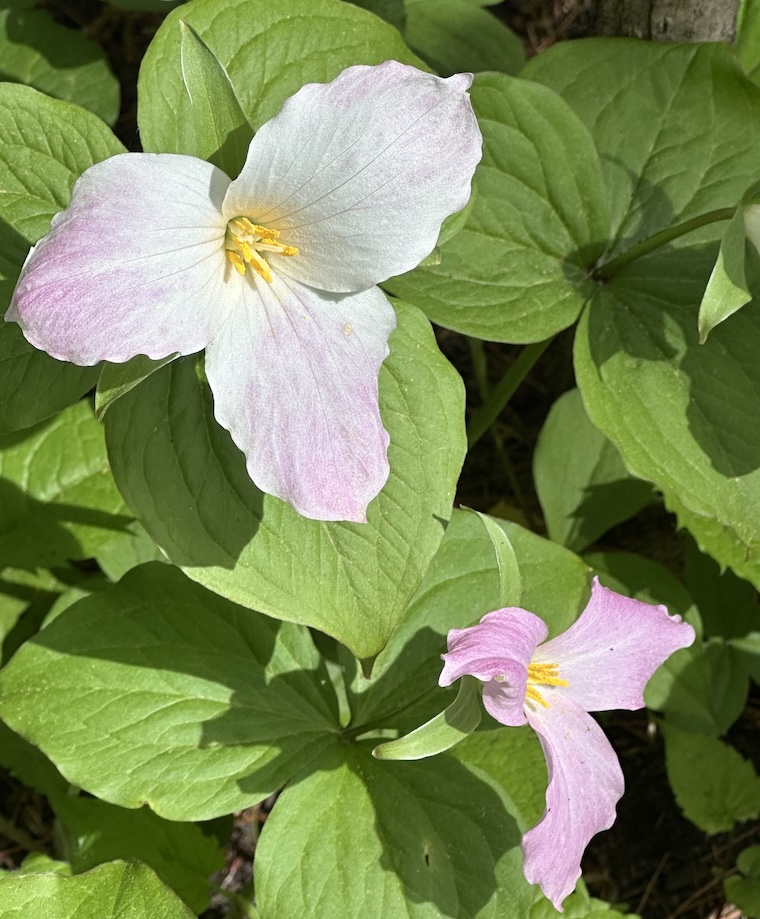
The trillium offers another alternative – the idea of a love not bound by time or gender or distance. Which brings us back… centuries back… to a love that at the time dare not speak its name, on a lush lunch gathering just for two.
Two lads.
Two lads on a beautiful, ephemeral spring day – the kind of day you know will never last, so part of you wants to weep, and part of you doesn’t want to be there at all because you know it will never be like this again, and you’re certain you can’t handle the heartbreak of having sipped such loveliness only in order to never have it again, and part of you knows that to not taste of heaven won’t make hell any more bearable when he is gone, so you partake of it – the day, the spring, the lips of a lad who only just said he loved you.
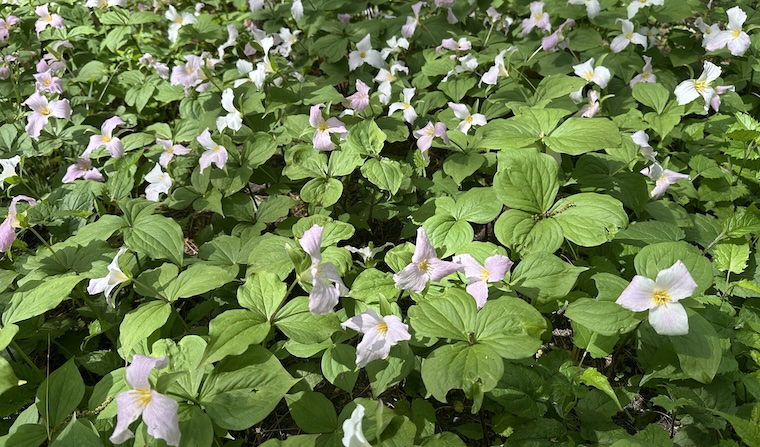
Two lads… and time – a tricky trio, a throubling threesome, if you’ll indulge the wayward bending of words. Time is safely and ruinously their only witness – when the lads have grown old and forgetful, when age has erased the once-indelible grooves of memory – only time will remember them there, beside the trilliums – their laughter, their gaiety, their happiness – the way they slumped gratefully against the trunk of an oak tree, one nuzzling into the neck of the other and closing his eyes, one looking languidly into the distance, into the future, into the nodding heads of the trilliums.